
For home coffee lovers, the dream of pulling a rich, velvety espresso shot without spending $20 per cup at a café is real. But the path to that perfect shot splits early: Should you invest in a budget espresso machine or go the convenience route with a pod system? Both promise cafe-quality results, but they deliver on that promise in fundamentally different ways. The choice isn’t just about price—it’s about ritual, control, consistency, and long-term satisfaction.
This guide breaks down the strengths and limitations of each option, backed by brewing science, user experience, and real-world testing. Whether you're a novice or a seasoned coffee enthusiast on a budget, understanding these differences will help you make an informed decision that aligns with your taste, lifestyle, and expectations.
The Espresso Experience: What Makes a Shot “Cafe-Quality”?
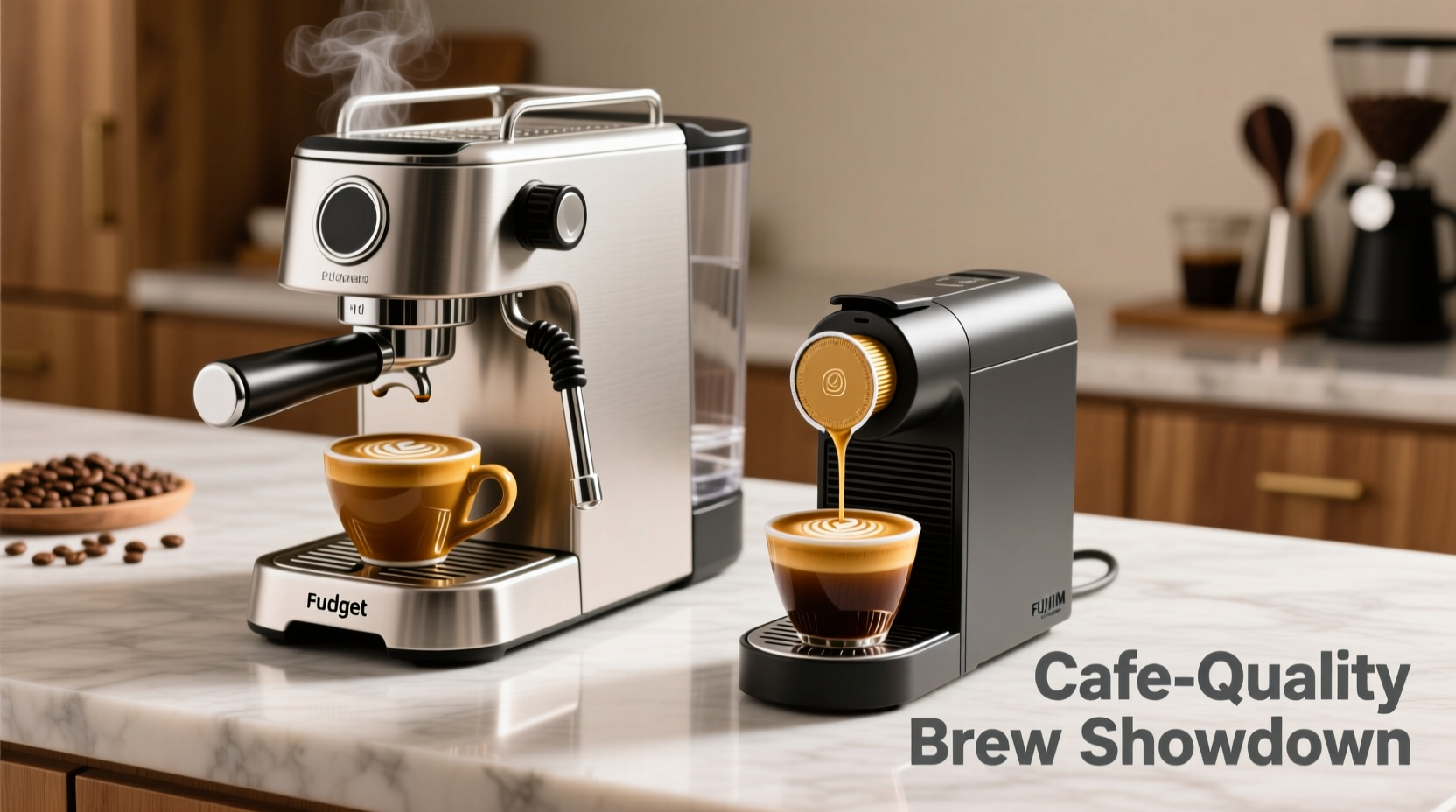
Before comparing machines, it's essential to define what \"cafe-quality\" actually means. In professional settings, a great espresso shot has:
- Balanced extraction – neither sour (under-extracted) nor bitter (over-extracted)
- Rich crema – a golden-brown layer of emulsified oils indicating proper pressure and freshness
- Complex flavor profile – notes of chocolate, fruit, nuttiness, or acidity depending on bean origin
- Consistent temperature and pressure – typically 9 bars of pressure and water between 195°F–205°F
Achieving this consistently requires precision in grind size, dose, tamping pressure, water temperature, and timing. Manual control allows for fine-tuning; automation sacrifices some control for ease. This distinction lies at the heart of the budget espresso vs. pod debate.
Budget Espresso Machines: Control, Craft, and Compromise
Budget espresso machines—typically priced between $100 and $300—offer manual or semi-automatic operation. They usually feature a portafilter, steam wand, and pump capable of reaching 9–15 bars of pressure. While not as precise as high-end models, they allow users to engage directly with the brewing process.
Key advantages include:
- Full control over variables: You choose the beans, grind size, dose, and tamp pressure.
- Freshness: Grinding beans just before brewing preserves volatile compounds responsible for aroma and flavor.
- Milk steaming capability: Most come with a steam wand for lattes and cappuccinos.
- Lower long-term cost per shot: Whole beans are cheaper than proprietary pods.
However, there are notable trade-offs:
- Learning curve: Achieving consistent shots can take weeks or months of practice.
- Inconsistent temperature and pressure: Many entry-level machines use thermoblocks that fluctuate in heat.
- Build quality limitations: Plastic components may wear faster, and group heads lack thermal stability.
“Even a $200 machine can produce excellent espresso—if you’re willing to learn. It’s not the gear; it’s the grinder and technique.” — Carlos Mendez, Home Barista Coach & Coffee Educator
Real Example: The First-Time Enthusiast
Jamie bought a $180 semi-automatic machine online after watching YouTube tutorials. Her first shots were sour and thin. Over three weeks, she adjusted her grind size daily, invested in a $50 hand grinder, and learned to tamp evenly. By week four, she pulled her first balanced shot with a honey-like mouthfeel and notes of dark cherry. It wasn’t perfect, but it was hers. Now, she prefers her homemade espresso to most café versions—because she understands every variable behind it.
Pod Systems: Simplicity, Speed, and Sacrifice
Pod systems like Nespresso OriginalLine, Keurig K-Café, or Dolce Gusto prioritize convenience. They use pre-measured, pre-ground coffee sealed in plastic or aluminum capsules. With a push of a button, the machine pierces the pod, forces hot water through under pressure, and delivers a shot in under a minute.
Their appeal is undeniable:
- Speed and simplicity: No grinding, dosing, or cleanup beyond discarding the pod.
- Consistency: Every shot from the same pod type tastes identical.
- Compact design: Ideal for small kitchens or office use.
- Low maintenance: Descaling is required, but no backflushing or portafilter cleaning.
But when it comes to true espresso quality, compromises emerge:
- Pre-ground degradation: Coffee in pods is ground weeks or months before use, losing up to 70% of its aromatic compounds.
- Limited customization: You can’t adjust dose, grind, or tamp—only select pod intensity.
- Environmental impact: Most pods are not widely recyclable and contribute to single-use waste.
- Higher cost per shot: Premium pods range from $0.75 to $1.50 each, compared to $0.25–$0.40 for whole beans.
Case Study: The Busy Professional
David, a project manager with two young kids, values speed and reliability. He owns a Nespresso VertuoPlus and drinks two coffees daily. He appreciates that his morning routine takes 90 seconds start-to-finish. While he admits the espresso lacks the depth of his favorite third-wave café, he finds the Lungo and Gran Lungo formats satisfying. For him, consistency and time savings outweigh nuanced flavor. He recently tried a friend’s manual machine but found the cleanup and learning curve impractical for his schedule.
Head-to-Head Comparison: Key Factors Evaluated
| Factor | Budget Espresso Machine | Pod System |
|---|---|---|
| Initial Cost | $100–$300 | $100–$200 |
| Cost Per Shot | $0.25–$0.40 (beans + electricity) | $0.75–$1.50 (per pod) |
| Taste Quality Potential | High (with skill and fresh beans) | Moderate (limited by pre-ground coffee) |
| Consistency | Variable (depends on user skill) | High (machine-controlled) |
| Customization | Full control over all variables | None (except pod selection) |
| Convenience | Low to moderate (setup, cleaning, grinding) | Very high (one-touch operation) |
| Maintenance | Regular backflushing, descaling, portafilter cleaning | Descaling only; pod chamber wipe |
| Environmental Impact | Low (reusable filters, compostable grounds) | High (plastic/aluminum waste unless recycled) |
Maximizing Results: Step-by-Step Brewing Guide
Whether you choose a budget machine or a pod system, follow these steps to get the best possible shot:
- Start with fresh beans: Use beans roasted within the past 2–4 weeks. Store in an airtight container away from light and moisture.
- Grind immediately before brewing: Invest in a burr grinder—even a $50 model improves consistency dramatically.
- Dose correctly: Aim for 16–18g of coffee for a double shot. Use a scale for accuracy.
- Tamp evenly: Apply 30 lbs of pressure with a level, twisting motion to create a uniform puck.
- Time your shot: Target 25–30 seconds for 1 oz (30ml) of liquid. Adjust grind size if too fast (bitter) or too slow (sour).
- Clean regularly: Backflush with water weekly and descale monthly to prevent buildup.
- Preheat everything: Run water through the group head and warm your cup to stabilize temperature.
FAQ: Common Questions Answered
Can a $150 espresso machine really make good espresso?
Yes—but with conditions. The machine must have a pump capable of 9+ bars, and you must pair it with a decent grinder and fresh beans. Skill matters more than machine price. Many users achieve excellent results with models like the Breville Bambino Plus or De’Longhi ECP3420 when they master technique.
Are reusable pods a good alternative for better quality?
Reusable pods can improve flavor by allowing fresh, whole-bean grinding. However, most pod machines still lack the temperature stability and pressure profiling of real espresso machines. Results vary, but many users report improved body and aroma. Just be aware that filling pods adds time and cleanup, reducing the core advantage of pod systems.
Do pod systems make real espresso?
Technically, no. True espresso requires 9 bars of pressure and freshly ground coffee. Most pod systems operate below 9 bars (closer to 5–7), producing what’s legally labeled as “espresso-style” coffee. The result is often thinner and less complex than authentic espresso.
Checklist: Choosing Your System
Use this checklist to decide which option fits your priorities:
- ☐ I want full control over my coffee-making process → Budget espresso machine
- ☐ I value speed and minimal cleanup → Pod system
- ☐ I’m willing to spend 10–15 minutes learning and refining technique → Budget espresso machine
- ☐ I drink espresso daily and want to minimize long-term costs → Budget espresso machine
- ☐ I live in a small space and need a compact machine → Pod system
- ☐ I care about sustainability and reducing waste → Budget espresso machine
- ☐ I prefer plug-and-play simplicity with no learning curve → Pod system
Final Verdict: Quality Is in the Details—and the Discipline
When it comes to brewing cafe-quality shots at home, a budget espresso machine holds the upper hand in potential quality. Given the right beans, grinder, and attention to detail, it can produce shots that rival those in specialty cafés. The process becomes part of the pleasure—a daily ritual of precision and sensory engagement.
Pod systems, meanwhile, excel in consistency and convenience. They deliver a clean, reliable cup with zero effort. For many, that’s enough. But they rarely surpass “good enough” into truly exceptional territory. The sealed, pre-ground nature of pods caps their flavor ceiling.
The truth is, neither option wins outright. The best choice depends on who you are as a coffee drinker. If you crave mastery, flavor exploration, and long-term value, go for the budget espresso machine. If your priority is time, simplicity, and predictable results, a pod system is a worthy compromise.




 浙公网安备
33010002000092号
浙公网安备
33010002000092号 浙B2-20120091-4
Comments
No comments yet. Why don't you start the discussion?