
In an era where smartphone photography often replaces standalone cameras, the debate over whether you need a flagship device for great photos has never been more relevant. With budget smartphones now boasting triple-lens setups and AI-enhanced shooting modes, many consumers wonder: is the jump to a $1,000 flagship justified by camera quality alone? The answer isn’t a simple yes or no—it depends on how you use your phone, what kind of lighting conditions you shoot in, and how much post-processing you're willing to do.
While marketing materials may suggest that only premium devices deliver professional-grade results, real-world testing reveals a more nuanced picture. Advances in computational photography have allowed mid-range and even budget phones to close the gap significantly—especially in daylight. But when the lights dim or you zoom in, the hardware limitations of cheaper models begin to show.
Understanding the Camera Hardware Divide
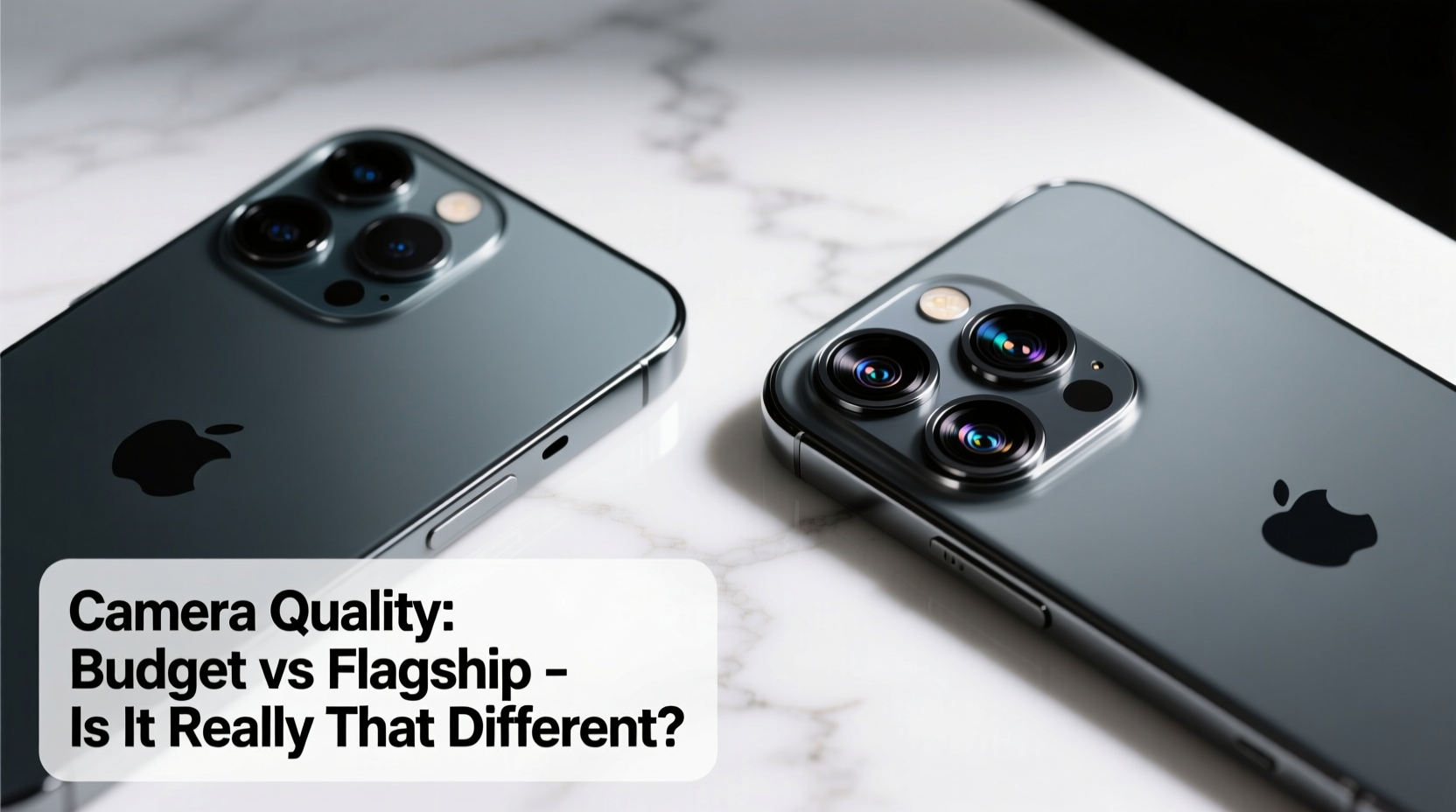
The foundation of any smartphone camera system lies in its physical components: sensor size, pixel dimensions, lens quality, aperture, and optical stabilization. Flagship phones typically feature larger sensors (such as 1/1.3-inch or larger), which capture more light and detail. These sensors are often paired with wider apertures (f/1.5–f/1.8), enabling better low-light performance.
Budget smartphones, on the other hand, usually rely on smaller sensors (often 1/2.5-inch or smaller) and narrower apertures (f/2.0 or higher). While they may advertise “48MP” or “108MP” cameras, these numbers can be misleading. High megapixel counts are frequently achieved through pixel binning—a process that combines multiple small pixels into one larger virtual pixel. This helps improve dynamic range and noise control but doesn’t equate to true optical superiority.
Additionally, flagships often include dedicated telephoto lenses, ultra-wide shooters, and laser autofocus systems, giving them versatility across different shooting scenarios. Budget phones might offer similar lens configurations on paper, but the execution varies widely. Ultra-wide lenses on cheaper models often suffer from heavy distortion and poor edge clarity, while digital zoom beyond 2x quickly degrades image quality.
“Sensor size and lens quality matter more than megapixels. A 12MP shot from a flagship will outperform a 64MP shot from a budget phone in most real-world conditions.” — David Lin, Mobile Imaging Analyst at DXOMARK
Computational Photography: The Great Equalizer?
One reason budget phones have improved so dramatically is the rise of computational photography—the use of software algorithms to enhance images after capture. Techniques like multi-frame exposure stacking, HDR fusion, noise reduction, and AI scene optimization allow lower-end devices to produce visually appealing photos, especially in well-lit environments.
For example, Google’s Pixel series popularized this approach, proving that strong software could compensate for modest hardware. Today, brands like Xiaomi, Samsung, and Motorola apply similar techniques across their mid-range lines. Night modes, portrait effects, and auto-enhancement features are now standard—even on sub-$300 devices.
However, there are limits. Computational methods require processing power and time. In low light, budget phones often take noticeably longer to process a shot, leading to motion blur if either the subject or the photographer moves. They also struggle with preserving fine details, sometimes oversmoothing textures like hair, fabric, or foliage. Flagships, equipped with faster processors and specialized imaging chips (like Apple’s Neural Engine or Qualcomm’s Spectra ISP), handle these tasks more efficiently and with greater precision.
Real-World Performance: Daylight vs Low Light vs Zoom
To assess the actual difference, consider three key shooting conditions: daylight, low light, and zoomed shots.
Daylight Photos
In bright outdoor conditions, modern budget phones perform remarkably well. Colors tend to be vibrant (sometimes overly saturated), dynamic range is decent, and autofocus is quick enough for casual snapshots. For social media sharing or printing standard-sized photos, the output from a $250 phone may be indistinguishable from a flagship to the average viewer.
Low-Light Photography
This is where the gap widens. Flagships leverage larger pixels, optical image stabilization (OIS), and advanced night modes that capture multiple long-exposure frames. The result is cleaner, brighter, and more detailed images with accurate color reproduction. Budget phones attempt to mimic this, but their smaller sensors gather less light, forcing the software to amplify the signal—which introduces graininess and color shifts. Shadows often appear muddy, and highlights can blow out easily.
Digital and Optical Zoom
Flagships often include periscope-style telephoto lenses offering 3x, 5x, or even 10x optical zoom. These maintain sharpness without relying on cropping. Budget phones lack this hardware and instead use digital zoom, which crops into the center of the sensor. At 3x magnification, image quality drops sharply, with visible softness and artifacts. Hybrid zoom (a mix of optical and digital) is rare outside premium devices.
| Feature | Budget Smartphone (e.g., $200–$350) | Flagship Smartphone (e.g., $800+) |
|---|---|---|
| Main Sensor Size | 1/2.5″ – 1/1.7″ | 1/1.3″ – 1″ (e.g., Sony IMX989) |
| Aperture (Main Lens) | f/1.8 – f/2.0 | f/1.5 – f/1.7 |
| Optical Image Stabilization | Rare or limited to main camera | Standard on main and telephoto lenses |
| Telephoto Lens | None or 2x digital zoom | 3x–10x optical zoom available |
| Night Mode Quality | Decent in moderate low light | Excellent even in near-darkness |
| Processing Speed | Slower, noticeable shutter lag | Near-instant processing |
Mini Case Study: Sarah’s Travel Dilemma
Sarah, a freelance travel blogger, needed a new phone for her upcoming Southeast Asia trip. She was torn between the Google Pixel 8a ($499) and the Samsung Galaxy S24 Ultra ($1,299). Her priority was photography—she posts high-resolution images to Instagram and her blog daily.
She tested both phones during a weekend getaway. In daylight, the Pixel 8a impressed her with its natural color tone and excellent HDR handling. Its software-based portrait mode produced clean edges, and the ultrawide lens had minimal distortion. However, during a dinner cruise at dusk, the Galaxy S24 Ultra clearly pulled ahead. It captured crisp details in dim candlelight, preserved sky gradients, and handled backlit scenes without blowing out highlights. When she zoomed in on temple carvings from a distance, the S24 Ultra’s 5x optical zoom retained texture, while the Pixel relied on lossy digital enhancement.
Sarah ultimately chose the flagship—not because the budget phone was bad, but because her use case demanded consistency across all lighting and framing conditions. For her, the extra cost translated into fewer retakes and less editing time.
When a Budget Phone Makes Sense
You don’t need a flagship to take great photos—if your expectations align with realistic usage patterns. Consider a budget or mid-range phone if:
- You primarily shoot in daylight or well-lit indoor settings.
- Your photos are shared digitally (social media, messaging) rather than printed large.
- You’re not heavily invested in zoom, astrophotography, or professional content creation.
- You prefer simplicity and don’t want to manually adjust settings.
Brands like Google (Pixel a-series), Nokia (G-series), and Motorola (Edge lineup) consistently deliver strong camera performance relative to price. Even some Chinese manufacturers like Realme and Poco offer compelling options with capable main sensors and reliable software tuning.
Checklist: Choosing Based on Camera Needs
Use this checklist to determine whether a budget phone meets your photographic requirements:
- ✅ Do most of your photos happen in good lighting? → Budget phone likely sufficient.
- ✅ Do you often take pictures at night or in restaurants? → Prioritize OIS and large sensor.
- ✅ Do you zoom in frequently? → Look for optical zoom; avoid reliance on digital crop.
- ✅ Are you editing photos professionally or printing them large? → Flagship recommended.
- ✅ Is fast burst shooting important (e.g., kids, pets, sports)? → Check processor speed and buffer capacity.
- ✅ Do you record video in 4K or use cinematic modes? → Flagships offer better stabilization and audio.
Frequently Asked Questions
Can a $300 phone replace a DSLR for everyday use?
For most casual photographers, yes. Modern smartphones—even budget ones—can outperform entry-level DSLRs in convenience, ease of use, and automatic optimization. However, DSLRs still win in manual control, interchangeable lenses, and raw file quality. For hobbyists who want creative flexibility, a dedicated camera remains valuable.
Why do flagship photos look better even when I can’t tell the difference?
Flagship photos often have superior dynamic range, finer detail retention, and more accurate colors—subtle improvements that become apparent upon closer inspection or when editing. They also handle edge cases (backlighting, motion, low contrast) more gracefully, reducing the need for retries.
Does brand matter for camera quality?
Yes. Companies like Apple, Google, and Samsung invest heavily in both hardware integration and software tuning. Two phones with identical sensors can produce very different results based on calibration, processing pipeline, and algorithm design. Stick to brands known for consistent imaging performance, especially in your price range.
Conclusion: Value Over Hype
The camera gap between budget smartphones and flagships exists—but it’s no longer a chasm. For everyday users who snap photos in daylight, share moments online, and appreciate convenience, a well-chosen budget phone delivers exceptional value. You’re no longer paying just for megapixels; you’re paying for consistency, speed, and performance under pressure.
If your lifestyle involves frequent travel, event photography, or content creation, the investment in a flagship pays off in reliability and creative freedom. But if you’re simply documenting life as it happens, today’s affordable smartphones offer surprisingly capable tools.
Instead of defaulting to the most expensive model, evaluate your real needs. Test sample photos in conditions you actually encounter. Read independent reviews that compare low-light and zoom performance—not just daylight beauties. Make your decision based on how the camera performs for you, not on marketing claims.




 浙公网安备
33010002000092号
浙公网安备
33010002000092号 浙B2-20120091-4
Comments
No comments yet. Why don't you start the discussion?