
In a world where personalization sells, even the smallest accessories are getting a glow-up. The humble keyring — once a purely functional piece of metal — now shares space with whimsical designs like bunny keychains, pastel charms, and minimalist art pieces. But is the trend actually useful, or just Instagram bait? If you’re torn between grabbing a cute bunny keychain and sticking with your no-frills keyring, this breakdown will help you weigh aesthetics against practicality.
The debate isn’t just about looks. It’s about longevity, usability, security, and how much joy a tiny object can bring to your daily routine. Let’s dissect both sides so you can make a choice that suits your lifestyle — not just your feed.
Design & Aesthetic Appeal: Cute vs. Classic
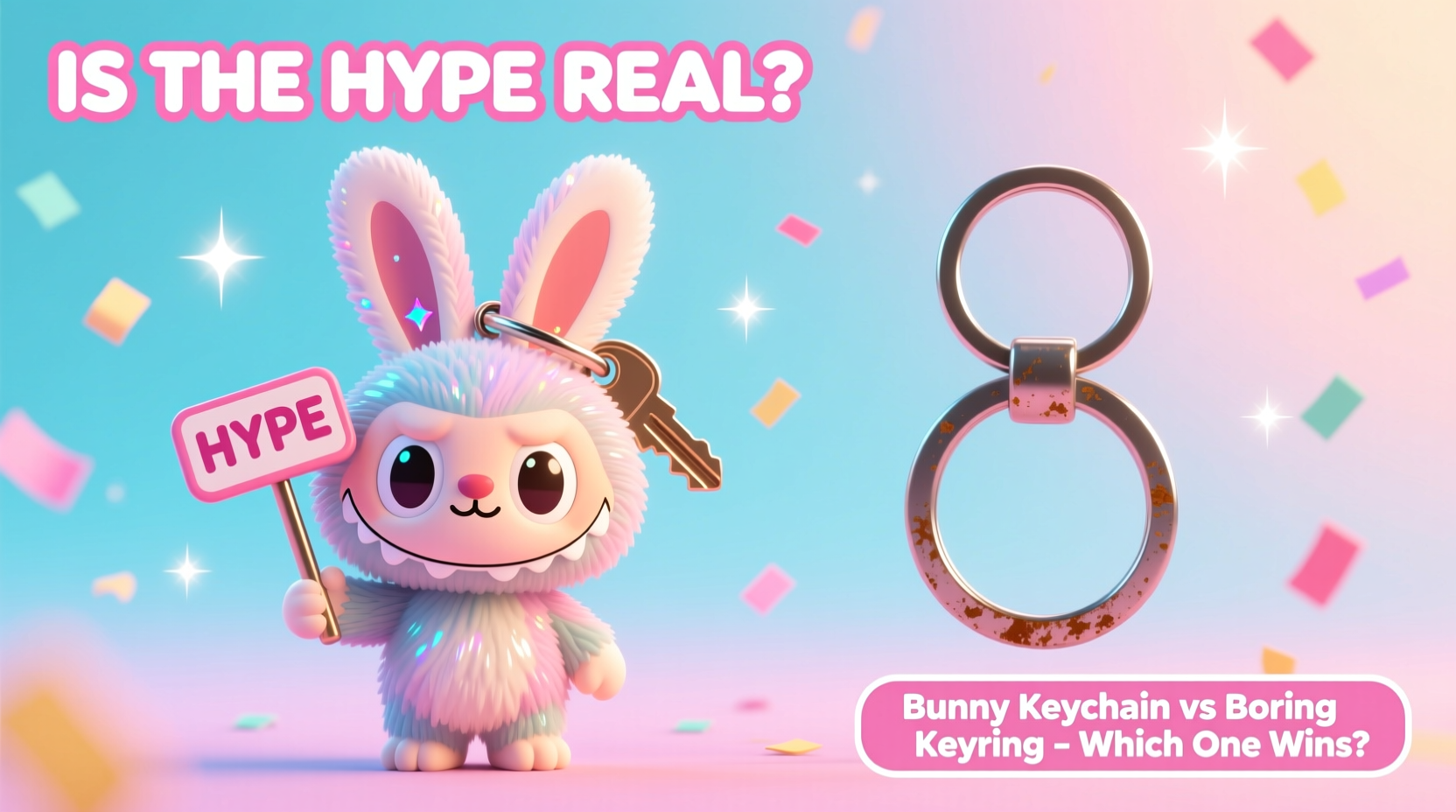
Bunny keychains have exploded in popularity thanks to social media trends, K-beauty influences, and the rise of “quiet luxury” meets playful minimalism. Often made from enamel, silicone, or soft PVC, they feature floppy ears, blushing cheeks, and dainty details that stand out on a keychain ring or bag zipper.
On the flip side, traditional keyrings are typically made of stainless steel, brass, or aluminum. They come in simple shapes — O-rings, split rings, carabiners — designed for utility, not charm. Their appeal lies in their invisibility: they do the job without drawing attention.
Where bunny keychains win is emotional resonance. They add personality. For many, especially those who value self-expression through accessories, a cute keychain becomes part of their identity. As fashion psychologist Dr. Naomi Baron explains:
“Small accessories act as micro-signals of identity. A playful keychain can convey warmth, approachability, or creativity — traits people want associated with them.” — Dr. Naomi Baron, Fashion Psychology Researcher
However, if your style leans toward minimalist, professional, or utilitarian, a flashy bunny might feel out of place. There’s no right answer — only what aligns with how you present yourself and what brings you genuine satisfaction.
Functionality: Does Cuteness Come at a Cost?
A keyring’s primary job is to hold keys securely and allow easy access. Bunny keychains often sacrifice some functionality for design. Many attach via a small loop or charm clasp rather than a full metal ring, making it harder to add or remove keys quickly.
Additionally, bulky designs can make keys harder to fit into tight pockets or narrow bag compartments. Ever tried pulling a set of jangling keys out of your coat pocket only to have the bunny’s ear catch on the fabric? It happens more often than you’d think.
Meanwhile, standard keyrings offer unmatched efficiency. Split rings keep keys bunched tightly together, reducing tangling. Heavy-duty versions can handle thick bundles without bending. And because they're compact, they don’t interfere with everyday movements.
For high-use scenarios — commuting, working in maintenance, carrying multiple keys — simplicity wins. But for light users who carry just one or two keys, a bunny keychain might strike the perfect balance between form and function.
Material Quality & Durability Comparison
Not all bunny keychains are created equal. Mass-produced versions sold online may use brittle plastics or thin coatings that chip after a few months. Exposure to moisture, heat, or friction (like being tossed in a bag daily) accelerates wear.
In contrast, metal keyrings resist corrosion, withstand drops, and endure years of use with minimal degradation. Stainless steel models won’t rust, even in humid climates. Some premium options even feature anti-tamper mechanisms or locking systems for added security.
To illustrate the differences, here's a comparison table based on real-world performance:
| Feature | Bunny Keychain | Standard Keyring |
|---|---|---|
| Material Options | Silicone, enamel, PVC, resin | Stainless steel, brass, aluminum |
| Durability (Long-Term Use) | Moderate – prone to cracking or fading | High – resists wear and tear |
| Weather Resistance | Low to moderate | High – especially stainless steel |
| Security | Low – open loops or weak clasps | High – secure closures available |
| Weight | Lightweight | Heavier but stable |
If you live in a rainy climate or frequently drop your keys, material resilience matters. A flimsy bunny charm might look adorable on day one but turn into a sad, chipped trinket by month three.
Real-World Example: Sarah’s Commute Dilemma
Sarah, a graphic designer in Seattle, bought a pastel bunny keychain because she loved its aesthetic and thought it would brighten her daily commute. Within six weeks, the glue holding the ears detached after repeated exposure to rain and being stuffed into her backpack.
Frustrated, she switched to a matte black steel keyring with a magnetic closure. While less eye-catching, it kept her keys secure during bus rides, survived coffee spills, and didn’t snag on anything. She admitted, “I missed the cuteness at first, but I stopped losing keys — and that mattered more.”
Her experience reflects a common trade-off: emotional appeal versus reliability under stress. For urban commuters, parents, or tradespeople, durability often outweighs decoration.
When Should You Choose Each Option?
The best choice depends on your priorities. Here’s a checklist to guide your decision:
- Choose a bunny keychain if:
- You carry few keys and use them infrequently.
- Personal expression is important to you.
- You enjoy seasonal or rotating accessories.
- You mostly keep keys in a purse or inner pocket.
- You’re buying as a gift for someone who loves kawaii or lifestyle aesthetics.
- Stick with a standard keyring if:
- You carry a large or heavy key bundle.
- You work outdoors or in demanding environments.
- Security and key retention are top concerns.
- You prefer low-maintenance, long-lasting gear.
- You frequently toss your keys into bags, drawers, or vehicles.
Step-by-Step: How to Decide What Works for You
- Assess your key load: Count how many keys you carry daily. More than three? Lean toward a sturdy ring.
- Evaluate your environment: Do you face rain, dirt, or rough handling? Metal performs better under pressure.
- Consider usage frequency: Daily use favors durability; occasional use allows for flair.
- Test emotional value: Would losing or breaking the keychain upset you beyond its function?
- Try hybrid solutions: Attach a small bunny charm to a strong metal ring instead of replacing it entirely.
Frequently Asked Questions
Can I make a bunny keychain more durable?
Yes. Look for models with reinforced metal cores, UV-resistant coatings, or waterproof seals. Avoid leaving them in direct sunlight or extreme temperatures. You can also apply a clear nail polish sealant to painted surfaces to slow chipping.
Are there secure decorative keyrings?
Increasingly, yes. Brands like Tarriss, Nomatic, and Buckle Up Gear offer stylish yet functional designs with locking mechanisms, modular setups, and aerospace-grade materials. These blend aesthetics with reliability — though they come at a higher price point.
Is a plain keyring boring?
Boring is subjective. What some call boring, others call reliable. A sleek titanium ring or brushed steel loop can be just as intentional as a colorful charm. Minimalism isn’t dull — it’s deliberate.
Final Verdict: Hype or Worth It?
The hype around bunny keychains isn’t baseless. They tap into a cultural shift toward joyful, personalized objects in an increasingly digital and impersonal world. For light users, collectors, or those seeking small moments of delight, they’re absolutely worth it.
But for anyone prioritizing function, longevity, or security, a standard keyring remains the smarter investment. The truth is, you don’t have to pick one forever. Rotate based on season, outfit, or mood — use the bunny for weekends and the steel ring for workdays.
The real win isn’t choosing between cute or classic. It’s understanding your needs and designing a system that balances both practicality and pleasure.




 浙公网安备
33010002000092号
浙公网安备
33010002000092号 浙B2-20120091-4
Comments
No comments yet. Why don't you start the discussion?