
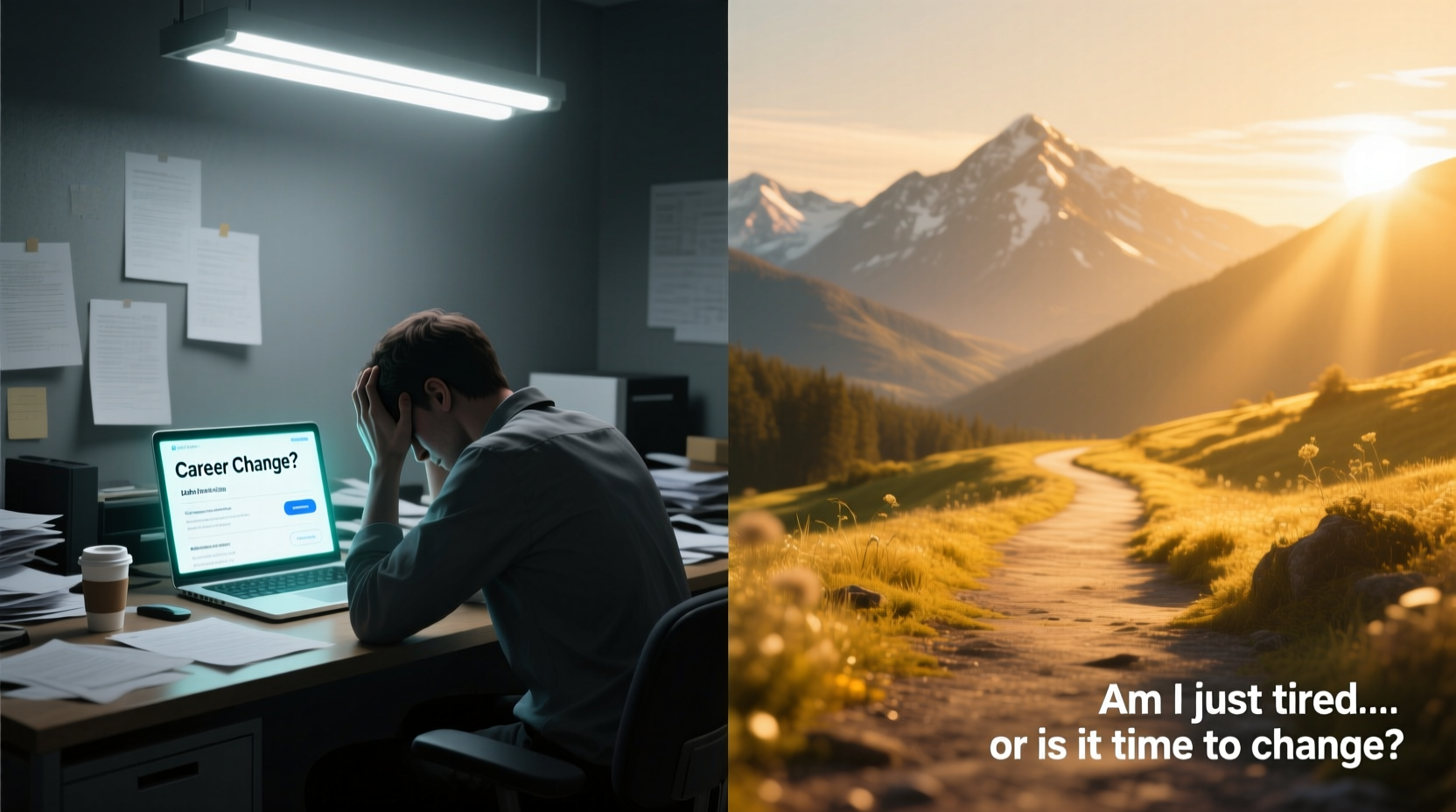
You wake up exhausted even after eight hours of sleep. Your motivation is gone. The thought of opening your work email triggers a knot in your stomach. You wonder: Is this just stress? Or have I burned out? And more importantly—should I stay in this job, or is it time to walk away?
These questions are increasingly common in today’s high-pressure work culture. Stress is a normal part of life. Burnout is not. Understanding the difference—and recognizing where you stand—is essential for your mental health, productivity, and long-term career satisfaction.
This article breaks down the key differences between stress and burnout, helps you assess your current state, and guides you through practical steps to decide whether you need a break, a reset, or a full career shift.
Understanding Stress: The Body’s Natural Alarm System
Stress is your body’s response to pressure or perceived threats. It activates the sympathetic nervous system, releasing cortisol and adrenaline—chemicals that prepare you to respond quickly. In manageable doses, stress can be motivating. It helps you meet deadlines, perform under pressure, and adapt to challenges.
Common signs of short-term stress include:
- Feeling tense or on edge
- Difficulty sleeping
- Irritability or mood swings
- Increased heart rate
- Temporary fatigue after intense periods
When managed properly—with rest, support, and recovery—stress doesn’t cause lasting harm. But when stress becomes chronic and unrelenting, it can evolve into something far more serious: burnout.
Burnout: When Stress Wins the Long Game
Burnout is not just \"a lot of stress.\" According to the World Health Organization (WHO), burnout is an occupational phenomenon resulting from chronic workplace stress that has not been successfully managed. It’s characterized by three dimensions:
- Feelings of energy depletion or exhaustion
- Increased mental distance from one’s job, or feelings of negativism or cynicism related to work
- Reduced professional efficacy
Unlike stress, which often comes with over-engagement (trying too hard), burnout is marked by disengagement. You don’t care as much. You feel detached. You might show up physically, but mentally, you’ve already checked out.
Burnout doesn’t resolve with a weekend off. It lingers. It affects your identity, relationships, and physical health. Studies link chronic burnout to increased risk of cardiovascular disease, weakened immune function, and depression.
“Burnout isn’t a sign of weakness—it’s a signal that your environment and expectations are misaligned with your capacity.” — Dr. Christina Maslach, pioneer in burnout research
Key Differences: Stress vs Burnout
To help clarify where you stand, here’s a side-by-side comparison:
| Aspect | Stress | Burnout |
|---|---|---|
| Energy Level | Overwhelmed, but still driven | Exhausted, depleted, no motivation |
| Mindset | \"I have too much to do\" | \"Nothing matters anymore\" |
| Emotional State | Anxious, tense, reactive | Detached, numb, hopeless |
| Physical Symptoms | Headaches, muscle tension, insomnia | Chronic fatigue, frequent illness, changes in appetite |
| Duration | Short-term, situational | Prolonged, persistent (weeks to months) |
| Recovery | Rest, boundaries, time off | Extended recovery, possible role or career change |
If your symptoms align more with the burnout column—and have persisted for several weeks—you may be beyond typical stress. That doesn’t mean you need to quit your job tomorrow. But it does mean you need to take deliberate action.
Am I Just Tired, or Is It Time for a Career Change?
Not every period of exhaustion leads to a career overhaul. Sometimes, a well-timed vacation, better boundaries, or improved management can restore balance. Other times, the problem runs deeper—into values mismatch, lack of growth, or toxic environments that won’t change.
Ask yourself these questions to determine your next move:
- Do I dread going to work most days?
- Have my values changed, but my job hasn’t?
- Do I feel stuck, with no clear path forward?
- Has feedback or recognition disappeared?
- Would I recommend this job to someone I care about?
- Am I sacrificing my health for my paycheck?
If you answered “yes” to three or more, it’s likely time to consider a significant shift—not just a break.
Mini Case Study: From Burnout to New Beginnings
Sarah, a marketing director at a fast-paced tech startup, used to thrive on long hours and tight deadlines. For years, she prided herself on being the first in and last out. But over 18 months, things changed. She started waking up with anxiety. Her creativity dried up. She snapped at her team over small issues. A two-week vacation didn’t help. Neither did switching managers.
After speaking with a therapist, Sarah realized she wasn’t just stressed—she was burned out. More importantly, she discovered her passion had shifted. She no longer cared about viral campaigns. She wanted meaningful work in sustainability.
She didn’t quit overnight. Instead, she took a structured approach: reduced her hours temporarily, explored part-time consulting, volunteered with environmental nonprofits, and eventually transitioned into a role at a green energy firm. Today, she says, “I’m not just surviving—I’m excited to wake up.”
Sarah’s story isn’t about quitting impulsively. It’s about listening to the signals, taking time to reflect, and making intentional choices.
Step-by-Step Guide: Assessing Your Situation
If you’re unsure whether you need a career change, follow this six-step process:
- Pause and Reflect: Take a few days off if possible. Journal about how you feel physically, emotionally, and mentally about work.
- Identify Triggers: Pinpoint specific sources of stress. Is it workload? Leadership? Lack of autonomy? Values conflict?
- Test Small Changes: Can adjusting your schedule, delegating tasks, or setting firmer boundaries improve things?
- Seek Feedback: Talk to a mentor, coach, or therapist. An outside perspective can clarify blind spots.
- Explore Alternatives: Research roles, industries, or skills that align with your evolving interests. Try informational interviews.
- Make a Decision Timeline: Give yourself 60–90 days to gather data and make a plan. Avoid rushing, but don’t ignore red flags.
This method prevents impulsive exits while ensuring you don’t stay in a harmful situation longer than necessary.
Action Plan: What to Do Next
Depending on your assessment, here’s what to consider:
If It’s Stress: Reset and Rebuild
- Negotiate flexible hours or remote days
- Practice daily stress-reduction techniques (mindfulness, exercise, digital detox)
- Set clearer boundaries (e.g., no emails after 7 PM)
- Use PTO intentionally—even for staycations
If It’s Burnout: Recover and Reevaluate
- Take medical leave if needed—burnout is recognized in many countries as a legitimate health condition
- Engage in therapy or coaching focused on occupational wellness
- Disconnect completely during recovery—no checking in “just briefly”
- Reflect on non-negotiables: What must your next role provide (autonomy, purpose, balance)?
If It’s Time for a Career Change: Plan Strategically
- Inventory your transferable skills (leadership, communication, project management)
- Update your resume with outcome-focused language
- Network authentically—focus on learning, not begging for jobs
- Consider upskilling through certifications or courses
- Start small: freelance, volunteer, or moonlight in your target field
“You don’t have to leave your job to start your new career. You just have to start moving toward it.” — Cal Newport, author of *So Good They Can’t Ignore You*
Frequently Asked Questions
Can burnout happen even if I love my job?
Yes. Burnout isn’t about hating your work—it’s about unsustainable demands. Even passionate professionals in meaningful roles can burn out if they lack control, support, or recovery time.
Is burnout the same as depression?
No, though they share symptoms. Depression is a clinical mental health condition that can occur regardless of work context. Burnout is specifically tied to workplace factors. However, untreated burnout can increase the risk of developing depression.
How long does it take to recover from burnout?
There’s no fixed timeline. Mild cases may improve in a few weeks with proper rest and boundary-setting. Severe burnout often requires months of recovery, especially if systemic job changes are needed. Rushing back too soon can lead to relapse.
Final Checklist: Your Personal Readiness Assessment
Before deciding your next step, go through this checklist:
- ✅ I’ve tracked my symptoms for at least two weeks
- ✅ I’ve ruled out medical causes (e.g., thyroid issues, vitamin deficiency)
- ✅ I’ve tried adjusting my current role (boundaries, delegation, conversations with management)
- ✅ I’ve spoken with a trusted advisor or mental health professional
- ✅ I’ve explored alternative paths and know what I’d move toward—not just what I’d escape
- ✅ I have a financial buffer or plan to support a potential transition
If you’ve checked most of these boxes, you’re not just reacting—you’re responding with clarity and courage.
Conclusion: Listen to Your Body, Then Act with Purpose
Being tired isn’t a failure. Feeling overwhelmed doesn’t mean you’re weak. But ignoring persistent exhaustion, emotional detachment, and loss of meaning—that’s when real damage occurs.
The line between stress and burnout is thin, but crossing it doesn’t mean the end of your career. It might mean the beginning of a more authentic one. Whether you need a reset, a sabbatical, or a complete pivot, the most important step is to acknowledge what you’re experiencing without shame.
Your career should sustain you—not deplete you. If it’s no longer doing that, it’s not time to push harder. It’s time to pause, reflect, and choose a path that aligns with who you are now—not who you were five years ago.




 浙公网安备
33010002000092号
浙公网安备
33010002000092号 浙B2-20120091-4
Comments
No comments yet. Why don't you start the discussion?