
In today’s fast-paced world, emotional exhaustion is common. Many people feel drained, unmotivated, or overwhelmed—but knowing whether these feelings stem from burnout or depression can be difficult. While both conditions share overlapping symptoms like fatigue, irritability, and reduced performance, they differ significantly in origin, duration, and treatment. Misdiagnosing one as the other can delay proper care. Understanding the distinction isn’t just academic—it’s essential for recovery.
Understanding Burnout: A Stress-Driven State
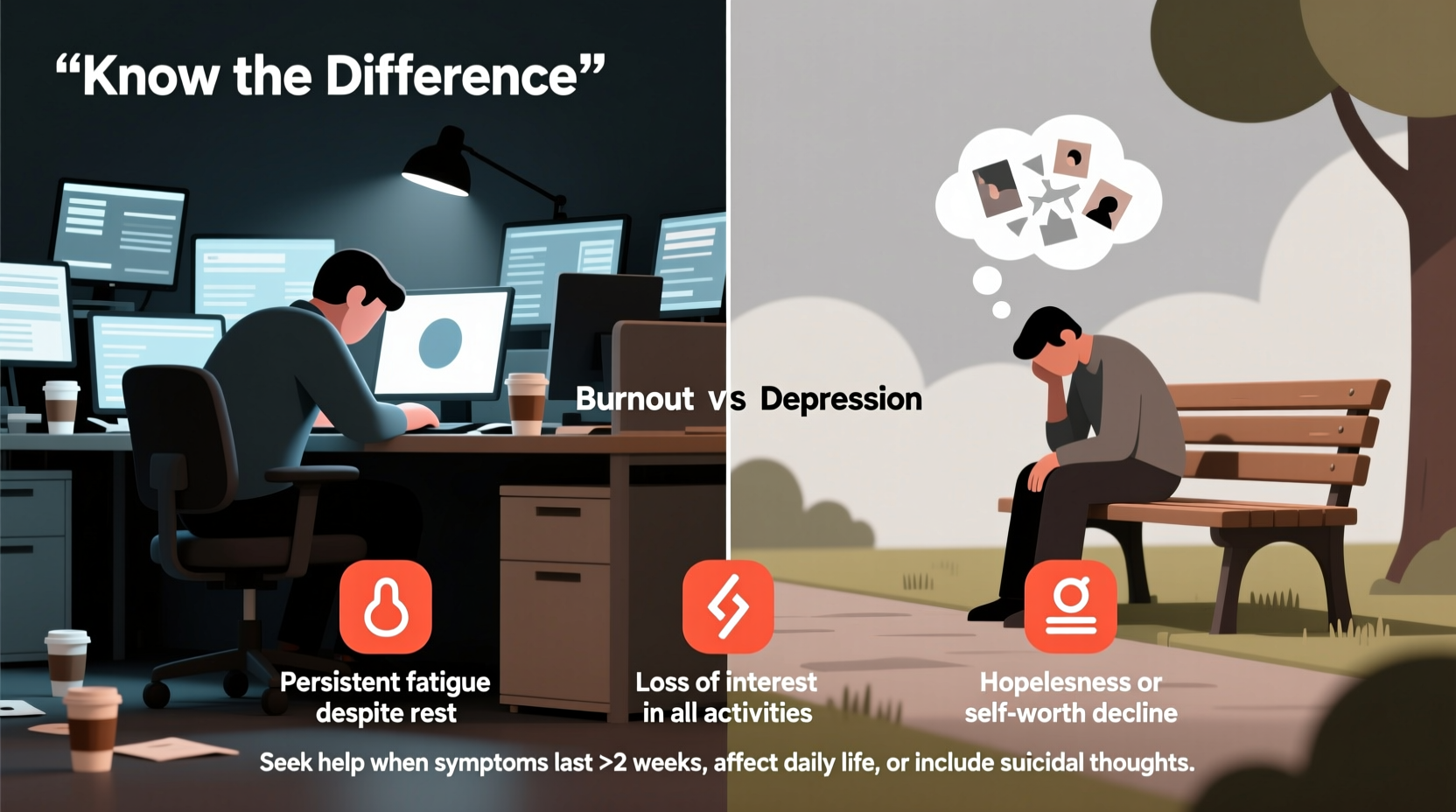
Burnout is a psychological syndrome resulting from chronic workplace stress that hasn’t been successfully managed. First defined by psychologist Herbert Freudenberger in the 1970s, burnout is now officially recognized by the World Health Organization (WHO) as an occupational phenomenon. It’s not classified as a medical condition but rather as a state of physical, emotional, and mental depletion caused by prolonged stress—typically work-related.
The three core dimensions of burnout include:
- Emotional exhaustion: Feeling drained, unable to face another day at work.
- Cynicism or depersonalization: Developing a negative, detached attitude toward responsibilities or colleagues.
- Reduced personal accomplishment: A decline in productivity and sense of competence.
Burnout tends to emerge gradually. Someone might start feeling mildly stressed, then increasingly disengaged, until even routine tasks feel insurmountable. The key differentiator? Context. Burnout usually centers around job demands, long hours, lack of control, or poor workplace support. Outside of work, interests and relationships may remain intact—at least initially.
Depression: A Clinical Mental Health Condition
Unlike burnout, depression—specifically major depressive disorder (MDD)—is a diagnosable mental illness defined by the Diagnostic and Statistical Manual of Mental Disorders (DSM-5). It affects how a person feels, thinks, and functions across all areas of life, not just work. Depression is characterized by persistent sadness, loss of interest in activities once enjoyed (anhedonia), and a range of cognitive and physical symptoms lasting at least two weeks.
Common symptoms of depression include:
- Persistent sadness, emptiness, or hopelessness
- Loss of energy or constant fatigue
- Changes in appetite or weight
- Sleep disturbances (insomnia or oversleeping)
- Difficulty concentrating or making decisions
- Feelings of worthlessness or excessive guilt
- Recurrent thoughts of death or suicide
Depression isn’t tied to a single cause. It arises from a complex interplay of biological, genetic, environmental, and psychological factors. Neurochemical imbalances, trauma, chronic illness, or significant life changes can all contribute. Importantly, depression persists regardless of environment or workload. Even in relaxing settings, individuals with depression often struggle to experience pleasure or relief.
“Depression is not simply sadness or stress. It’s a medical condition that affects brain function and requires appropriate diagnosis and treatment.” — Dr. Lena Torres, Clinical Psychologist
Key Differences Between Burnout and Depression
Distinguishing between burnout and depression can be challenging because they frequently coexist. However, recognizing their differences helps guide appropriate interventions. Below is a comparative table outlining critical distinctions:
| Factor | Burnout | Depression |
|---|---|---|
| Primary Cause | Chronic workplace stress | Multifactorial: biological, genetic, environmental |
| Scope of Impact | Mainly work-related; may improve outside job context | Affects all areas: work, relationships, self-care |
| Mood Triggers | Worsens during workdays; improves during breaks | Persistent regardless of situation or activity |
| Self-Esteem | Feels inadequate at work but retains self-worth elsewhere | Pervasive feelings of worthlessness or guilt |
| Biological Symptoms | Fatigue, mild sleep issues, headaches | Significant sleep/appetite changes, psychomotor slowing |
| Treatment Focus | Workplace adjustments, boundaries, stress management | Therapy, medication, lifestyle changes |
While burnout may lead to depression if left unaddressed, not everyone experiencing burnout meets the criteria for clinical depression. Conversely, someone with depression may perform poorly at work, mimicking burnout, but the root issue extends far beyond job stress.
When They Overlap: Recognizing Comorbidity
It’s entirely possible—and not uncommon—for someone to experience both burnout and depression simultaneously. Chronic stress from overwork can trigger or worsen depressive episodes, especially in individuals predisposed to mood disorders. In such cases, symptoms intensify and recovery becomes more complex.
For example, a teacher working 60-hour weeks under high pressure may begin showing signs of burnout: dreading school, feeling emotionally numb during class, and struggling to grade papers. Over time, without intervention, this stress may erode their overall mental health. They start isolating from friends, lose interest in hobbies, and experience persistent sadness even on days off. At this point, depression has likely developed alongside burnout.
This progression underscores why early recognition matters. Treating only the burnout—say, by taking a vacation—might offer temporary relief but won’t resolve underlying depression. Similarly, treating only depression with medication may not address the toxic work environment fueling ongoing distress.
Mini Case Study: From Exhaustion to Diagnosis
Mark, a 38-year-old project manager, began noticing he was snapping at his team, skipping lunch to meet deadlines, and waking up exhausted despite sleeping eight hours. He chalked it up to a “busy season” and pushed through. After six months, he stopped exercising, withdrew from family dinners, and felt guilty about not being productive—even on weekends.
His doctor first suggested burnout and recommended time off. But after two weeks away, Mark still felt hopeless and struggled to get out of bed. A mental health evaluation revealed moderate major depressive disorder. Therapy uncovered that while work stress was a major trigger, Mark also had a family history of depression and had ignored mounting emotional strain for years. His treatment plan included antidepressants, cognitive behavioral therapy (CBT), and a phased return to work with adjusted responsibilities.
Mark’s case illustrates how burnout can mask or accelerate depression—and why comprehensive assessment is crucial.
How to Know When to Seek Help
Both burnout and depression are serious and warrant attention. Waiting too long can lead to worsening symptoms, relationship strain, or even suicidal ideation. Here’s a step-by-step guide to help determine when and how to seek support:
- Monitor symptom duration: If low mood, fatigue, or irritability persist beyond two weeks—especially if they occur daily—consider professional evaluation.
- Assess functional impact: Are you missing work, neglecting hygiene, or avoiding social interactions? These are red flags.
- Evaluate context: Does your mood improve significantly during time off? If yes, burnout is more likely. If not, depression may be involved.
- Screen for severity: Use validated tools like the PHQ-9 (Patient Health Questionnaire) to assess depression risk. Scores above 10 suggest moderate to severe symptoms needing clinical review.
- Consult a professional: Speak with a primary care provider, therapist, or psychiatrist. They can differentiate between conditions and recommend treatment.
Checklist: Signs It’s Time to Get Professional Support
- Feeling hopeless or worthless most days
- Losing interest in nearly all activities
- Experiencing changes in sleep or appetite lasting over two weeks
- Having trouble concentrating at work or home
- Thinking about death or suicide, even passively
- Using alcohol or drugs to cope with emotions
- Relationship conflicts increasing due to mood or irritability
- Physical symptoms (headaches, stomach issues) with no medical cause
Frequently Asked Questions
Can burnout turn into depression?
Yes. Prolonged burnout, especially without intervention, can increase the risk of developing depression. Chronic stress alters brain chemistry and hormone regulation, particularly cortisol and serotonin levels, which play roles in mood disorders. Individuals with a history of depression or anxiety are especially vulnerable.
Is burnout covered by health insurance?
Burnout itself is not a diagnosed illness, so insurers typically don’t cover it directly. However, if burnout leads to an anxiety disorder, depression, or another recognized condition, treatment for those diagnoses is usually covered. Therapy, counseling, and prescribed medications fall under most mental health benefits.
Can you recover from burnout without quitting your job?
Yes, many people recover from burnout without leaving their jobs. Success depends on making meaningful changes: setting firm boundaries, reducing workload, improving work-life balance, and seeking support. Employers increasingly offer wellness programs, flexible schedules, or EAPs (Employee Assistance Programs) that can aid recovery.
Conclusion: Prioritize Your Mental Well-Being
Distinguishing between burnout and depression isn’t about labeling yourself—it’s about finding the right path to healing. Burnout signals a need for structural change: better boundaries, reduced demands, or a shift in work culture. Depression calls for clinical care: therapy, possible medication, and holistic self-care. Sometimes, both are needed.
Ignoring persistent emotional distress only deepens the toll on your health, relationships, and future. Whether you’re overwhelmed by deadlines or haunted by sadness, reaching out is not a sign of weakness—it’s an act of strength. Talk to a trusted friend, schedule a doctor’s appointment, or contact a mental health professional. Small steps today can lead to profound relief tomorrow.




 浙公网安备
33010002000092号
浙公网安备
33010002000092号 浙B2-20120091-4
Comments
No comments yet. Why don't you start the discussion?