
Choosing between a button-up blouse and a pullover isn’t just about fashion—it’s a daily decision that affects comfort, time, and even confidence. One offers structure and polish; the other promises ease and simplicity. But when you're standing in front of your closet each morning, wrestling with tiny buttons or pulling fabric over your head, you might ask: Is the extra effort of a button blouse really worth it?
The answer depends on context—your lifestyle, wardrobe needs, and personal priorities. Let’s explore both sides with clarity and honesty, so you can make choices that align not just with how you want to look, but how you want to live.
Style and Professionalism: The Power of Presentation
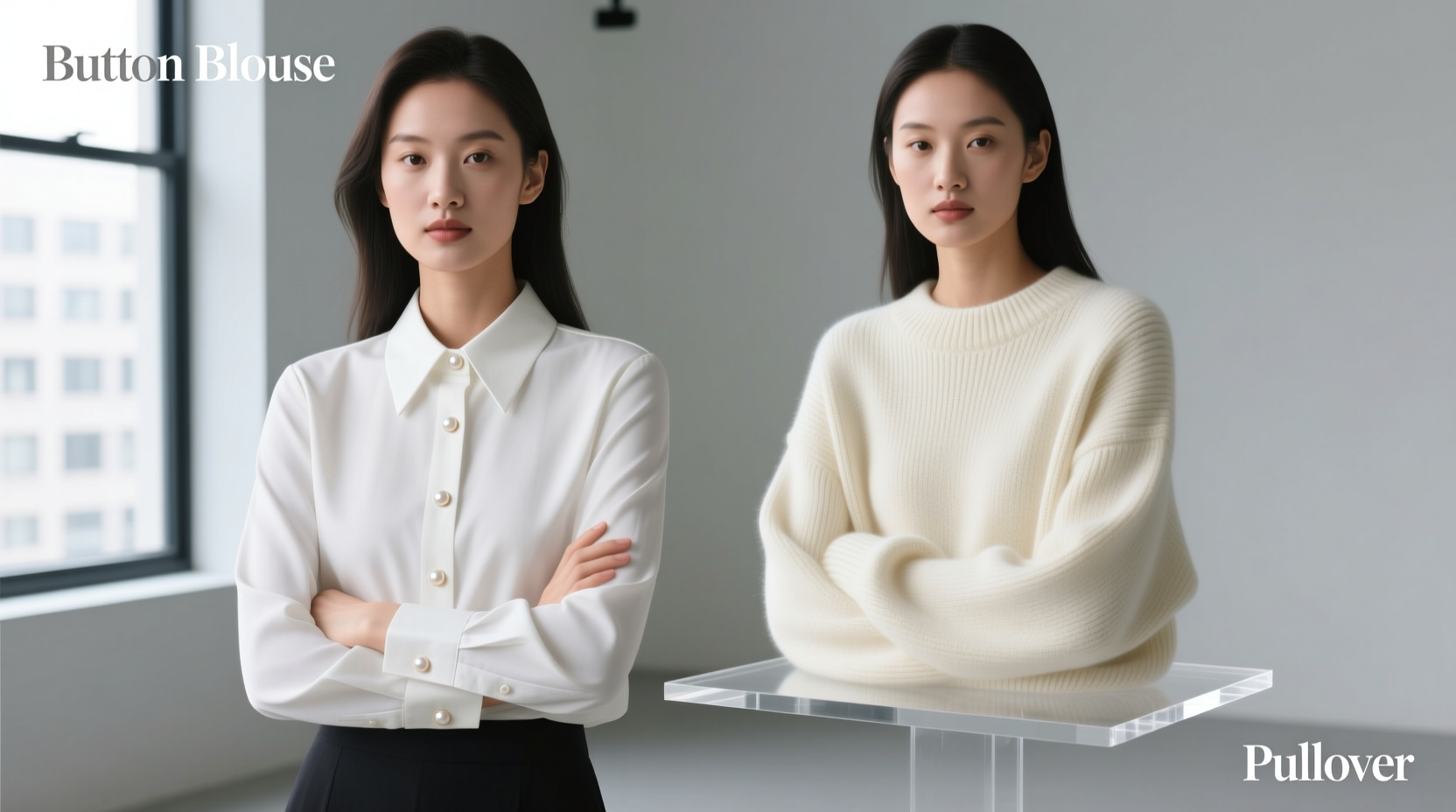
Button blouses have long been associated with professionalism, precision, and attention to detail. Whether worn under a blazer or styled casually with jeans, they project intentionality. The structured placket, collar, and clean lines offer a tailored appearance that’s hard to replicate with most pullovers.
In corporate environments or formal settings, a crisp button-down blouse often reads as more polished than a knit top. This perception isn’t arbitrary—studies in workplace psychology suggest that clothing influences both how others perceive us and how we perform ourselves. A 2015 study published in *Social Psychological and Personality Science* found that people wearing formal attire demonstrated increased abstract thinking and feelings of power—traits linked to leadership.
“Clothing acts as a nonverbal signal. A well-fitted button blouse tells others—and yourself—that you’re prepared.” — Dr. Lena Torres, Organizational Psychologist
Pullovers, while increasingly accepted in business-casual offices, tend to lean toward informality. Even high-end cashmere turtlenecks or structured knits lack the sharpness of a tailored cotton shirt. That doesn’t mean they’re inferior—it means they serve different roles.
Comfort and Convenience: The Case for Effortless Wear
If style leans toward button blouses, comfort tilts decisively in favor of pullovers. Slipping one over your head takes seconds. There are no misaligned buttons, no popped fasteners mid-meeting, and no awkward fumbling when getting dressed in low light.
Pullovers also adapt better to movement. Knit fabrics stretch naturally, allowing freedom during commutes, workouts (in casual settings), or long days at a desk. In contrast, button blouses can feel restrictive, especially if they fit snugly around the chest or shoulders. Over time, repeated fastening can stress buttonholes, leading to gapping or loosened threads.
Comparing Daily Practicality: A Side-by-Side Analysis
| Feature | Button Blouse | Pullover |
|---|---|---|
| Dressing Time | 2–3 minutes (more if buttons are small) | Under 30 seconds |
| Movement Flexibility | Moderate (can gap or bind) | High (especially in knits) |
| Wrinkle Resistance | Low (cotton creases easily) | High (wool, synthetics hold shape) |
| Layering Ease | Excellent (open or closed over layers) | Limited (must go on first or last) |
| Care Requirements | Higher (buttons may need reattachment, ironing) | Lower (machine-washable options common) |
| Professional Perception | Strong (ideal for formal settings) | Variable (depends on fabric and cut) |
This comparison shows that neither option is universally superior. Instead, their value shifts based on the situation. For job interviews or client presentations, the button blouse wins by convention. For travel, weekends, or relaxed workplaces, the pullover excels in wearability.
A Real-World Example: Sarah’s Wardrobe Shift
Sarah, a marketing manager in Chicago, used to wear button blouses five days a week. She believed they made her appear more authoritative in meetings. But after months of frustration—buttons catching on necklaces, rushed mornings spent redoing cuffs, and dry-cleaning bills piling up—she decided to experiment.
She introduced three high-quality pullovers into her rotation: a navy merino wool crewneck, a black ribbed turtleneck, and a cream textured knit. Paired with blazers and tailored pants, they looked professional. Her colleagues didn’t comment on a drop in formality—instead, several complimented her “effortless” style.
Over six months, Sarah reduced her button blouse usage to two days a week—reserved for presentations and external calls. She saved time, felt more comfortable, and noticed fewer wardrobe malfunctions. “I realized I was clinging to tradition,” she said. “Now I dress for impact, not ritual.”
When Buttons Are Worth the Hassle (And When They’re Not)
There are clear scenarios where button blouses justify the extra effort:
- Formal events: Weddings, interviews, court appearances.
- Layering versatility: Wearing open over camisoles, turtlenecks, or undershirts.
- Adjustable fit: Unbuttoning the top one or two buttons allows breathing room without removing the garment.
- Easy alterations: Hemming or adjusting sleeve length is simpler with shirts than knits.
Conversely, pullovers shine when:
- You prioritize speed and simplicity.
- Traveling (wrinkle-resistant, compact).
- Engaging in active movement (commuting, errands).
- Seeking softness and warmth (natural fibers like cashmere or alpaca).
Checklist: Choosing the Right Top for Your Day
- Ask: What is the dress code? (Formal → button blouse; Casual → pullover)
- Consider your schedule: Will you be sitting all day, or moving frequently?
- Check the weather: Knits offer better insulation in cold climates.
- Think about layering: Do you plan to add a jacket or scarf?
- Evaluate your morning routine: Are you pressed for time?
- Assess comfort needs: Any sensory sensitivities to collars or tags?
- Review laundry access: Button blouses may require ironing or dry cleaning.
Frequently Asked Questions
Can a pullover look professional enough for the office?
Yes—provided it’s well-fitted, made from quality fabric (like fine wool or structured cotton blend), and paired with tailored bottoms. Avoid overly slouchy styles or graphic prints in conservative workplaces.
Do button blouses wear out faster than pullovers?
They can. Repeated buttoning stresses thread and fabric, especially around the bust. However, higher thread-count cottons and reinforced buttonholes extend lifespan. Proper care, like washing inside out and air-drying, helps preserve both types.
Are there stylish alternatives to traditional button blouses?
Absolutely. Consider wrap tops, surplice necklines, or buttonless tunics with slit fronts. These mimic the elegance of a button-up without requiring fastening.
Final Thoughts: Balance Over Dogma
The debate isn’t about which garment is objectively better—it’s about alignment with your life. Fashion should serve function, not complicate it. Button blouses bring undeniable sophistication and flexibility, but they demand time and maintenance. Pullovers offer comfort and ease, but may not meet every professional standard.
The smartest approach is curation: build a balanced wardrobe that includes both. Reserve button blouses for moments when presence matters. Embrace pullovers when comfort and efficiency take priority. And don’t underestimate the power of hybrid designs—pieces that borrow the best from both worlds.




 浙公网安备
33010002000092号
浙公网安备
33010002000092号 浙B2-20120091-4
Comments
No comments yet. Why don't you start the discussion?