
When it comes time to upgrade your iPhone, one of the most consequential decisions isn’t just which model to choose—it’s where to buy it. Many consumers assume that purchasing directly from their carrier, like Verizon, offers better deals or convenience. But how does that stack up against buying straight from Apple? The answer depends on several factors: device cost, financing terms, trade-in values, network flexibility, and long-term savings. Understanding the real differences between these two paths can save you hundreds of dollars over the life of your phone.
Understanding the Purchase Models
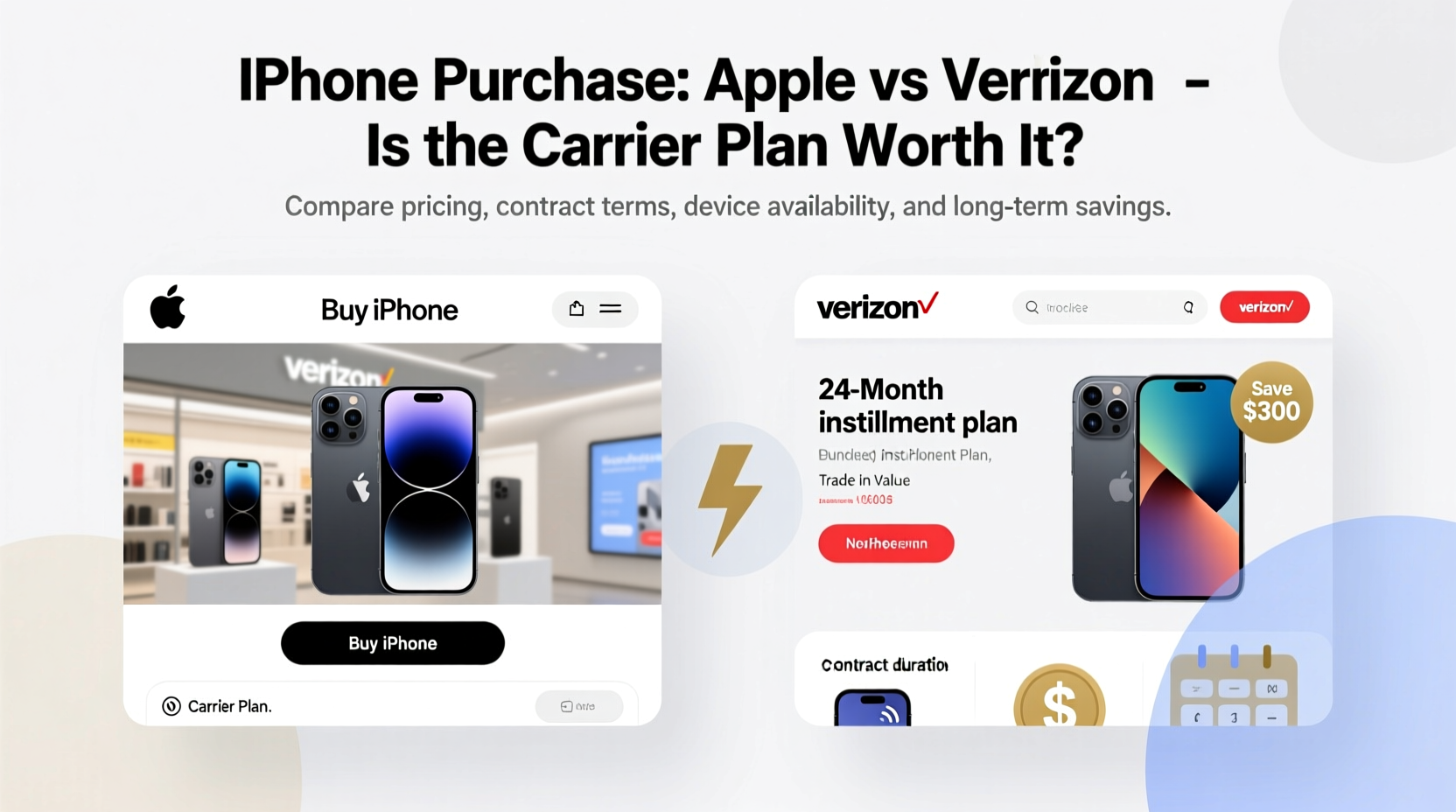
Apple and Verizon offer fundamentally different approaches to selling iPhones. Apple sells devices outright, through installment plans (Apple iPhone Payments), or with trade-in credits—all without tying you to a carrier. Verizon, on the other hand, bundles the phone purchase with a wireless service plan, often offering discounts in exchange for a commitment to monthly service.
This bundling strategy can appear attractive at first glance. Verizon frequently advertises “free” or “discounted” iPhones when you switch lines or activate a new plan. However, those savings are usually contingent on maintaining specific unlimited data plans for 36 months. If you drop below the required plan tier, Verizon will charge you the full remaining balance of the device.
Pricing & Financing: Apple vs Verizon
Let’s compare a real-world example: the iPhone 15 (128GB), retailing at $799 from Apple.
| Provider | Upfront Cost | Monthly Payment (24 mo) | Financing APR | Carrier Commitment? |
|---|---|---|---|---|
| Apple | $0 (with trade-in or full financing) | $33.29 | 0% | No |
| Verizon | $0 (with eligible plan) | $24.90 + $30 plan minimum | N/A (bundled into service) | Yes (36 months) |
At first glance, Verizon’s $24.90/month seems cheaper than Apple’s $33.29. But that number doesn’t include the mandatory $30/month Unlimited Welcome or Plus plan required to qualify. When combined, you’re actually paying $54.90 per month—over $20 more than Apple’s standalone financing.
Additionally, Apple’s 0% APR financing gives you predictable payments with no interest. Verizon’s model hides costs within service fees, making it harder to assess true value. You also lose flexibility: if you decide to switch carriers or downgrade your plan, Verizon recoups the unpaid device balance immediately.
“Consumers often overlook the hidden cost of carrier loyalty. A lower monthly device payment means little when locked into a premium service plan for years.” — Mark Delgado, Wireless Industry Analyst
Trade-In Values: Who Offers Better Deals?
Both Apple and Verizon offer trade-in programs, but they differ significantly in transparency and value.
- Apple: Provides instant credit toward your new device. Their trade-in tool is accurate and consistent across regions. Credits can be applied whether you pay upfront or finance.
- Verizon: Offers trade-in credits too, but often as bill credits spread over 36 months. This delays the benefit and ties it to continued service. If you cancel early, you may lose uncredited portions.
In independent comparisons, Apple consistently offers higher trade-in values for the same devices. For example, a working iPhone 13 128GB might earn $300 at Apple versus $240 at Verizon—with the latter paid over three years.
Mini Case Study: Sarah’s Upgrade Decision
Sarah wanted to upgrade from her iPhone 12 to an iPhone 15. She owned her phone outright and had excellent credit. At her local Verizon store, she was told she could get the new iPhone “free” with a new Unlimited Plus plan ($70/month). Excited, she almost signed—until she ran the numbers.
She visited Apple’s website and discovered she could get $280 in trade-in credit for her iPhone 12. With Apple’s 24-month financing at 0%, her total out-of-pocket cost would be $519, paid at $21.63/month. Even adding her existing $50/month MVNO plan, her total monthly cost was $71.63—nearly identical to Verizon’s $70—but with no long-term lock-in.
Better yet, she kept her current low-cost carrier and avoided a three-year contract. By choosing Apple, Sarah retained control over her service and saved money on the device itself.
Flexibility and Long-Term Value
One of the most underrated advantages of buying from Apple is freedom. An unlocked iPhone purchased from Apple works on any major U.S. carrier—Verizon, AT&T, T-Mobile, or MVNOs like Mint Mobile or Visible. This allows you to shop around for the best service deals now and in the future.
In contrast, iPhones bought from Verizon are often locked to the network for 60 days and may require additional steps to unlock—even after full payment. While unlocking is possible, it adds friction if you want to switch or travel internationally with a local SIM.
Buying from Apple also simplifies repairs, insurance, and AppleCare+ enrollment. Support is centralized through Apple, not mediated by carrier policies. If you need a replacement or have billing questions about your device, Apple handles it directly.
Step-by-Step: How to Decide Where to Buy Your iPhone
- Assess your current phone’s trade-in value using both Apple’s and Verizon’s trade-in tools.
- Compare total 24-month costs: Add device payments + required carrier plan minimums.
- Evaluate your carrier needs: Are you happy with your current provider? Do you want flexibility?
- Determine your credit situation: Apple requires a credit check for financing; so does Verizon.
- Decide on lock-in tolerance: Can you commit to a specific carrier and plan tier for 3+ years?
- Choose based on net savings and freedom, not just the lowest headline device price.
FAQ
Can I use an iPhone bought from Apple on Verizon?
Yes, absolutely. All iPhones sold by Apple since the iPhone 14 support both GSM and CDMA networks and are compatible with Verizon. Just ensure you select a model with mmWave 5G if you want access to Verizon’s ultra-fast network.
Does Verizon really give free iPhones?
Not exactly. Verizon offers full device discounts (e.g., $800 off) when you enroll in qualifying unlimited plans and maintain them for 36 months. If you cancel early or downgrade, you’ll owe the remaining balance. It’s effectively financing through your bill—not a free phone.
Is Apple’s iPhone Payments plan worth it?
Yes, especially if you want 0% APR financing and flexibility. You own the phone outright after 24 months and can switch carriers anytime. There are no surprise charges or plan requirements. Just remember to budget for separate cellular service.
Final Verdict: Is a Carrier Plan Worth It?
For most users, buying an iPhone directly from Apple offers better value, greater transparency, and more long-term flexibility. While Verizon’s promotional pricing looks appealing, the strings attached—long contracts, high service requirements, delayed trade-in credits—often outweigh the benefits.
The exception might be for customers who are already committed to Verizon, want the convenience of bundled billing, and don’t mind staying on a premium plan for years. Even then, it’s crucial to calculate the total cost of ownership, not just the monthly device fee.
If you prioritize control, clarity, and the ability to adapt your service over time, Apple is the smarter path. You’ll pay a bit more each month for the phone, but you’ll save in flexibility, avoid punitive clauses, and keep your options open.




 浙公网安备
33010002000092号
浙公网安备
33010002000092号 浙B2-20120091-4
Comments
No comments yet. Why don't you start the discussion?