
At first glance, c-hoop and huggie earrings might seem nearly identical—both circle the earlobe in a compact arc, sit close to the ear, and offer a minimalist elegance. But for those who wear earrings daily or build curated jewelry collections, the subtle distinctions matter. While all huggies could be considered a subset of hoops, not all small hoops are true huggies. Understanding the nuances between c-hoops and huggies goes beyond size; it involves construction, closure mechanisms, comfort, and styling potential.
The confusion arises because fashion retailers often use the terms interchangeably. A search for \"small hoop earrings\" yields dozens labeled as huggies, and vice versa. Yet, in jewelry craftsmanship and design, specific features define each type. Knowing these details empowers you to make informed choices based on durability, security, and aesthetic preference.
Defining C-Hoop Earrings
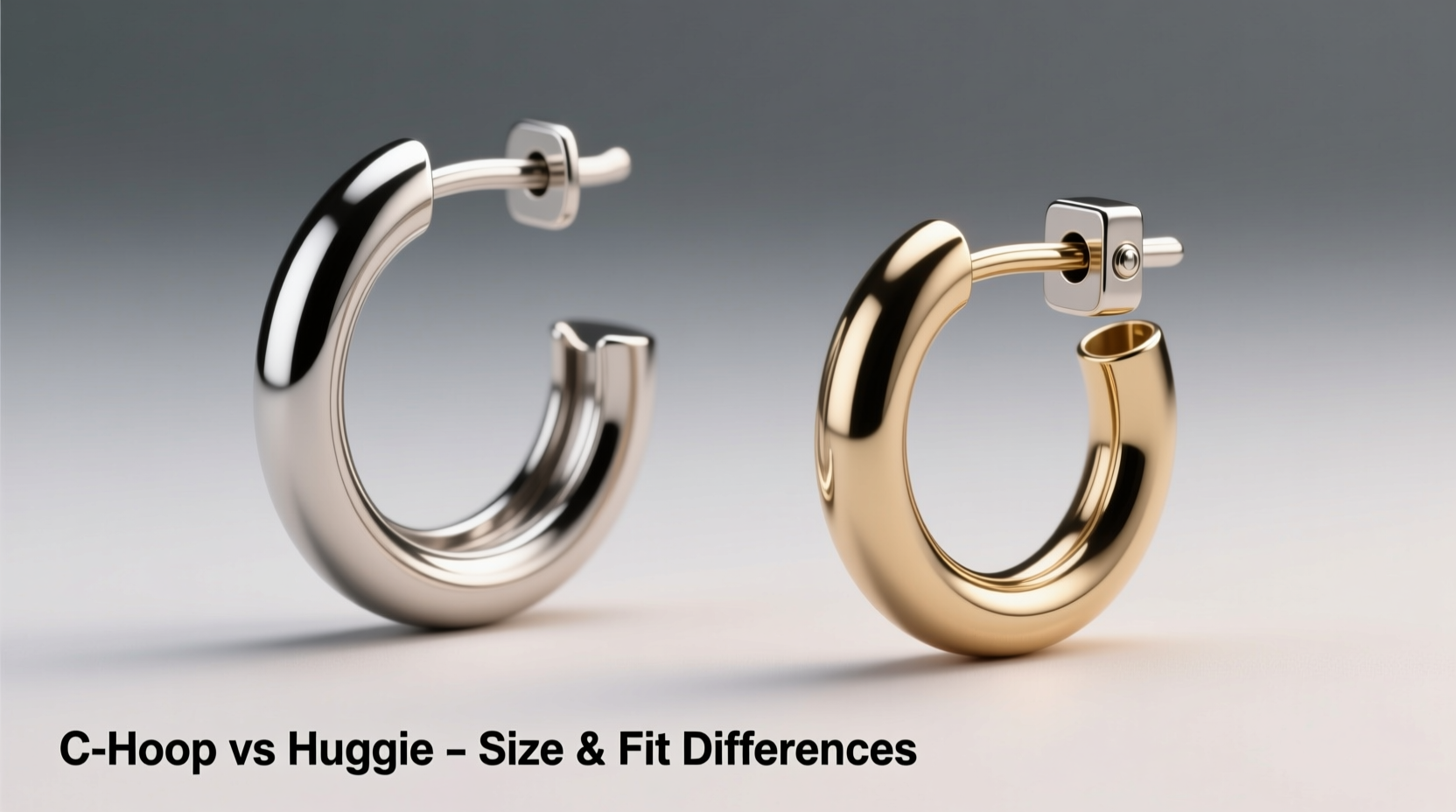
C-hoop earrings derive their name from their shape—a “C” that wraps around the front half of the earlobe. Unlike full-circle hoops, c-hoops do not form a complete loop. Instead, they feature two ends that insert into the piercing: one rigid post and a friction-back or screw mechanism on the other side. This open design allows them to hug the earlobe snugly without requiring a hinge or latch.
Because of their structure, c-hoops typically have a seamless appearance when worn. The metal curves smoothly along the edge of the lobe, creating a floating effect. They’re commonly made from solid gold, sterling silver, or titanium, and range from ultra-minimalist 5mm designs to bolder 15mm statement pieces.
What Makes an Earring a Huggie?
Huggie earrings are a category of small hoop earrings designed to “hug” the earlobe tightly. True huggies form a complete circle and feature a secure closure—usually a hinge-and-clasp or threaded screw-back mechanism. This closed-loop design keeps the earring firmly in place, making it less likely to fall out during movement or sleep.
The defining trait of a huggie is its engineering: the back must open and close reliably. Because of this mechanism, huggies often have a slightly thicker profile at the clasp point compared to the rest of the hoop. They come in diameters ranging from 6mm to 12mm, with most falling in the 8–10mm sweet spot for everyday wear.
While many people refer to any tiny hoop as a “huggie,” authentic huggies prioritize function and safety. Their secure closure makes them popular for active lifestyles, children’s jewelry, and second-piercing placements like the conch or tragus.
“Huggies were originally developed for practicality—they needed to stay put without sacrificing elegance.” — Lena Torres, Contemporary Jewelry Designer
Key Differences Between C-Hoops and Huggies
Despite visual similarities, several structural and functional differences set c-hoops and huggies apart. Recognizing these helps clarify why one might be better suited to your needs than the other.
| Feature | C-Hoop | Huggie |
|---|---|---|
| Shape | Semi-circular (open \"C\") | Full circle (closed loop) |
| Closure Type | Friction back or push-back | Hinge with clasp or screw thread |
| Security | Moderate (can loosen over time) | High (secure closure) |
| Comfort Level | Smooth curve, no pressure points | May feel tighter due to clasp |
| Durability | High (no moving parts) | Varies (hinges may wear over time) |
| Style Flexibility | Limited embellishment options | Can include stones, engraving, texture |
This comparison reveals that while both styles serve a similar aesthetic purpose—clean lines, close fit, modern minimalism—their applications differ. C-hoops offer simplicity and a sleek profile, whereas huggies provide enhanced retention and decorative versatility.
When to Choose One Over the Other
Selecting between a c-hoop and a huggie depends on lifestyle, sensitivity, and personal taste. Here’s a step-by-step guide to help you decide:
- Assess your activity level: If you work out frequently, sleep with earrings in, or lead an active life, opt for huggies. Their secure closure reduces loss risk.
- Consider your piercings: For multiple piercings close together (like a stacked helix), smaller huggies can fit neatly without crowding.
- Evaluate comfort needs: If you dislike pressure behind the ear, c-hoops may feel lighter and less intrusive.
- Think about maintenance: Huggies with hinges require occasional cleaning to prevent buildup in the clasp. C-hoops are easier to clean overall.
- Match your style: Want sparkle? Look for huggies with micro-pave diamonds. Prefer understated luxury? A polished c-hoop in 14k gold delivers quiet sophistication.
Mini Case Study: Office Worker vs. Fitness Instructor
Sarah, a corporate attorney, wears earrings every day but removes them only before bed. She prefers c-hoops in 10mm rose gold because they slide in easily, feel lightweight, and complement her professional wardrobe. She values their clean look and doesn’t mind checking occasionally to ensure they’re secure.
In contrast, Maya, a yoga instructor, teaches six classes a day and rarely takes off her earrings. After losing several c-hoops during inversions, she switched to 8mm huggies with snap clasps. Now, she never worries about losing jewelry mid-class. Though slightly heavier, she appreciates the peace of mind.
Their experiences highlight how context shapes preference. Neither choice is superior—only more suitable for specific routines.
Common Misconceptions About Huggies and Hoops
- Misconception 1: “All small hoops are huggies.” Not true. Size alone doesn’t define a huggie—it’s the closure system that matters.
- Misconception 2: “Huggies are always safer.” While generally more secure, poorly made huggies with weak clasps can still pop open.
- Misconception 3: “C-hoops are outdated.” On the contrary, c-hoops have seen a resurgence in high-end minimalist collections due to their seamless design.
FAQ
Can I sleep in c-hoops or huggies?
Yes, but huggies are safer for overnight wear due to their locking mechanism. Ensure the surface is smooth to avoid snagging on fabric.
Are huggies suitable for new piercings?
Only if recommended by your piercer. Most professionals advise against wearing any hoop-style earring in fresh lobe or cartilage piercings, as they can trap bacteria and delay healing.
Do c-hoops fall out easily?
They can, especially if the friction back loosens over time. Regularly check the tightness, and consider upgrading to silicone backs for added security.
Final Checklist Before Buying
- ✅ Measure your ear thickness:
- Ensure the hoop width accommodates your lobe comfortably.
- ✅ Check the closure type:
- Prefer no moving parts? Go c-hoop. Want maximum hold? Choose a huggie with a screw or snap lock.
- ✅ Verify material quality:
- Look for stamped karat markings (e.g., 14K) or “925” for sterling silver.
- ✅ Try the opening mechanism:
- If purchasing in person, test how easy it is to open and close a huggie—stiff clasps become frustrating over time.
- ✅ Consider long-term wear:
- Will you wear these daily? Prioritize comfort and durability over trendiness.
Conclusion
The question isn’t whether huggies are just smaller hoops—but rather, what kind of experience you want from your earrings. C-hoops deliver elegance through simplicity, offering a fluid silhouette with minimal hardware. Huggies answer the need for security and structure, combining the circular charm of hoops with engineered reliability. Both have earned their place in modern jewelry boxes, serving different moments and moods.
Understanding the distinction empowers you to move beyond marketing labels and choose pieces that align with your lifestyle. Whether you lean toward the effortless glide of a c-hoop or the dependable embrace of a huggie, the right pair should feel like an extension of your self-expression—secure, comfortable, and unmistakably you.




 浙公网安备
33010002000092号
浙公网安备
33010002000092号 浙B2-20120091-4
Comments
No comments yet. Why don't you start the discussion?