
When evaluating the caloric density of foods, few ingredients offer as much nutritional value for so few calories as spinach. Widely celebrated in health-conscious diets, this leafy green is often praised for being “low-calorie,” but understanding exactly how many calories are in a serving of spinach—and what those calories represent nutritionally—is essential for informed meal planning. Whether you're managing weight, building balanced meals, or optimizing athletic performance, knowing the precise energy content and macro-nutrient composition of spinach allows you to make smarter culinary choices. This guide breaks down serving sizes, calorie counts across preparation methods, and how spinach contributes far more than just minimal energy—it delivers a powerhouse of vitamins, minerals, and phytonutrients that support long-term wellness.
Definition & Overview
Spinach (Spinacia oleracea) is an edible flowering plant native to central and western Asia, now cultivated globally for its tender, dark green leaves. A member of the Amaranthaceae family, it has been consumed for over two millennia, with historical roots in Persian cuisine before spreading through the Mediterranean and eventually worldwide. Today, spinach is available in multiple forms—raw, cooked, frozen, canned, and powdered—and is used in salads, sautés, smoothies, soups, and casseroles.
Nutritionally, spinach is classified as a non-starchy vegetable, meaning it contains minimal carbohydrates and negligible fat. Its flavor profile is mild and slightly earthy when raw, with a more concentrated mineral taste when cooked. The leaves vary in texture depending on variety: some are smooth and delicate (like baby spinach), while others are crinkled and more fibrous (such as mature Savoy types). Despite these differences, all forms share a remarkably low-calorie footprint relative to their nutrient density.
Key Characteristics
Understanding spinach’s characteristics helps contextualize its role in both everyday cooking and specialized diets. Below is a breakdown of its core attributes:
| Characteristic | Description |
|---|---|
| Flavor Profile | Mildly sweet and grassy when raw; earthier and more mineral-forward when cooked. Bitterness may increase if overcooked due to oxalic acid release. |
| Aroma | Fresh, clean, and subtly vegetal—reminiscent of damp soil or spring greens. |
| Color & Form | Deep green leaves; can be flat (baby spinach) or crinkled (Savoy). Sold loose, pre-washed, bunched, or processed. |
| Heat Level | None. Spinach does not contain capsaicin or any natural heat compounds. |
| Culinary Function | Used as a base green, thickener (when puréed), nutrient booster, color enhancer, and volume filler in dishes. |
| Shelf Life | 3–7 days refrigerated (raw, fresh); up to 12 months frozen. Degrades quickly if exposed to moisture or heat. |
Calories by Serving Size and Preparation Method
The number of calories in a serving of spinach depends significantly on portion size and how it's prepared. Raw spinach is one of the least calorically dense vegetables available, but cooking concentrates its mass, altering perceived caloric intake per volume—even though total calories remain nearly unchanged.
Below is a detailed comparison of caloric content across common serving formats:
| Form / Preparation | Serving Size | Calories | Notes |
|---|---|---|---|
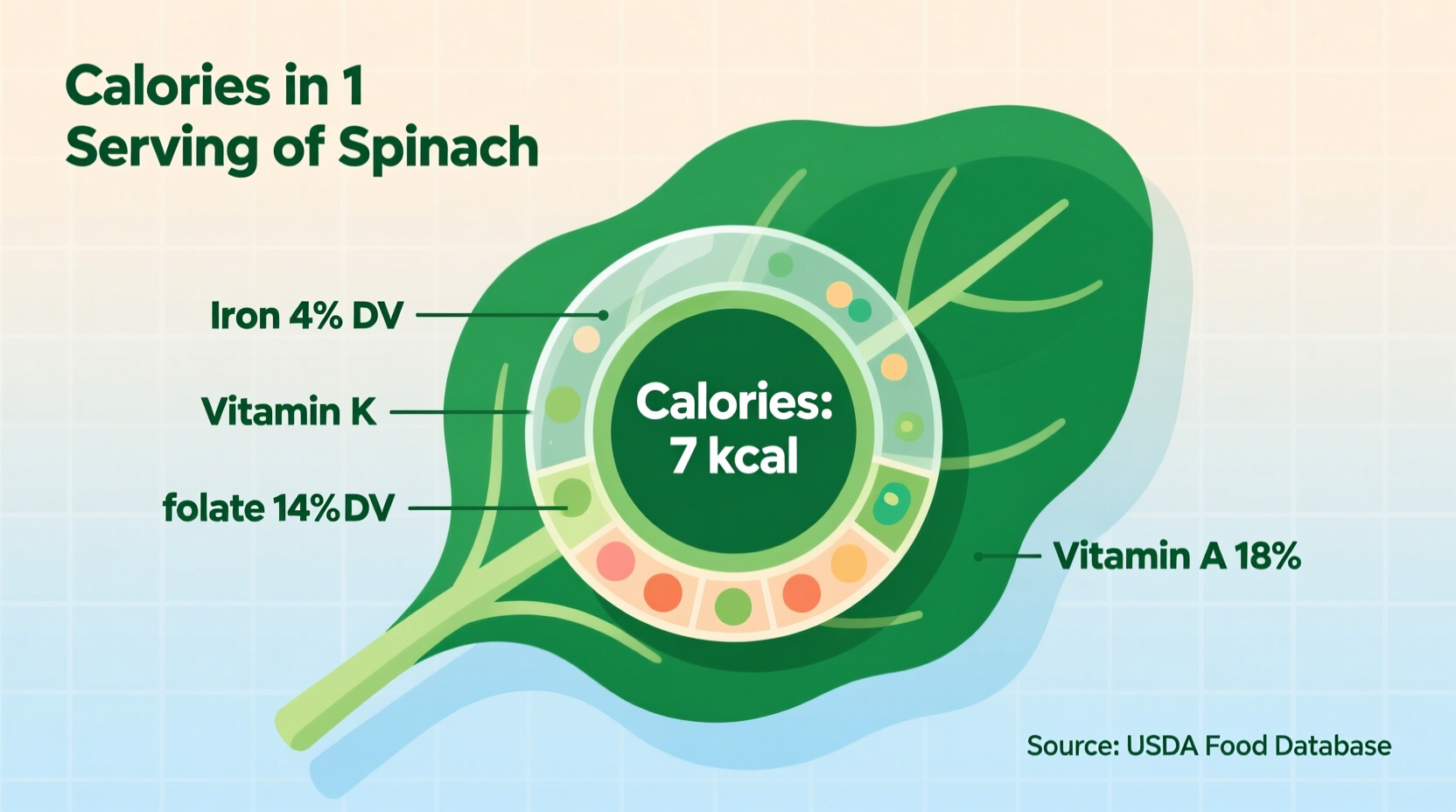
| Raw baby spinach | 1 cup (30g) | 7 kcal | Lightweight and voluminous; ideal for salads and blending. |
| Raw mature spinach | 1 cup chopped (30g) | 7 kcal | Slightly tougher texture; similar nutrient profile. |
| Cooked spinach (boiled, drained) | 1/2 cup (90g) | 21 kcal | Volume reduces by ~75%; same nutrients in smaller space. |
| Sautéed spinach (with 1 tsp olive oil) | 1/2 cup cooked (90g) | 68 kcal | Oil adds 40+ kcal; enhances fat-soluble vitamin absorption. |
| Frozen spinach (unprepared) | 1/2 cup (90g) | 21 kcal | Typically blanched before freezing; no added salt or fat. |
| Canned spinach (drained) | 1/2 cup (90g) | 25–30 kcal | May contain added sodium; check labels carefully. |
Note that while cooking doesn’t destroy calories, water loss during heating means a half-cup of cooked spinach contains about three times the leaf mass of a raw cup. Thus, although the caloric count appears higher per unit volume, the actual energy comes from more spinach—not increased concentration.
Pro Tip: When tracking calories, always measure spinach after cooking if using volume-based measurements. For accuracy, weigh spinach raw: 30 grams ≈ 7 calories regardless of form.
Practical Usage: How to Use Spinach in Cooking
Spinach’s versatility makes it indispensable in both home and professional kitchens. Because of its low caloric cost and high functional utility, chefs and home cooks alike use it to add bulk, color, and nutrition without significantly increasing energy intake.
Home Cooking Applications
- Salads: Baby spinach is a superior base compared to iceberg lettuce, offering triple the fiber and tenfold the micronutrients at only 7 extra calories per cup.
- Smoothies: Add 1–2 cups raw spinach to fruit-based smoothies. It imparts no strong flavor but boosts iron, folate, and vitamin K content.
- Omelets & Frittatas: Sauté handfuls of spinach with garlic and fold into eggs. The protein-fat combo improves absorption of carotenoids like lutein.
- Pasta Dishes: Stir fresh spinach into hot pasta off-heat; residual warmth wilts it perfectly. Works well in carbonara, Alfredo, or tomato sauces.
- Stuffed Proteins: Mix cooked, drained spinach with ricotta and herbs for chicken breast or mushroom stuffing.
Professional Culinary Techniques
In restaurant settings, spinach is used strategically to enhance menu item appeal without inflating calorie counts. Sous chefs often purée blanched spinach into sauces (e.g., velouté or béchamel) to create vibrant green hues naturally—avoiding artificial dyes. In fine dining, microgreens or petite spinach leaves garnish plates for freshness and visual contrast.
Another technique involves flash-wilting large batches of spinach, then pressing out excess moisture for consistent texture in casseroles or quiches. This prevents sogginess and ensures even distribution.
Pairing Suggestions & Ratios
To maximize flavor balance and nutrient uptake, pair spinach with complementary ingredients:
- Fats: Olive oil, avocado, nuts, or cheese improve absorption of fat-soluble vitamins (A, E, K, and carotenoids).
- Acids: Lemon juice or vinegar brightens earthy notes and helps reduce oxalate bitterness.
- Proteins: Chicken, tofu, lentils, or eggs turn spinach into a complete, satiating meal component.
- Alliums: Garlic, shallots, or onions build savory depth when sautéed first.
A standard ratio for sautéed side dishes: 5 oz (140g) raw spinach + 1 tsp olive oil + 1 minced garlic clove + pinch of salt = approximately 60 kcal per serving.
Expert Insight: “I always tell my clients to treat spinach like a nutrient vehicle. At under 10 calories per cup raw, it’s one of the best ways to stretch meals nutritionally without stretching waistlines.” — Maria Tran, RD, Culinary Nutrition Educator
Variants & Types of Spinach
Not all spinach is created equal. Different cultivars and processing methods affect texture, usability, and shelf life. Knowing which type to choose ensures optimal results in your recipes.
1. Baby Spinach
Harvested early (20–30 days), baby spinach features small, tender leaves with a milder taste. Ideal for raw applications like salads, sandwiches, and smoothies. Typically sold pre-washed in clamshells. Caloric density: ~7 kcal per cup raw.
2. Mature Spinach (Savoy, Flat, Semi-Savoy)
- Savoy: Crinkly, dark green leaves; robust texture suited for cooking. Commonly found in bunches. Requires thorough washing.
- Flat-Leaf: Smooth surface; easier to clean and process. Often used in commercial kitchens.
- Semi-Savoy: Hybrid between Savoy and flat-leaf; combines durability with ease of cleaning.
Best for sautéing, boiling, or incorporating into cooked dishes. One cup raw still contains ~7 kcal.
3. Frozen Spinach
Blanched and quick-frozen at peak freshness, retaining most nutrients. Contains no additives unless labeled otherwise. Must be thawed and drained thoroughly before use to avoid diluting dishes. Equivalent in calories to fresh cooked spinach: ~21 kcal per ½ cup.
4. Canned Spinach
Less common today due to texture degradation and potential sodium content. Offers convenience but lower quality. Rinsing reduces sodium by up to 40%. Calories range from 25–30 kcal per ½ cup.
5. Dehydrated & Powdered Spinach
Used in supplements, infant formulas, or as a natural coloring agent. Extremely concentrated: 1 tablespoon powder ≈ 1 cup raw spinach (~7 kcal). Rehydration restores volume but not full texture.
Comparison with Similar Leafy Greens
Spinach is often grouped with other dark leafy greens, but key differences exist in nutrition, flavor, and culinary application. Here's how it compares:
| Green | Calories (per cup raw) | Key Differences | Best Uses |
|---|---|---|---|
| Spinach | 7 kcal | Mildest flavor; highest oxalate content; rich in folate and vitamin K. | Raw salads, smoothies, gentle cooking. |
| Kale | 33 kcal | More fibrous; bitter edge; higher in vitamin C and calcium. | Massaged salads, chips, soups. |
| Arugula | 5 kcal | Pungent, peppery taste; lower in iron but high in nitrates. | Finishing green, pizza topping. |
| Swiss Chard | 7 kcal | Thicker stems require separate cooking; colorful stalks. | Sautéed dishes, stews. |
| Romaine Lettuce | 8 kcal | Watery texture; minimal nutrients beyond hydration. | Ceasar salads, wraps. |
While arugula has fewer calories, spinach provides significantly more iron, magnesium, and antioxidants. Compared to kale, spinach is less calorically dense and more palatable raw—but contains more oxalates, which can inhibit mineral absorption in sensitive individuals.
Practical Tips & FAQs
Q: Does cooking spinach increase its calorie content?
A: No. Cooking removes water, concentrating nutrients and volume, but the total caloric content remains the same. However, adding oils, butter, or sauces will increase the final dish’s calorie count.
Q: Is raw or cooked spinach healthier?
A: Both have advantages. Raw spinach preserves heat-sensitive vitamin C and folate. Cooked spinach increases bioavailability of beta-carotene, lutein, and non-heme iron. For maximum benefit, include both in your diet.
Q: Can eating too much spinach be harmful?
A: For most people, no. However, those prone to kidney stones should moderate intake due to high oxalate levels. Individuals on blood thinners (e.g., warfarin) must maintain consistent vitamin K intake—sudden spikes from daily spinach consumption can interfere with medication efficacy.
Q: How should I store fresh spinach?
A: Keep unopened bags in the crisper drawer. Once opened, transfer to an airtight container lined with paper towels to absorb moisture. Avoid washing until ready to use. Never freeze raw spinach without blanching—ice crystals damage cell structure.
Q: What are good substitutes for spinach?
A: In raw applications, use romaine or butter lettuce (lower nutrition). In cooked dishes, Swiss chard, collard greens, or kale work well. Note that substitution alters flavor and nutrient profiles.
Q: How much spinach should I eat per day?
A: There is no official upper limit. One to two cups raw (or ½–1 cup cooked) daily aligns with USDA vegetable recommendations. This provides ample vitamins A, C, K, folate, and manganese with minimal caloric impact.
Storage Checklist:
- Inspect leaves: discard yellowed or slimy ones.
- Keep dry—moisture accelerates spoilage.
- Use within 5 days of opening.
- Freeze surplus: blanch 1 minute, cool, squeeze dry, pack in portions.
Summary & Key Takeaways
Spinach is among the most nutrient-dense vegetables available, delivering exceptional health benefits for minimal caloric cost. A typical serving—whether 1 cup raw (7 kcal) or ½ cup cooked (21 kcal)—contributes essential vitamins and minerals without compromising dietary goals.
The primary takeaways are:
- Raw spinach contains approximately 7 calories per cup (30g), making it ideal for volume eating and weight management.
- Cooking concentrates spinach physically but does not alter its base caloric content—added fats do.
- Different types (baby, mature, frozen) serve distinct culinary purposes but share similar nutritional profiles.
- Pair spinach with healthy fats and acids to enhance flavor and nutrient absorption.
- Compared to similar greens, spinach strikes a balance between mild taste, versatility, and micronutrient richness.
- Proper storage extends freshness; freezing preserves nutrients for future use.
Integrating spinach into daily meals isn't just about cutting calories—it's about enriching them. From boosting antioxidant intake to supporting eye, bone, and cardiovascular health, this humble green earns its place at the center of modern nutritious cooking. Whether tossed into a salad, blended into a sauce, or folded into a breakfast scramble, spinach proves that the most powerful ingredients often come in the quietest packages.
Call to Action: Start tomorrow’s meal with one cup of raw spinach—add it to a smoothie, sandwich, or scrambled eggs. Track how effortlessly you can elevate nutrition without adding bulk. Over time, notice improvements in energy, digestion, and overall well-being.




 浙公网安备
33010002000092号
浙公网安备
33010002000092号 浙B2-20120091-4
Comments
No comments yet. Why don't you start the discussion?