
In the world of nail art, decorative accents like camellia bows and rhinestones have become staples for those seeking a touch of glamour. While both elevate the aesthetic of a manicure, they differ significantly in longevity, visual impact, and overall sophistication. Choosing between them isn’t just about personal taste—it’s about understanding how each element performs over time and which better aligns with a timeless, elegant look.
The Aesthetic Appeal: Elegance vs. Glamour
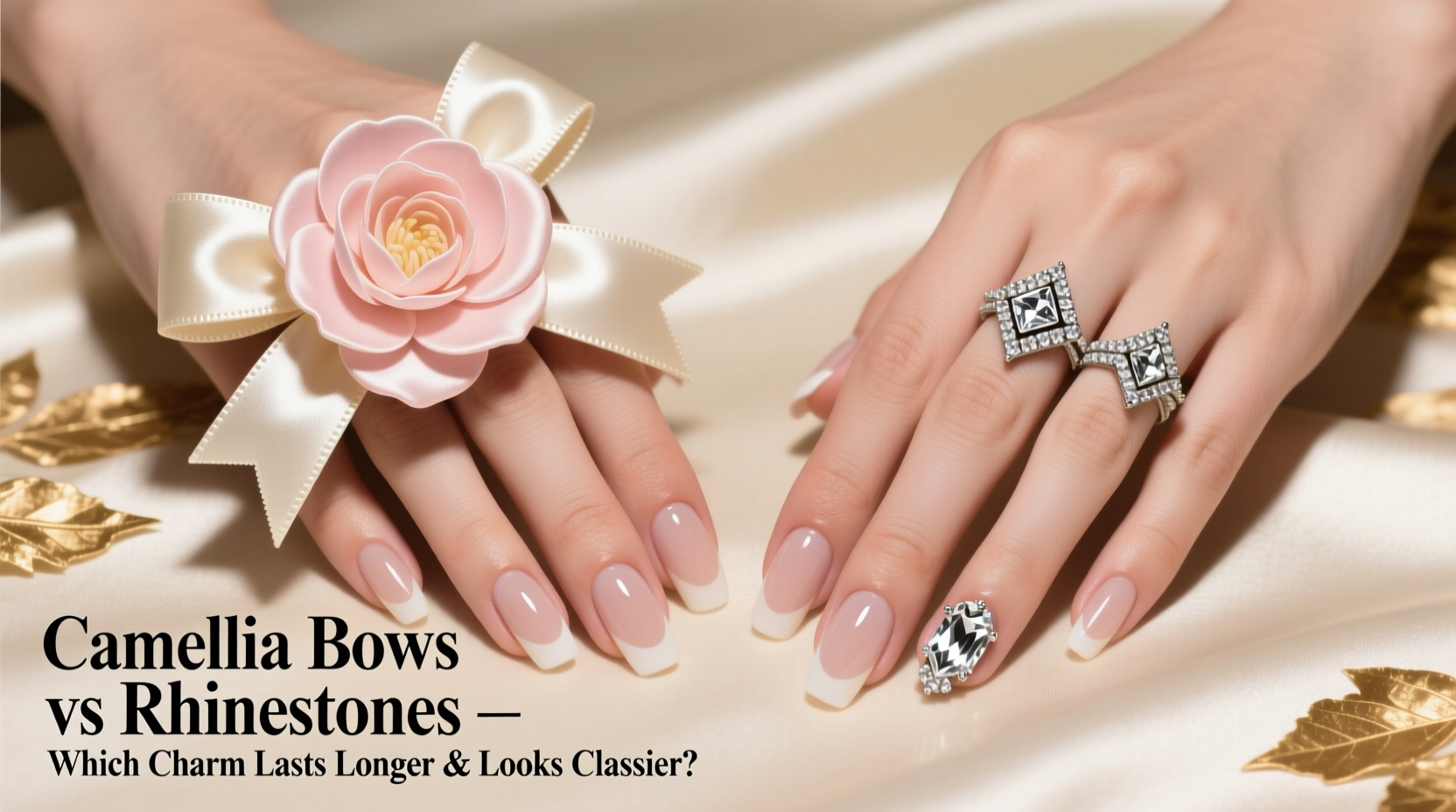
Camellia bows, often crafted from silk, resin, or high-quality polymer, evoke a sense of vintage refinement. Inspired by classic fashion motifs—particularly associated with luxury brands like Chanel—they bring a soft, romantic elegance to nail designs. Their structured yet delicate form adds dimension without overwhelming the nail bed, making them ideal for formal events, bridal sets, or minimalist-chic styles.
Rhinestones, on the other hand, are all about sparkle and statement. Available in various cuts, colors, and sizes, they reflect light dramatically, drawing immediate attention. They’re perfect for bold, festive, or nightlife-oriented manicures. However, their high-shine nature can sometimes lean toward theatrical rather than refined, depending on placement and quantity.
“Camellia details whisper luxury; rhinestones announce it. The former suggests confidence through subtlety, the latter through visibility.” — Lila Monroe, Nail Art Curator at *Luxe Manicure Review*
Durability and Longevity: How Well Do They Hold Up?
One of the most practical considerations when choosing nail embellishments is how long they stay intact. A beautiful design means little if it chips or detaches within days.
Camellia bows, when properly adhered using professional-grade nail glue and sealed under a quality top coat, can last the full duration of a gel or dip manicure—typically two to three weeks. Because they are often embedded into the polish layer or placed before curing (in UV/LED gels), they are less prone to snagging if filed smoothly and coated evenly.
Rhinestones, while stunning, are more fragile in practice. Their sharp edges and raised surfaces make them vulnerable to catching on fabric, leading to premature lifting. Even with meticulous application, a single stone can dislodge after minor contact, especially on fingers that see frequent use—like thumbs and index fingers. Once one stone comes loose, the surrounding polish often begins to chip around the gap.
Comparison Table: Camellia Bows vs. Rhinestones
| Feature | Camellia Bows | Rhinestones |
|---|---|---|
| Visual Style | Soft, romantic, vintage-inspired | Bold, flashy, modern-glam |
| Longevity | High (with proper sealing) | Moderate to low (prone to snagging) |
| Application Complexity | Moderate (requires precise placement) | Low to moderate (easy to place but hard to secure) |
| Maintenance Needs | Low (if sealed well) | High (monitor for looseness) |
| Classiness Factor | High (understated elegance) | Variable (can appear gaudy if overused) |
| Best For | Weddings, office wear, luxury aesthetics | Parties, festivals, Instagram moments |
Real-World Example: A Bridal Manicure Dilemma
Sophie, a bride planning her wedding day look, wanted her nails to be both photogenic and durable throughout a long weekend of events. She initially considered rhinestones for their sparkle under reception lighting. However, after testing a sample set, she noticed two stones came loose during a dress fitting when her nails brushed against lace fabric.
She switched to small white camellia bows accenting her ring fingers. Applied by a specialist using dual adhesion (glue + gel embed), the bows remained flawless through hair trials, photo sessions, bouquet holding, and even post-wedding brunch prep. Guests complimented the “timeless” look, and Sophie reported feeling more confident knowing her manicure wouldn’t fail mid-event.
This case illustrates how real-life functionality often outweighs initial visual appeal. For occasions where reliability matters, camellia bows proved superior—not just in staying power, but in emotional reassurance.
Care and Maintenance Tips for Long-Lasting Wear
No matter which embellishment you choose, proper care determines how long your manicure remains pristine. Here’s a step-by-step guide to preserving 3D nail art:
- Seal thoroughly: After placing the bow or stone, apply a thick, non-yellowing top coat that fully encapsulates the edges. Repeat daily for the first three days.
- Avoid water immersion: Keep hands out of hot baths, pools, and dishwater. Moisture weakens adhesive bonds over time.
- Use cuticle oil sparingly: Apply oil carefully with a fine brush to avoid soaking the base of the embellishment, which can degrade glue.
- File smooth: If the piece protrudes, gently file down any sharp edges with a 180-grit buffer to reduce snag risk.
- Carry a repair kit: Keep a mini bottle of top coat and nail glue in your bag for emergency touch-ups.
Which Looks More Classy? The Verdict on Sophistication
Classiness is not defined by cost or complexity, but by intentionality and restraint. In this context, camellia bows consistently rank higher in perceived elegance. Their association with haute couture, historical fashion, and artisan craftsmanship lends them an air of quiet luxury. They enhance without dominating, suggesting attention to detail rather than a need for attention.
Rhinestones aren’t inherently unclassy—but their classiness depends heavily on execution. A single, perfectly placed micro-stone at the base of the nail can be chic and modern. Conversely, clusters across every nail, especially in neon colors or excessive sizes, often cross into kitsch territory. As fashion stylist Marcus Tran notes:
“One rhinestone can be jewelry. Ten can be costume. Know the difference.” — Marcus Tran, Fashion Stylist & Editorial Contributor, *Vogue Nails*
If your goal is a polished, grown-up aesthetic suitable for boardrooms, evening galas, or editorial shoots, camellia bows offer a safer bet. They harmonize with neutral palettes, French tips, and soft metallics—designs that define enduring style.
FAQ
Can I mix camellia bows and rhinestones in one design?
Yes, but balance is key. Use rhinestones as accents *around* the bow—such as tiny crystals outlining its edges—to add subtle shimmer without overpowering the bow’s elegance. Avoid overcrowding the nail surface.
Are camellia bows reusable?
Typically, no. Once glued and sealed under gel or acrylic, removal usually damages the bow. However, some press-on versions with adhesive tabs can be reused if carefully removed and cleaned.
How do I remove embellished nails without damage?
Soak nails in acetone for gel systems, gently pushing off softened layers. Never peel or force off embellishments, as this can rip the natural nail. For glued pieces, let the entire coating dissolve gradually.
Final Thoughts: Choose Based on Purpose, Not Just Preference
The choice between camellia bows and rhinestones shouldn’t hinge solely on trendiness or momentary attraction. Consider the occasion, your lifestyle, and what kind of impression you want to make. If longevity and understated grace matter most, camellia bows are the superior choice. They endure better, age more gracefully, and align with a sophisticated, curated aesthetic.
Rhinestones have their place—especially when drama, celebration, or social media impact is the goal. But for lasting charm and true class, few nail embellishments rival the quiet confidence of a perfectly placed camellia bow.




 浙公网安备
33010002000092号
浙公网安备
33010002000092号 浙B2-20120091-4
Comments
No comments yet. Why don't you start the discussion?