
For generations, Campbell's Cream of Mushroom Soup has been a staple in American pantries, prized for its convenience, rich flavor, and remarkable versatility. Whether used as a base for casseroles, a thickener in gravies, or a shortcut in weeknight meals, this canned soup transcends its humble origins to become a functional ingredient in both home and institutional kitchens. Its presence on grocery shelves since the 1930s speaks not only to its enduring popularity but also to its role in shaping modern American comfort food. Understanding what it is, how it works, and how to use it effectively allows cooks to harness its potential beyond the casserole dish—while also making informed decisions about quality, health, and substitution when needed.
Definition & Overview
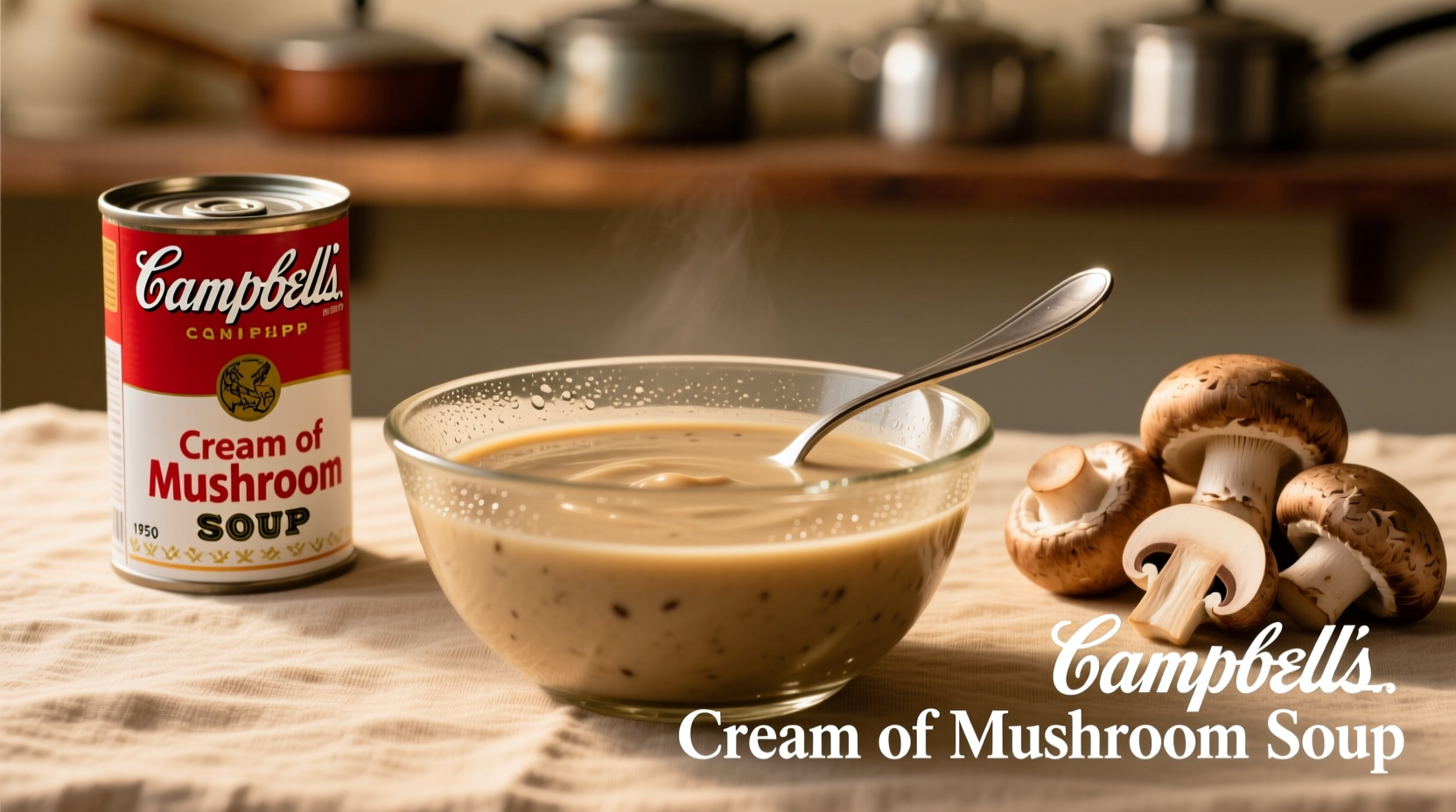
Campbell's Cream of Mushroom Soup is a condensed canned soup produced by the Campbell Soup Company, first introduced in 1934. It belongs to the broader category of \"cream-style\" condensed soups, which are designed to be diluted with water or milk before consumption. The product combines mushrooms (typically mushroom broth and pieces), modified food starch, vegetable oil, and a blend of seasonings into a thick, creamy, shelf-stable base.
Unlike fresh or homemade mushroom soups, Campbell’s version is engineered for long shelf life, consistent texture, and rapid preparation. It contains no actual cream—despite the name—but achieves a creamy mouthfeel through starch thickeners and emulsifiers. This makes it distinct from dairy-based cream soups while offering a stable, transportable alternative ideal for pantry storage.
The soup functions primarily as an ingredient rather than a standalone course. It is most famously used in green bean casserole, a Thanksgiving classic, but its applications extend far beyond that single dish. Its umami-rich profile and viscous texture make it a valuable tool for adding depth and body to sauces, stews, and baked dishes with minimal effort.
Key Characteristics
| Characteristic | Description |
|---|---|
| Flavor Profile | Savory, earthy, mildly salty with a pronounced umami note from mushrooms and hydrolyzed proteins. Slight sweetness from corn syrup solids balances the savoriness. |
| Aroma | Distinctive cooked mushroom scent with background notes of onion, garlic, and fat. Recognizable even before opening the can. |
| Color & Texture | Light to medium tan with visible mushroom flecks. Thick, paste-like when undiluted; becomes smooth and creamy when mixed with liquid. |
| Heat Level | None. Not spicy. Suitable for all palates, including children. |
| Culinary Function | Thickening agent, flavor enhancer, moisture binder in casseroles, sauces, and slow-cooker dishes. |
| Shelf Life | 2–5 years unopened when stored in a cool, dry place. Once opened, refrigerate and use within 3–5 days. |
| Allergens | Contains wheat (in the form of modified food starch and possibly gluten-containing seasonings). May contain milk derivatives in some formulations. Always check label. |
Practical Usage: How to Use Campbell's Cream of Mushroom Soup
The primary method for using Campbell's Cream of Mushroom Soup is dilution: one can (typically 10.5 oz) combined with approximately 1 cup of water or milk. However, its real value lies in its adaptability across a range of culinary applications.
Casseroles and Baked Dishes
The most iconic use is in green bean casserole, where the soup binds blanched green beans and crispy fried onions into a cohesive, golden-brown bake. But it works equally well in:
- Mixed vegetable casseroles (carrots, peas, mushrooms)
- Chicken and rice bakes
- Tuna-noodle casserole (as a substitute for homemade sauce)
- Shepherd’s pie topping layer for added moisture and richness
To maximize flavor and texture, consider enhancing the soup with sautéed shallots, fresh thyme, or a splash of dry sherry before incorporating it into the dish.
Sauces and Gravies
The soup serves as an excellent shortcut for creating mushroom-infused sauces. For a quick steak or pork accompaniment:
- Open one can of soup.
- Add ½ cup beef broth and ¼ cup heavy cream.
- Simmer gently for 5–7 minutes, stirring frequently.
- Season with black pepper, Worcestershire sauce, and fresh parsley.
This yields a restaurant-style mushroom sauce in under 10 minutes—ideal for busy weeknights.
Slow Cooker and One-Pot Meals
In crockpot recipes, the soup adds viscosity and prevents drying. It integrates seamlessly into:
- Beef stew (add one can midway through cooking)
- Chicken and wild rice soup
- Mushroom risotto (use instead of part of the stock)
Because it’s pre-thickened, it helps create a silky texture without constant stirring.
Pro Tip: To elevate the flavor of canned soup, always cook it briefly in a pan after mixing with liquid. This drives off the \"canned\" aroma and deepens the savory notes. A minute or two of simmering makes a noticeable difference.
Professional Kitchen Applications
While high-end restaurants rarely use canned soup outright, many professional chefs acknowledge its conceptual influence. The idea of a standardized, reproducible mushroom base aligns with the principles of consistency in commercial kitchens. Some delis and cafeterias still use it for speed and cost control, particularly in staff meals or budget-conscious menu items.
In culinary education, Campbell’s soup is sometimes used to demonstrate the principles of flavor layering and thickening mechanisms—even as students learn to replicate its function with roux, reduction, and fresh ingredients.
Variants & Types
Campbell’s offers several versions of Cream of Mushroom Soup, each tailored to different dietary needs and flavor preferences:
- Regular (Original): The classic formulation with soybean oil, modified starch, and mushroom broth. Highest in sodium (~870 mg per ½ cup serving).
- 98% Fat Free: Reduced-fat version using less oil and more starch. Thinner texture; may require additional thickening in recipes.
- Healthy Request / Lower Sodium: Contains about half the salt of the original. Ideal for those monitoring sodium intake without sacrificing convenience.
- Organic: Made with organic ingredients, including organic mushrooms and non-GMO starches. Pricier but preferred by clean-label consumers.
- Gluten-Free: Formulated without wheat-derived ingredients. Verified safe for celiac diets. Label carefully as formulations change.
Additionally, Campbell’s produces “Condensed” and “Chunky” styles. The condensed version requires dilution and is standard in most recipes. The chunky variety contains larger mushroom pieces and is often marketed as a ready-to-eat option, though it can be used in cooking where a heartier texture is desired.
| Variant | Best Used For | Texture | Dilution Required? |
|---|---|---|---|
| Original Condensed | Casseroles, sauces, baking | Thick, smooth | Yes |
| 98% Fat Free | Low-fat diets, lighter sauces | Thinner, slightly gummy | Yes |
| Lower Sodium | Heart-healthy cooking | Similar to original | Yes |
| Organic | Clean eating, organic recipes | Smooth, natural mouthfeel | Yes |
| Gluten-Free | Celiac-safe meals | Standard thickness | Yes |
| Chunky Style | Stews, rustic dishes | Coarse, textured | No (but can be) |
Comparison with Similar Ingredients
Campbell's Cream of Mushroom Soup is often confused with other mushroom-based products. Understanding the differences ensures proper usage and substitution.
| Product | Differences from Campbell’s | When to Use Instead |
|---|---|---|
| Homemade Cream of Mushroom Soup | Contains real cream, fresh mushrooms, butter, and flour. Fresher taste, richer texture, no preservatives. | For gourmet dishes, dinner parties, or when quality is prioritized over speed. |
| Canned Mushroom Sauce (e.g., Stouffer’s) | Not condensed; ready-to-serve. Often thicker and more heavily seasoned. | As a gravy replacement, not for baking or thinning. |
| Dried Mushroom Powder or Paste | Concentrated umami, no starch or fat. Requires liquid and thickener to mimic texture. | For flavor boosting without altering consistency. |
| Roux-Based Mushroom Sauce | From scratch using flour, butter, stock, and mushrooms. More control over flavor and salt. | When time allows and customization is needed. |
| Plant-Based Cream Soups (e.g., Pacific Foods) | Non-dairy, often gluten-free, made with coconut milk or cashew base. Cleaner label. | For vegan, allergen-free, or organic cooking. |
\"Campbell’s didn’t invent the mushroom sauce, but they democratized it. For millions of Americans, especially mid-century homemakers, it was a reliable way to deliver flavor and consistency with minimal skill or time.\" — Culinary Historian, Dr. Elaine Park, *Journal of American Foodways*, 2021
Practical Tips & FAQs
Can I use milk instead of water to thin the soup?
Yes. Using whole milk, half-and-half, or even evaporated milk enriches the soup significantly, giving it a creamier mouthfeel and milder flavor. This is especially effective in casseroles or sauces meant to be luxurious.
Is Campbell’s Cream of Mushroom Soup vegan?
The standard version is not certified vegan. While it contains no meat, it may include animal-derived vitamin D3 or dairy traces depending on production batch. Check the label for definitive confirmation. Plant-based alternatives exist from brands like Amy’s or Health Valley.
How can I reduce the sodium content?
Choose the \"Lower Sodium\" variant, or dilute the regular version with extra water and boost flavor with herbs, lemon juice, or nutritional yeast. Avoid adding additional salt when using the soup in recipes.
Can I freeze unused portions?
Yes. Transfer leftover soup to an airtight container or ice cube trays for portioning. Freeze for up to 3 months. Thaw in the refrigerator before use. Note: texture may separate slightly upon thawing—whisk vigorously when reheating.
What are common substitutions?
If you don’t have Campbell’s on hand, consider these alternatives:
- Homemade roux + mushroom broth + sautéed mushrooms: Mix 2 tbsp flour, 2 tbsp butter, 1 cup mushroom stock, and ½ cup chopped mushrooms. Simmer until thick.
- Canned cream of celery or chicken soup: Closest in texture; lacks mushroom flavor but works in bind-heavy dishes.
- Blended silken tofu + mushroom powder: For a high-protein, low-sodium vegan option.
- Greek yogurt + mushroom duxelles: In non-baked sauces, this combo mimics richness and earthiness.
Does it contain real mushrooms?
Yes, but in limited quantity. The ingredient list includes \"mushroom broth\" and \"mushroom pieces,\" but the dominant components are water, starch, and oil. The mushroom content is sufficient for flavor but not for texture or nutrition.
Is it healthy?
In moderation, yes—as a convenience ingredient. However, the regular version is high in sodium, contains processed starches, and lacks fiber or protein. It should not be considered a nutritious standalone food. When possible, enhance it with vegetables, lean proteins, and whole grains to improve the meal’s overall balance.
Quick Checklist: Maximizing Your Can
- Always stir well after opening—settling is normal.
- Cook the diluted soup for 3–5 minutes to improve flavor.
- Pair with fresh aromatics (onion, garlic, thyme) to elevate quality.
- Use in combination with real mushrooms for depth.
- Store opened cans in glass containers, not metal, to prevent off-flavors.
Summary & Key Takeaways
Campbell's Cream of Mushroom Soup remains a cornerstone of American convenience cooking—not because it’s gourmet, but because it’s functional. Its ability to thicken, enrich, and flavor dishes with minimal effort has secured its place in kitchens across the country. While not a health food, it is a practical tool when used thoughtfully.
Understanding its composition—starch-thickened, umami-rich, shelf-stable—allows cooks to use it strategically. Whether building a holiday casserole, rescuing a dry stew, or crafting a fast sauce, the soup delivers reliability. With multiple variants available, including lower-sodium and gluten-free options, it can fit into diverse dietary frameworks.
Still, its greatest power lies in its role as a springboard. The best cooks don’t stop at the can—they build upon it. By adding fresh ingredients, adjusting seasonings, and understanding its limitations, even a processed product can contribute to a genuinely satisfying meal.




 浙公网安备
33010002000092号
浙公网安备
33010002000092号 浙B2-20120091-4
Comments
No comments yet. Why don't you start the discussion?