
When temperatures drop and you’re exposed to the elements, staying warm isn’t just about comfort—it’s a matter of survival. In outdoor emergencies or even routine camping trips gone wrong, the right blanket can mean the difference between hypothermia and safety. But not all blankets are built for cold exposure. The terms “camping blanket” and “emergency blanket” are often used interchangeably, but they serve fundamentally different purposes. Understanding these differences—especially when you're already shivering—can save your life.
What Defines a Camping Blanket?
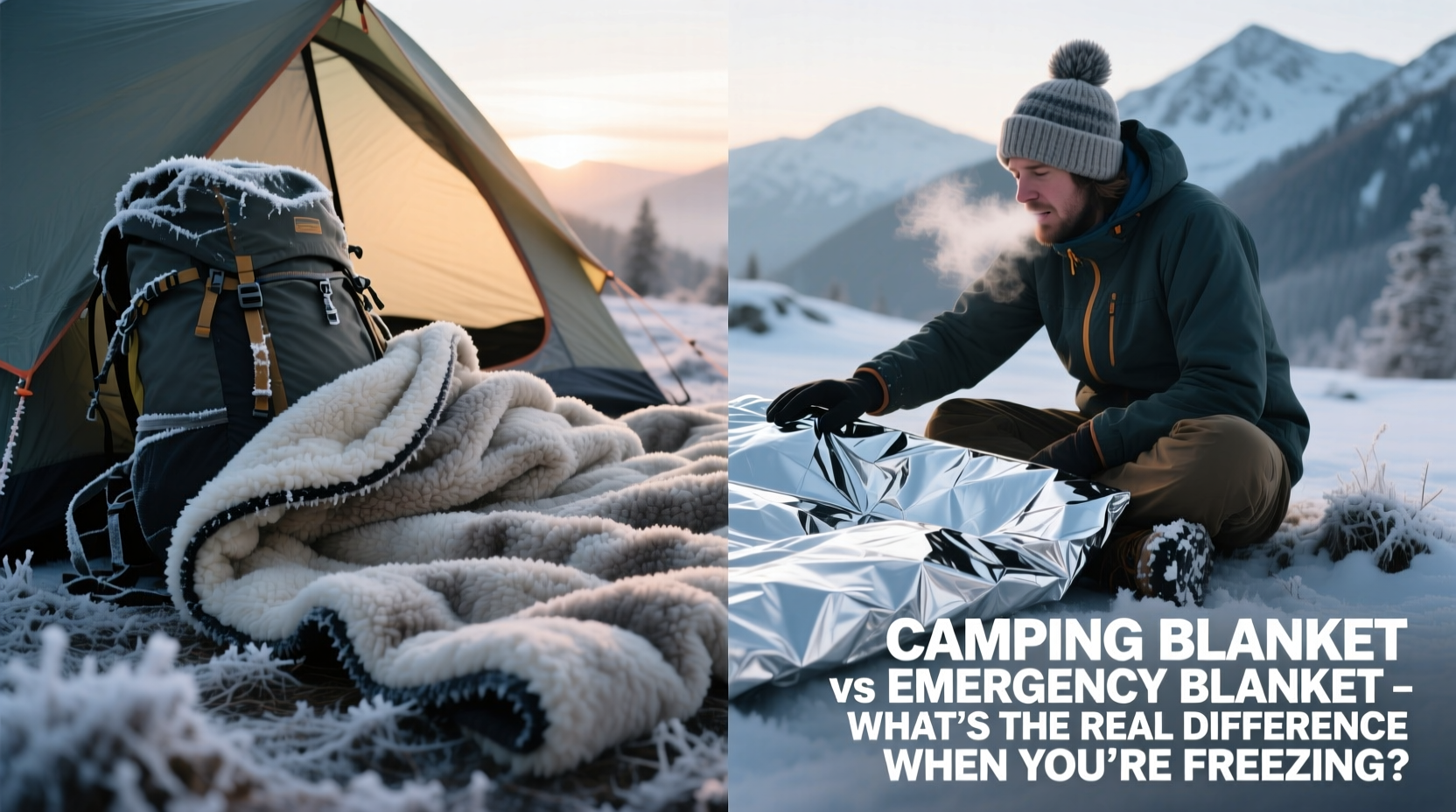
Camping blankets are designed for regular outdoor use. They prioritize comfort, weight, and packability while offering moderate insulation. Typically made from materials like fleece, wool, or synthetic fibers such as polyester, these blankets are meant to be cozy around a campfire, draped over your shoulders during stargazing, or used as an extra layer inside a sleeping bag.
They come in various sizes—often full or throw-sized—and are frequently water-resistant or quick-drying. Some are even treated with antimicrobial agents to resist odors after repeated use. While durable and comfortable, most camping blankets are not engineered for extreme conditions or long-term survival scenarios.
Emergency Blankets: Built for Survival
Also known as space blankets or Mylar blankets, emergency blankets are lightweight sheets made from metallized polyethylene terephthalate (MPET). Originally developed by NASA, their primary function is to reflect up to 90% of a person’s body heat back to them, minimizing radiant heat loss—a major factor in hypothermia.
These blankets are typically single-use, extremely compact, and included in most survival kits. They are not soft or comfortable, but they are highly effective at preventing heat loss in critical situations. Their reflective surface also doubles as a signaling tool for search and rescue teams.
Unlike camping blankets, emergency blankets do not insulate through thickness or loft. Instead, they work as radiant barriers, trapping heat that would otherwise escape into the environment.
“An emergency blanket isn't about comfort—it's about stopping heat loss fast. In a survival situation, even ten minutes under a Mylar sheet can stabilize core temperature.” — Dr. Lena Reyes, Wilderness Medicine Specialist
Key Differences: Function, Material, and Performance
The confusion between camping and emergency blankets often stems from assuming both provide warmth. But how they achieve it—and how well they perform under stress—is vastly different.
| Feature | Camping Blanket | Emergency Blanket |
|---|---|---|
| Primary Purpose | Comfort, warmth during recreational use | Prevent hypothermia in survival situations |
| Material | Fleece, wool, synthetic blends | Metallized plastic film (Mylar) |
| Insulation Type | Conductive (traps air) | Radiant (reflects body heat) |
| Durability | High (reusable, washable) | Low (easily torn, single-use) |
| Pack Size | Moderate (fits in backpack) | Ultra-compact (fits in pocket) |
| Water Resistance | Varies (some are water-repellent) | Yes (impermeable) |
| Wind Protection | Limited | None (unless layered) |
Real-World Scenario: When the Difference Matters
In October 2022, a hiker named Jordan Thompson got caught in an unexpected snowstorm on the Appalachian Trail near Roan Mountain. He had packed a thick fleece camping blanket for overnight stays but hadn’t included an emergency blanket. After slipping on ice and spraining his ankle, he couldn’t hike out before dark. Temperatures dropped to 28°F (-2°C).
He wrapped himself in the camping blanket, which helped initially. But as wind picked up and moisture seeped in from the wet ground, the blanket lost much of its insulating power. He began shivering uncontrollably. It wasn’t until rescuers arrived six hours later—with an emergency Mylar blanket—that his core temperature stabilized.
Afterward, he noted: “My camping blanket felt great at base camp, but once I was injured and exposed, it didn’t stop the heat from bleeding out. The foil blanket they gave me? That’s what kept me alive.”
This case illustrates a crucial point: comfort doesn’t equal survival efficiency. In prolonged exposure, moisture, wind, and immobility rapidly degrade the performance of traditional insulating materials.
How to Use Each Blanket Effectively
Knowing what each blanket does well allows you to use them strategically—even together.
- Use a camping blanket for planned warmth: Ideal during breaks, at campsites, or as an added layer in a sleeping system. Best when dry and sheltered.
- Reserve the emergency blanket for crisis response: Deploy only when signs of hypothermia appear—uncontrollable shivering, slurred speech, confusion—or when stranded.
- Layer them for maximum effect: Wrap the emergency blanket around your torso first (shiny side in), then cover with the camping blanket. This combines radiant reflection with conductive insulation.
- Improvise shelter if needed: Emergency blankets can be tied between trees to create a windbreak or makeshift tent. Their reflectivity helps signal rescuers during daylight.
- Avoid direct skin contact with Mylar: The material can feel clammy and may cause discomfort. Place clothing or fabric between skin and blanket when possible.
Checklist: What to Pack for Cold-Weather Safety
- ✅ One high-quality camping blanket (wool or synthetic)
- ✅ At least two emergency blankets (one in pack, one in first-aid kit)
- ✅ Insulated sleeping pad (critical for ground insulation)
- ✅ Waterproof outer layer (to protect blankets from moisture)
- ✅ Fire-starting tools (to generate external heat if needed)
- ✅ Whistle and signaling mirror (pair with emergency blanket’s reflectivity)
Frequently Asked Questions
Can I sleep under an emergency blanket overnight?
You can, but it’s not ideal. Emergency blankets don’t provide insulation from the ground, and condensation can build up. Use it as an inner radiant layer beneath a regular blanket or sleeping bag, not as a standalone solution.
Do emergency blankets really work?
Yes—but with caveats. They are highly effective at reducing radiant heat loss, which accounts for up to 50% of body heat loss in cold air. However, they do nothing against conductive (contact with cold surfaces) or convective (wind) heat loss unless combined with other insulation.
Is a camping blanket enough for winter camping?
Not alone. For winter conditions, a camping blanket should supplement a proper sleeping bag rated for the temperature. It adds warmth but shouldn’t replace technical gear designed for sub-40°F environments.
Final Thoughts: Know Your Tools Before You Need Them
The real difference between a camping blanket and an emergency blanket lies in intent and design. One is for comfort in controlled outdoor settings; the other is a last line of defense against cold-induced collapse. Neither replaces proper preparation, but together, they form part of a smart thermal management strategy.
If you're heading into the backcountry, ask yourself: Would I survive eight hours exposed with only what I’m carrying? An emergency blanket weighs ounces and costs a few dollars—yet it has saved countless lives. Don’t wait for a crisis to learn the difference.




 浙公网安备
33010002000092号
浙公网安备
33010002000092号 浙B2-20120091-4
Comments
No comments yet. Why don't you start the discussion?