
The off-road UTV market has long been dominated by two major players: Can-Am with its Commander series and Polaris with the General lineup. For years, Polaris General models have enjoyed strong brand loyalty, praised for their smooth ride and rugged versatility. But in recent seasons, a growing number of owners are trading in their Generals for Can-Am Commanders. Is this just a trend, or is there a fundamental shift happening in consumer preference?
By analyzing performance data, owner sentiment, mechanical design, and long-term ownership costs, it’s possible to determine whether riders are truly \"ditching\" Polaris—and if so, why.
Performance & Power: A Closer Look at Engine Output
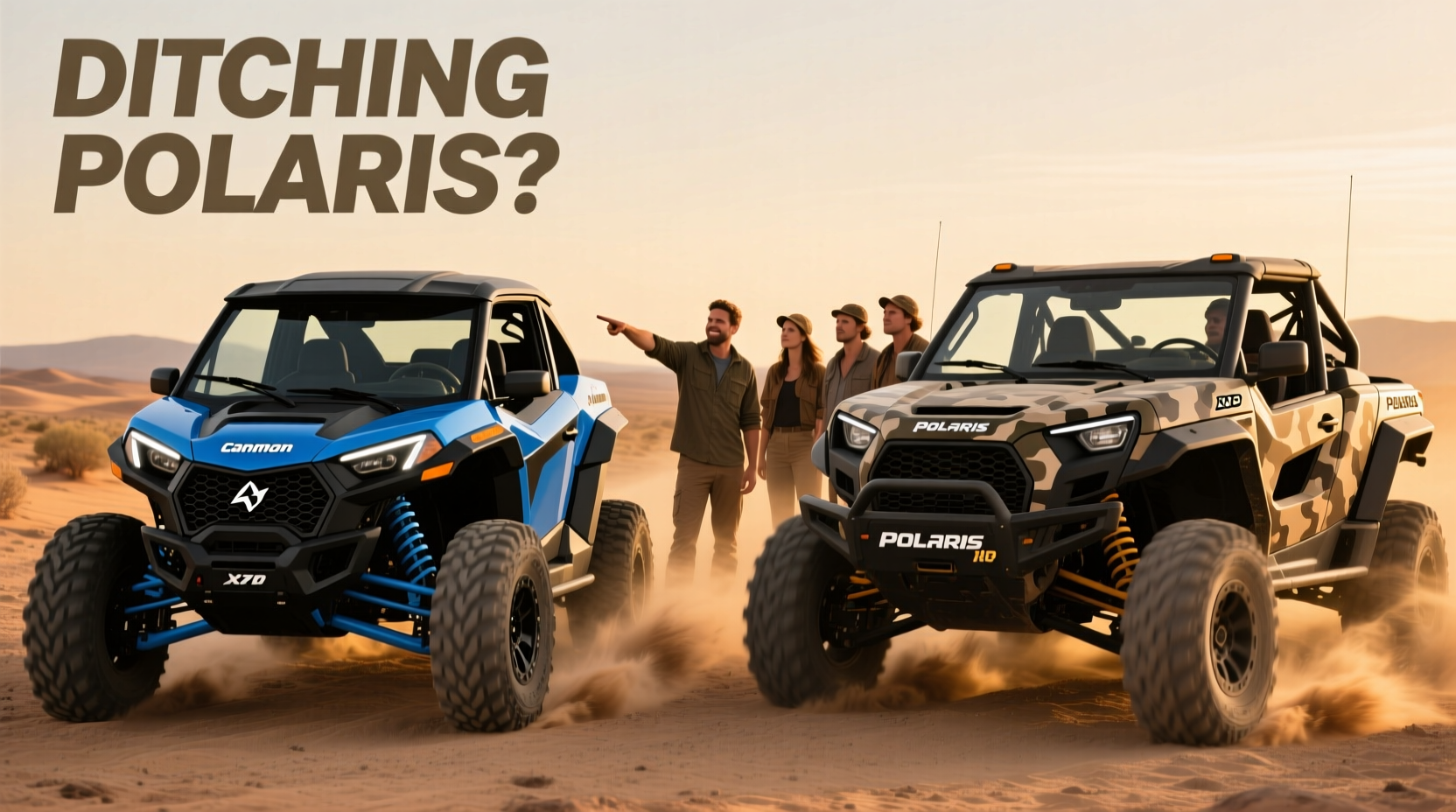
One of the most cited reasons for switching brands centers on engine performance. The Can-Am Commander, particularly the 1000R model, features a Rotax V-Twin engine that delivers up to 102 horsepower. In contrast, the Polaris General XP 1000 produces around 100 horsepower, but with a more linear power delivery.
While the difference may seem marginal on paper, real-world riding reveals key distinctions:
- Throttle response: The Commander’s engine is known for aggressive low-end torque and rapid acceleration.
- Top-end pull: Both vehicles perform well, but the Commander maintains momentum better on steep inclines.
- Transmission tuning: Can-Am’s Quick Response System (QRS) offers faster shifting compared to Polaris’ standard CVT setup.
“Many of our customers upgrading from Polaris mention they wanted more punch right off idle. The Commander delivers that.” — Jake R., Off-Road Shop Manager, Moab, UT
Handling and Suspension: Comfort vs. Capability
Ride quality is where Polaris has traditionally excelled. The General line features Dynamic Power Steering (DPS) and a well-tuned suspension system that absorbs bumps effectively, making it ideal for long trail rides or ranch work.
However, the Can-Am Commander responds with a wider stance (64 inches vs. Polaris’ 60), improved ground clearance (13.5” vs. 12”), and a rear trailing-arm suspension design that enhances rear-wheel traction on uneven terrain.
| Feature | Can-Am Commander 1000R | Polaris General XP 1000 |
|---|---|---|
| Horsepower | 102 HP | 100 HP |
| Ground Clearance | 13.5 in | 12 in |
| Track Width | 64 in | 60 in |
| Front Suspension Travel | 12 in | 10 in |
| Rear Suspension Travel | 13 in | 12 in |
| Towing Capacity | 3,000 lbs | 1,500 lbs |
For riders tackling rocky switchbacks or deep mud, the extra inch of travel and increased stability make the Commander a preferred choice. However, those prioritizing comfort on gravel roads or daily utility tasks may still favor the General’s smoother damping characteristics.
Reliability and Long-Term Ownership Trends
Forum discussions on platforms like Reddit’s r/utv and dedicated Facebook groups show a noticeable uptick in complaints about recurring issues with certain Polaris General models—particularly early 2020–2022 units. Common concerns include:
- EPS motor failures
- CVT belt degradation under high load
- Wiring harness corrosion in humid environments
- Front differential leaks after extended use
In contrast, Can-Am Commander owners report fewer electronic gremlins and stronger drivetrain durability, especially when modified. While both brands require regular maintenance, third-party mechanics note that Commander owners tend to spend less on warranty-related repairs post-first-year.
“We’ve seen a 30% increase in trade-ins of Polaris Generals for Can-Am Commanders over the past 18 months. Most cite reliability and resale value as deciding factors.” — Mike Tran, Service Director at Rocky Mountain Powersports
Mini Case Study: Why One Owner Switched Brands
Derek L., a Colorado-based trail guide, owned a 2021 Polaris General XP 1000 for two years. He used it daily during tourist season, averaging 800 miles per summer across high-altitude terrain. After replacing the EPS unit twice and experiencing repeated belt slippage on climbs, he sold it at 35% below MSRP.
He purchased a used 2022 Can-Am Commander X mr, added aftermarket tires and a snorkel, and has since logged over 1,200 miles with zero mechanical issues. “The Commander feels more built for punishment,” he said. “I’m not babying it anymore.”
Resale Value and Market Sentiment
Used UTV pricing data from Autotrader, UTVUnderground, and RZR Forums indicates a shift in depreciation curves. Over a three-year span, Polaris General models lose an average of 45–50% of MSRP, while Can-Am Commanders retain 55–60%. This suggests stronger buyer demand and perceived longevity for the Can-Am platform.
Additionally, online search trends support this movement. Google Trends shows a steady rise in searches for “Can-Am Commander reviews” and “Polaris General problems” since 2022, coinciding with increased social media chatter about potential quality control lapses at Polaris manufacturing plants.
Step-by-Step Guide: Evaluating Whether to Switch Brands
If you're considering leaving your Polaris General behind, follow this decision-making process:
- Assess current issues: List all repairs needed in the last 12 months and their total cost.
- Compare upgrade options: Research aftermarket parts that could improve your existing machine.
- Test drive alternatives: Schedule side-by-side test rides with the Can-Am Commander and other competitors.
- Analyze resale value: Use Kelley Blue Book Off-Road or local listings to estimate trade-in worth.
- Calculate ROI: Factor in fuel economy, maintenance intervals, and expected lifespan of the new model.
- Make a decision: Choose based on total cost of ownership, not just sticker price.
Frequently Asked Questions
Is the Can-Am Commander more comfortable than the Polaris General?
Comfort is subjective. The Polaris General typically offers a smoother ride due to superior damping and quieter cabin noise. However, the Commander compensates with greater adjustability in seating and a roomier cockpit for taller drivers.
Why do some people say Polaris is losing ground?
Criticism stems from inconsistent build quality in recent batches, slower innovation in suspension technology, and higher-than-average repair frequency reported by independent shops. Brand reputation takes time to rebuild once trust erodes.
Can I modify a Polaris General to match Commander performance?
You can significantly improve a General with upgrades like a secondary clutch kit, long-travel suspension, and larger tires. However, these modifications often exceed $4,000—approaching the price difference between a base General and a fully loaded Commander.
Final Verdict: Are Riders Really Ditching Polaris?
Yes—but selectively. It's not a mass exodus, but a quiet migration driven by practical decisions. Riders who push their machines hard, operate in extreme conditions, or prioritize resale value are increasingly choosing the Can-Am Commander. Meanwhile, Polaris still holds strong among casual users, families, and those who prefer a refined, turnkey experience.
The shift reflects evolving expectations. Modern off-roaders want not only power and agility but also proven durability and lower lifetime costs. In these categories, the Commander currently holds an edge.
Polaris remains a capable brand with loyal fans, but complacency in addressing customer-reported issues may continue to erode its lead. Can-Am, meanwhile, has capitalized on rider frustration with smart engineering and aggressive marketing toward serious enthusiasts.




 浙公网安备
33010002000092号
浙公网安备
33010002000092号 浙B2-20120091-4
Comments
No comments yet. Why don't you start the discussion?