
Bringing a real Christmas tree into your home transforms the atmosphere—filling the space with the scent of pine, fir, or spruce and marking the official start of the holiday season. For humans, it’s a nostalgic ritual. But for cats, this sudden addition to their environment isn’t just festive—it can be startling, intriguing, or even stressful. The short answer is yes: cats can absolutely sense when a real Christmas tree arrives. Their heightened senses, territorial instincts, and acute awareness of environmental changes make them highly responsive to such shifts. Understanding how and why they react can help pet owners create a safer, more harmonious holiday experience for both family and feline.
How Cats Perceive Environmental Changes
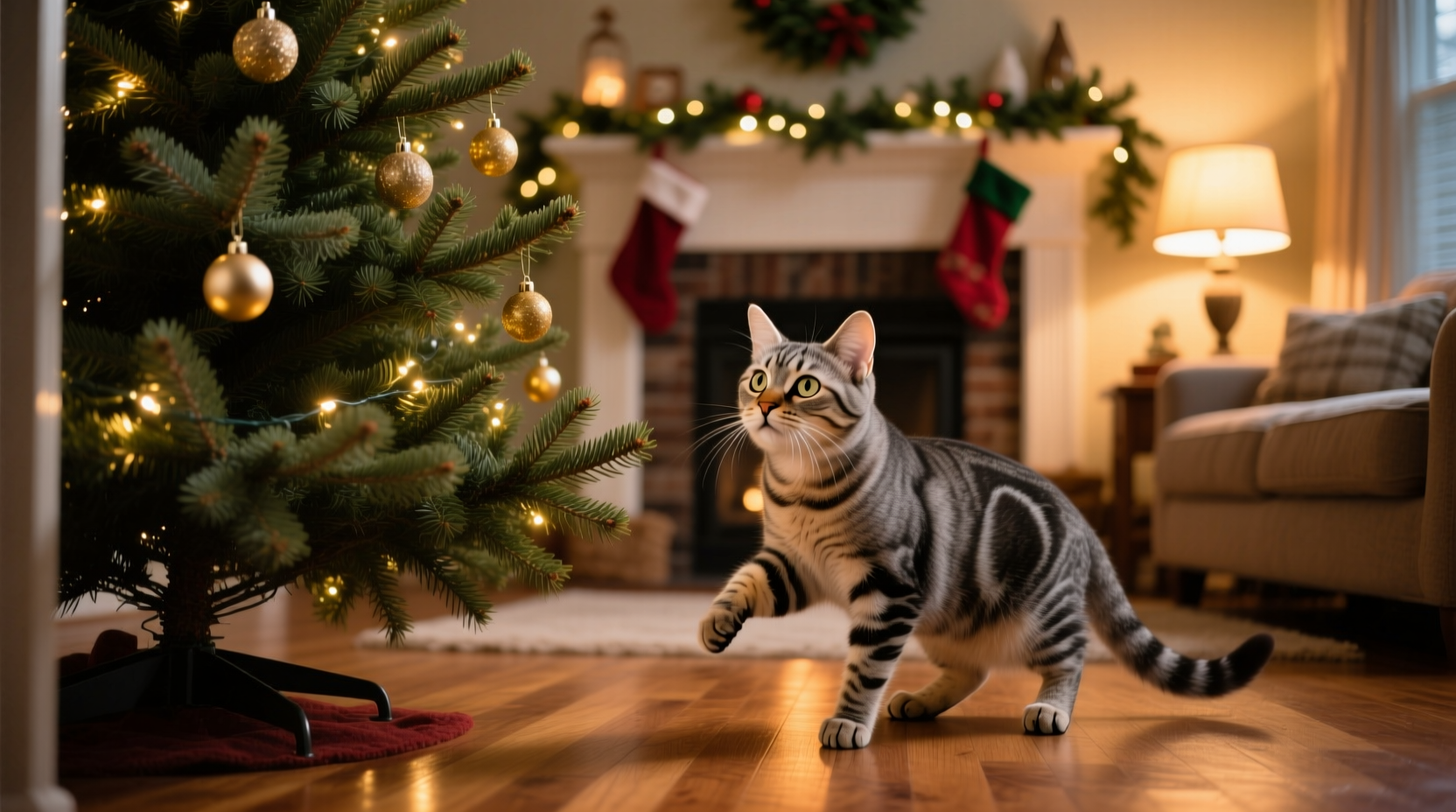
Cats are masters of observation. Unlike humans who might focus on visual aesthetics, cats process their world through a combination of smell, sound, movement, and subtle energy shifts. When a real Christmas tree enters the home, multiple sensory inputs are activated:
- Smell: Evergreen trees emit strong terpenes—organic compounds responsible for their distinctive aroma. To a cat with a sense of smell up to 14 times more sensitive than a human’s, this sudden olfactory shift is impossible to ignore.
- Sight: A large, unfamiliar object now occupies space in what was once open territory. Its shape, texture, and movement (especially if near a draft) can trigger curiosity or caution.
- Sound: Needles may drop, branches creak, or ornaments jingle—each sound potentially interpreted as a threat or opportunity.
- Energy: While not scientifically quantifiable, many cat owners report that their pets seem to “feel” the change in household mood during the holidays—more activity, visitors, altered routines—all of which affect feline stress levels.
A study published in *Applied Animal Behaviour Science* notes that domestic cats are particularly sensitive to novel objects in established environments, especially when those objects disrupt familiar scent markers or spatial navigation patterns.
Common Behavioral Reactions in Cats
When a real tree appears, cats may respond in a variety of ways—some playful, some problematic. These behaviors stem from instinctual drives rather than mere mischief.
Curiosity and Investigation
Most cats will approach the tree cautiously, circling it, sniffing the base, or pawing at low-hanging ornaments. This is normal investigative behavior. The trunk resembles a giant scratching post, while dangling decorations mimic prey-like movement.
Marking Behavior
Some cats may rub against the tree, chin-mark it, or even attempt to spray. This is an attempt to reassert ownership over territory now occupied by a foreign object. Neutered cats are less likely to spray, but stress-induced marking can still occur.
Climbing and Knocking Over
Evergreen branches offer footholds, making the tree an irresistible climbing structure. Unfortunately, cats often misjudge weight distribution, leading to toppled trees and broken ornaments. This is not defiance—it’s natural feline exploration gone awry.
Avoidance or Anxiety
Not all cats engage. Some withdraw, hide under furniture, or avoid the room entirely. Sudden changes, strong smells, and unpredictable sounds (like twinkling lights or timers) can overwhelm sensitive cats, especially seniors or those with past trauma.
“Cats don’t just live in our homes—they map them sensorially. A Christmas tree disrupts scent trails, sightlines, and safe pathways. What we see as decoration, they may perceive as an intrusion.” — Dr. Lena Torres, Feline Behavioral Specialist
Why Real Trees Are More Disruptive Than Artificial Ones
While both real and artificial trees alter the home environment, real trees present unique challenges due to their biological nature.
| Factor | Real Tree | Artificial Tree |
|---|---|---|
| Smell | Strong, natural terpenes; constantly releasing scent | Minimal to none (unless scented spray used) |
| Texture | Rough bark, sticky sap, shedding needles | Smooth plastic or fabric; consistent feel |
| Movement | Natural sway from drying or drafts | Static unless manually disturbed |
| Durability | Dries out over time; becomes unstable | Stable and predictable |
| Pet Risk | Potential toxicity from ingestion; sap irritation | Low risk (choking hazards from small parts only) |
The organic qualities of a real tree—its smell, moisture, and instability—make it far more “alive” from a cat’s perspective. This increases both attraction and unpredictability.
Step-by-Step Guide: Introducing a Real Tree Safely
Minimizing stress and danger requires planning. Follow this timeline to acclimate your cat gradually:
- Day 1–2: Unpack and Place Undecorated Tree
Set up the tree without ornaments, lights, or tinsel. Let it sit in its stand with water. Keep the door open so your cat can approach voluntarily. - Day 3: Supervised Exposure
Spend time near the tree with your cat. Offer treats or toys nearby to create positive associations. Observe reactions closely. - Day 4: Add Lights (Unplugged First)
Drape lights loosely and let your cat inspect them. Once comfortable, plug in briefly while supervising. Watch for fear of flickering or buzzing sounds. - Day 5: Begin Low-Level Decorating
Add sturdy, non-breakable ornaments above cat-reach. Avoid anything dangling within paw range. - Day 6–7: Final Setup and Monitoring
Complete decorating. Ensure the tree is anchored securely. Continue supervision, especially during peak activity hours.
This phased approach respects your cat’s need for predictability while allowing controlled exposure to novelty.
Tips for Keeping Cats and Trees Coexisting Peacefully
Even with careful introduction, ongoing management is essential. Use these strategies to protect both your pet and your decor.
- Secure the Tree: Anchor it to a wall using fishing line or a commercial tree stabilizer. Even a curious nudge from a cat can cause collapse.
- Block Access to Water: Cover the tree stand with a decorative skirt or plastic guard. Stagnant water may contain bacteria, fertilizers, or preservatives harmful if ingested.
- Avoid Toxic Ornaments: Skip tinsel (a choking hazard), chocolate decorations, or plants like mistletoe and holly, which are toxic to cats.
- Provide Alternatives: Set up a cat tree or cardboard scratcher nearby. Redirect climbing and scratching urges away from the Christmas tree.
- Use Motion Deterrents: Place aluminum foil or double-sided tape around the base—cats dislike the texture and will avoid stepping on it.
Mini Case Study: Bella and the Blue Spruce
Marissa, a cat owner in Portland, Oregon, brought home a 7-foot blue spruce for the holidays. Her 3-year-old tabby, Bella, had never encountered a real tree before. On the first night, Bella hissed and retreated to the bedroom. By morning, she returned to sniff the base, then began rubbing against the trunk—a sign of territorial reclamation.
Over the next two days, Marissa followed the step-by-step introduction plan. She placed Bella’s favorite feather toy near the tree and rewarded calm behavior with treats. She also installed a climbing tower across the room. Within four days, Bella stopped treating the tree as a threat. However, she did knock over a lower ornament when attempting to climb. Marissa responded by anchoring the tree to a bookshelf and removing all decorations below three feet.
By Christmas Eve, Bella still avoided direct contact—but no longer viewed the tree as an enemy. The key, Marissa noted, was patience and redirection, not punishment.
Frequently Asked Questions
Are real Christmas trees toxic to cats?
Most common varieties—such as fir, pine, and spruce—are only mildly toxic. Ingestion of needles can cause oral irritation, vomiting, or gastrointestinal upset. Sap may lead to drooling or skin irritation. Severe poisoning is rare but possible if large quantities are consumed. Avoid trees treated with pesticides or chemical preservatives.
Can I use essential oils to deter my cat from the tree?
Proceed with caution. While citrus scents (like orange or lemon) may repel cats, many essential oils—including tea tree, eucalyptus, and pine—are highly toxic to cats due to their liver’s inability to metabolize certain compounds. Always consult a veterinarian before using any scent-based deterrent.
My cat keeps drinking the tree water. Is it dangerous?
Yes. Tree water often contains mold, bacteria, and additives like aspirin or fertilizer meant to prolong freshness. These can cause vomiting, diarrhea, or more serious illness. Use a covered stand or place the tree in a room with a baby gate to block access.
Checklist: Cat-Safe Christmas Tree Setup
Ensure a safe and stress-free holiday with this actionable checklist:
- ✅ Choose a stable tree stand with a wide base
- ✅ Anchor the tree to a wall or ceiling support
- ✅ Cover the water reservoir with a secure guard
- ✅ Decorate only above cat-reach (minimum 3 feet high)
- ✅ Avoid tinsel, small ingestible ornaments, and toxic plants
- ✅ Introduce the tree gradually over several days
- ✅ Provide alternative climbing and scratching outlets
- ✅ Monitor interactions, especially during unsupervised hours
- ✅ Remove the tree promptly after the holidays to restore normalcy
Conclusion: Harmony Through Understanding
The arrival of a real Christmas tree is more than a seasonal upgrade—it’s a sensory event for your cat. Their reactions, whether cautious, curious, or chaotic, are rooted in instinct, not disobedience. By recognizing how deeply cats perceive environmental changes, owners can take proactive steps to reduce stress and prevent accidents. With thoughtful preparation, secure setup, and patient acclimation, it’s entirely possible to enjoy the beauty of a real tree while keeping your feline companion safe and calm.




 浙公网安备
33010002000092号
浙公网安备
33010002000092号 浙B2-20120091-4
Comments
No comments yet. Why don't you start the discussion?