
For centuries, the question of whether Christians can eat pork has sparked debate among believers, theologians, and scholars. Rooted in ancient dietary laws from the Old Testament and reshaped by teachings in the New Testament, this issue reflects broader tensions between religious tradition, scriptural interpretation, and cultural adaptation. Today, most Christians consume pork without hesitation, but for others—especially those exploring deeper roots or aligning with specific denominations—this topic remains spiritually significant. This article examines the biblical foundations, historical developments, and modern applications surrounding pork consumption in Christianity.
Biblical Foundations: Old Testament Dietary Laws
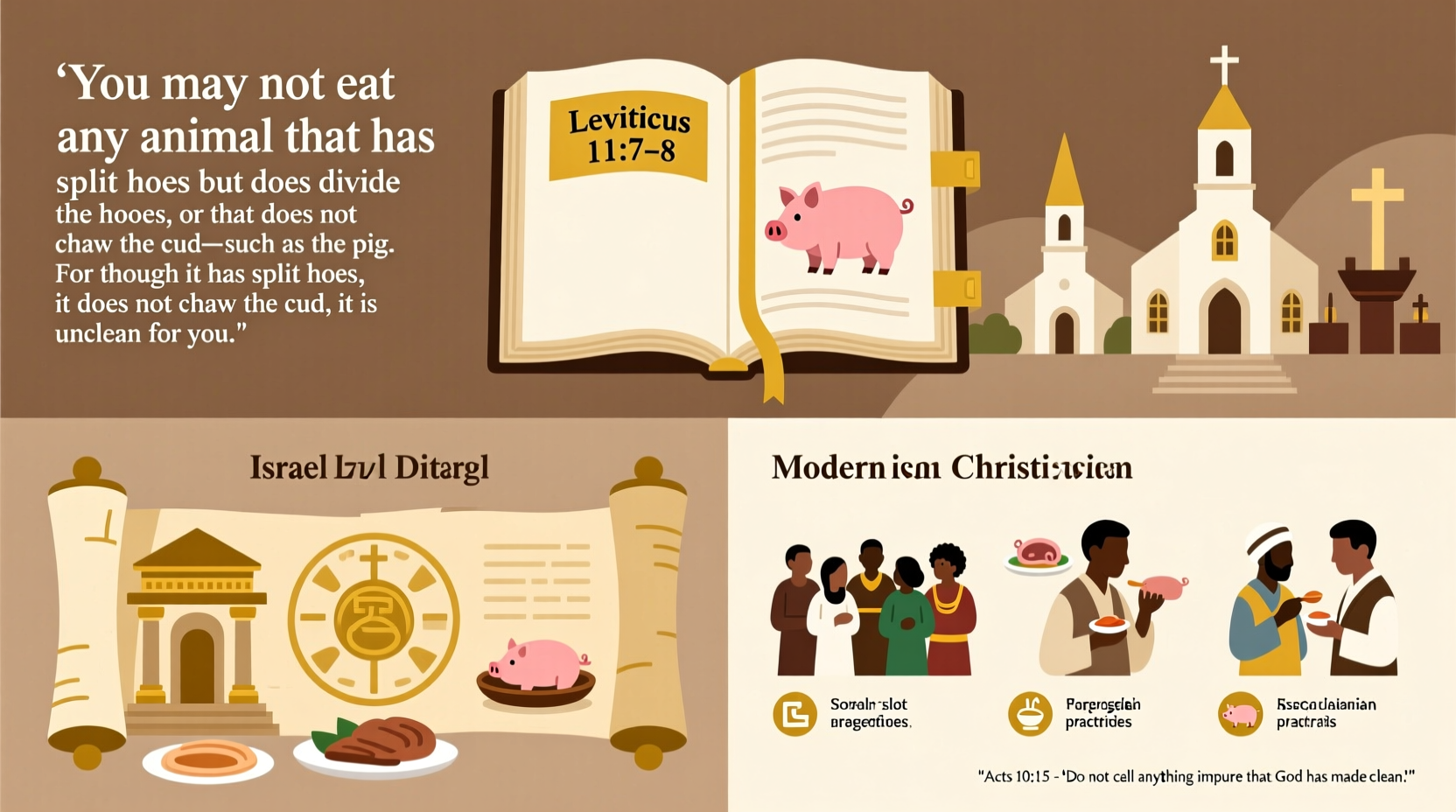
In the Hebrew Bible, particularly in Leviticus 11 and Deuteronomy 14, God gives detailed instructions to the Israelites about clean and unclean animals. Pigs are explicitly declared unclean because they “chew the cud” but do not “part the hoof.” The text prohibits consuming their meat or even touching their carcasses (Leviticus 11:7–8). These laws were part of a broader covenant designed to set Israel apart as a holy nation, influencing not only diet but also ritual purity and community identity.
At the time, these regulations had theological, health, and sociological dimensions. Avoiding pork helped distinguish Israelites from neighboring cultures where pig farming was common. Some scholars suggest that avoiding pork may have also reduced risks of diseases like trichinosis in hot climates before refrigeration.
“Do not defile yourselves by any of these creatures… I am the Lord your God; consecrate yourselves and be holy, because I am holy.” — Leviticus 11:44
The New Testament Shift: Jesus and the Apostles
A pivotal moment in understanding Christian dietary freedom occurs in the Gospels when Jesus declares all foods clean. In Mark 7:18–19, He states: “Don’t you see that nothing that enters a person from the outside can defile them? For it doesn’t go into their heart but into their stomach, and then out of the body.” The Gospel writer adds, “In saying this, Jesus declared all foods clean.”
This teaching marks a shift from external observance to internal righteousness. Jesus emphasizes that moral impurity comes from within—from thoughts and actions—not from what one eats.
Later, in Acts 10, Peter experiences a vision in which he sees a sheet descending from heaven filled with unclean animals. A voice commands him to kill and eat. When Peter objects, citing Jewish law, the voice responds: “Do not call anything impure that God has made clean.” This event precedes Peter’s ministry to Cornelius, a Gentile, signaling that the gospel is for all people—and that dietary restrictions should not be barriers to inclusion in the early Church.
Paul’s Teaching on Food and Conscience
The Apostle Paul further clarifies this principle in Romans 14 and 1 Corinthians 8. He affirms that no food is inherently unclean, but acknowledges that some believers still consider certain foods offensive due to their background or conscience. His guidance centers on love and edification: “Eat anything sold in the meat market without raising questions of conscience… But if someone says to you, ‘This has been offered in sacrifice,’ then do not eat it, both for the sake of the one who told you and for the sake of conscience” (1 Corinthians 10:25–28).
Paul’s emphasis is not on legalism but on unity and sensitivity. Believers have freedom in Christ, but that freedom should never cause another to stumble.
Modern Christian Practices and Denominational Views
Today, the vast majority of Christian denominations—including Catholic, Protestant, and Orthodox traditions—permit the consumption of pork. They interpret the New Testament teachings as fulfilling and transcending the Old Testament dietary codes. For these groups, following ceremonial laws is no longer necessary for salvation or holiness.
However, some Christian communities maintain stricter dietary standards. Seventh-day Adventists, for example, follow a health message rooted in Old Testament principles and typically avoid pork and other biblically unclean meats. Their stance is based on holistic wellness and obedience to God’s design for the body as a temple of the Holy Spirit (1 Corinthians 6:19–20).
Similarly, certain Messianic Jewish congregations blend New Testament faith with Torah observance, including kosher dietary practices. For them, abstaining from pork is an expression of cultural continuity and spiritual devotion.
Table: Christian Perspectives on Eating Pork
| Denomination/Group | Permits Pork? | Basis for Practice |
|---|---|---|
| Roman Catholic | Yes | New Testament freedom; ceremonial laws fulfilled in Christ |
| Protestant (Mainline & Evangelical) | Yes | Belief in grace over law; focus on faith and heart condition |
| Eastern Orthodox | Yes | Accepts New Testament authority; fasts observed seasonally |
| Seventh-day Adventist | No (typically) | Health message; adherence to Old Testament cleanliness laws |
| Messianic Jews | No (often) | Torah observance combined with belief in Jesus as Messiah |
Practical Guidance for Believers Today
So how should individual Christians navigate this issue? The answer often depends on context, conviction, and community. Here are key considerations:
- Freedom in Christ does not mean indifference to others’ beliefs. While Scripture grants liberty, exercising it thoughtlessly can harm relationships and witness.
- Personal conviction matters. If eating pork troubles your conscience, abstain until clarity comes through prayer and study.
- Cultural sensitivity is vital. In regions with strong Jewish or Muslim populations, avoiding pork may demonstrate respect and open doors for dialogue.
Checklist: Navigating Pork Consumption as a Christian
- Study relevant Scriptures (Leviticus 11, Mark 7, Acts 10, Romans 14).
- Examine your motives: Are you seeking freedom or pushing boundaries?
- Consider the impact on others in your church or family.
- Respect differing views without judgment.
- Pray for wisdom and discernment in daily choices.
“We are free in Christ, but freedom is not license—it is opportunity to serve in love.” — Dr. Timothy Chen, Theological Ethicist
Real-Life Example: A Church Fellowship Dilemma
In a small Midwestern town, a new believer from a Jewish background joined a Baptist church. During a potluck, he quietly avoided the pulled pork sandwiches. When asked, he explained his discomfort based on childhood teachings. Instead of dismissing his concerns, the pastor invited him to share his journey during a Bible study. The conversation led to a series on Christian liberty, deepening mutual understanding. The next fellowship meal included both pork and pork-free options, reflecting care for diverse convictions.
This scenario illustrates how compassion and education can transform potential conflict into spiritual growth.
Frequently Asked Questions
Does eating pork make a Christian less holy?
No. Holiness in the New Testament is tied to relationship with Christ and moral conduct, not dietary habits. Romans 14:20 states, “Do not destroy the work of God for the sake of food.”
Are Old Testament dietary laws still binding?
Most Christian traditions hold that these laws were part of the Mosaic covenant, fulfilled in Jesus. While ethical and moral laws remain relevant, ceremonial and dietary regulations are generally seen as no longer obligatory.
What if my church teaches against eating pork?
If your denomination or community discourages pork (e.g., Adventists), it’s important to understand their theological basis. You can respectfully engage with leaders, study Scripture together, and follow your conscience under pastoral guidance.
Conclusion: Freedom, Faith, and Respect
The question of whether Christians can eat pork ultimately points beyond food to deeper issues of faith, freedom, and fellowship. Scripture affirms that in Christ, believers are released from ceremonial restrictions. Yet, this liberty must be exercised with humility, love, and awareness of others’ convictions. Whether you choose to eat pork or abstain, let your decision flow from informed faith and reverence for God. What matters most is not what goes into the mouth, but what comes out of the heart.




 浙公网安备
33010002000092号
浙公网安备
33010002000092号 浙B2-20120091-4
Comments
No comments yet. Why don't you start the discussion?