
A tidy desk, a clean kitchen counter, an organized closet—these aren’t just signs of good housekeeping. They may be indicators of a sharper mind. While it’s easy to dismiss clutter as merely a visual nuisance, growing evidence from psychology, neuroscience, and behavioral research suggests that disorganized spaces do more than just look bad—they actively interfere with your ability to think clearly, concentrate, and manage stress.
The relationship between environment and cognition isn't new. Environmental psychologists have long studied how spatial design influences mood, productivity, and decision-making. But in recent years, the focus has shifted toward understanding how everyday domestic clutter—the stacks of mail, overflowing drawers, clothes on chairs, and unused gadgets—impacts mental function on a daily basis. The findings are both compelling and practical: your surroundings shape your thoughts, often without you realizing it.
The Science Behind Clutter and Cognitive Load
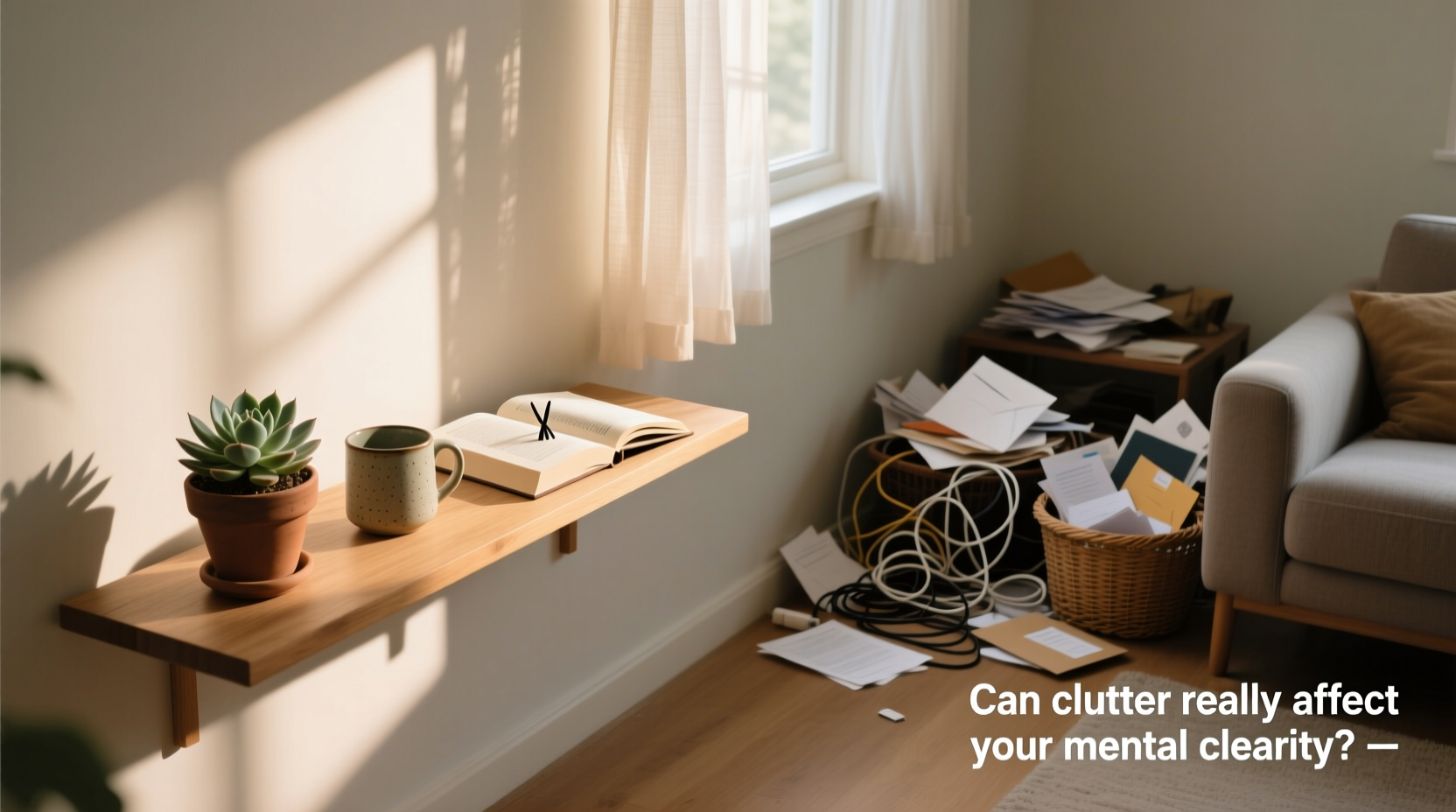
Human attention is a limited resource. When your eyes scan a cluttered room, your brain registers multiple stimuli simultaneously: a pile of books, unwashed dishes, tangled cords, half-finished projects. Each object competes for neural processing, even if only subconsciously. This phenomenon is known as “attentional overload,” where the brain struggles to filter irrelevant information, leaving less capacity for focused thought.
Research from Princeton University’s Neuroscience Institute demonstrated that physical clutter reduces the brain’s ability to process information efficiently. In one study, participants performed significantly better on memory and concentration tasks in minimalist environments compared to cluttered ones. Brain imaging revealed increased activity in regions associated with distraction and decreased activation in areas linked to goal-directed behavior when subjects were surrounded by disarray.
“Visual clutter overloads the brain’s attentional system, making it harder to prioritize tasks and maintain mental control.” — Dr. Sabine Kastner, Cognitive Neuroscientist, Princeton University
This cognitive burden doesn’t just slow you down—it can erode mental stamina over time. Chronic exposure to clutter may contribute to decision fatigue, reduced motivation, and even symptoms resembling mild anxiety. It's not that clutter causes mental illness, but rather that it amplifies existing stressors by creating a low-grade, persistent background noise in your nervous system.
How Clutter Disrupts Focus and Productivity
Imagine trying to write a report while sitting at a desk buried under old receipts, coffee cups, and unopened mail. Even if you're determined to work, your brain is constantly registering these distractions. You might find yourself pausing to reorganize a stack or wondering where a missing pen went. These micro-interruptions fragment attention, making deep work nearly impossible.
Psychologist Sherrie Bourg Carter identifies clutter as a primary contributor to “attention residue”—a term describing the mental lag that occurs when shifting focus between tasks or stimuli. In cluttered environments, this residue accumulates because the brain never fully disengages from the surrounding chaos.
Beyond momentary distractions, clutter also undermines long-term productivity. A 2019 study published in the *Journal of Environmental Psychology* found that individuals working in organized spaces completed tasks 25% faster and reported higher satisfaction with their output. Moreover, they were more likely to stick to schedules and meet deadlines—key markers of executive function.
Emotional and Psychological Effects of Domestic Clutter
The impact of clutter extends beyond cognition into emotional well-being. Many people report feeling guilty or ashamed about messy homes, even when the clutter doesn’t interfere with basic living functions. This self-criticism can create a feedback loop: the mess causes stress, stress reduces energy, low energy leads to procrastination, and procrastination results in more mess.
Clinical psychologist Dr. Nicole LePera explains that clutter often reflects unresolved emotional states. Accumulated items—whether unused gifts, old paperwork, or clothing from past life stages—can symbolize attachment, fear of loss, or avoidance. Letting go of physical objects becomes emotionally charged because it feels like relinquishing memories or identities.
Furthermore, cluttered spaces are frequently associated with lower perceived control over one’s life. A UCLA study on family lifestyles found that women who described their homes as cluttered had higher cortisol levels—a biological marker of chronic stress—than those who lived in organized environments. Elevated cortisol over time is linked to sleep disturbances, impaired memory, and weakened immune response.
“Clutter isn’t just dirt or mess. It’s postponed decisions, unprocessed emotions, and invisible obligations.” — Dr. Gail Brenner, Psychotherapist and Mindfulness Coach
Step-by-Step Guide to Decluttering for Mental Clarity
Reducing clutter doesn’t require a complete home overhaul. Small, consistent actions can yield noticeable improvements in focus and emotional balance. Follow this six-step approach to begin reclaiming your mental space through environmental order.
- Start with a single surface. Choose a small area like a nightstand, kitchen counter, or desk. Limiting scope prevents overwhelm and builds momentum.
- Sort items into four categories: Keep, Donate, Trash, Relocate. Be ruthless—if you haven’t used it in the past year and don’t love it, let it go.
- Create designated homes for essentials. Assign specific spots for frequently used items (e.g., charging cables in a drawer organizer, keys on a hook).
- Adopt the “one in, one out” rule. For every new item brought into your home, remove one. This maintains equilibrium and discourages accumulation.
- Schedule weekly reset minutes. Set a 10-minute timer each week to return misplaced items, wipe surfaces, and reassess clutter hotspots.
- Evaluate emotional attachments. If an item brings up guilt or nostalgia but no joy or utility, consider photographing it before letting go.
Real-Life Impact: A Mini Case Study
Sarah, a freelance graphic designer from Portland, struggled with missed deadlines and constant fatigue despite working from home with flexible hours. Her workspace was functional but crowded: monitors half-covered by sketches, chargers snaking across the floor, and a chair piled high with clothes.
After reading about the link between environment and focus, she committed to a three-week decluttering plan. She cleared her desk completely, kept only essential tools within arm’s reach, and implemented nightly cleanup rituals. Within ten days, she noticed changes: fewer distractions during client calls, improved sleep quality, and a 30% increase in completed projects per week.
“I didn’t realize how much mental energy I was wasting just navigating my space,” Sarah said. “Now, when I sit down to work, my brain knows it’s time to focus—not sort through yesterday’s mess.”
Do’s and Don’ts of Sustainable Organization
| Do | Don’t |
|---|---|
| Label storage containers for quick identification | Store items without clear labels or categories |
| Use vertical space (shelves, hooks) to free up floors and desks | Stack items precariously or block walkways |
| Digitize documents to reduce paper clutter | Keep multiple copies of the same file in different places |
| Practice “touch it once” for mail and small tasks | Put things down “for now” without a plan to address them |
| Involve household members in shared-space organization | Declutter others’ belongings without consent |
FAQ: Common Questions About Clutter and Mental Function
Does minimalism guarantee better focus?
Not necessarily. While minimalism can reduce distractions, extreme emptiness may feel sterile or uncomfortable for some people. The key is intentional design—keeping only what serves a purpose or brings genuine value. Personal comfort matters as much as visual simplicity.
What if I live with someone who refuses to declutter?
You can still create zones of control. Focus on organizing your personal spaces and routines. Use baskets or screens to section off cluttered areas visually. Open communication about shared spaces helps, but avoid turning organization into a battleground.
Is digital clutter just as harmful as physical clutter?
Yes. Overflowing inboxes, disorganized files, and too many open browser tabs trigger similar cognitive strain. Digital clutter contributes to decision fatigue and task-switching errors. Regular digital cleanup—unsubscribing, archiving emails, deleting unused apps—is just as important as physical tidying.
Checklist: Building a Clutter-Resistant Environment
- ✅ Identify your top three clutter zones (e.g., entryway, home office, bathroom)
- ✅ Remove non-essential items from sight in high-focus areas
- ✅ Establish a daily 5-minute reset routine
- ✅ Digitize recurring paperwork (bills, receipts, notes)
- ✅ Install organizational tools (hooks, trays, labeled bins)
- ✅ Schedule a monthly “clutter audit” for each room
- ✅ Practice mindful consumption—ask “Do I need this?” before buying
Conclusion: Clear Space, Clear Mind
Clutter is more than a household issue—it’s a cognitive disruptor. Every misplaced object, every overcrowded shelf, adds to the invisible tax your brain pays for living in disorder. But the reverse is also true: intentional organization fosters mental clarity, sustained attention, and emotional resilience.
You don’t need perfection. You need progress. Start small, stay consistent, and observe how your thinking shifts when your environment supports rather than competes with your goals. A calmer mind begins not with willpower alone, but with the quiet dignity of a well-kept space.




 浙公网安备
33010002000092号
浙公网安备
33010002000092号 浙B2-20120091-4
Comments
No comments yet. Why don't you start the discussion?