
Anxiety affects millions worldwide, often disrupting sleep, focus, and daily functioning. While therapy and medication remain essential tools, many people seek accessible, low-cost strategies to manage symptoms. One such method—journaling—has gained attention not just as a reflective habit but as a clinically supported practice for reducing anxiety. Research shows that writing about thoughts and feelings can rewire emotional responses, improve self-awareness, and create psychological distance from distressing experiences. But does journaling every day actually help? And if so, which format delivers the most benefit? This article explores the science behind daily journaling, evaluates different approaches, and provides practical guidance for building a sustainable routine.
The Science of Journaling and Anxiety Reduction
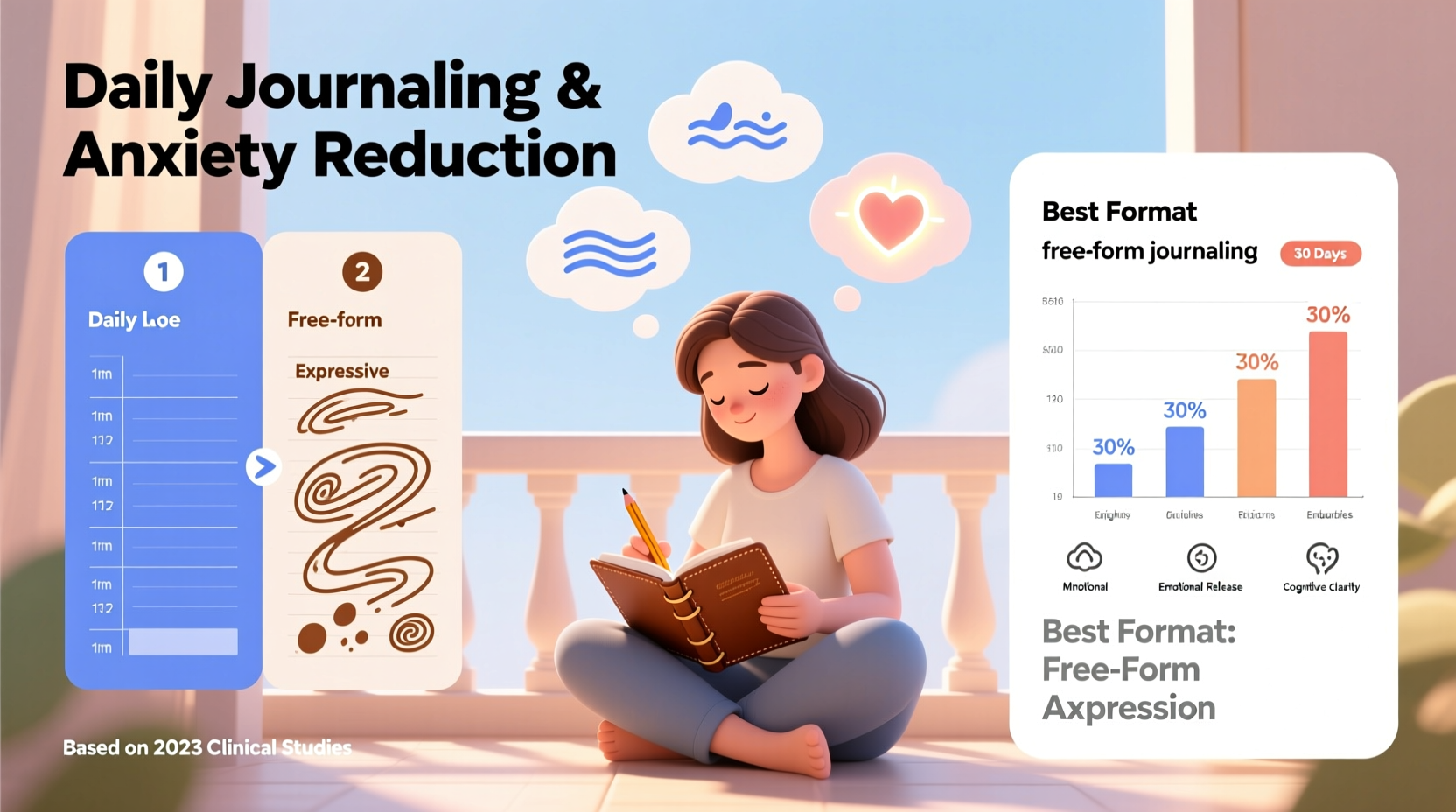
Decades of psychological research support expressive writing as a tool for emotional regulation. Dr. James Pennebaker, a pioneer in this field, conducted landmark studies showing that individuals who wrote about traumatic or stressful events for 15–20 minutes over several days experienced measurable improvements in mental and physical health. These benefits included reduced anxiety, lower blood pressure, and stronger immune function.
The mechanism lies in how writing engages the brain. When we articulate emotions on paper, we activate the prefrontal cortex—the area responsible for logic, planning, and emotional control. This process helps override the amygdala, which governs fear and stress responses. Over time, regular journaling can reduce the intensity and frequency of anxious thoughts by promoting cognitive reappraisal: reframing negative narratives into more balanced perspectives.
“Writing transforms intangible fears into concrete words. Once they’re on paper, they become something you can examine, question, and ultimately manage.” — Dr. Susan David, Harvard psychologist and author of Emotional Agility
A 2020 meta-analysis published in the Journal of Affective Disorders reviewed 37 studies involving over 3,000 participants and found that expressive writing significantly reduced symptoms of anxiety and depression, especially when practiced consistently for at least two weeks. Notably, the greatest improvements were seen in those who journaled daily rather than sporadically.
Which Journaling Formats Work Best for Anxiety?
Not all journaling is equally effective. The format matters. Some methods promote rumination—repetitive, unproductive thinking—while others encourage insight and resolution. Below is a comparison of five common journaling styles and their impact on anxiety.
| Format | Best For | Effectiveness for Anxiety | Potential Risk |
|---|---|---|---|
| Expressive Writing | Processing trauma, releasing pent-up emotions | High – proven in clinical trials | Short-term emotional discomfort |
| Gratitude Journaling | Shifting focus from fear to appreciation | High – builds positive neural pathways | Feeling forced positivity |
| Stream-of-Consciousness | Quick emotional release | Moderate – can lead to rumination | Reinforces anxious loops |
| CBT-Based Journaling | Challenging distorted thoughts | Very High – aligns with therapy models | Requires learning structure |
| Mindfulness Journaling | Grounding in the present moment | High – reduces avoidance behaviors | Less effective for deep trauma |
Why Structure Matters
Unstructured venting—writing whatever comes to mind without reflection—may offer temporary relief but rarely leads to lasting change. In contrast, structured formats guide the mind toward problem-solving and perspective-taking. For example, Cognitive Behavioral Therapy (CBT)-based journaling uses prompts like “What evidence supports this worry?” or “What would I tell a friend in this situation?” These questions disrupt automatic negative thinking, a core driver of anxiety.
A Step-by-Step Guide to Effective Daily Journaling
Starting a journaling habit doesn’t require hours or perfect handwriting. What it does require is consistency, intention, and the right framework. Follow this five-step process to build a practice that reduces anxiety over time.
- Choose Your Format: Begin with one approach. Gratitude journaling is ideal for beginners; CBT-based writing suits those with persistent worries.
- Set a Fixed Time: Attach journaling to an existing habit—after brushing your teeth, with morning coffee, or before bed. Consistency reinforces neural pathways.
- Limits Duration: Start with 5–10 minutes. Long entries aren’t necessary. Focus on depth, not length.
- Use Prompts: Avoid blank-page paralysis. Use guided questions like:
- What am I feeling right now, and where do I feel it in my body?
- What’s the worst that could happen? How likely is it?
- What’s one small step I can take today to feel more in control?
- Review Weekly: Every Sunday, skim your entries. Look for patterns: recurring triggers, progress in coping, shifts in mood. This reflection turns writing into insight.
Real Impact: A Mini Case Study
Sarah, a 34-year-old project manager, struggled with generalized anxiety disorder. She worried constantly about deadlines, relationships, and worst-case scenarios. Her therapist recommended daily journaling using a CBT template. For 21 days, she spent 10 minutes each evening completing a three-column chart: Situation, Automatic Thought, and Balanced Response.
One entry read:
- Situation: Boss didn’t reply to my email.
- Automatic Thought: I must have made a mistake. He’s angry with me.
- Balanced Response: He’s likely busy. I’ve received positive feedback before. No evidence he’s upset.
After three weeks, Sarah reported a 40% reduction in anxiety symptoms on the GAD-7 scale. More importantly, she noticed fewer nighttime awakenings and less compulsive checking of her phone. “Writing it down made the worry smaller,” she said. “It wasn’t magic, but it gave me a way to talk back to my fear.”
Common Pitfalls and How to Avoid Them
Even with good intentions, journaling can backfire if done incorrectly. Here are three common mistakes and how to correct them:
- Rumination Instead of Reflection: Repeating the same fears without analysis keeps the brain in threat mode. Solution: Add a “What did I learn?” section to each entry.
- Inconsistency: Skipping days breaks momentum. Solution: Use habit-stacking—journal right after another daily activity.
- Overemphasis on Perfection: Worrying about grammar or neatness shifts focus from emotion to performance. Solution: Use a cheap notebook. Remind yourself: this is for your eyes only.
“Journaling isn’t about creating literature. It’s about creating clarity.” — Dr. Jamie Pennebaker, University of Texas Psychology Department
Checklist: Build Your Anxiety-Reducing Journaling Routine
✅ Daily Journaling Success Checklist
- ☑ Choose one primary format (e.g., gratitude, CBT, mindfulness)
- ☑ Set a consistent time and place
- ☑ Use at least one prompt per session
- ☑ Limit writing to 5–15 minutes
- ☑ Write without editing or judging content
- ☑ Review entries weekly for patterns
- ☑ Adjust format if no improvement after 3 weeks
Frequently Asked Questions
How long does it take for journaling to reduce anxiety?
Most people notice subtle shifts within 2–3 weeks of daily practice. Clinical studies show significant reductions in anxiety scores after 15–21 days. However, lasting change requires ongoing use, much like physical exercise.
Is digital journaling as effective as pen and paper?
For some, yes—especially if typing feels faster or more private. However, handwriting activates motor memory and slows down thinking, which can enhance emotional processing. If using a device, disable notifications and avoid spell-check to maintain flow.
Should I share my journal with my therapist?
Only if you feel safe and it adds value. Many therapists welcome insights from journals but don’t require reading entries. You can summarize key themes instead of sharing verbatim text.
Conclusion: Turn Words Into Wellness
Daily journaling is more than a habit—it’s a form of self-rescue. By giving shape to invisible fears, it transforms anxiety from an overwhelming force into a manageable experience. The best format depends on your needs: gratitude journaling lifts mood, CBT writing challenges distortions, and mindfulness entries anchor you in the present. What matters most is not perfection, but persistence.
You don’t need special tools or hours of free time. Just a notebook, five minutes, and the willingness to show up for yourself. Over time, those small moments accumulate into greater resilience, clarity, and peace. The page doesn’t judge. It listens. And in that silent exchange, healing begins.




 浙公网安备
33010002000092号
浙公网安备
33010002000092号 浙B2-20120091-4
Comments
No comments yet. Why don't you start the discussion?