
Anxiety affects millions of people worldwide, often manifesting as persistent worry, physical tension, or intrusive thoughts. While therapy and medication are vital tools, many seek accessible, low-cost strategies to manage symptoms. One such practice—journaling—has gained attention not just as a personal habit but as a scientifically supported method for calming the mind. The question remains: can putting pen to paper actually ease anxiety? And if so, how should you begin in a way that's sustainable and effective?
The answer lies in both psychology and neuroscience. Writing about emotions engages areas of the brain involved in regulation and self-reflection. Over time, this process can reframe anxious thinking patterns, create emotional distance from stressors, and foster greater self-awareness. But like any skill, effective journaling requires intention and structure—not just random venting. When done right, it becomes less about documenting problems and more about creating clarity.
The Science Behind Journaling and Anxiety Reduction
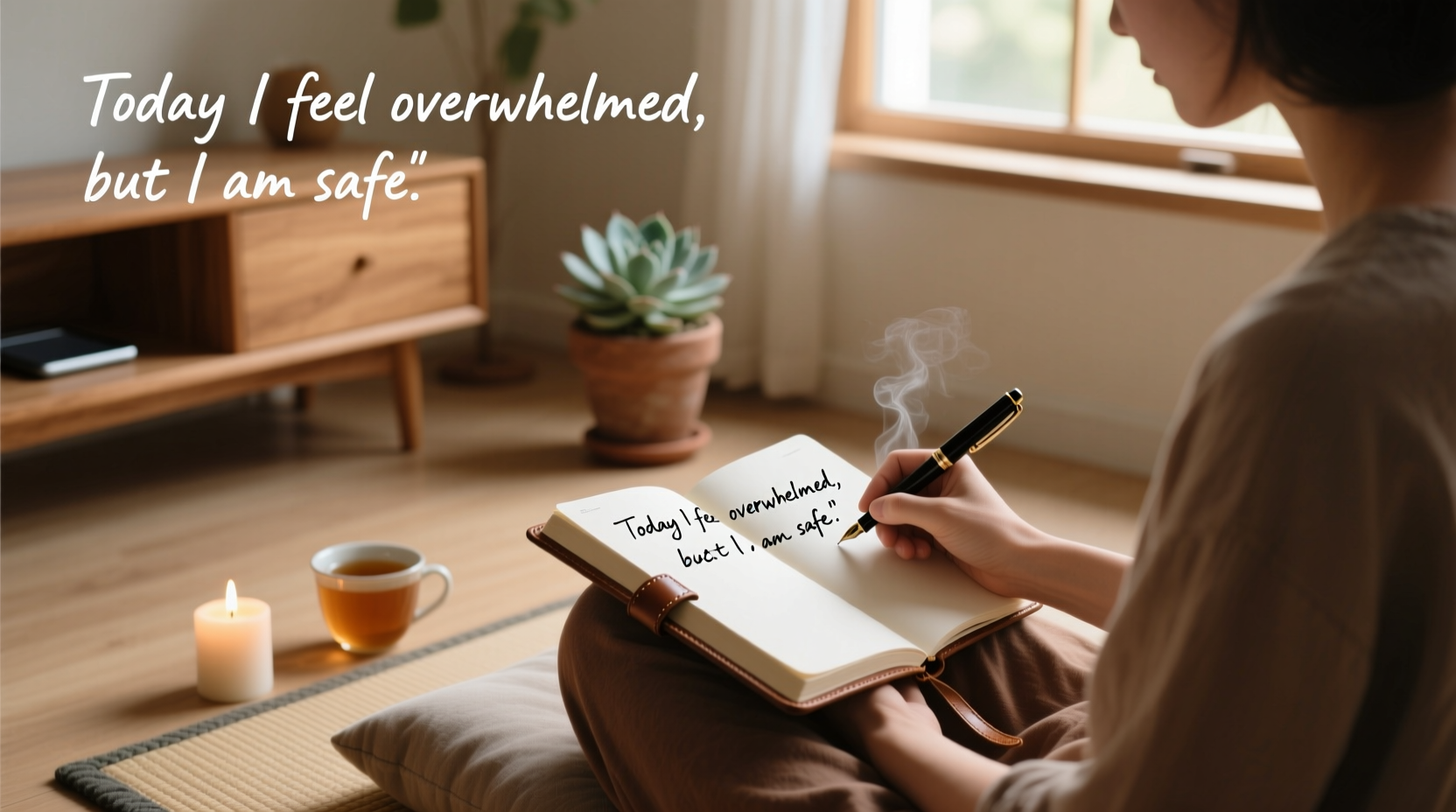
Decades of research support expressive writing as a tool for psychological relief. A landmark study by Dr. James Pennebaker in the 1980s found that individuals who wrote about traumatic or emotionally charged experiences for 15–20 minutes over several days showed improved immune function, reduced stress levels, and fewer visits to health centers. Importantly, these benefits weren’t limited to those with diagnosed conditions—they appeared across diverse populations.
More recent studies reinforce these findings. A 2018 meta-analysis published in the Journal of Affective Disorders concluded that expressive writing significantly reduces symptoms of anxiety and depression, especially when practiced consistently over two to four weeks. The mechanism is twofold: cognitive processing and emotional regulation. Writing forces the brain to organize chaotic thoughts into coherent narratives, which diminishes their emotional intensity. It also activates the prefrontal cortex—the region responsible for reasoning—helping override the amygdala’s fear-driven responses.
Additionally, journaling disrupts rumination, a hallmark of anxiety where the same negative thoughts loop endlessly. By externalizing worries onto paper, individuals gain perspective. They see thoughts as transient mental events rather than absolute truths. This shift alone can reduce the grip of anxiety.
“Writing about emotional experiences doesn’t erase pain, but it gives the mind a way to make sense of it. That sense-making is healing.” — Dr. Matthew D. Lieberman, UCLA Social Cognitive Neuroscience Lab
How Journaling Works: The Psychological Mechanisms
Journals aren't diaries in the traditional sense—they’re cognitive tools. Effective journaling operates through several key psychological processes:
- Emotional Labeling: Naming emotions (\"I feel overwhelmed,\" \"I’m afraid of failing\") reduces their neural impact. Brain imaging shows that labeling feelings calms the amygdala almost immediately.
- Cognitive Reappraisal: Writing allows you to reframe situations. Instead of “Everything is falling apart,” you might write, “This situation is difficult, but I’ve handled hard things before.”
- Problem-Solving Activation: Once emotions are on paper, the brain shifts from emotional reactivity to solution-focused thinking. You begin asking, “What can I do?” instead of spiraling.
- Mindfulness and Presence: The act of writing grounds you in the present moment, interrupting anxious projections about the future.
These mechanisms explain why even brief daily entries can lead to noticeable changes in mood and mental resilience. Unlike talk therapy, journaling offers privacy and immediacy—no scheduling, no cost, no judgment.
How to Start Journaling Effectively: A Step-by-Step Guide
Starting a journaling habit doesn’t require special tools or hours of time. What matters most is consistency and honesty. Follow this practical timeline to build an effective routine:
- Choose Your Medium (Day 1): Decide whether you prefer a physical notebook or a digital app. Paper may enhance mindfulness due to tactile engagement; apps offer searchability and password protection. Pick what feels easiest to maintain.
- Set a Realistic Time (Day 2): Begin with 5–10 minutes per day. Morning helps set a calm tone; evening aids reflection. Avoid tying it to perfection—some days will be shorter, and that’s okay.
- Create a Prompt System (Day 3): Use structured prompts to avoid blank-page paralysis. Examples: “What’s weighing on me right now?” or “What emotion am I avoiding?”
- Write Freely (Ongoing): Don’t edit, censor, or worry about grammar. Let thoughts flow. If stuck, write “I don’t know what to say” until something emerges.
- Review Weekly (After 7 Days): Once a week, read back your entries. Look for patterns: recurring fears, triggers, or small wins. This builds self-insight without daily analysis.
The goal isn’t literary quality—it’s emotional honesty. Over time, you’ll notice shifts: fewer panic spikes, quicker recovery from stress, and increased self-compassion.
Common Pitfalls and How to Avoid Them
Many people abandon journaling within weeks. Often, it’s not lack of desire but missteps in approach. Below is a comparison of common mistakes and better alternatives:
| Don’t | Do |
|---|---|
| Wait for the “right mood” to write | Write regardless of how you feel—even one sentence counts |
| Expect immediate results | Track subtle shifts over 2–4 weeks |
| Focus only on negative emotions | Balanced entries: include gratitude, small victories, or neutral observations |
| Keep the journal out in the open if privacy is a concern | Store it securely—use a lockbox or encrypted app |
| Force deep emotional writing every day | Vary content: stream-of-consciousness, lists, sketches, quotes |
Another frequent error is treating journaling as a chore. To prevent burnout, vary your format. Some days, try bullet points. Other days, use guided prompts or answer a single question. Flexibility sustains long-term engagement.
Real Example: How Sarah Reduced Her Anxiety Through Journaling
Sarah, a 34-year-old project manager, struggled with chronic work-related anxiety. She’d lie awake at night replaying meetings, fearing criticism. After reading about expressive writing, she committed to 10 minutes each morning with a simple prompt: “What’s on my mind?”
At first, her entries were fragmented: “Deadline pressure,” “Afraid I’ll mess up,” “Can’t keep up.” But within two weeks, she began noticing patterns. Most of her anxiety centered on perceived expectations, not actual feedback. She started adding a second sentence: “Is this thought helpful?” That small addition created space between feeling and belief.
By week four, Sarah added a nightly gratitude line: “One thing that went well today…” This didn’t negate her stress but balanced it. After six weeks, she reported fewer nighttime ruminations and greater confidence in high-pressure situations. Her therapist noted improved emotional regulation during sessions. For Sarah, journaling wasn’t a cure—but a compass.
Actionable Tips for Immediate Results
To get the most out of journaling, integrate these evidence-based strategies:
Essential Journaling Checklist
Use this checklist to ensure your practice stays effective and sustainable:
- ☑ Choose a consistent time and place
- ☑ Keep your journal accessible (on your nightstand, in your bag)
- ☑ Start with a prompt if you feel stuck
- ☑ Write without editing or judging content
- ☑ Protect your privacy—store securely
- ☑ Review weekly for patterns, not daily for perfection
- ☑ Include at least one positive note per entry (e.g., “I handled X well”)
- ☑ Be patient—benefits accumulate over weeks, not days
Frequently Asked Questions
How long does it take to see results from journaling?
Most people notice subtle improvements in clarity and mood within 2–3 weeks of consistent practice. Significant reductions in anxiety symptoms typically emerge after 4–6 weeks. Like physical exercise, the benefits compound over time.
Should I share my journal with a therapist?
If you’re in therapy, sharing select entries can deepen treatment. However, journals are meant to be private spaces first. Only disclose what feels safe. Many therapists encourage journaling precisely because it fosters self-discovery outside sessions.
What if writing makes me feel more anxious?
This can happen initially, especially when confronting suppressed emotions. If distress increases, scale back: write for 3 minutes instead of 10, focus on neutral topics, or add grounding statements like “I am safe right now.” If anxiety persists, consult a mental health professional.
Conclusion: Turn Thoughts Into Tools
Journalling isn’t magic—it’s method. It won’t erase life’s stressors, but it transforms how you relate to them. By giving anxiety a voice on paper, you rob it of its silence-powered intensity. You begin to see thoughts as passing weather, not permanent climate.
The barrier to starting has never been lower: a notebook, a pen, and five minutes. No expertise required. No rules beyond honesty and regularity. Whether you’re managing mild stress or navigating deeper anxiety, the page waits without judgment.




 浙公网安备
33010002000092号
浙公网安备
33010002000092号 浙B2-20120091-4
Comments
No comments yet. Why don't you start the discussion?