
Anxiety affects millions of people worldwide, often interfering with daily life, relationships, and long-term well-being. While therapy and medication are common treatments, many seek accessible, low-cost tools to manage symptoms. One such tool—journaling—has gained significant attention for its mental health benefits. But can simply writing in a notebook actually reduce anxiety? The answer, supported by growing scientific evidence, is yes. When done intentionally and consistently, journaling can rewire thought patterns, improve emotional regulation, and provide lasting relief from anxious thoughts.
This article explores the psychological mechanisms behind journaling, reviews clinical studies confirming its effectiveness, and outlines specific, research-backed methods that deliver measurable results. Whether you're new to journaling or looking to refine your practice, these strategies offer a practical path toward greater calm and clarity.
The Science Behind Journaling and Anxiety Reduction
Journaling works not because it's magical, but because it engages core cognitive and emotional processes in the brain. Writing about stressful experiences activates the prefrontal cortex—the area responsible for rational thinking and emotional control—while reducing activity in the amygdala, which governs fear and threat detection.
A landmark study published in the Journal of Clinical Psychology found that participants who engaged in expressive writing for 15–20 minutes a day over three consecutive days reported significantly lower anxiety levels compared to a control group. These effects were sustained for up to six weeks post-intervention. Researchers concluded that putting emotions into words helps “name and tame” them, reducing their emotional intensity.
Another study from the University of Texas at Austin demonstrated that expressive writing decreased cortisol levels—the body’s primary stress hormone—indicating a physiological shift away from the fight-or-flight response. This biological change supports what many practitioners observe: journaling doesn’t just make people feel better; it changes how their bodies respond to stress.
“Writing about emotional upheavals allows individuals to gain distance from their feelings, making them less overwhelming and more manageable.” — Dr. James Pennebaker, Psychologist and Pioneer in Expressive Writing Research
Proven Journaling Methods That Reduce Anxiety
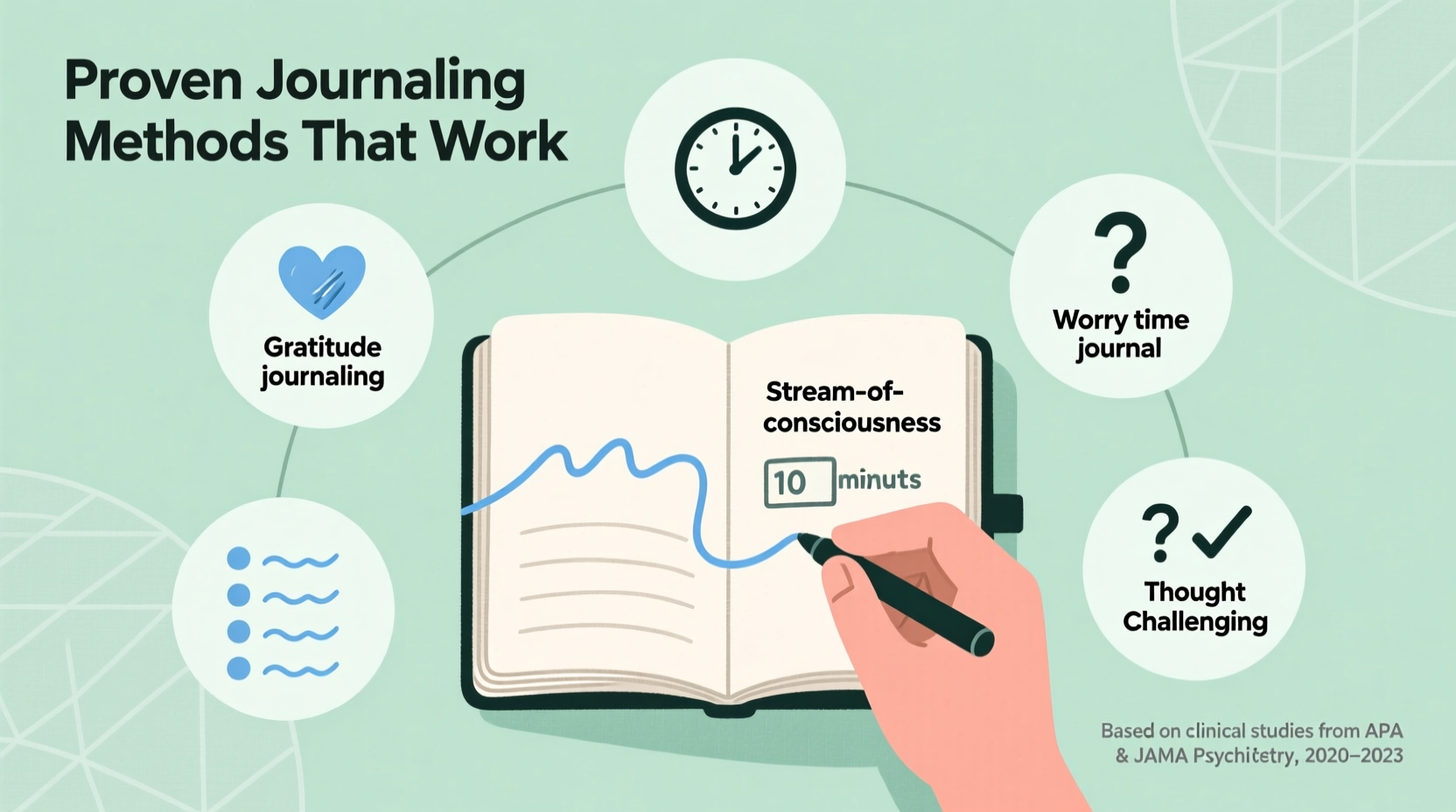
Not all journaling is equally effective. Randomly jotting down thoughts may offer temporary relief, but structured techniques yield deeper, longer-lasting results. Below are four evidence-based methods shown to reduce anxiety in clinical and self-directed settings.
1. Expressive Writing (Pennebaker Method)
Developed by Dr. James Pennebaker, this method involves writing freely about traumatic or emotionally charged events for 15–20 minutes per session over 3–4 consecutive days. The goal is to explore deep feelings—not just recount facts.
- Write without stopping or editing.
- Focus on emotions, memories, and personal meaning.
- Choose a private, quiet space to avoid interruptions.
In one trial, 70% of participants reported reduced anxiety symptoms after completing the full cycle. Many also experienced improved sleep and increased sense of control over their lives.
2. Gratitude Journaling
Focusing on positive aspects of life shifts attention away from anxious rumination. A 2016 study in Applied Psychology: Health and Well-Being showed that individuals who wrote down three things they were grateful for each day experienced lower anxiety and greater emotional resilience after just two weeks.
Effective gratitude journaling includes specificity. Instead of “I’m grateful for my family,” try “I’m grateful for how my sister listened patiently when I was overwhelmed yesterday.” This detail strengthens neural associations with safety and connection.
3. Cognitive Reframing Journaling
Anxiety often stems from distorted thinking—catastrophizing, overgeneralization, or black-and-white thinking. Cognitive reframing uses journaling to identify and challenge these patterns.
Follow this structure:
- Describe the anxious thought (e.g., “I’ll fail my presentation and get fired.”)
- Identify the cognitive distortion (e.g., catastrophizing).
- List evidence for and against the thought.
- Write a balanced, realistic alternative (“I’ve prepared well. Even if I make a mistake, it won’t cost me my job.”)
Regular use of this technique trains the brain to respond more rationally under pressure.
4. Stream-of-Consciousness Dumping
Also known as “brain dumping,” this method involves writing continuously for 5–10 minutes without structure or filter. It’s especially useful during acute anxiety spikes.
The goal is not coherence but release. By externalizing swirling thoughts onto paper, you reduce mental clutter and interrupt the cycle of rumination. A 2020 study in Anxiety, Stress & Coping found that participants who practiced nightly brain dumps reported 30% fewer intrusive thoughts the following week.
Step-by-Step Guide to Starting an Effective Anxiety-Reducing Journaling Practice
Success with journaling depends less on frequency and more on consistency and intention. Follow this seven-day timeline to build a sustainable habit backed by behavioral psychology.
- Day 1: Choose your method. Decide whether you’ll begin with expressive writing, gratitude, or cognitive reframing based on your current needs.
- Day 2: Set up your journal. Use a physical notebook or digital app—whichever feels most private and accessible.
- Day 3: Schedule a time. Anchor journaling to an existing habit, like after brushing your teeth or before bed.
- Day 4: Write for 5 minutes. Start small to overcome resistance. Focus on ease, not depth.
- Day 5: Reflect on the experience. Note any shifts in mood or clarity. Adjust timing or method if needed.
- Day 6: Introduce structure. Add prompts or categories (e.g., “Today’s Wins,” “Worry List,” “Gratitude Moments”)
- Day 7: Commit to 21 days. Research shows it takes roughly three weeks to form a habit. Mark your calendar for follow-up.
Common Mistakes That Undermine Journaling Benefits
Even with the right intentions, some habits can limit—or even worsen—anxiety. Avoid these pitfalls to ensure your journaling supports mental wellness.
| Mistake | Why It’s Harmful | Better Approach |
|---|---|---|
| Rereading old entries obsessively | Reinforces negative narratives and rumination | Review only for insight, not immersion. Set a time limit. |
| Using journaling to vent without reflection | Amplifies anger or fear without resolution | Add a “What did I learn?” section after venting. |
| Waiting for motivation | Leads to inconsistency and broken streaks | Treat journaling like brushing your teeth—do it regardless of mood. |
| Expecting immediate results | Discouragement leads to early abandonment | Track subtle shifts: sleep quality, reaction time, emotional awareness. |
Real Impact: A Mini Case Study
Sarah, a 34-year-old project manager, struggled with chronic anxiety fueled by workplace pressure and perfectionism. She often lay awake at night replaying meetings and anticipating future failures. After learning about expressive writing, she committed to Pennebaker’s method for four days.
On day one, she wrote: “I’m terrified I’ll be exposed as incompetent.” Over the next sessions, she explored childhood experiences that shaped her fear of judgment. By the final entry, she wrote: “My worth isn’t tied to flawless performance. I can be human and still be capable.”
Within two weeks, Sarah noticed she responded more calmly to feedback. Her nighttime anxiety decreased, and she began using a nightly gratitude list to wind down. Six months later, she still journals three times a week and credits the practice with helping her leave a toxic job and rebuild confidence.
“Journaling didn’t eliminate stress, but it gave me tools to process it—instead of being crushed by it.” — Sarah, marketing professional
Essential Tips for Long-Term Success
To maximize the anxiety-reducing power of journaling, integrate these expert-backed practices into your routine.
- Protect privacy. Knowing your thoughts are safe encourages honesty. Use a locked notebook or encrypted app.
- Vary your prompts. Rotate between gratitude, fears, wins, and reflections to maintain engagement.
- Don’t aim for perfection. Messy handwriting, grammar errors, and fragmented sentences are all part of the process.
- Pair with mindfulness. Take three deep breaths before writing to center yourself and enhance focus.
FAQ: Common Questions About Journaling and Anxiety
How long does it take for journaling to reduce anxiety?
Many people notice subtle improvements within 3–7 days of consistent practice. More significant reductions in anxiety symptoms typically emerge after 2–4 weeks. Long-term benefits deepen with continued use.
Is digital journaling as effective as writing by hand?
Both can be effective, but handwriting appears to have stronger cognitive and emotional benefits due to increased sensory engagement. However, typing may be preferable for those with motor difficulties or who prefer speed. The key is consistency, not format.
What if journaling makes me feel more anxious?
It’s normal to feel temporarily unsettled when confronting difficult emotions. If distress persists, scale back intensity—try shorter sessions or switch to gratitude journaling. Consider working with a therapist if past trauma is involved.
Conclusion: Turn Words Into Wellness
Journals don’t judge, interrupt, or demand answers. They offer a silent, steadfast space to untangle fear, reclaim perspective, and restore inner balance. The evidence is clear: structured, intentional journaling is a powerful, accessible tool for reducing anxiety—one that fits seamlessly into daily life.
You don’t need special skills or expensive tools. Just a pen, a few minutes, and the willingness to show up for yourself. Start tonight. Write one sentence. Then another. Over time, those words will weave a quieter mind, a calmer heart, and a stronger sense of self.




 浙公网安备
33010002000092号
浙公网安备
33010002000092号 浙B2-20120091-4
Comments
No comments yet. Why don't you start the discussion?