
Anxiety affects millions of people worldwide, manifesting in persistent worry, physical tension, and emotional distress. While therapy and medication remain standard treatments, many are turning to meditation as a complementary—or even primary—tool for managing anxiety. But does it actually work? More importantly, is there solid scientific backing behind the claims, or is it just anecdotal feel-good advice? The answer, supported by both clinical research and real-world outcomes, is a resounding yes. Meditation isn't a magic cure, but when practiced consistently, it can significantly reduce symptoms of anxiety and improve overall mental resilience.
The Science Behind Meditation and Anxiety Reduction
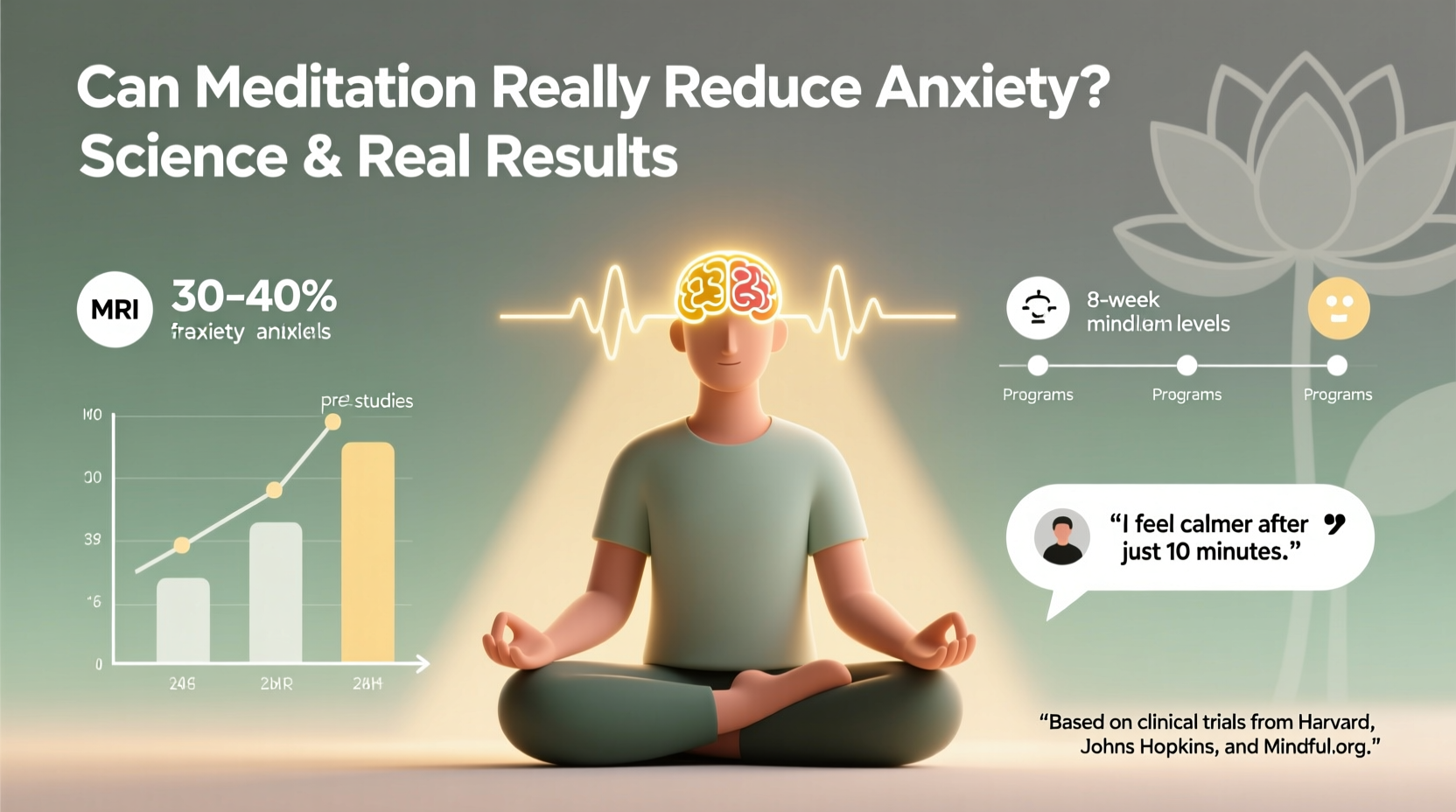
Over the past two decades, neuroscience and psychology have made substantial progress in understanding how meditation influences the brain and nervous system. Researchers use tools like fMRI (functional magnetic resonance imaging) and EEG (electroencephalography) to observe changes in brain activity before and after meditation practice. One of the most consistent findings is that meditation reduces activity in the amygdala—the brain’s “fear center” responsible for triggering stress and anxiety responses.
A landmark 2014 meta-analysis published in JAMA Internal Medicine reviewed 47 clinical trials involving over 3,500 participants and concluded that mindfulness meditation programs showed moderate evidence of improving anxiety, depression, and pain. The effects were comparable to those seen with antidepressant medications, though without the side effects.
Another study from Harvard Medical School found that just eight weeks of Mindfulness-Based Stress Reduction (MBSR) led to measurable changes in brain regions associated with memory, sense of self, empathy, and stress regulation. Participants reported lower anxiety levels, and brain scans confirmed increased gray matter density in the hippocampus and decreased volume in the amygdala.
“Mindfulness meditation shifts brain activity away from reactive fear circuits toward more reflective, regulated processing. It doesn’t eliminate anxiety, but it changes our relationship with it.” — Dr. Sara Lazar, Neuroscientist, Harvard Medical School
User Results: What Real People Are Saying
Beyond lab results and brain scans, thousands of individuals report tangible improvements in their anxiety through regular meditation. Online communities, mental health forums, and wellness apps like Headspace and Calm are filled with testimonials from users who’ve experienced reduced panic attacks, improved sleep, and greater emotional control.
One recurring theme among long-term practitioners is the shift from avoidance to acceptance. Instead of trying to suppress anxious thoughts, they learn to observe them without judgment—a core principle of mindfulness. This subtle change often leads to decreased reactivity over time.
Mini Case Study: From Panic Attacks to Peaceful Mornings
Lena, a 34-year-old graphic designer from Portland, struggled with generalized anxiety disorder for over a decade. She experienced frequent panic attacks, especially during tight deadlines. Medication helped, but she wanted a more sustainable solution. On her therapist’s recommendation, she began practicing guided mindfulness meditation using an app for 10 minutes each morning.
At first, she found it difficult to sit still and often felt more aware of her anxiety. But after three weeks, she noticed she was catching anxious thoughts earlier—before they spiraled. By week six, her morning meditation became a non-negotiable part of her routine. After eight weeks, she reported a 70% reduction in panic episodes and no longer needed rescue medication.
“It didn’t erase my anxiety,” Lena said, “but it gave me space between feeling anxious and reacting. That space changed everything.”
Types of Meditation That Work Best for Anxiety
Not all meditation practices are equally effective for anxiety. Some forms emphasize concentration, others awareness, and some combine movement with breath. Here are the most researched and widely recommended types:
- Mindfulness Meditation: Focuses on present-moment awareness, often using breath or body sensations as anchors. Proven to reduce rumination and emotional reactivity.
- Loving-Kindness Meditation (Metta): Involves silently repeating phrases of goodwill toward oneself and others. Studies show it reduces self-criticism and social anxiety.
- Body Scan Meditation: A systematic attention to different parts of the body. Helps release physical tension linked to anxiety.
- Transcendental Meditation (TM): Uses a personalized mantra. Research indicates it lowers cortisol levels and improves heart rate variability, a marker of stress resilience.
- Breath Awareness Meditation: Simple yet powerful. Focusing on slow, deep breathing activates the parasympathetic nervous system, which calms the body.
Checklist: Getting Started with Meditation for Anxiety
If you're new to meditation, this checklist can help you begin safely and effectively:
- Choose a quiet time and place where you won’t be interrupted.
- Select one type of meditation to start with (mindfulness is best for beginners).
- Use a timer or guided audio to stay on track.
- Set a consistent daily time—even five minutes counts.
- Focus on your breath or bodily sensations when your mind wanders.
- Be patient. Don’t expect immediate results; benefits build gradually.
- Track your mood before and after sessions for at least two weeks.
- Consider joining a meditation group or online community for support.
How Long Does It Take to See Results?
Many people expect instant relief, but meditation is more like physical exercise—it requires repetition to build strength. However, some benefits appear surprisingly quickly.
| Timeframe | Typical Changes Reported | Scientific Support |
|---|---|---|
| After 1 session | Immediate calm, slight reduction in heart rate | Yes – acute relaxation response observed in EEG studies |
| 1–2 weeks | Improved focus, less mental chatter, better sleep onset | Yes – early subjective improvements in anxiety scales |
| 4–8 weeks | Reduced frequency of anxious thoughts, greater emotional stability | Strong – structural brain changes visible in MRI scans |
| 3+ months | Sustained anxiety reduction, increased self-awareness, resilience under stress | Well-documented in longitudinal studies |
Progress isn’t always linear. Some days will feel harder than others, especially during high-stress periods. The key is consistency, not perfection.
Common Misconceptions About Meditation and Anxiety
Despite growing popularity, several myths persist about meditation’s role in anxiety management:
- Misconception: Meditation should make you feel completely calm.
Reality: It’s normal to feel more aware of discomfort initially. The goal is not to eliminate feelings but to relate to them differently. - Misconception: You need to clear your mind completely.
Reality: Thoughts will come and go. Success lies in noticing them without getting caught up. - Misconception: Meditation replaces therapy or medication.
Reality: For many, it complements traditional treatment. Severe anxiety disorders may still require professional medical care. - Misconception: Only spiritual or “zen” people benefit.
Reality: Meditation is a secular, trainable skill. Millions of skeptics have benefited from structured programs.
Step-by-Step Guide: Building a Sustainable Meditation Practice
Starting is easy. Sticking with it is the challenge. Follow this timeline to develop a habit that lasts:
- Week 1: Experiment – Try different styles (guided, silent, breath-focused) for 5 minutes daily. Use free apps like Insight Timer or UCLA Mindful.
- Week 2–3: Anchor Your Habit – Meditate at the same time each day (e.g., right after waking). Pair it with an existing routine like brushing your teeth.
- Week 4: Reflect and Adjust – Journal about how you feel before and after. Notice patterns. Adjust duration or method if needed.
- Month 2: Deepen Practice – Increase to 10–15 minutes. Explore body scans or loving-kindness if mindfulness feels stale.
- Month 3+: Integrate Mindfulness – Bring meditative awareness into daily activities: eating, walking, listening. This strengthens real-world anxiety resilience.
Frequently Asked Questions
Can meditation make anxiety worse?
In rare cases, yes—especially for individuals with trauma or severe mental health conditions. Sitting with intense emotions without support can be overwhelming. If meditation increases distress, pause and consult a mental health professional. Trauma-sensitive mindfulness programs exist for safer practice.
Do I need to meditate every day?
Daily practice yields the best results, but even 3–4 times per week can help. Think of it like building muscle: regularity strengthens neural pathways. Missing a day isn’t failure—just return gently the next day.
Is there a “best” time to meditate for anxiety?
Morning meditation sets a calm tone for the day and prevents postponement. However, evening practice can help unwind accumulated stress. Choose what fits your rhythm. Some find midday “reset” meditations helpful during work hours.
Conclusion: A Tool Worth Trying
Meditation is not a panacea, but it is one of the most accessible, low-cost, and scientifically validated tools for reducing anxiety. From neuroplastic changes in the brain to real-life transformations in emotional regulation, the evidence is robust and growing. Whether you’re dealing with everyday stress or diagnosed anxiety, carving out a few minutes a day to sit, breathe, and observe can lead to profound shifts over time.
You don’t need special equipment, a retreat, or years of training. Just willingness and patience. Start small. Be kind to yourself when your mind wanders—this is part of the process, not a flaw. With consistent effort, meditation can become a cornerstone of your mental well-being strategy.




 浙公网安备
33010002000092号
浙公网安备
33010002000092号 浙B2-20120091-4
Comments
No comments yet. Why don't you start the discussion?