
Sleep and meditation are both powerful tools for enhancing mental clarity, focus, and emotional resilience. In a world where productivity is prized and time feels scarce, many people wonder: can meditation actually replace sleep when it comes to sharpening the mind? The short answer is no—meditation cannot fully substitute for sleep. However, it can play a deeply supportive role in cognitive function, especially when used strategically alongside healthy sleep habits.
Understanding the distinct yet overlapping roles of sleep and meditation requires looking at brain activity, neurochemistry, and long-term mental performance. While both states involve altered consciousness and restorative processes, they serve different biological purposes. This article explores what science says about meditation and sleep, compares their effects on mental clarity, and provides practical guidance for integrating both into a balanced lifestyle.
The Biological Role of Sleep in Mental Clarity
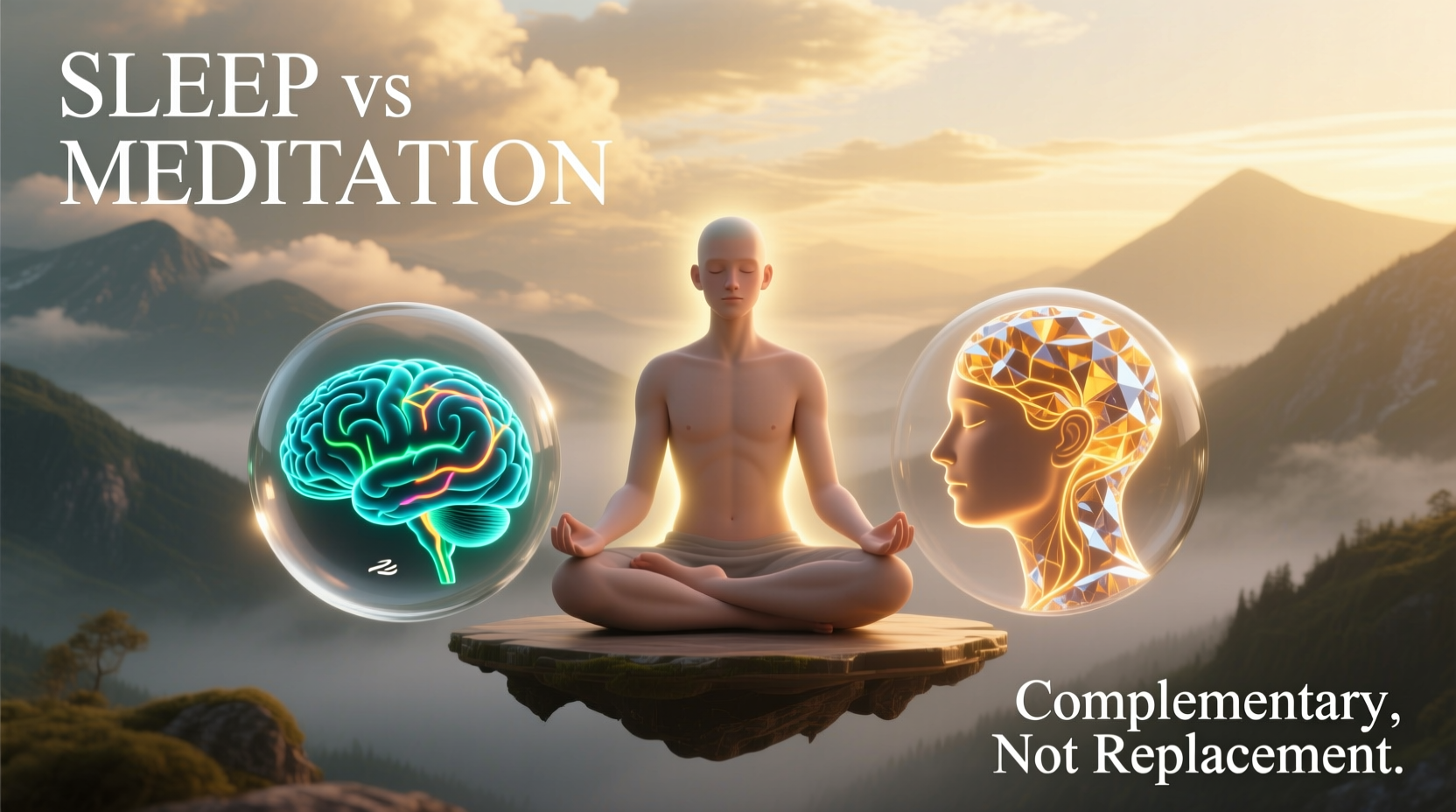
Sleep is not merely downtime—it's an active, essential physiological process. During sleep, the brain cycles through stages including light sleep, deep slow-wave sleep (SWS), and rapid eye movement (REM) sleep. Each stage contributes uniquely to mental restoration.
- Memory consolidation: Deep sleep helps transfer information from short-term to long-term memory, strengthening learning and recall.
- Toxin clearance: The glymphatic system becomes highly active during sleep, flushing out metabolic waste like beta-amyloid proteins linked to neurodegenerative diseases.
- Emotional regulation: REM sleep supports emotional processing by modulating activity in the amygdala and prefrontal cortex.
- Cognitive restoration: After sufficient sleep, attention, decision-making, and problem-solving abilities return to optimal levels.
Chronic sleep deprivation—even as little as one night of poor sleep—impairs reaction time, working memory, and executive function. Over time, it increases risks for anxiety, depression, and cognitive decline. No form of waking rest, including meditation, has been shown to replicate these systemic functions.
“Sleep is non-negotiable for brain health. It’s during deep sleep that the brain resets its chemistry and clears toxins. Meditation supports well-being, but it doesn’t perform the same housekeeping.” — Dr. Matthew Walker, Neuroscientist and author of *Why We Sleep*
What Meditation Actually Does for the Mind
Meditation, particularly mindfulness and focused-attention practices, induces a state of relaxed awareness. Unlike sleep, it occurs while awake and conscious, allowing individuals to train attention, reduce mental chatter, and regulate emotions.
Neuroimaging studies show that regular meditation leads to structural changes in the brain, including increased gray matter density in areas related to self-awareness, compassion, and executive control. These changes correlate with improved concentration, reduced stress reactivity, and greater emotional stability—all contributors to mental clarity.
Short-term meditation sessions (even 10–20 minutes) can produce immediate benefits:
- Reduced cortisol (stress hormone) levels
- Improved attention span and task focus
- Enhanced mood and subjective sense of calm
- Lowered mental fatigue after cognitively demanding work
In this way, meditation acts as a “mental reset” that can clear brain fog and restore perspective—especially useful during midday slumps or after stressful events. But while it refreshes the mind, it does not fulfill the body’s need for unconscious neural repair and hormonal regulation provided by sleep.
Comparing Meditation and Sleep: A Functional Breakdown
To understand whether meditation can replace sleep, it helps to compare their functions side by side. The table below outlines key differences in purpose, brain activity, duration, and outcomes.
| Aspect | Sleep | Meditation |
|---|---|---|
| State of Consciousness | Unconscious or semi-conscious | Fully conscious and aware |
| Primary Brain Waves | Delta (deep sleep), Theta (light/REM) | Alpha, Theta (relaxed focus) |
| Duration Needed Daily | 7–9 hours for adults | 10–30 minutes typical; up to several hours in retreats |
| Core Function | Physical & neural restoration, memory consolidation, metabolic regulation | Mental focus training, stress reduction, emotional regulation |
| Effect on Alertness | Restores baseline alertness after depletion | Provides temporary boost in focus and clarity |
| Can Replace Sleep? | N/A | No—complements but does not substitute |
While both states involve theta wave activity—a frequency associated with drowsiness and deep relaxation—their overall impact on cognition differs fundamentally. Sleep rebuilds the foundation; meditation fine-tunes the structure.
Real-World Example: The Executive Who Tried to Replace Sleep
James, a 42-year-old tech startup founder, began experimenting with replacing one hour of sleep per night with meditation. Inspired by Silicon Valley biohackers, he believed mindfulness could offset lost rest. For two weeks, he meditated for 60 minutes each morning and reduced his sleep from 7.5 to 6.5 hours.
Initially, he reported feeling more centered and productive. However, by week three, subtle declines emerged: difficulty concentrating during meetings, irritability with team members, and reliance on multiple coffees to stay awake. After a missed investor deadline due to a lapse in judgment, he consulted a sleep specialist.
The assessment revealed elevated cortisol levels and reduced REM sleep percentage—signs of chronic sleep restriction. James resumed full sleep and kept meditation as a morning ritual. Within a week, his focus and emotional balance improved significantly.
This case illustrates a common misconception: because meditation makes people feel alert and calm, it must be compensating for lost sleep. In reality, it may mask early signs of fatigue without addressing underlying deficits.
How to Use Meditation Strategically for Mental Clarity
While meditation cannot replace sleep, it can dramatically enhance mental performance when used wisely. Here’s a step-by-step guide to integrating meditation effectively without compromising rest.
- Assess your baseline sleep quality. Before adding meditation, ensure you’re getting at least 7 hours of uninterrupted sleep nightly. Use a sleep tracker or journal to monitor patterns.
- Start with short sessions (5–10 minutes). Focus on breath awareness or body scanning to build consistency without adding pressure.
- Time meditation for cognitive transitions. Practice upon waking, before important tasks, or after lunch to reset attention and reduce mental fatigue.
- Avoid using meditation as a sleep substitute. If you're tempted to cut sleep for more meditation, reframe your goal: prioritize sleep first, then add meditation as a supplement.
- Experiment with nap-meditation hybrids. After a 20-minute power nap, follow with 10 minutes of mindfulness to amplify alertness and clarity.
Action Checklist: Optimize Both Sleep and Meditation
Use this checklist to ensure you’re leveraging both practices effectively:
- ✅ Get 7–9 hours of sleep per night consistently
- ✅ Maintain a regular sleep schedule (same bedtime/wake time)
- ✅ Meditate daily, ideally at the same time each day
- ✅ Keep meditation sessions under 30 minutes unless on retreat
- ✅ Avoid meditating in bed if it interferes with sleep associations
- ✅ Use meditation to manage stress, not to compensate for sleep loss
- ✅ Monitor mental performance weekly—adjust routines if focus declines
Frequently Asked Questions
Can meditation reduce the amount of sleep I need?
No conclusive evidence shows that meditation reduces total sleep requirements. Some advanced practitioners report needing slightly less sleep, but this is anecdotal and often comes with trade-offs in long-term health. Most adults still require 7+ hours regardless of meditation practice.
Is it better to meditate or sleep when I’m exhausted?
Sleep. If you’re physically or mentally drained, meditation may increase frustration or lead to falling asleep mid-session. Sleep addresses the root cause of exhaustion; meditation works best when you’re already reasonably rested.
Can meditation help me fall asleep faster?
Yes. Mindfulness meditation, body scans, and loving-kindness practices have been shown to reduce insomnia symptoms and shorten sleep onset time. Apps like Headspace and Calm offer guided sleep meditations backed by clinical research.
“Meditation isn’t a shortcut to bypass sleep. It’s a tool to deepen your relationship with your mind—so you can sleep better, think clearer, and live more fully.” — Sharon Salzberg, Mindfulness Teacher and Author
Conclusion: Complement, Don’t Compensate
Meditation is a powerful ally for mental clarity, but it is not a replacement for sleep. The brain relies on sleep for irreplaceable restorative processes that no waking practice can replicate. Attempting to trade sleep for meditation may yield short-term feelings of alertness but risks long-term cognitive decline, emotional instability, and impaired decision-making.
The most effective approach is integration: use high-quality sleep as the foundation of mental performance, and apply meditation as a precision tool to enhance focus, reduce stress, and cultivate presence. When combined, these practices create a synergistic effect—greater than the sum of their parts.




 浙公网安备
33010002000092号
浙公网安备
33010002000092号 浙B2-20120091-4
Comments
No comments yet. Why don't you start the discussion?