
Slouching has become a modern epidemic. Hours spent hunched over laptops, smartphones, and steering wheels have reshaped how many people carry themselves—often without realizing it. In response, posture correctors have surged in popularity, promising to pull shoulders back, straighten the spine, and retrain poor habits. But do they actually fix slouching, or are they merely offering a short-term illusion of improvement?
The answer isn’t straightforward. While posture correctors can offer immediate physical feedback and momentary alignment, their long-term effectiveness hinges on how they're used and whether they’re paired with deeper behavioral and muscular changes. Understanding the difference between symptom management and structural correction is key to determining whether these devices are worth incorporating into your routine.
How Posture Correctors Work
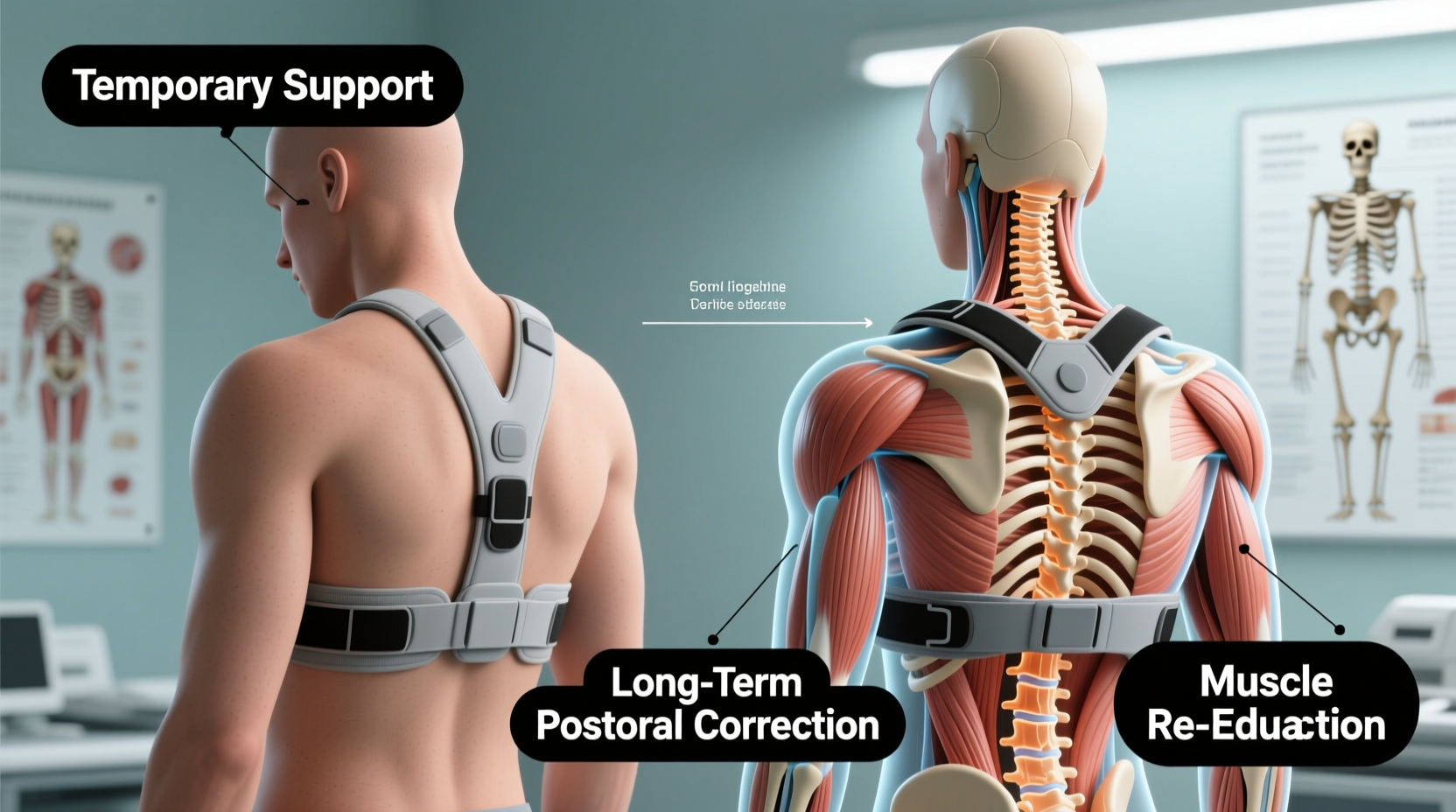
Posture correctors come in various forms: shoulder braces, back supports, wearable shirts, and even smart garments with vibration alerts. Most function by physically restricting forward shoulder movement and pulling the upper back into extension. This creates an upright appearance and can reduce strain on the neck and upper back muscles caused by prolonged forward head posture.
Mechanically, they work like training wheels. By holding the body in a more anatomically neutral position, they provide sensory feedback—your brain begins to associate that aligned stance with comfort or stability. Over time, proponents argue, this may help recalibrate muscle memory.
However, this mechanism only addresses the visible manifestation of poor posture, not its root causes. Slouching often stems from weak postural muscles (especially deep neck flexors, lower trapezius, and serratus anterior), tight chest and hip flexors, sedentary behavior, and ergonomic deficiencies. A brace cannot strengthen muscles or stretch tight tissues—it only masks misalignment temporarily.
The Science Behind Their Effectiveness
Research on posture correctors remains limited but offers some insights. A 2018 study published in the Journal of Physical Therapy Science found that participants wearing a posture brace showed improved thoracic curvature during short-term use. However, these improvements vanished once the device was removed, suggesting no lasting neuromuscular adaptation.
Another study from the International Journal of Occupational Safety and Ergonomics observed that while users reported reduced discomfort during computer work with a back support, there was no measurable improvement in muscle activation patterns after four weeks of consistent use.
These findings point to a critical distinction: posture correctors may alleviate symptoms such as upper back pain or fatigue, but they don’t inherently correct dysfunctional movement patterns. As Dr. Karen Jacobs, clinical professor of occupational therapy at Boston University, explains:
“Bracing can be useful as part of a broader rehabilitation strategy, but relying on it alone is like using a cast for a sprained ankle without doing rehab exercises. The support helps, but healing requires active engagement.” — Dr. Karen Jacobs, OTD, OTR/L, CHT
When Posture Correctors Help—and When They Don’t
Not all slouching is the same. The effectiveness of a posture corrector depends largely on the type and cause of postural deviation.
| Postural Issue | Corrector Helpful? | Why or Why Not |
|---|---|---|
| Acute muscle fatigue from desk work | Yes (short-term) | Provides rest and alignment during prolonged sitting; reduces strain |
| Chronic kyphosis (rounded upper back) | Limited | May improve appearance temporarily, but won’t reverse structural or muscular imbalances |
| Post-surgical or injury-related support | Yes (under supervision) | Medical-grade braces aid healing when prescribed by a professional |
| Forward head posture due to weak deep neck flexors | No | Braces don’t target neck musculature; may worsen dependency |
| Habitual slumping in adolescents | Potentially | Youth neuroplasticity allows faster habit formation, but must be combined with exercise |
The data suggests that posture correctors are most effective when used as one component of a comprehensive plan—including strength training, mobility work, and ergonomic adjustments. Used in isolation, they risk creating muscular atrophy by encouraging passive reliance instead of active stabilization.
Building Real, Lasting Posture Improvement
If posture correctors aren’t a standalone solution, what actually works? Sustainable posture change comes from consistent, targeted interventions that address both structure and behavior.
Step-by-Step Guide to Long-Term Postural Health
- Assess Your Current Posture
Stand sideways in front of a mirror or take a photo. Look for signs: forward head, rounded shoulders, excessive arch in the lower back. Note any asymmetries. - Improve Workspace Ergonomics
Adjust your chair so feet are flat, knees at 90 degrees, and screen at eye level. Use a standing desk intermittently to break up sitting. - Strengthen Key Muscles
Focus on exercises that activate underused postural stabilizers:- Rows (banded or dumbbell) – target mid-back
- Face pulls – engage rear delts and rotator cuff
- Planks and dead bugs – build core stability
- Chin tucks – strengthen deep neck flexors
- Stretch Tight Areas
Daily stretching counters the shortening caused by sitting:- Chest doorway stretches (30 seconds per side)
- Pec minor release with a foam roller
- Levator scapulae stretch (tilt head diagonally)
- Incorporate Movement Breaks
Set a timer every 30–45 minutes to stand, walk, or perform shoulder rolls and cervical retractions. - Use a Posture Corrector Strategically
Wear it briefly (e.g., first hour of work) as a reminder to sit tall. Remove it and try to maintain the position independently. - Track Progress Monthly
Reassess posture through photos and note reductions in pain or fatigue.
Checklist: Building a Posture-Friendly Lifestyle
- ✅ Adjust workstation to promote neutral spine alignment
- ✅ Perform 10 minutes of posture-focused exercises daily
- ✅ Stretch chest and hip flexors every evening
- ✅ Limit posture corrector use to under 2 hours per day
- ✅ Schedule walking meetings or standing calls
- ✅ Sleep with proper pillow support (neck aligned, not elevated)
- ✅ Consult a physical therapist if pain persists beyond 4 weeks
A Real Example: From Dependency to Independence
Sarah, a 34-year-old graphic designer, began experiencing sharp upper back pain after transitioning to full-time remote work. She bought an online posture corrector after seeing influencer endorsements and wore it for six hours daily. Initially, her pain decreased and she felt “taller.” But after two months, she noticed her shoulders felt weaker when not wearing the brace. Simple tasks like carrying groceries triggered discomfort.
She consulted a physical therapist who explained that her rhomboids and lower traps had weakened from disuse. The brace was doing the work her muscles should have been doing. Under guidance, Sarah stopped full-time brace use and began a regimen of resistance training, postural drills, and ergonomic adjustments. Within 10 weeks, she could maintain good posture unaided and reported a 90% reduction in pain.
Her experience reflects a common pitfall: mistaking symptom relief for structural correction. Only by addressing the underlying weakness did she achieve lasting change.
FAQ: Common Questions About Posture Correctors
Can posture correctors damage your muscles?
When worn excessively, yes. Prolonged use can lead to muscle inhibition and atrophy, particularly in the mid-back and shoulder stabilizers. The body adapts to external support by reducing natural muscle activation. This is why moderation and concurrent exercise are essential.
How long should I wear a posture corrector each day?
Most experts recommend no more than 30 to 60 minutes at a time, and not more than 2–3 times per week. Think of it as a \"posture reset\" tool rather than all-day wear. Extended use increases dependency risk and may cause skin irritation or restricted breathing.
Are there alternatives to wearing a brace?
Yes. Alternatives include:
- Ergonomic chairs with lumbar support
- Smartphone apps that remind you to adjust posture
- Yoga or Pilates classes focusing on spinal alignment
- Taping techniques (kinesiology tape applied by a professional)
- Working with a physical therapist for personalized correction
Conclusion: Tools Are Only as Good as How You Use Them
Posture correctors don’t fix slouching—they highlight it. At best, they serve as biofeedback tools that make you aware of misalignment. At worst, they foster dependency while allowing the root causes of poor posture to persist unchecked.
Real correction happens through consistent effort: strengthening weak muscles, releasing tight ones, adjusting environments, and cultivating mindful movement. A brace might help you remember to sit up straight, but only deliberate practice will teach your body to stay that way on its own.
If you choose to use a posture corrector, do so intentionally. Pair it with exercise, limit duration, and view it as a stepping stone—not a destination. Lasting change doesn’t come from what you strap on your body, but from what you teach it to do naturally.




 浙公网安备
33010002000092号
浙公网安备
33010002000092号 浙B2-20120091-4
Comments
No comments yet. Why don't you start the discussion?