
Sleep is one of the most powerful tools for skin regeneration, yet how we sleep—specifically our sleeping position—can quietly accelerate or slow down facial aging. Among the growing body of skincare advice, one tip stands out: sleep on your back to prevent face wrinkles. But is this more than just anecdotal wisdom? Dermatologists, sleep specialists, and cosmetic researchers have weighed in, and the evidence suggests that yes, back sleeping can significantly reduce the development of certain types of facial wrinkles—especially those caused by repeated pressure and friction.
This article examines the biomechanics behind sleep-induced wrinkles, evaluates the scientific support for back sleeping, and provides actionable strategies to make the transition both effective and sustainable. Whether you're aiming to preserve a youthful appearance or simply optimize your nightly routine, understanding how your sleep posture influences your skin is a critical step.
The Science Behind Sleep Wrinkles
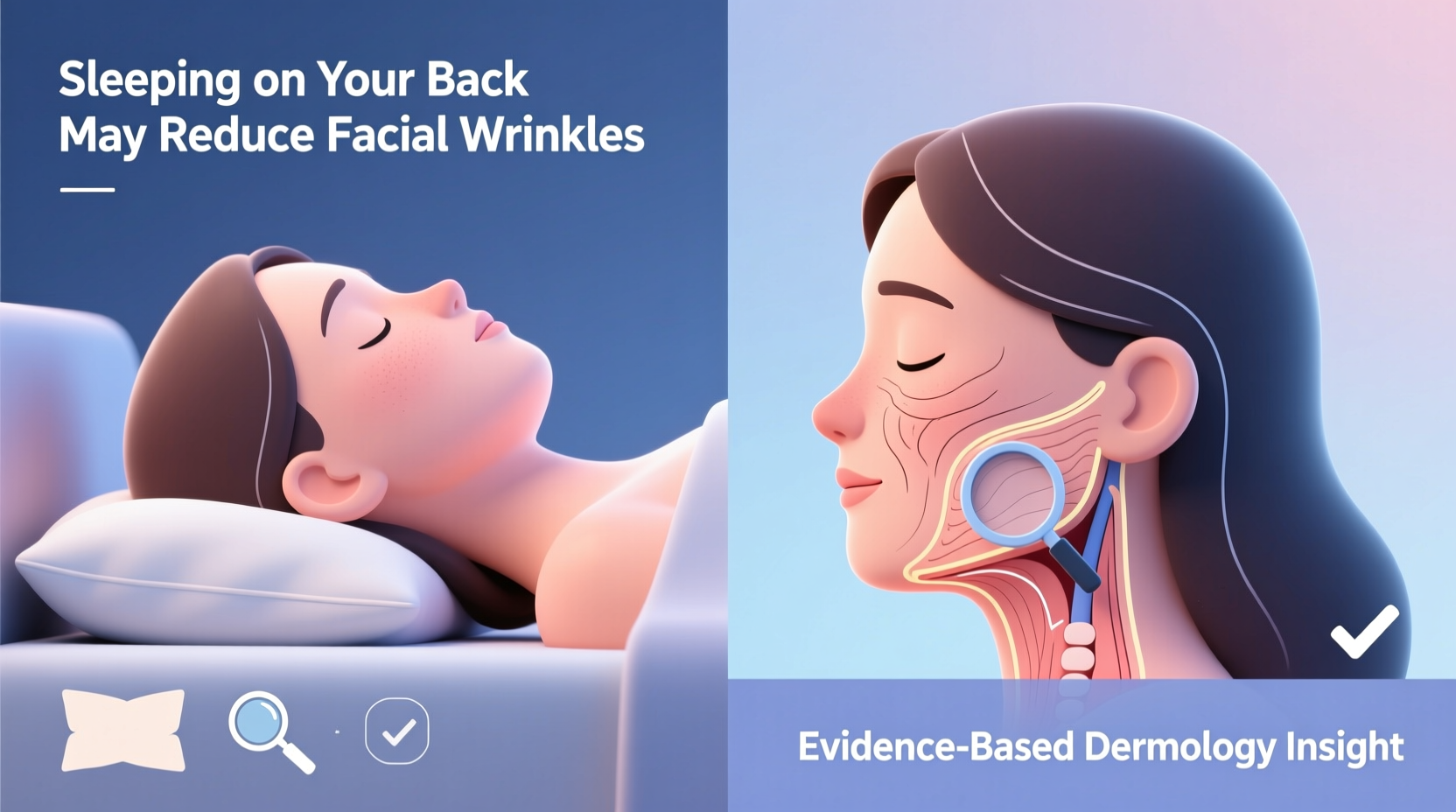
Facial wrinkles form through a combination of intrinsic aging (loss of collagen and elastin) and extrinsic factors like sun exposure, pollution, and repetitive mechanical stress. While UV damage is the most widely recognized external cause, a lesser-known contributor is what dermatologists call “sleep wrinkles.” These are creases formed when the face is compressed against a pillow over several hours each night.
Unlike expression lines—such as crow’s feet or forehead furrows—sleep wrinkles develop perpendicular to the direction of muscle movement. For example, if you consistently sleep on your side, the cheeks press into the pillow, creating horizontal folds along the jawline and mid-face. Over time, these temporary impressions become etched into the skin as permanent grooves.
“Sleep wrinkles are real and often overlooked. They result from prolonged compression and shear forces on delicate facial skin during the night.” — Dr. Rachel Klein, Board-Certified Dermatologist
A 2016 study published in the Aesthetic Surgery Journal found that sleep position directly correlates with wrinkle patterns. Participants who slept predominantly on their sides or stomachs showed deeper nasolabial folds and cheek creases compared to back sleepers. The study concluded that minimizing facial contact with surfaces during sleep could delay the onset of mechanical aging.
Why Back Sleeping Reduces Wrinkle Formation
Sleeping on your back eliminates direct facial pressure, allowing the skin to remain in a neutral, relaxed state throughout the night. Without constant tugging or folding, collagen fibers maintain their integrity longer, and micro-inflammation from friction is minimized.
Additionally, gravity works in your favor when lying supine. On your side or stomach, soft tissue is pulled downward and compressed, distorting facial contours. In contrast, back sleeping promotes even fluid distribution and reduces puffiness, especially around the eyes—a secondary benefit that enhances overall facial freshness.
Types of Wrinkles Affected by Sleep Position
| Wrinkle Type | Caused By | Reduced by Back Sleeping? |
|---|---|---|
| Sleep wrinkles | Pillow compression, shear force | Yes – significantly |
| Expression lines | Muscle movement (e.g., smiling) | No – unrelated to sleep position |
| Photoaging lines | UV exposure, oxidative stress | No – but back sleeping complements sun protection |
| Neck bands | Bending neck forward on pillow | Partially – improved with proper pillow height |
Challenges of Transitioning to Back Sleeping
While the benefits are clear, shifting from side or stomach sleeping to back sleeping isn’t always easy. Long-standing habits, breathing issues like snoring or sleep apnea, and discomfort can make sustained supine sleep difficult.
Many people naturally roll onto their sides during the night without realizing it. This undermines the anti-wrinkle benefits unless preventive measures are taken. The key is not perfection but consistency—reducing the frequency and duration of facial compression over time.
Real-Life Example: A 6-Month Skin Transformation
Claire, a 42-year-old marketing executive, struggled with deepening cheek creases and jawline shadows. After a consultation with her dermatologist, she learned that her lifelong habit of sleeping on her left side was likely contributing to asymmetrical aging. She decided to try back sleeping using a combination of positional therapy tools.
She started with a contoured memory foam pillow and placed a small cushion under her knees to ease lower back strain. To prevent rolling, she used a wearable vibration device that gently alerts her when she turns. Within three months, she noticed reduced morning puffiness and softer cheek lines. After six months, her aesthetician remarked on improved skin texture and fewer new fine lines forming.
Claire’s experience reflects a growing trend: individuals leveraging sleep ergonomics as part of a holistic anti-aging strategy.
Proven Strategies to Make Back Sleeping Work
Success doesn’t come from willpower alone—it comes from smart environmental design and gradual behavioral change. Here’s a step-by-step guide to help you adopt and maintain a back-sleeping routine.
- Choose the right pillow: Use a pillow that supports the natural curve of your neck without elevating your head too much. Too high a pillow can tilt the chin down, increasing neck creasing.
- Add lumbar support: Place a small pillow or rolled towel under your knees to relieve pressure on the lower back, making back sleeping more comfortable.
- Use positional aids: Wear a soft backpack or place pillows beside you to discourage rolling. Some people use tennis balls sewn into the back of a T-shirt as a gentle deterrent.
- Train gradually: Start by spending the first hour of sleep on your back. Use an alarm reminder or app to reposition if needed.
- Optimize bedding: Choose smooth fabrics like silk or satin for pillowcases—they reduce friction and further protect the skin.
Back Sleeping Do’s and Don’ts
| Do | Don’t |
|---|---|
| Use a medium-firm mattress for spinal support | Use overly thick pillows that flex the neck |
| Wear moisture-wicking pajamas to stay cool | Ignore chronic snoring or breathing pauses |
| Practice evening stretches to relax muscles | Force yourself to stay on your back if it causes pain |
| Keep bedroom temperature between 65–68°F (18–20°C) | Consume alcohol before bed—it worsens positional instability |
Complementary Skincare Practices
Back sleeping is most effective when combined with other skin-preserving habits. Even the best sleep posture won’t counteract dehydration, poor nutrition, or UV exposure.
- Night creams with retinoids: Support collagen production and repair overnight.
- Hydration: Drink water consistently during the day; dehydrated skin shows wrinkles more prominently.
- Sunscreen daily: UV rays break down collagen, making skin more susceptible to mechanical damage—even indoors near windows.
- Avoid smoking: Nicotine restricts blood flow to the skin, accelerating wrinkle formation.
Think of back sleeping as one pillar of a broader strategy. It won’t erase existing deep-set wrinkles, but it can prevent new ones from forming due to avoidable pressure.
Frequently Asked Questions
Does sleeping on your back eliminate all facial wrinkles?
No. Back sleeping primarily prevents sleep-related wrinkles caused by compression. It does not affect expression lines (from smiling or frowning) or photoaging from sun exposure. However, it can slow overall facial aging by reducing mechanical stress.
How long does it take to see results from back sleeping?
Visible changes typically appear within 3 to 6 months. Early signs include reduced morning puffiness and softer skin texture. Preventing new wrinkles takes consistent effort over years, but many report feeling like their skin looks “less tired” sooner.
Are silk pillowcases enough to prevent wrinkles?
Silk reduces friction but doesn’t eliminate compression. If you sleep on your side, even silk won’t stop the folding effect. Silk helps when combined with back sleeping, but it’s not a standalone solution.
Final Thoughts and Call to Action
Sleeping on your back isn’t a miracle cure, but it’s one of the simplest, most scientifically supported ways to reduce preventable facial aging. Unlike invasive treatments or expensive serums, this habit costs nothing and integrates seamlessly into a healthy lifestyle. The real power lies in consistency—night after night, your skin rests in its most natural, unstrained position.
Start small. Adjust your pillow, try a knee cushion, or commit to just the first 30 minutes of back sleeping. Track subtle changes in your skin’s texture and morning appearance. Over time, you’ll likely notice a smoother, more resilient complexion—one shaped by rest, not resistance.




 浙公网安备
33010002000092号
浙公网安备
33010002000092号 浙B2-20120091-4
Comments
No comments yet. Why don't you start the discussion?