
Sleep is essential for skin repair and regeneration, but the way you sleep might be working against your skin’s youthful appearance. While factors like sun exposure, genetics, and skincare routines are well-known contributors to wrinkles, one often-overlooked element is sleeping position. The pressure and friction your face experiences during the night can accelerate the development of fine lines and deeper creases—especially in predictable patterns. Understanding this connection empowers you to make simple yet effective changes that support long-term skin health.
Facial wrinkles form when collagen and elastin break down over time. External forces, such as repeated compression from pressing your face into a pillow, contribute to what dermatologists call \"sleep lines.\" These temporary imprints can become permanent if they occur consistently in the same direction. Unlike expression lines caused by smiling or frowning, sleep-related wrinkles develop due to mechanical stress, not muscle movement. This subtle distinction matters because it means prevention lies not only in topical treatments but also in modifying habits.
The Science Behind Sleep Lines and Wrinkles
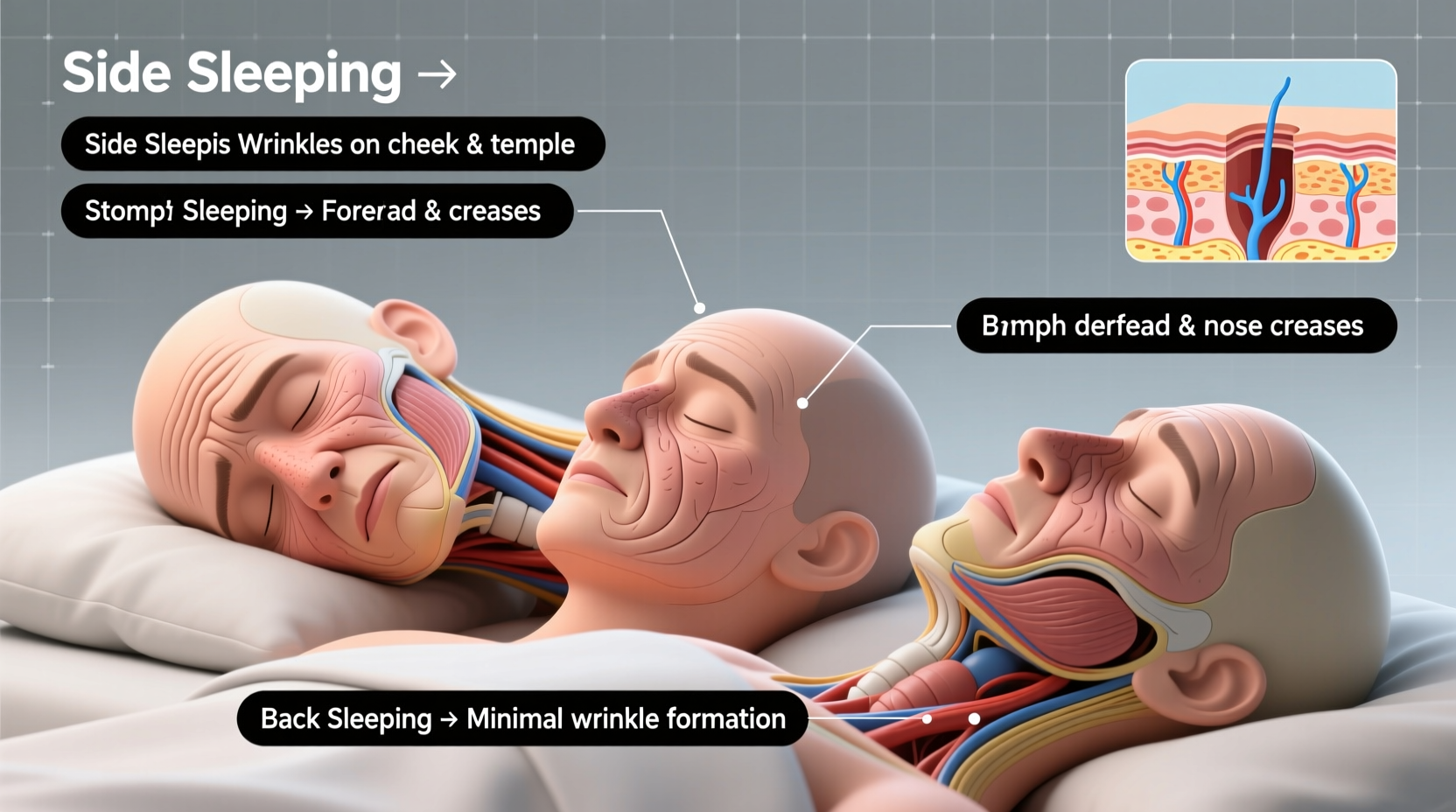
When you lie on your side or stomach, your face presses directly against the pillow surface. Over hours, this sustained pressure distorts the skin and underlying tissue. A 2007 study published in *Aesthetic Surgery Journal* found that facial distortion during sleep correlates strongly with wrinkle location—particularly on the cheeks, chin, and forehead. These areas align precisely with common contact points depending on sleep posture.
Moreover, cotton pillows generate significant friction. As you shift positions throughout the night, your skin drags across the fabric, which may compromise the skin barrier and exacerbate moisture loss. Dryness accelerates the visibility of fine lines, especially around delicate zones like the eyes and mouth. In contrast, back sleeping minimizes direct facial contact, reducing both compression and shear forces.
“Repeated mechanical deformation of the skin during sleep can lead to permanent furrows, particularly in patients who favor one side.” — Dr. Melissa K. Levin, Board-Certified Dermatologist
How Different Sleeping Positions Impact Skin Aging
Your habitual sleep posture plays a critical role in where and how wrinkles develop. Each position exerts unique pressures on facial structures:
Stomach Sleeping: Highest Risk for Wrinkles
Sleeping face-down maximizes skin-to-pillow contact. Your entire face—forehead, nose, cheeks, and chin—is flattened against the surface. This constant compression disrupts microcirculation and strains collagen fibers. Over time, vertical lines may appear on the forehead, diagonal folds on the cheeks, and horizontal creases near the jawline. Stomach sleepers often wake with pronounced puffiness and redness, indicators of prolonged pressure.
Side Sleeping: Common Cause of Asymmetrical Lines
About 65% of adults sleep on their sides, according to the National Sleep Foundation. While this position supports airway alignment and reduces snoring, it creates uneven pressure distribution. The dependent cheek (the one facing down) bears the brunt of friction and compression, leading to deeper nasolabial folds and marionette lines on that side. Some individuals even notice asymmetry in facial volume or sagging over years.
Back Sleeping: Most Skin-Friendly Position
Lying supine keeps the face free from direct pressure. Gravity works evenly across the facial plane, minimizing distortion. This position also reduces fluid accumulation around the eyes, helping prevent under-eye puffiness. Though it may take time to adjust, back sleeping is widely recommended by dermatologists and plastic surgeons for anti-aging benefits.
Do’s and Don’ts of Sleep Habits for Wrinkle Prevention
| Category | Do | Don’t |
|---|---|---|
| Pillow Material | Use silk or satin pillowcases to reduce friction | Avoid rough cotton or polyester blends |
| Sleep Position | Sleep on your back whenever possible | Don’t press your face into the pillow nightly |
| Nighttime Skincare | Apply hydrating serums or overnight masks | Don’t skip moisturizer before bed |
| Habit Formation | Use supportive pillows to maintain position | Don’t expect immediate change—consistency matters |
| Cleansing Routine | Wash face before bed to remove oils and pollutants | Don’t go to sleep with makeup on |
Step-by-Step Guide to Transitioning to Wrinkle-Reducing Sleep Habits
Changing your sleep position isn't something that happens overnight—but with gradual adjustments and smart tools, lasting change is achievable. Follow this six-week timeline to shift toward more skin-friendly habits:
- Week 1: Assess Your Current Pattern
Track your sleep position using a journal or wearable device. Note how often you start on your back but roll onto your side or stomach during the night. - Week 2: Upgrade Your Pillowcase
Replace cotton pillowcases with mulberry silk or high-thread-count satin. These materials reduce drag and help retain skin moisture. Wash them weekly to prevent oil and bacteria buildup. - Week 3: Introduce Positional Support
Add a body pillow or place cushions beside your lower back and knees to stabilize your posture. Some people find hugging a pillow naturally encourages back alignment. - Week 4: Optimize Bed Setup
Elevate the head of your bed slightly (about 6 inches) using risers or an adjustable base. This gentle incline helps reduce facial swelling and discourages rolling forward. - Week 5: Reinforce with Nightly Rituals
Develop a calming pre-sleep routine that includes applying anti-aging products like retinoids or peptides. Knowing you’ve invested in your skin may motivate you to protect it through proper positioning. - Week 6: Monitor Progress and Adjust
Take note of any changes in morning skin texture, puffiness, or comfort. If you’re still struggling, consider specialized pillows designed for back sleeping or consult a sleep specialist.
Additional Preventive Strategies Beyond Sleep Position
While adjusting how you sleep is crucial, combining it with other evidence-based practices amplifies results. Consider these complementary approaches:
- Hydration from Within: Drink adequate water daily. Well-hydrated skin appears plumper and less prone to visible fine lines.
- Topical Antioxidants: Use vitamin C serum in the morning to combat free radical damage and support collagen synthesis.
- Nighttime Retinoids: Incorporate retinol or prescription tretinoin into your evening regimen to increase cell turnover and thicken the dermis.
- Silk Sleepwear: Wearing a silk sleep mask and pajamas further reduces friction across the face and neck.
- Avoid Alcohol Before Bed: Alcohol dilates blood vessels and increases fluid leakage into surrounding tissues, worsening puffiness and weakening capillary walls over time.
“Even small changes—like switching to a silk pillowcase—can have measurable effects on skin smoothness within weeks.” — Dr. Joshua Zeichner, Director of Cosmetic and Clinical Research in Dermatology, Mount Sinai Hospital
Real-Life Example: How One Woman Reduced Her Cheek Wrinkles
Sarah, a 42-year-old graphic designer from Portland, had always been a dedicated side sleeper. For years, she noticed a deepening groove along her left cheekbone—the exact spot she rested her face every night. Concerned about premature aging, she consulted a dermatologist who pointed out the correlation between her sleep habits and the asymmetrical wrinkle pattern.
Following the doctor’s advice, Sarah replaced her cotton pillowcase with a 22-momme mulberry silk version and began using a full-length body pillow to discourage rolling. She also started applying a hyaluronic acid serum before bed and elevated her mattress slightly. Within two months, she reported reduced morning puffiness and smoother texture on her left cheek. After six months, her dermatologist noted a visible softening of the previous fold, attributing the improvement to decreased mechanical stress during sleep.
Checklist: Your Action Plan for Wrinkle-Preventive Sleep
To make implementation easy, follow this practical checklist:
- ☐ Replace cotton pillowcase with silk or satin
- ☐ Invest in a supportive pillow that keeps your head aligned
- ☐ Try sleeping on your back using body pillows for stability
- ☐ Cleanse face thoroughly before bed every night
- ☐ Apply a nourishing night cream or targeted anti-aging treatment
- ☐ Stay hydrated throughout the day
- ☐ Limit alcohol intake, especially in the evening
- ☐ Reassess progress monthly and adjust as needed
Frequently Asked Questions
Can changing my sleeping position really reduce existing wrinkles?
While altering your sleep posture won’t erase deep-set wrinkles entirely, it can prevent them from worsening and allow newer, undamaged skin to regenerate. Combined with proper skincare, many users report softened lines over several months due to reduced nightly trauma.
Is silk better than satin for preventing wrinkles?
Both materials are superior to cotton, but mulberry silk offers additional benefits. It’s naturally hypoallergenic, temperature-regulating, and less absorbent than satin (which is often synthetic). High-quality silk preserves skin moisture and creates minimal friction, making it the preferred choice among dermatologists.
What if I can’t get used to sleeping on my back?
You’re not alone—many people struggle with positional changes. Start by aiming for partial back sleeping and use supportive aids. Even reducing side/stomach time by 50% can slow wrinkle progression. Patience and consistency yield better long-term outcomes than perfection.
Final Thoughts: Small Changes, Lasting Results
Wrinkle prevention doesn’t require drastic measures. Often, the most impactful adjustments are the ones integrated quietly into daily life—like choosing a gentler pillowcase or repositioning your body at bedtime. By recognizing that sleep posture influences skin aging, you gain control over a factor previously dismissed as inevitable.
The goal isn’t to achieve flawless skin overnight but to create conditions where your natural repair processes can thrive. Every night presents a new opportunity to support your skin’s resilience. Whether you begin with a silk pillowcase or commit to retraining your sleep position, each step moves you closer to a smoother, healthier complexion.




 浙公网安备
33010002000092号
浙公网安备
33010002000092号 浙B2-20120091-4
Comments
No comments yet. Why don't you start the discussion?