
Snoring affects millions of people worldwide, disrupting not only their own sleep but often that of their partners as well. While it's commonly dismissed as a minor annoyance, chronic snoring can be a sign of poor sleep quality and may contribute to more serious health issues like obstructive sleep apnea. One simple, non-invasive solution gaining attention is the use of a bedroom humidifier. But does adding moisture to the air really help? The answer, supported by both medical insight and user experience, is often yes—especially when dry air is a contributing factor.
Dry indoor air, particularly during winter months or in arid climates, can irritate the tissues in your nose and throat. This irritation leads to swelling, increased mucus production, and restricted airflow—all of which can worsen or even trigger snoring. By maintaining optimal humidity levels, a humidifier may soothe these passages, promote easier breathing, and ultimately lead to quieter, more restful nights.
How Dry Air Contributes to Snoring
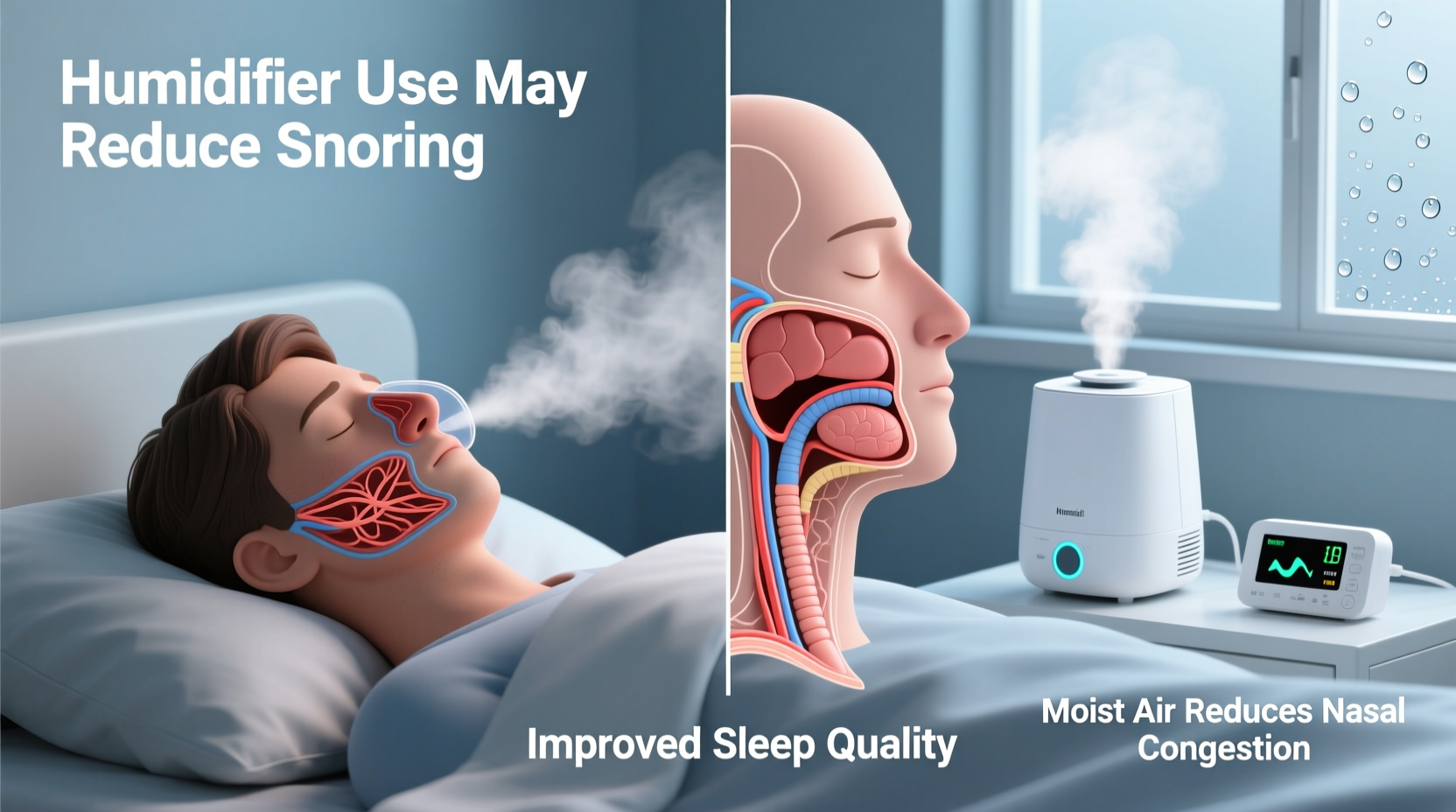
Air that lacks sufficient moisture can dry out the mucous membranes lining the nasal passages, throat, and sinuses. When these tissues become dehydrated, they lose their natural elasticity and become more prone to vibration—the primary cause of snoring. Additionally, dry air prompts the body to produce thicker mucus, which can partially block nasal passages and force you to breathe through your mouth. Mouth breathing increases the likelihood of soft palate collapse, another key contributor to snoring sounds.
Heating systems in homes and offices often exacerbate this problem. During colder months, central heating reduces indoor relative humidity to as low as 10–20%, far below the ideal range of 30–50%. In such conditions, even individuals who don’t typically snore may begin to do so temporarily.
The Role of Humidifiers in Reducing Snoring
Humidifiers add water vapor to the air, increasing relative humidity and helping maintain moisture in the respiratory tract. Cool mist and warm mist humidifiers both serve this function, though they operate differently:
- Cool mist humidifiers use ultrasonic vibrations or evaporative wicks to disperse room-temperature moisture. They are energy-efficient and safe around children.
- Warm mist humidifiers heat water to create steam, which cools slightly before release. The warmth can feel soothing and may slightly reduce airborne bacteria.
By keeping nasal and throat tissues hydrated, humidifiers reduce inflammation and mucus viscosity. This allows for smoother airflow and less tissue vibration during sleep. For individuals whose snoring is linked to allergies, colds, or seasonal dryness, a humidifier can provide noticeable relief within just a few nights.
“Maintaining proper bedroom humidity can significantly reduce upper airway resistance, especially in patients with mild snoring due to environmental dryness.” — Dr. Lena Patel, Sleep Specialist at Pacific Sleep Institute
Scientific Evidence and User Experience
While large-scale clinical trials specifically linking humidifiers to snoring reduction are limited, several studies support the broader benefits of optimal humidity on respiratory health. A 2020 study published in the Journal of Clinical Sleep Medicine found that participants exposed to dry air during sleep experienced increased upper airway resistance and more frequent arousals. Conversely, those in environments with controlled humidity (40–50%) reported fewer breathing disruptions and improved subjective sleep quality.
Anecdotal evidence is even more compelling. Online forums, sleep clinics, and consumer reviews consistently report improvements in snoring after introducing a humidifier. Many users describe waking up feeling less congested and notice their partners commenting on reduced noise levels.
Mini Case Study: Mark’s Experience with Nighttime Snoring
Mark, a 42-year-old software developer from Denver, began snoring heavily during winter months. His partner recorded audio that revealed consistent, loud snoring beginning shortly after falling asleep. After consulting a sleep clinic, he was ruled out for sleep apnea but advised to address environmental factors. He purchased a cool mist humidifier and used it nightly, monitoring humidity with a digital hygrometer.
Within five days, his snoring decreased in frequency and volume. After two weeks, his partner confirmed a 70% reduction in nighttime noise. Mark also reported waking up with less throat irritation and improved morning alertness. While not a cure-all, the humidifier became a permanent part of his bedroom routine.
Choosing the Right Humidifier for Better Sleep
Not all humidifiers are created equal. Selecting the right model involves considering room size, maintenance needs, noise level, and safety features. Here’s a comparison of common types:
| Type | Noise Level | Maintenance | Best For |
|---|---|---|---|
| Cool Mist (Ultrasonic) | Very quiet | Weekly cleaning; demineralization filters recommended | Bedrooms, nurseries |
| Cool Mist (Evaporative) | Moderate (fan noise) | Regular wick replacement; less mineral buildup | Larger rooms, allergy sufferers |
| Warm Mist | Quiet | Low mineral dispersion; requires daily water changes | Winter use, congestion relief |
For most sleep applications, an ultrasonic cool mist humidifier is ideal due to its near-silent operation and efficient moisture distribution. Look for models with adjustable humidity settings, automatic shut-off, and built-in hygrometers for precise control.
Step-by-Step Guide to Using a Humidifier for Snoring Relief
Simply owning a humidifier isn’t enough—proper use is key to achieving results. Follow this timeline to maximize effectiveness:
- Week 1: Assess Your Environment
Use a hygrometer to measure current bedroom humidity. Ideal levels are between 30% and 50%. Below 30% indicates dry air that may be contributing to snoring. - Day 1: Set Up the Humidifier
Choose a flat, elevated surface away from walls and bedding. Fill with distilled or demineralized water to prevent white dust and microbial growth. - Nights 1–3: Run at Moderate Output
Start with medium mist setting. Monitor comfort and any changes in breathing or snoring. Use a smartphone app or ask your partner for feedback. - Nights 4–7: Adjust Based on Response
If no improvement, increase output slightly. If condensation forms on windows or surfaces, lower the setting to avoid over-humidification. - Ongoing: Maintain Cleanliness
Empty, rinse, and dry the tank daily. Perform a deep clean with vinegar or manufacturer-recommended solution every 3–5 days to prevent mold and bacteria buildup.
Consistency is crucial. It may take up to 10 nights to notice significant changes, especially if chronic dryness has been present for weeks.
Limitations and When a Humidifier Isn’t Enough
While humidifiers can help reduce snoring caused by dry air, they are not a universal solution. Snoring can stem from various underlying causes, including:
- Anatomical issues (enlarged tonsils, deviated septum)
- Obstructive sleep apnea (OSA)
- Excess weight or poor sleep posture
- Alcohol consumption before bedtime
If snoring persists despite consistent humidifier use, especially when accompanied by gasping, choking, or daytime fatigue, a medical evaluation is essential. Continuous Positive Airway Pressure (CPAP) therapy or oral appliances may be necessary for diagnosed sleep disorders.
Do’s and Don’ts of Bedroom Humidifier Use
| Do’s | Don’ts |
|---|---|
| Use distilled or filtered water | Use tap water regularly (causes mineral buildup) |
| Clean the unit every 3–5 days | Let water sit stagnant in the tank |
| Monitor humidity with a hygrometer | Run above 50% humidity (promotes mold) |
| Place on a waterproof tray | Ignore musty odors (sign of mold) |
Frequently Asked Questions
Can a humidifier completely stop snoring?
Not always. A humidifier can significantly reduce snoring caused by dry air or mild congestion, but it won’t eliminate snoring rooted in structural or medical issues like sleep apnea. It should be viewed as one component of a broader sleep hygiene strategy.
Is it safe to use a humidifier every night?
Yes, provided it is cleaned regularly and humidity levels are kept between 30% and 50%. Unclean units can disperse bacteria or mold spores, and over-humidification can encourage dust mites and mold growth on surfaces.
What’s better for snoring: cool mist or warm mist?
Both can be effective. Cool mist humidifiers are generally quieter and more energy-efficient, making them better suited for continuous nighttime use. Warm mist units may offer added comfort for those with congestion but tend to require more maintenance and consume more energy.
Final Thoughts: A Simple Step Toward Quieter, Deeper Sleep
Sleeping with a humidifier isn’t a miracle cure, but for many, it’s a surprisingly effective tool in the fight against snoring. By addressing one of the most common environmental triggers—dry air—it supports healthier breathing, reduces throat irritation, and fosters a more peaceful sleep environment. When combined with other good habits like side sleeping, avoiding alcohol before bed, and maintaining a healthy weight, a humidifier can play a meaningful role in improving overall sleep quality.
The best part? It’s a low-cost, non-invasive intervention with minimal risk when used properly. Whether you're snoring occasionally during winter or dealing with year-round congestion, giving a humidifier a fair trial could be the first step toward quieter nights and more refreshed mornings.




 浙公网安备
33010002000092号
浙公网安备
33010002000092号 浙B2-20120091-4
Comments
No comments yet. Why don't you start the discussion?