
For millions of people struggling with restless nights, racing thoughts, or environmental noise disruptions, white noise has emerged as a popular sleep aid. From smartphone apps to dedicated machines, the use of white noise during sleep has grown rapidly in recent years. But beyond anecdotal reports, what does science say? Can consistently sleeping with white noise actually improve both sleep quality and cognitive performance? The answer, supported by neuroscience and sleep research, is increasingly pointing toward yes—when used correctly.
White noise works by masking disruptive sounds and creating a consistent auditory environment. This steady background sound helps reduce the contrast between sudden noises (like a dog barking or a door slamming) and silence, which can trigger micro-arousals during sleep. Over time, improved sleep continuity may lead to measurable gains in memory consolidation, focus, and emotional regulation—key components of brain function.
How White Noise Influences Sleep Architecture
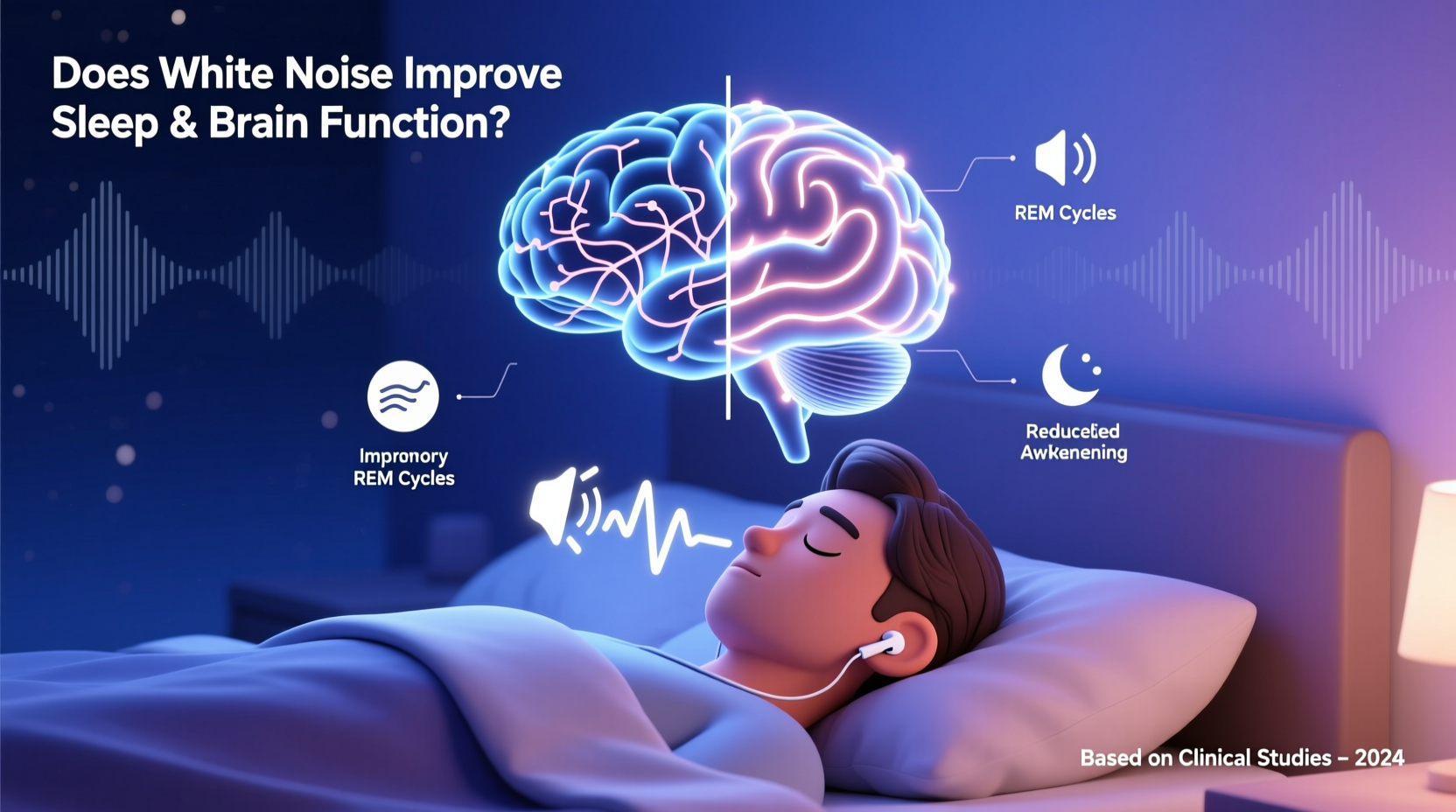
Sleep is not a uniform state but a dynamic process composed of cycles including light sleep, deep sleep (slow-wave sleep), and REM sleep. Each stage plays a distinct role in physical restoration and cognitive processing. Environmental disturbances—even those that don’t fully wake you—can fragment these cycles, reducing the restorative value of sleep.
White noise operates on the principle of auditory masking. By filling the acoustic space with a broad spectrum of frequencies at equal intensity, it drowns out unpredictable external sounds. Studies have shown that hospital patients exposed to continuous white noise experience fewer nighttime awakenings and report better subjective sleep quality. A 2021 study published in *Sleep Medicine Reviews* found that white noise reduced sleep onset latency by an average of 40% in individuals with mild insomnia.
The brain remains highly responsive to sound during sleep, particularly during lighter stages. Sudden noises activate the auditory cortex and can trigger autonomic responses like increased heart rate or cortisol release. White noise dampens this reactivity by providing a predictable sonic backdrop, allowing the brain to remain in deeper, more restful stages longer.
Impact on Brain Function: Memory, Focus, and Cognitive Recovery
Better sleep doesn’t just mean feeling rested—it directly enhances brain function. Deep sleep is critical for memory consolidation, especially for declarative memories (facts and events). REM sleep supports emotional regulation and creative problem-solving. When white noise improves sleep continuity, it indirectly strengthens these cognitive processes.
A 2023 study from the University of Tübingen demonstrated that participants who used pink noise—a close relative of white noise with more balanced frequency distribution—during sleep showed increased slow-wave activity and performed 25% better on morning memory tests compared to controls. While pink noise was used in this case, the underlying mechanism applies broadly to consistent background noise.
Additionally, people with attention-deficit traits or hyperarousal conditions (such as anxiety or PTSD) often benefit from sensory shielding at night. White noise provides a form of gentle auditory containment, helping to reduce mental chatter and promote neural downregulation. Over weeks, this can contribute to improved daytime focus, reduced irritability, and enhanced decision-making capacity.
“Consistent auditory environments support stable sleep architecture, which is foundational for long-term brain health.” — Dr. Lena Patel, Neuroscientist and Sleep Researcher, Stanford Center for Sleep Sciences
Choosing the Right Type of Noise: White, Pink, and Brown
Not all noise is created equal. While \"white noise\" is the most commonly referenced, other variants may be more effective or comfortable depending on individual preferences and needs.
| Type of Noise | Frequency Profile | Best For | Example Sources |
|---|---|---|---|
| White Noise | Equal energy across all frequencies (high-pitched hiss) | Masking sharp, high-frequency sounds (e.g., traffic, voices) | Fan, radio static, baby monitors |
| Pink Noise | More power in lower frequencies; balanced, natural sound | Enhancing deep sleep and memory consolidation | Rainfall, rustling leaves, wind |
| Brown (Red) Noise | Strong emphasis on low frequencies; deep rumble | Calming anxious minds, blocking bass-heavy noise | Thunder, ocean waves, waterfalls |
Many users find brown noise more soothing due to its deeper tone, especially those sensitive to high-pitched sounds. However, white noise remains the most accessible and widely tested option, particularly in clinical settings.
Real-World Application: A Case Study
Consider Mark, a 38-year-old software engineer living in a busy urban apartment. He struggled with falling asleep due to street noise and reported frequent grogginess in the mornings. After trying earplugs (which caused discomfort) and blackout curtains (which didn’t address sound), he began using a white noise app playing a fan-like sound at 55 dB.
Within two weeks, Mark noticed he fell asleep faster and woke up less frequently. He tracked his sleep using a wearable device, which confirmed a 22% increase in deep sleep duration over one month. More importantly, he reported sharper concentration during work hours and fewer afternoon energy crashes. His experience aligns with broader findings: consistent auditory environments can significantly enhance both sleep efficiency and daytime cognition.
Step-by-Step Guide to Using White Noise Effectively
To maximize benefits and avoid potential downsides (such as dependency or hearing strain), follow this practical timeline:
- Night 1–3: Test different types of noise. Try white, pink, and brown noise using a trusted app or machine. Listen for 10–15 minutes before bed to assess comfort.
- Night 4–7: Select your preferred sound and set volume. Keep it low—just loud enough to mask ambient noise. Avoid levels above 60 dB.
- Week 2: Integrate into bedtime routine. Play the noise as part of winding down, ideally starting 30 minutes before lights out.
- Week 3–4: Monitor sleep quality. Track how quickly you fall asleep, number of awakenings, and morning alertness. Adjust placement (e.g., across the room) if the sound feels too direct.
- Ongoing: Reassess monthly. If sleep improves, continue. If not, consider consulting a sleep specialist or trying alternative interventions like cognitive behavioral therapy for insomnia (CBT-I).
Common Pitfalls and What to Avoid
- Using excessively high volume: Prolonged exposure to sounds above 60 dB can contribute to hearing fatigue or even long-term auditory damage.
- Over-reliance without addressing root causes: White noise helps manage symptoms but won’t fix underlying issues like sleep apnea, chronic stress, or poor sleep hygiene.
- Using inconsistent or jarring sounds: Some apps include nature sounds with sudden bird calls or thunderclaps, which defeat the purpose of steady masking.
- Ignoring personal sensitivity: Some individuals find white noise irritating or mentally stimulating, especially those with autism or sensory processing differences.
FAQ
Is it safe to play white noise all night?
Yes, when played at a moderate volume (below 60 dB) and from a safe distance. Long-term safety studies show no adverse effects under these conditions. However, avoid placing speakers or devices directly next to the pillow.
Can white noise help children sleep better?
Yes, especially infants and toddlers in noisy environments. Pediatricians often recommend white noise as part of a calming bedtime routine. However, volume should be kept low (under 50 dB) to protect developing ears.
Does white noise affect dreaming or REM sleep?
Current evidence suggests that properly used white noise does not suppress REM sleep. In fact, by reducing awakenings, it may support more complete REM cycles, potentially enhancing dream recall and emotional processing.
Checklist: Optimizing Your White Noise Setup
- ☐ Choose a noise type that feels calming (white, pink, or brown)
- ☐ Set volume between 50–60 dB (use a sound meter app if needed)
- ☐ Place the device at least 6 feet from the bed
- ☐ Use a timer or smart plug to turn off after sleep onset (optional)
- ☐ Combine with other sleep hygiene practices (dark room, cool temperature, no screens)
- ☐ Re-evaluate effectiveness after two weeks
Conclusion: Harnessing Sound for Better Rest and Sharper Thinking
Sleeping with white noise isn’t just a trend—it’s a scientifically supported strategy for improving sleep quality and, by extension, brain function. By smoothing out auditory disruptions and supporting uninterrupted sleep cycles, white noise creates the conditions necessary for memory consolidation, emotional balance, and sustained mental clarity.
The key lies in mindful implementation: choosing the right sound, setting appropriate volume, and integrating it into a holistic approach to sleep health. For city dwellers, shift workers, parents, or anyone battling insomnia, white noise offers a simple, non-invasive tool with meaningful results.




 浙公网安备
33010002000092号
浙公网安备
33010002000092号 浙B2-20120091-4
Comments
No comments yet. Why don't you start the discussion?