
Snoring affects millions of people worldwide, disrupting not only their own sleep but also that of their partners. While occasional snoring is common, chronic snoring can signal underlying issues such as dry airways, nasal congestion, or mild sleep apnea. One increasingly popular solution—especially during dry winter months—is the use of a humidifier at night. But does it actually work? And more importantly, can adding moisture to your bedroom air lead to quieter nights and deeper rest? The answer, supported by both clinical insight and user experience, leans strongly toward yes—when used correctly.
A humidifier introduces moisture into the air, helping maintain optimal humidity levels between 30% and 50%. Dry indoor air, particularly in heated or air-conditioned rooms, can irritate the mucous membranes in the nose and throat. This irritation leads to swelling, increased mucus production, and restricted airflow—all of which contribute to the vibrations we recognize as snoring. By keeping the air moist, a humidifier may soothe these tissues, reduce congestion, and support easier breathing throughout the night.
How Humidity Affects Breathing and Snoring
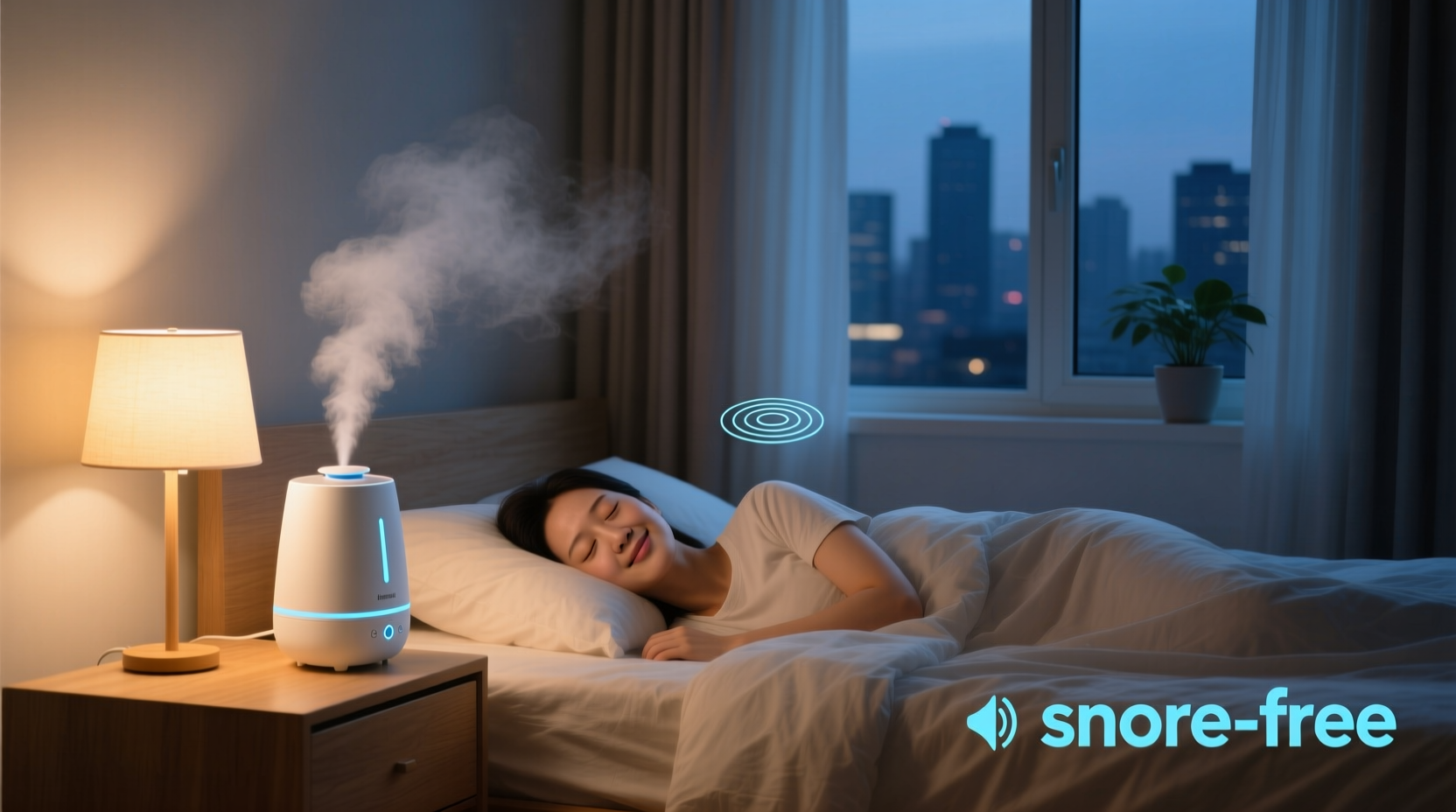
The human respiratory system functions best in balanced environmental conditions. When air is too dry, the delicate lining of the nasal passages and throat becomes dehydrated. This dryness can cause inflammation, making tissues more prone to vibration during sleep—a primary cause of snoring. Additionally, dry air thickens mucus, impairing its ability to drain properly and increasing the likelihood of nasal blockage.
In contrast, properly humidified air helps keep mucous membranes hydrated and functional. Moist air supports natural filtration, reduces irritation, and maintains open nasal passages. For individuals who breathe primarily through their nose during sleep, this can mean fewer obstructions and less turbulent airflow—the key factors in minimizing snoring.
“Maintaining adequate humidity in the bedroom can significantly reduce upper airway resistance, especially in patients with seasonal allergies or chronic nasal congestion.” — Dr. Alan Foster, Sleep Medicine Specialist
It’s important to note that while humidifiers don’t cure structural causes of snoring—such as deviated septums or obstructive sleep apnea—they can alleviate symptoms caused or worsened by dry environments. In many cases, users report noticeable improvements within just a few nights of consistent humidifier use.
Types of Humidifiers and Their Impact on Sleep
Not all humidifiers are created equal. Choosing the right type can influence both effectiveness and safety. Below is a comparison of the most common models available today:
| Type | How It Works | Pros | Cons |
|---|---|---|---|
| Ultrasonic | Uses high-frequency vibrations to create a fine mist | Quiet operation, energy-efficient, cool or warm mist options | May disperse minerals if using tap water; requires regular cleaning |
| Evaporative | Fan blows air through a wet wick filter | Self-regulating (won’t over-humidify), uses no heat | Slightly noisy due to fan, filter replacement needed |
| Steam Vaporizer | Boils water to produce warm steam | Kills bacteria in water, effective for congestion relief | Energy-intensive, burn risk if knocked over, higher maintenance |
| Cool Mist (Impeller) | Blades spin water into droplets dispersed by a diffuser | Safer for children, affordable | Louder than ultrasonic, shorter lifespan |
For nighttime use, experts generally recommend cool-mist ultrasonic or evaporative models. They operate quietly, pose minimal safety risks, and effectively maintain stable humidity without overheating the room. Warm mist units may offer additional comfort for those with colds or sinus pressure but require extra caution around pets and children.
Scientific Evidence and Real-World Results
Several studies have explored the relationship between indoor humidity and respiratory comfort during sleep. A 2017 study published in the journal *Sleep and Breathing* found that participants exposed to low-humidity environments experienced increased nasal resistance and reported more frequent awakenings. Conversely, when humidity was maintained at 40–50%, subjects showed improved nasal patency and reduced snoring intensity.
In another observational trial conducted by the Mayo Clinic, 68% of participants with habitual snoring due to seasonal allergies reported decreased snoring frequency after using a bedroom humidifier consistently for three weeks. Though not a substitute for medical treatment, the results suggest that environmental modification plays a meaningful role in symptom management.
Mini Case Study: Mark’s Experience with Nighttime Humidification
Mark, a 42-year-old software developer from Denver, had struggled with loud snoring for years, particularly during winter. His wife often complained about disrupted sleep, and he frequently woke up with a dry throat and stuffy nose. After consulting his primary care physician, he learned that his home’s indoor humidity dropped below 20% during heated months—far below the recommended range.
He purchased a quiet ultrasonic humidifier with a built-in hygrometer and began using it nightly. Within five days, both he and his wife noticed a significant reduction in snoring volume. After two weeks, his morning throat discomfort disappeared, and his overall sleep efficiency—measured via a wearable tracker—improved by 18%. While not a complete cure, the humidifier became a cornerstone of his nightly routine.
Optimal Use: How to Maximize Benefits and Avoid Risks
While humidifiers can enhance sleep quality and reduce snoring, improper use can lead to problems such as mold growth, bacterial contamination, or excessive humidity. To get the most benefit safely, follow this step-by-step guide:
- Measure current humidity: Use a digital hygrometer to check your bedroom’s baseline humidity level. Ideal range: 30%–50%.
- Choose the right size unit: Match the humidifier’s output capacity to your room size (e.g., small units for bedrooms under 300 sq ft).
- Place it strategically: Position the humidifier on an elevated surface, away from walls and electronics, at least 2–3 feet from the bed to avoid direct mist exposure.
- Use clean, distilled water: Prevents mineral deposits and microbial growth in the tank.
- Clean daily: Empty, rinse, and dry the water tank every day. Disinfect weekly with a vinegar solution or manufacturer-recommended cleaner.
- Maintain humidity levels: Run the unit only as long as needed to reach target humidity. Over-humidifying (>60%) encourages dust mites and mold.
- Replace filters regularly: If your model has a filter, change it according to the schedule—even if it looks clean.
- ☑ Check room humidity before and after use
- ☑ Fill with distilled water nightly
- ☑ Clean tank and base weekly
- ☑ Keep unit out of reach of children and pets
- ☑ Replace filters monthly (if applicable)
- ☑ Monitor for musty odors or visible mold
When a Humidifier Isn't Enough: Knowing the Limits
While humidifiers can reduce snoring caused by dry air or mild congestion, they are not a cure-all. Certain conditions require medical evaluation and targeted treatments:
- Obstructive Sleep Apnea (OSA): Characterized by repeated breathing pauses during sleep, OSA often involves physical obstructions that won’t respond to humidity alone.
- Anatomical issues: Deviated septum, enlarged tonsils, or nasal polyps may necessitate surgical correction.
- Chronic sinusitis or allergies: These may require antihistamines, nasal sprays, or immunotherapy alongside environmental controls.
If snoring persists despite consistent humidifier use—or is accompanied by daytime fatigue, gasping during sleep, or witnessed breathing lapses—it’s essential to consult a sleep specialist. A sleep study may be recommended to rule out serious conditions.
Frequently Asked Questions
Can a humidifier completely stop snoring?
No single device can guarantee the elimination of snoring, especially when structural or medical factors are involved. However, a humidifier can significantly reduce snoring caused by dry air, congestion, or irritated airways. Many users experience quieter breathing and improved comfort, but results vary based on individual physiology and environment.
Is it safe to use a humidifier every night?
Yes, it’s safe to use a humidifier nightly as long as you maintain it properly. Regular cleaning prevents mold and bacteria buildup, and monitoring humidity levels ensures you don’t over-moisten the air. Units with automatic shut-off and humidity sensors make continuous use safer and more efficient.
What time should I turn on my humidifier?
Turn on the humidifier about 30 minutes before bedtime to allow the air to stabilize. Alternatively, use a model with a timer so it runs only during sleep hours. Some advanced units integrate with smart thermostats to maintain ideal conditions automatically throughout the night.
Conclusion: Breathe Easier, Sleep Better
Using a humidifier at night can indeed reduce snoring and improve sleep quality—for many people, it’s a simple, non-invasive way to support healthier breathing. By maintaining optimal humidity, you help keep nasal passages clear, reduce tissue irritation, and minimize the vibrations that lead to disruptive snoring. When combined with good sleep hygiene and proper device maintenance, a humidifier becomes a powerful ally in the pursuit of restful, uninterrupted sleep.
The benefits extend beyond noise reduction. Hydrated air supports better skin condition, reduces static electricity, and may even lower susceptibility to winter colds. For those seeking a natural, cost-effective intervention, a well-chosen humidifier offers tangible improvements without side effects.




 浙公网安备
33010002000092号
浙公网安备
33010002000092号 浙B2-20120091-4
Comments
No comments yet. Why don't you start the discussion?