
In an era where digital engagement shapes much of our daily lives, video games are no longer seen merely as entertainment. For many adults, gaming has evolved into a complex cognitive activity that challenges the mind, fosters strategic thinking, and cultivates resilience. While critics have long associated gaming with distraction or escapism, a growing body of scientific evidence suggests that certain types of video games can significantly improve problem-solving abilities in adults. From navigating intricate puzzles to managing virtual economies under pressure, these interactive experiences train the brain in ways that translate to real-world decision-making and adaptability.
The connection between gaming and cognitive enhancement is not speculative—it’s measurable. Neuroscientists, psychologists, and educators have begun to recognize that well-designed games engage executive functions such as planning, working memory, flexibility, and inhibition control. These are the very components that underpin effective problem solving. This article explores how specific game genres stimulate cognitive development, examines the psychological mechanisms at play, and provides practical insights for leveraging gaming as a tool for mental agility.
How Video Games Challenge the Adult Brain
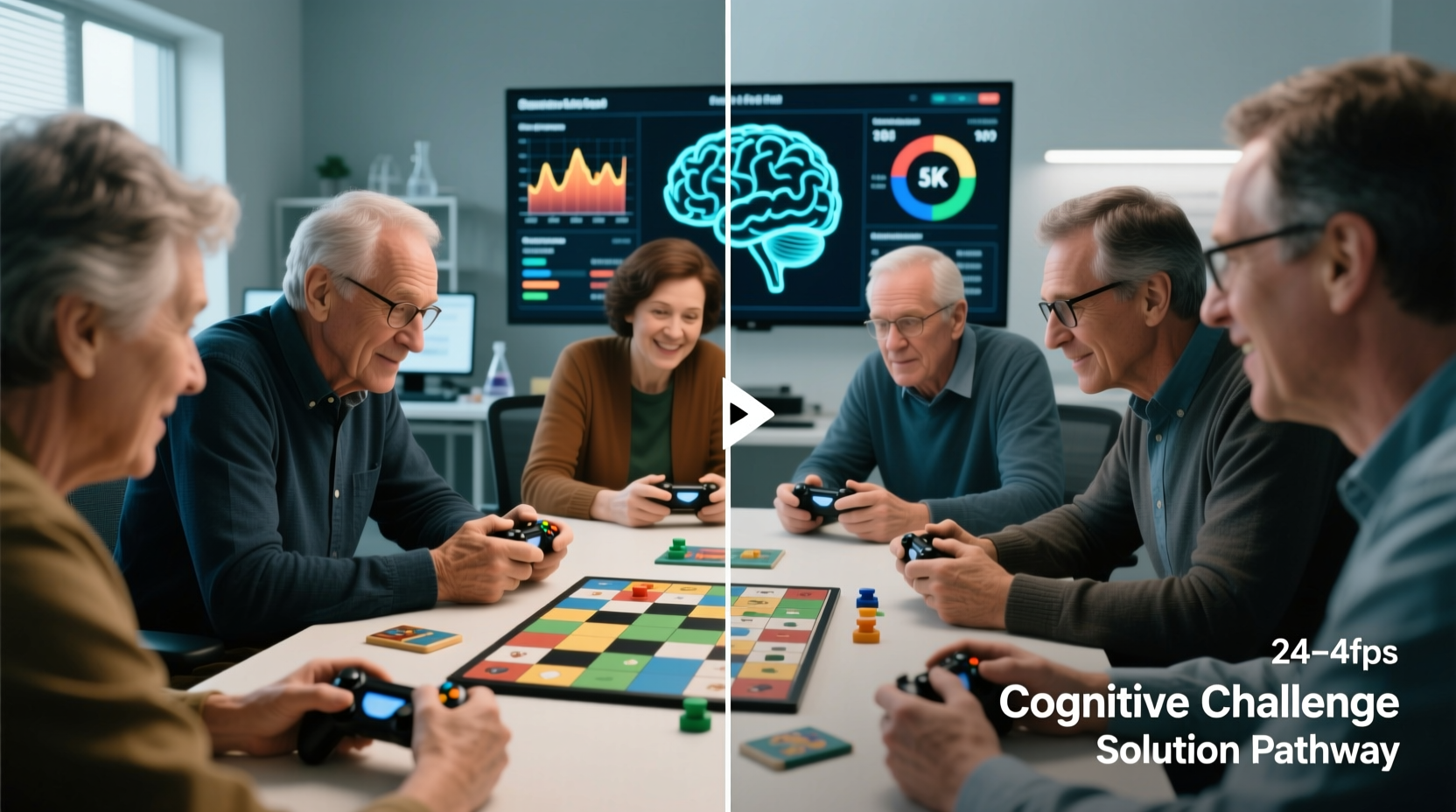
Unlike passive forms of media, video games require active participation. Players must interpret dynamic environments, anticipate outcomes, and adjust strategies in real time. This constant demand on cognitive resources makes gaming a potent form of mental exercise. Problem-solving in games often involves identifying patterns, evaluating risks, allocating limited resources, and responding to unexpected obstacles—all within constrained timeframes.
For example, strategy games like *Civilization* or *Crusader Kings* force players to manage diplomacy, warfare, economic development, and technological advancement simultaneously. Success depends not only on tactical decisions but also on long-term planning and foresight. Similarly, puzzle-based titles such as *Portal* or *The Talos Principle* present physics-driven challenges that require spatial reasoning, hypothesis testing, and iterative refinement of solutions—skills directly transferable to engineering, programming, and scientific inquiry.
Even fast-paced action games contribute to improved cognitive flexibility. Studies show that individuals who regularly play first-person shooters demonstrate enhanced attention allocation, faster information processing, and better multitasking abilities. While these may seem unrelated to traditional problem solving, they support the foundational mental speed and adaptability required when tackling complex, high-pressure situations.
Key Cognitive Skills Developed Through Gaming
Video games don’t just entertain—they rewire how we think. The following cognitive domains are consistently strengthened through regular gameplay, particularly in genres that emphasize logic, planning, and adaptation:
- Pattern Recognition: Many games rely on visual, auditory, or behavioral cues that repeat across levels. Recognizing these patterns allows players to predict enemy movements, decode puzzles, or exploit system mechanics.
- Working Memory: Keeping track of inventory, mission objectives, character stats, or map layouts strengthens short-term retention and manipulation of information.
- Cognitive Flexibility: Switching between tasks (e.g., combat, exploration, crafting) improves mental agility and reduces rigidity in thinking.
- Hypothesis Testing: Trial-and-error learning is central to gaming. Players formulate theories (“If I use this weapon here…”), test them, and refine based on feedback—a process mirroring scientific reasoning.
- Risk Assessment: Resource scarcity in survival games like *Subnautica* or *Don’t Starve* compels players to weigh potential gains against possible losses, fostering more deliberate decision-making.
These skills converge to create what researchers call “adaptive expertise”—the ability to apply knowledge creatively in novel situations. Unlike rote memorization, adaptive expertise thrives on uncertainty and improvisation, making it invaluable in professional settings ranging from healthcare to software development.
“Games provide a safe space to fail repeatedly while still progressing—a powerful model for developing resilient problem solvers.” — Dr. C. Shawn Green, Cognitive Psychologist, University of Wisconsin-Madison
Genres That Boost Problem-Solving Abilities
Not all games are created equal when it comes to cognitive benefits. Some genres are specifically designed to stretch mental faculties in targeted ways. Below is a breakdown of key genres and their impact on adult problem-solving skills:
| Game Genre | Problem-Solving Focus | Examples |
|---|---|---|
| Strategy (Turn-Based) | Long-term planning, resource management, geopolitical simulation | Civilization VI, XCOM 2, Into the Breach |
| Puzzle & Logic | Spatial reasoning, sequential thinking, constraint satisfaction | Portal 2, Baba Is You, The Witness |
| Survival/Crafting | Adaptive decision-making, prioritization under scarcity | Minecraft (Hardcore mode), Valheim, Satisfactory |
| Role-Playing Games (RPGs) | Narrative branching, moral dilemmas, consequence evaluation | Disco Elysium, Mass Effect, Baldur’s Gate 3 |
| Simulation & Management | Systemic thinking, cause-effect analysis, optimization | Two Point Hospital, Cities: Skylines, Oxygen Not Included |
Each of these genres presents unique cognitive demands. A player managing a hospital in *Two Point Hospital* learns to diagnose systemic inefficiencies and implement scalable fixes—paralleling operations management in real organizations. Meanwhile, someone navigating the narrative complexity of *Disco Elysium* practices weighing ethical trade-offs and interpreting ambiguous social cues, skills relevant to leadership and conflict resolution.
A Real-World Example: From Gamer to Crisis Manager
Consider the case of Marcus T., a logistics coordinator at a mid-sized distribution company. After years of playing real-time strategy games like *StarCraft II*, he noticed a shift in how he approached work-related challenges. During a major warehouse outage caused by a software failure, his team was scrambling to reroute shipments manually. While others focused on immediate fixes, Marcus applied a systems-thinking approach honed through gaming: he mapped out dependencies, identified critical bottlenecks, and proposed a temporary triage protocol that minimized delays.
His supervisor later remarked that Marcus’s solution resembled a “gamer’s playbook”—structured, anticipatory, and highly adaptive. When asked about his methodology, Marcus credited his experience with complex games that required balancing multiple variables under time pressure. “In *StarCraft*, if you don’t manage your economy while defending attacks, you lose instantly,” he explained. “That mindset carried over. I started seeing supply chains like interconnected units needing constant monitoring and adjustment.”
This anecdote illustrates how gaming can cultivate transferable competencies. Though Marcus never formally studied crisis management, his informal training through gameplay equipped him with tools to solve problems more effectively than colleagues relying solely on traditional training.
Scientific Evidence Supporting Cognitive Gains
The idea that video games improve problem-solving skills isn't anecdotal—it's supported by peer-reviewed research. A landmark study published in *Nature* in 2013 found that older adults who played a specially designed 3D platform game for 12 hours over a month showed significant improvements in memory, attention, and task-switching compared to a control group. These gains persisted for months after training ended.
Another study conducted by the University of Rochester demonstrated that action game players made decisions up to 25% faster than non-gamers without sacrificing accuracy. Researchers attributed this to enhanced perceptual processing and confidence in probabilistic judgments—key traits in high-stakes environments like emergency medicine or air traffic control.
Furthermore, a meta-analysis from the American Psychological Association concluded that playing strategy and puzzle games correlates strongly with improved fluid intelligence—the ability to reason and solve new problems independent of prior knowledge. This form of intelligence is particularly valuable in fast-changing industries where standard procedures quickly become obsolete.
It’s important to note that not all screen time yields these benefits. Passive consumption (e.g., binge-watching) does not engage executive function in the same way. The interactivity, feedback loops, and escalating challenges inherent in quality games are what drive cognitive growth.
How to Maximize Problem-Solving Gains from Gaming
To harness the full cognitive potential of video games, intentionality matters. Mindless grinding or repetitive play offers diminishing returns. Instead, adopt a purposeful approach that emphasizes learning and reflection. Follow this checklist to optimize your gaming sessions for mental development:
- Set clear goals for each session (e.g., master a new mechanic, complete a challenging level).
- Choose games with increasing difficulty curves and minimal hand-holding.
- Take notes after difficult encounters—what worked? What failed?
- Limit autoplay modes; disable tutorials once basics are learned.
- Play for 45–60 minutes per session to maintain focus and avoid fatigue.
- Reflect on in-game decisions: Could a different strategy have yielded better results?
- Discuss strategies with other players to gain alternative perspectives.
Additionally, vary your game selection across genres to develop a broader skill set. Just as cross-training strengthens the body, cognitive cross-training prevents over-specialization and promotes neural plasticity.
Frequently Asked Questions
Can casual games like mobile puzzles improve problem-solving skills?
Yes, but with limitations. Simple puzzle apps like *Lumosity* or *Candy Crush* can enhance basic pattern recognition and short-term memory. However, their repetitive nature often leads to plateauing. For sustained growth, opt for deeper, less scripted experiences that evolve with your skill level.
Are there negative effects of using games to train problem-solving?
Only if gaming becomes excessive or displaces essential activities like sleep, work, or social interaction. Moderate, structured play is beneficial. If you find yourself neglecting responsibilities or playing compulsively, reassess your habits. Balance is key.
Do multiplayer games offer the same benefits as single-player ones?
In some cases, even greater benefits. Multiplayer games introduce unpredictable human behavior, requiring advanced social cognition, negotiation, and teamwork. Games like *Overwatch* or *Among Us* demand rapid coordination and deception detection—complex problem-solving in social contexts.
Conclusion: Level Up Your Mind
Video games, when chosen wisely and played intentionally, are far more than diversions—they are dynamic training grounds for the modern mind. Adults who engage with cognitively demanding games aren’t wasting time; they’re sharpening their ability to analyze, adapt, and overcome challenges in both personal and professional realms. The skills developed through strategic thinking, iterative learning, and systemic awareness are not confined to pixels and polygons. They extend into boardrooms, classrooms, laboratories, and emergency rooms.
Instead of viewing gaming as a guilty pleasure, consider reframing it as a legitimate form of mental conditioning. Start small: pick one game that pushes your limits, commit to thoughtful play, and observe how your decision-making evolves. Share your experiences, compare strategies, and stay curious. The next level isn’t just in the game—it’s in how you think.




 浙公网安备
33010002000092号
浙公网安备
33010002000092号 浙B2-20120091-4
Comments
No comments yet. Why don't you start the discussion?