
Long-haul air travel often comes with uncomfortable side effects: swollen ankles, stiff legs, and that heavy, sluggish feeling in your lower limbs. These symptoms aren’t just annoyances—they’re signs of compromised circulation caused by prolonged sitting, low cabin pressure, and reduced mobility. Enter compression socks: a simple, non-invasive solution increasingly recommended by doctors and travel health experts. But do they actually work? The answer, supported by both clinical research and real-world experience, is a resounding yes—when used correctly.
Compression socks apply graduated pressure to the legs, strongest at the ankle and gradually decreasing toward the calf. This design helps veins push blood back toward the heart more efficiently, counteracting the pooling that occurs when you're seated for hours. For travelers, especially those on flights longer than four hours, this can make a meaningful difference in comfort and safety.
How Poor Circulation Develops During Flights
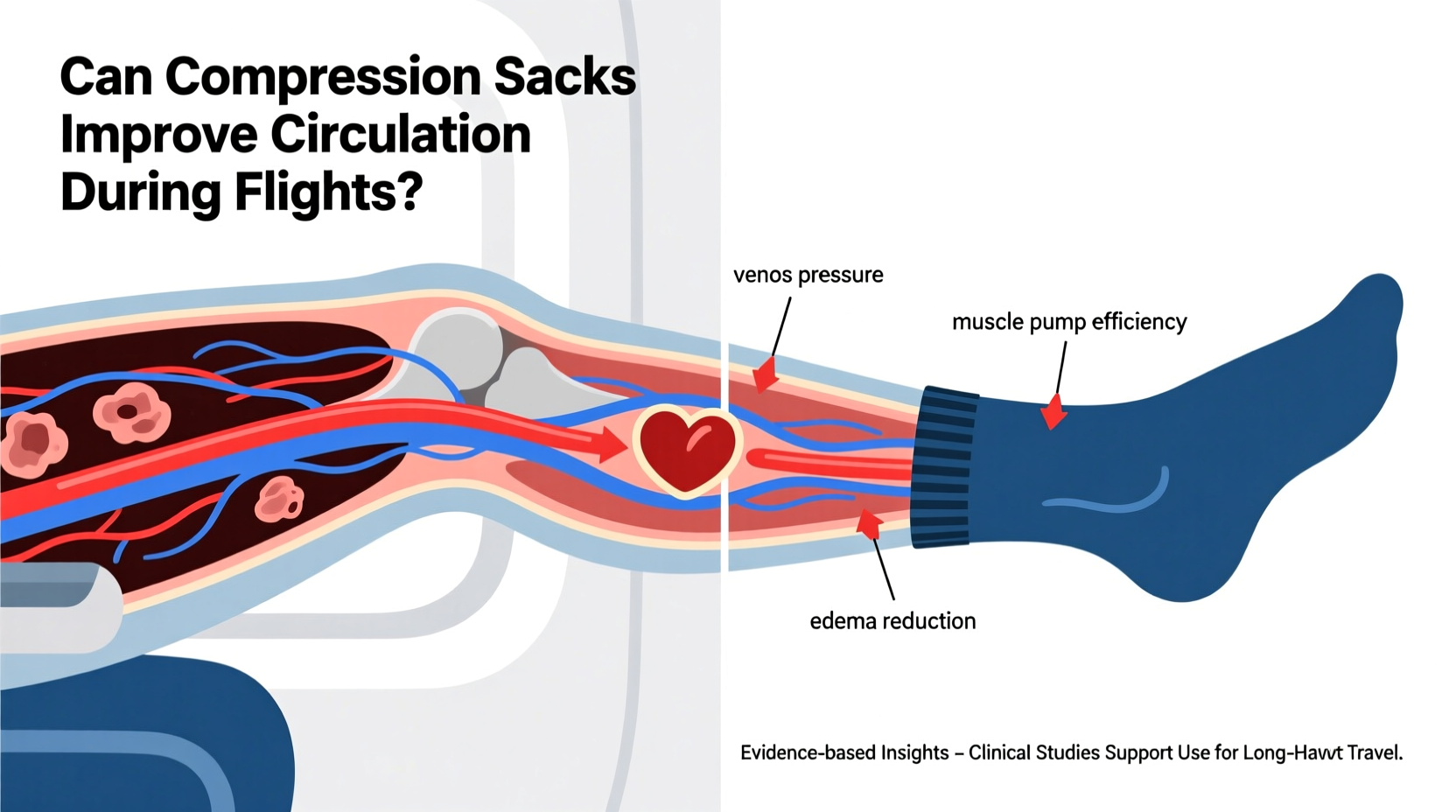
Airplane cabins are pressurized to simulate an altitude of 6,000–8,000 feet, which reduces oxygen levels slightly and affects circulation. Combine that with limited legroom, immobility, dehydration from dry cabin air, and sometimes alcohol or caffeine consumption, and you’ve created the perfect environment for venous stasis—the slowing or pooling of blood in the legs.
This condition increases the risk of:
- Edema (swelling in the feet and ankles)
- Muscle cramps and stiffness
- Deep vein thrombosis (DVT), a potentially life-threatening blood clot
The risk isn’t limited to older adults or those with pre-existing conditions. Healthy individuals can also develop circulation issues during long flights. According to the CDC, the risk of DVT doubles after flights lasting more than four hours.
The Science Behind Compression Socks
Graduated compression socks work by applying calibrated pressure measured in millimeters of mercury (mmHg). Medical-grade socks typically range from 15–20 mmHg (mild) to 30–40 mmHg (firm), with the latter usually prescribed for high-risk patients.
Studies consistently show their effectiveness. A 2006 meta-analysis published in *The Lancet* reviewed nine trials involving over 2,000 airline passengers and found that wearing compression stockings significantly reduced both symptomatic and asymptomatic DVT cases. Another study in the *Journal of Vascular Surgery* concluded that compression hosiery improves venous hemodynamics during flight, reducing blood pooling by up to 50% compared to no compression.
“Compression socks are one of the most effective non-pharmacological interventions to prevent travel-related venous issues.” — Dr. Rebecca Nguyen, Vascular Medicine Specialist, Mayo Clinic
The mechanism is straightforward: by gently squeezing the leg tissues and walls of superficial veins, compression socks support the calf muscle pump—the natural system that propels blood upward against gravity. When movement is restricted, as it is during long flights, this mechanical assistance becomes crucial.
Who Benefits Most From Wearing Compression Socks?
While nearly every traveler can benefit from improved circulation, certain groups see even greater advantages:
- Pregnant women: Increased blood volume and hormonal changes elevate clotting risk.
- Passengers over 50: Circulatory efficiency declines with age.
- Those with varicose veins or chronic venous insufficiency: Pre-existing valve weakness makes blood pooling more likely.
- Recent surgery or injury patients: Immobility heightens DVT risk.
- Individuals with obesity or a history of blood clots: Higher baseline risk factors.
Choosing the Right Compression Socks for Travel
Not all compression socks are created equal. To get real benefits, you need the right fit, strength, and quality. Here’s what to look for:
| Feature | Recommended | Avoid |
|---|---|---|
| Compression Level | 15–20 mmHg (medical-grade, over-the-counter) | Sock-like sleeves with no measurable pressure |
| Fabric | Moisture-wicking blend (nylon, spandex, merino wool) | 100% cotton (retains moisture, loses elasticity) |
| Fit | Snug but not painful; measure ankle and calf circumference | One-size-fits-all styles that slip or dig in |
| Length | Knee-high (covers key venous zones) | Ankle socks (limited coverage) |
| Certification | FDA-cleared or CE-marked medical devices | Unregulated \"wellness\" brands without testing |
Brands like Sigvaris, Jobst, and Medi are clinically trusted and widely available. Look for products labeled “graduated compression” rather than “support” or “firm,” which are often marketing terms without standardized pressure.
Real-World Impact: A Traveler’s Experience
Sarah Thompson, a 42-year-old business consultant, flies an average of 80,000 miles per year. For years, she dismissed compression socks as unnecessary. After a 14-hour flight from Sydney to London, she experienced significant swelling and pain in her left calf. A follow-up ultrasound ruled out DVT, but her physician advised preventive measures for future trips.
“I started wearing 20 mmHg knee-highs on my next long haul,” Sarah said. “The difference was immediate. No swelling, no tightness. I even walked off the plane without that usual heaviness in my legs. Now I pack them like toothbrushes—non-negotiable.”
Her experience reflects a growing trend among frequent flyers who prioritize proactive health over convenience. Airlines like British Airways and Emirates now include compression socks in wellness kits for premium passengers, signaling broader recognition of their value.
Step-by-Step Guide: How to Use Compression Socks Effectively During Flights
To maximize benefits, follow this timeline before, during, and after your flight:
- 24 Hours Before Flight: Hydrate well. Avoid alcohol and salty foods that promote fluid retention.
- 1 Hour Before Boarding: Put on your compression socks. It’s easiest to do this while lying down with legs elevated.
- During Boarding: Walk around the terminal to activate circulation before sitting.
- Once Seated: Adjust socks to ensure smooth fit—no bunching or wrinkles that could restrict flow.
- Every Hour: Perform seated calf raises (lift heels, then toes) and ankle circles. Compression works best when combined with movement.
- Mid-Flight: Get up and walk the aisle every 1–2 hours if possible.
- After Landing: Keep socks on for at least 30–60 minutes post-flight to support circulation during initial recovery.
- Post-Travel: Wash socks according to manufacturer instructions to maintain elasticity and hygiene.
Common Misconceptions About Compression Socks
Despite growing popularity, several myths persist:
- Myth: They’re only for elderly or sick people.
Reality: Healthy travelers benefit too—prevention is key. - Myth: Tighter is better.
Reality: Excessively tight socks can impair arterial flow. Stick to medically recommended levels. - Myth: Any tight sock works.
Reality: True graduated compression requires precise engineering. Athletic sleeves don’t provide the same physiological effect. - Myth: You’ll feel instant energy.
Reality: Benefits are subtle—less swelling, fewer cramps—not a stimulant effect.
Additional Tips for Maintaining Circulation While Flying
Compression socks are powerful, but they’re most effective as part of a holistic strategy. Combine them with these habits:
- Stay hydrated with water—avoid excessive caffeine and alcohol.
- Wear loose, comfortable clothing that doesn’t restrict blood flow.
- Choose an aisle seat to make getting up easier.
- Elevate your feet slightly if possible (use a small footrest or bag).
- Practice deep breathing to enhance oxygenation.
“Think of compression socks as seatbelts for your veins. You don’t know when you’ll need them, but they’re there to protect you when risks arise.” — Dr. Alan Torres, Aerospace Medicine Researcher
FAQ: Common Questions About Compression Socks and Air Travel
Can I wear compression socks if I’m not at high risk for blood clots?
Absolutely. Even low-risk travelers experience improved comfort, reduced leg fatigue, and less swelling. Prevention is always safer than treatment.
Are compression socks allowed through airport security?
Yes. Compression socks do not trigger metal detectors and require no special screening. You can wear them throughout your journey without removal.
How long should I wear them after landing?
For optimal recovery, keep them on for at least 30 minutes to an hour after your flight, especially if you have a long commute home. This helps stabilize circulation as your body readjusts to normal activity.
Final Thoughts: A Small Step With Big Impact
Wearing compression socks during flights isn’t about fear—it’s about smart, science-backed self-care. In an environment where your body is under subtle stress, supporting your circulatory system is one of the simplest and most effective things you can do. Whether you're flying across the country or around the world, these unassuming garments offer tangible protection against discomfort and serious complications.
The evidence is clear: compression socks improve circulation during flights by enhancing venous return, reducing edema, and lowering the risk of DVT. When paired with hydration, movement, and good travel habits, they form a cornerstone of healthy air travel.




 浙公网安备
33010002000092号
浙公网安备
33010002000092号 浙B2-20120091-4
Comments
No comments yet. Why don't you start the discussion?