
In the ongoing effort to reduce transmission of respiratory illnesses like COVID-19, mask-wearing has become a cornerstone of public health strategy. As new variants emerge and guidance evolves, many people are asking: is one mask enough? Can wearing two masks offer better protection—and if so, does that come at the cost of comfort or breathing difficulty? The answer isn’t a simple yes or no. It depends on mask types, fit, materials, and individual health. This article breaks down the science behind double masking, evaluates its real-world effectiveness, and addresses concerns about breathability and safety.
The Science Behind Double Masking
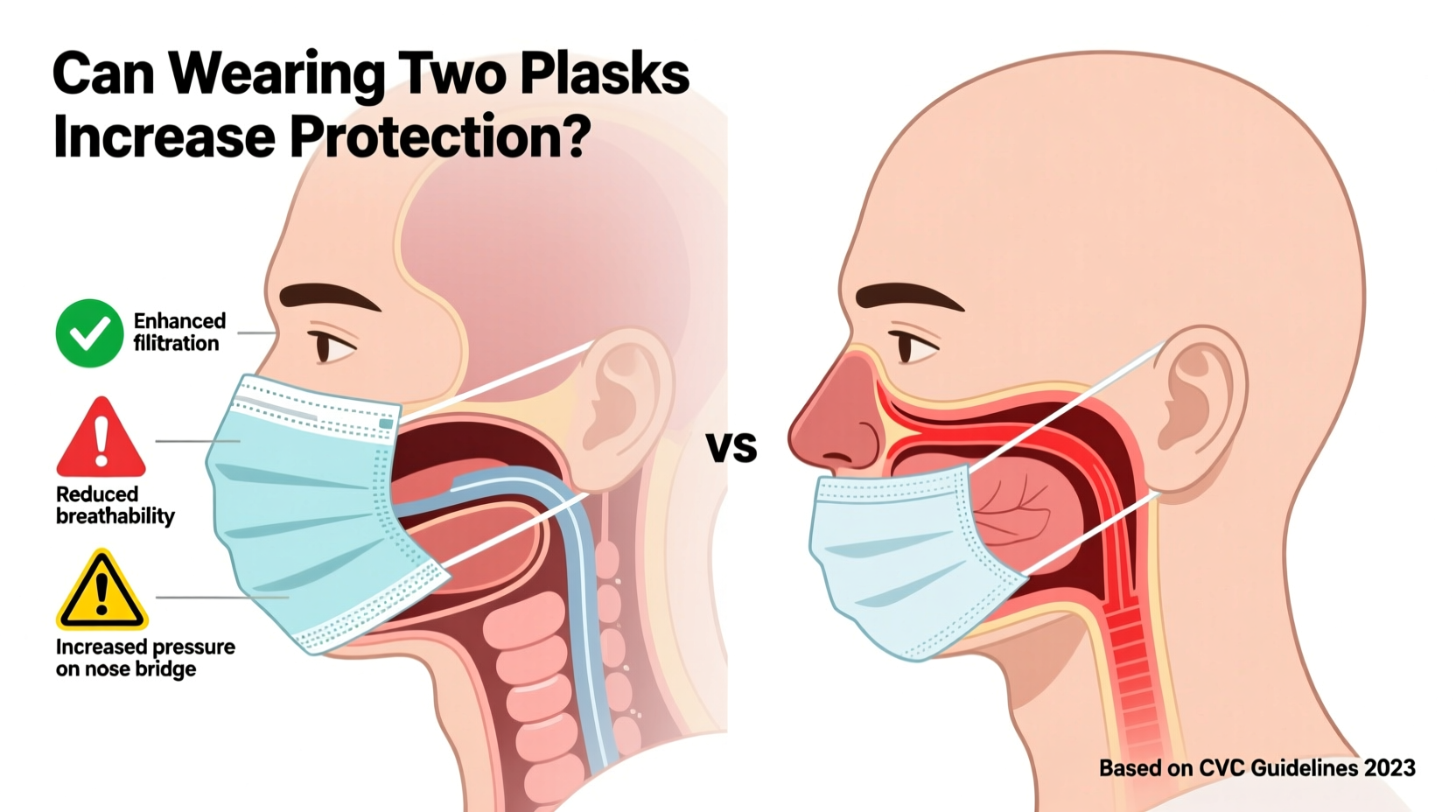
Double masking refers to wearing two face coverings simultaneously—typically a surgical mask underneath a cloth mask. The concept gained traction during the height of the pandemic, especially after studies from the Centers for Disease Control and Prevention (CDC) suggested improved filtration and fit when layering masks correctly.
The primary goal of any mask is source control (preventing your respiratory droplets from spreading) and personal protection (filtering incoming particles). A poorly fitting mask leaves gaps around the nose, cheeks, and chin, reducing effectiveness regardless of material quality. Double masking aims to solve this by improving both filtration and seal.
A 2021 CDC study using simulated coughs and laser scanning found that combining a disposable surgical mask with a well-fitted cloth mask over it could block up to 92.5% of particles—significantly more than either mask alone. The cloth mask helps press the surgical mask closer to the face, reducing leakage.
“Layering masks can improve performance, but only if done correctly. Not all combinations help, and some may even make things worse.” — Dr. Linsey Marr, Professor of Civil and Environmental Engineering, Virginia Tech
Does Double Masking Actually Increase Protection?
The short answer: sometimes. The benefit depends heavily on the combination and fit.
Wearing two loose-fitting cloth masks won’t necessarily help. In fact, it may create more gaps due to bulkiness. However, strategic layering—such as a procedural mask beneath a tightly woven, multi-layered cloth mask—can enhance protection in three key ways:
- Better filtration: Multiple layers increase the density of the filter medium, capturing smaller particles.
- Improved fit: The outer mask can compress the inner one against the face, sealing edges more effectively.
- Reduced exhalation leakage: Fewer particles escape around the sides, protecting others and reducing your own exposure to ambient aerosols.
However, not all mask pairings are beneficial. For example, wearing two N95 respirators offers no added benefit and wastes critical resources. Similarly, combining thick, non-breathable fabrics can compromise airflow without meaningful gains in protection.
How Double Masking Affects Breathing
One of the most common concerns about double masking is whether it restricts breathing. The human body is highly adaptable to minor increases in breathing resistance, and for most healthy individuals, double masking does not significantly impair oxygen intake or cause dangerous CO₂ buildup.
Studies measuring blood oxygen saturation (SpO₂) and carbon dioxide levels in healthcare workers wearing multiple masks—including N95s under surgical masks—have shown no clinically significant changes. Even during moderate physical activity, such as walking or climbing stairs, participants maintained normal respiratory function.
That said, perceived breathability matters. Increased resistance can lead to discomfort, which may cause people to adjust their masks frequently or remove them prematurely—reducing overall protection. Some individuals report a feeling of stuffiness or heat, particularly in warm environments or during exertion.
Certain populations should exercise caution:
- People with chronic respiratory conditions (e.g., COPD, asthma) may find double masking more taxing.
- Individuals with cardiovascular disease might experience increased heart rate or fatigue.
- Older adults or those with limited lung capacity may struggle with prolonged use.
If you have an underlying health condition, consult your physician before adopting double masking as a routine practice.
Best Practices for Effective and Safe Double Masking
To maximize protection while minimizing discomfort, follow these evidence-based guidelines:
- Choose the right combination: Pair a disposable surgical or procedural mask with a high-quality cloth mask that has multiple layers and a nose wire.
- Ensure a snug fit: No gaps around the nose, cheeks, or chin. Perform a “fit check” by placing your hands around the edges while exhaling—if you feel air leaking, adjust the mask.
- Avoid over-layering: More than two masks or excessively thick fabrics reduce breathability without improving filtration.
- Check comfort during movement: Talk, turn your head, and breathe deeply to ensure the mask stays in place and doesn’t slide or bunch.
- Replace masks regularly: Disposable masks should be discarded after a single day of use; cloth masks should be washed daily.
| Mask Combination | Protection Level | Breathability | Recommended? |
|---|---|---|---|
| Surgical mask + Cloth mask (well-fitted) | High | Moderate | Yes |
| Cloth mask + Cloth mask | Low-Moderate | Poor | No |
| N95 + Surgical mask | Very High | Moderate | Only in high-risk settings (e.g., healthcare) |
| Face shield + No mask | Very Low | Excellent | No – not protective alone |
| KF94 + Cloth mask | High | Poor | No – compromises KF94’s built-in fit |
Step-by-Step Guide to Proper Double Masking
Follow this sequence to wear two masks safely and effectively:
- Wash your hands thoroughly before handling any mask.
- Put on the inner mask first: A surgical or procedural mask should lie flat against your face, covering nose, mouth, and chin.
- Secure the ear loops or ties, ensuring no visible gaps on the sides.
- Place the outer cloth mask over the first: Choose one with a nose wire and snug ear loops that press the inner mask into your contours.
- Mold the nose wire to the shape of your bridge to prevent fogging and upward leakage.
- Do a seal test: Cup your hands around the edges and breathe out sharply. If air escapes, reposition both masks.
- Monitor comfort: After 10–15 minutes, assess for heat, moisture, or breathing strain. Remove safely when needed.
Real-World Example: Commuting During a Surge
During the winter surge of 2022, Maria, a public transit rider in Chicago, decided to double mask while commuting to her office. She wore a standard surgical mask underneath a reusable cotton-polyester blend mask with a flexible nose wire.
Initially, she felt slightly warmer and noticed mild resistance when climbing subway stairs. But after adjusting the fit and choosing a thinner outer mask, her comfort improved. Over the next six weeks, despite crowded trains and indoor workplaces, she remained uninfected—even after a colleague tested positive.
When surveyed by a local health initiative, Maria credited her protection to consistent double masking, hand hygiene, and avoiding peak crowding times. Her experience reflects broader trends: in high-exposure environments, proper double masking can be a practical layer of defense.
Expert Recommendations and Public Health Guidance
The CDC updated its guidance in early 2021 to include double masking as an optional strategy to improve protection, particularly in high-transmission areas or crowded indoor spaces. While not required for everyone, it remains a recommended option when higher-grade respirators (like N95s) are unavailable.
Healthcare professionals often use double masking in clinical settings—known as “mask bracketing”—where an N95 is worn under a surgical mask to protect the respirator from contamination and extend its usable life during shortages.
Dr. Anthony Fauci, former director of the National Institute of Allergy and Infectious Diseases, stated: “If you have a good surgical mask and you put a cloth mask over it, you actually get a much improved fit. That’s something the public can do easily and effectively.”
FAQ: Common Questions About Double Masking
Is double masking necessary for everyday activities?
For most low-risk situations—like walking outdoors or being in uncrowded, well-ventilated areas—a single, well-fitted mask (such as a surgical or KN95) is sufficient. Double masking is most useful in crowded indoor spaces, public transportation, or during outbreaks.
Can double masking cause carbon dioxide poisoning?
No. While CO₂ molecules are small, they still diffuse through mask layers effectively. Studies show no dangerous buildup occurs, even during prolonged use. Any discomfort is typically due to heat or humidity, not hypoxia or hypercapnia.
Are there alternatives to double masking?
Yes. Wearing a single high-performance mask—such as an N95, KN95, or KF94—offers superior protection and comfort compared to layered lower-grade masks. These are designed for optimal filtration and fit without needing additional layers.
Conclusion: Balancing Protection and Practicality
Double masking can increase protection against airborne pathogens when done correctly—but it’s not a universal solution. The benefits hinge on using the right combination, achieving a tight seal, and maintaining breathability. For healthy individuals in high-risk settings, it’s a viable upgrade. For others, upgrading to a single high-quality respirator may offer better results with greater comfort.
Ultimately, consistency and correct usage matter more than layer count. A poorly worn double mask is less effective than a well-fitted single one. Stay informed, assess your risk environment, and choose protection strategies that balance safety, comfort, and sustainability.




 浙公网安备
33010002000092号
浙公网安备
33010002000092号 浙B2-20120091-4
Comments
No comments yet. Why don't you start the discussion?