
Baking sourdough bread is a rewarding process that connects bakers with centuries-old traditions of fermentation, flavor, and self-reliance. However, one of the most common frustrations — and sources of food waste — in sourdough baking is the requirement to \"discard\" part of your starter before each feeding. For many home bakers, throwing away perfectly good fermented flour and water feels counterintuitive, especially when sustainability and minimalism are increasingly valued in the kitchen.
The good news: yes, you absolutely can bake sourdough without discarding starter. While traditional sourdough maintenance often includes regular discards to control volume and acidity, there are practical, science-backed ways to maintain a healthy starter without generating waste. This guide explores alternative feeding routines, scaling techniques, creative uses for excess starter, and long-term management strategies that allow you to enjoy vibrant sourdough baking while honoring zero-waste principles.
Why Discarding Became Standard Practice
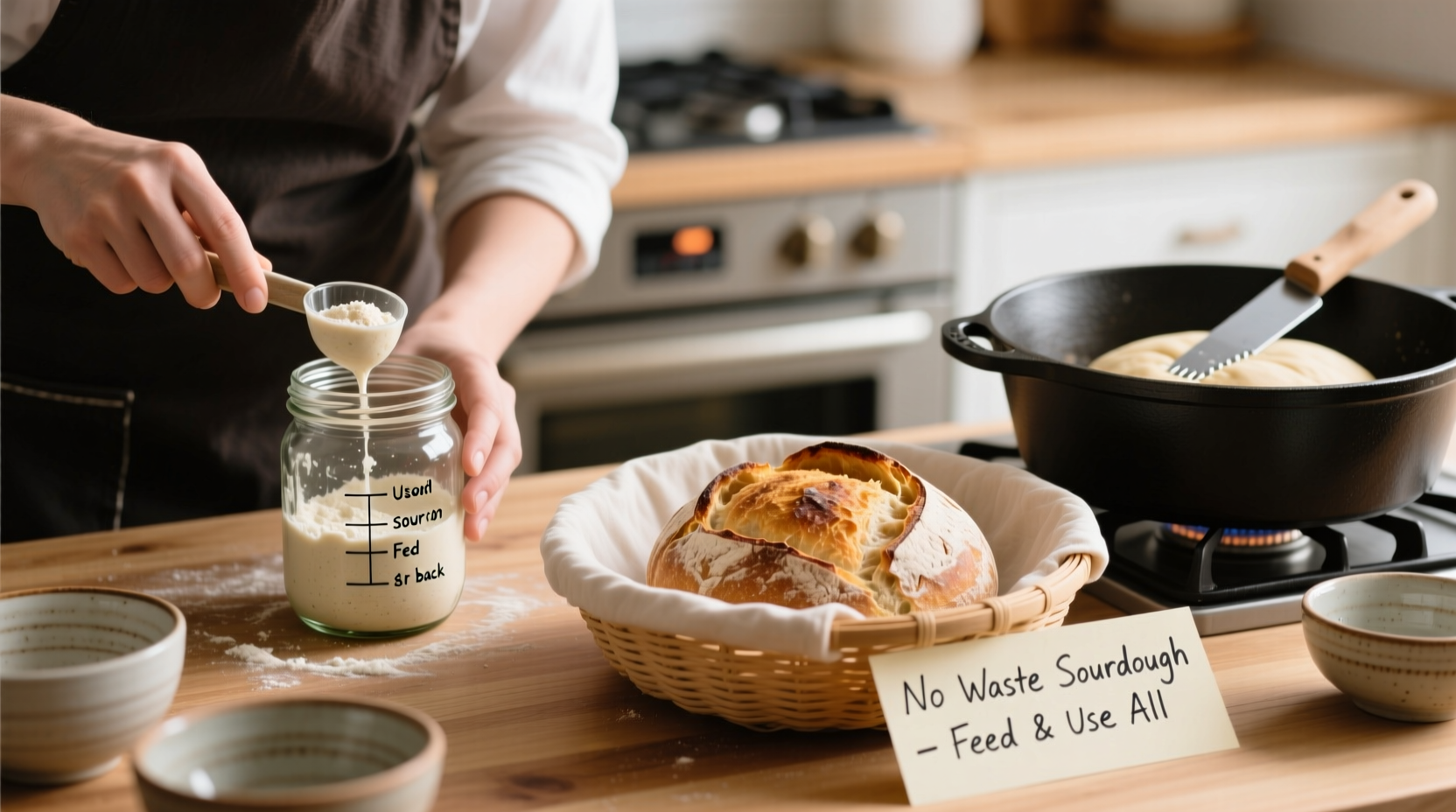
The practice of discarding half (or more) of a sourdough starter before feeding originated from both biological necessity and practical consistency. A sourdough starter is a living culture of wild yeast and lactic acid bacteria. To thrive, it needs fresh food — typically equal parts flour and water by weight. As microbes consume starches, they produce gas and acids, which leaven bread and contribute tangy flavor.
Over time, as the starter grows with each feeding, its volume increases exponentially unless controlled. Without discarding, a single jar could quickly balloon into several liters of starter — impractical for most households. Additionally, discarding helps reset pH levels, remove metabolic byproducts, and ensure consistent microbial balance.
“Discarding isn’t about waste; it’s about balance. But balance doesn’t have to mean throwing anything away.” — Dr. Karl DeSiel, Fermentation Scientist, University of California, Davis
Yet modern bakers are reimagining this model. With smarter planning and adjusted routines, discard-free sourdough is not only possible but sustainable and efficient.
Strategies to Bake Sourdough Without Discarding Starter
Eliminating waste doesn’t require abandoning proven fermentation principles. Instead, it calls for thoughtful adjustments in feeding frequency, portion size, and usage patterns. Below are five effective approaches to manage your starter without discarding.
1. Feed Only What You Need
The simplest way to avoid waste is to scale down your starter to match your baking frequency. Instead of maintaining 200 grams of active starter, keep a mini-starter of just 20–50 grams.
For example, if you bake once a week using 100g of fed starter, you only need to build up to that amount. Begin with 10g of mature starter, feed it 50g flour and 50g water, let it peak, then use 100g for baking and save 10g for the next cycle. No discard needed.
2. Refrigerate Your Starter Between Uses
If you don’t bake frequently, storing your starter in the refrigerator drastically reduces feeding frequency. A cold environment slows microbial activity, allowing you to feed it once every 7–14 days instead of daily.
When stored properly, a refrigerated starter doesn’t require discarding before feeding. Simply take it out, feed it (e.g., 20g starter + 40g flour + 40g water), let it sit at room temperature for 4–6 hours until bubbly, then return unused portions to the fridge. The key is to refresh it fully before returning, ensuring it has enough food to survive the next dormant phase.
3. Use Excess Starter Creatively Instead of Throwing It Out
If you do end up with extra unfed starter (also called “discard”), treat it as an ingredient, not trash. Unfed starter adds complexity, tenderness, and subtle tang to a wide range of baked goods.
- Pancakes and waffles
- Muffins and quick breads
- Crackers and flatbreads
- Pizza dough (adds chew and depth)
- Croutons and breadcrumbs
- Fried fritters and dumplings
A simple sourdough discard pancake recipe: mix 1 cup discard, 1 egg, 1 tbsp oil, 1 tsp baking soda, pinch of salt, and optional add-ins like blueberries or cinnamon. Cook on a griddle until golden.
4. Adjust Feeding Ratios to Minimize Growth
You can slow the expansion of your starter by altering the feeding ratio. Instead of a 1:1:1 ratio (starter:flour:water), try 1:2:1 or even 1:3:1. This means feeding more flour than water, creating a stiffer, less acidic environment where microbes grow more slowly.
Higher flour ratios also favor lactobacilli over yeast, enhancing sourness gradually without rapid volume increase. This method works well for bakers who want a flavorful starter with less frequent attention.
5. Bake More Frequently or in Smaller Batches
Aligning your baking schedule with your starter’s growth eliminates surplus. If you maintain a 100g starter fed daily, plan to use that volume weekly in smaller recipes — focaccia, crackers, or individual loaves. Alternatively, invite friends to share starter and recipes, turning excess into community sharing rather than waste.
Practical Step-by-Step Guide: Maintaining a No-Discard Routine
Follow this timeline to establish a sustainable, no-waste sourdough routine based on weekly baking.
- Day 1 (Sunday): Remove starter from fridge. Feed 20g starter with 40g flour and 40g water. Let sit at room temperature for 6–8 hours until doubled and bubbly.
- Day 1 (Evening): Use 100g of the now ~100g active starter for your bread recipe. Reserve 20g leftover starter.
- Day 1 (After Baking): Feed the reserved 20g with 40g flour and 40g water. Let rest 4 hours to reactivate.
- Day 1 (Night): Return refreshed starter to refrigerator.
- Days 2–6: No action required.
- Day 7: Repeat the cycle.
This approach ensures you never accumulate more than necessary, use all active starter productively, and maintain culture health through periodic full refreshment.
Do’s and Don’ts of Waste-Free Sourdough Maintenance
| Do’s | Don’ts |
|---|---|
| Feed only what you’ll use in upcoming recipes | Automatically discard half without considering usage |
| Store starter in the fridge between bakes | Leave starter unattended at room temperature for days |
| Label jars with dates and feeding schedules | Use tap water high in chlorine (can harm microbes) |
| Freeze excess discard for later use in recipes | Assume all discards must be thrown away immediately |
| Rotate flours (rye, whole wheat) to boost microbial diversity | Ignore signs of hooch or mold (indicates neglect) |
Real Example: Sarah’s Zero-Waste Sourdough Kitchen
Sarah, a home baker in Portland, used to discard nearly 300g of starter weekly — enough to make two full loaves. Frustrated by the waste, she redesigned her system. She downsized to a 40g maintenance starter kept in the fridge, feeds it only when planning to bake, and uses any extra unfed starter in weekend brunch recipes.
On Saturdays, she pulls her starter out, feeds it, and uses the entire batch in a sourdough pizza crust and garlic knots. By Sunday evening, she reserves 20g, gives it one final feed, and returns it to cold storage. Over six months, she estimates saving over 8 kg of flour-equivalent waste. “It’s not just about saving flour,” she says. “It feels better knowing my process aligns with my values.”
Expert Tips for Long-Term Success
Transitioning to a no-discard routine requires awareness and slight shifts in habit. Here are key insights from experienced bakers and fermentation experts.
“Waste in sourdough isn’t inherent — it’s habitual. Once bakers see discard as a resource, their entire relationship with fermentation changes.” — Miriam Chen, Artisan Baker & Educator, The Sourdough School
Frequently Asked Questions
Can I keep my starter alive forever without discarding?
Yes, provided you feed it regularly and use proper ratios. By feeding only what you need and storing it correctly, you can sustain a starter indefinitely without ever discarding material. The key is managing volume and acidity through intentional feeding, not routine removal.
Is unfed starter safe to eat?
Yes. Unfed starter (often called “discard”) is safe and nutritious. It contains live cultures, prebiotic fiber, and complex carbohydrates. Just avoid using starter that shows mold, off smells (like acetone or rot), or hasn’t been fed in over a month without refreshing.
What if I forget to feed my starter for weeks?
A refrigerated starter can survive 3–4 weeks without feeding. Look for hooch, smell (should be sour, not putrid), and color. If no mold, pour off hooch, feed with fresh flour and water for 2–3 consecutive days at room temperature to revive it. Most starters bounce back within 72 hours.
Checklist: Building a Waste-Free Sourdough Routine
- ☑ Assess how often you bake and adjust starter size accordingly
- ☑ Switch to refrigerated storage if baking weekly or less
- ☑ Keep a dedicated container for unfed starter (use in pancakes, crackers, etc.)
- ☑ Invest in a small glass jar and digital scale for precision
- ☑ Plan recipes that utilize discard before building active starter
- ☑ Label and date all starter containers
- ☑ Experiment with stiff starters or lower hydration to slow growth
- ☑ Share extra starter with friends or freeze for future use
Conclusion: Rethink Waste, Reclaim Flavor
Baking sourdough without discarding starter isn’t just possible — it’s a natural evolution of mindful baking. By shifting from rigid routines to intentional practices, you honor both the craft and the ingredients. Every gram of starter saved is a step toward a more sustainable kitchen, deeper connection to your food, and greater creativity in the bake.
Whether you're a beginner hesitant to begin because of the waste, or a seasoned baker tired of tossing viable culture, now is the time to refine your process. Start small: reduce your starter size, use what you have, and plan your bakes around your rhythm. The sourdough tradition was born from resourcefulness — bring that spirit back into your kitchen.




 浙公网安备
33010002000092号
浙公网安备
33010002000092号 浙B2-20120091-4
Comments
No comments yet. Why don't you start the discussion?