
Flying long-haul can be uncomfortable—dry air, cramped seats, and fluctuating cabin temperatures often leave travelers cold and restless. For many, a heated blanket offers warmth, comfort, and even therapeutic relief from stiffness or joint pain. But before packing one in your carry-on, it’s essential to understand the rules. Can you actually bring a heated blanket on a plane? The answer isn’t always straightforward, as policies vary by airline, device type, and battery specifications.
This guide breaks down everything you need to know: TSA regulations, airline-specific allowances, battery restrictions, and smart travel tips to ensure your heated blanket clears security and enhances your flight experience—without delays or confiscation.
TSA Guidelines for Heated Blankets on Planes
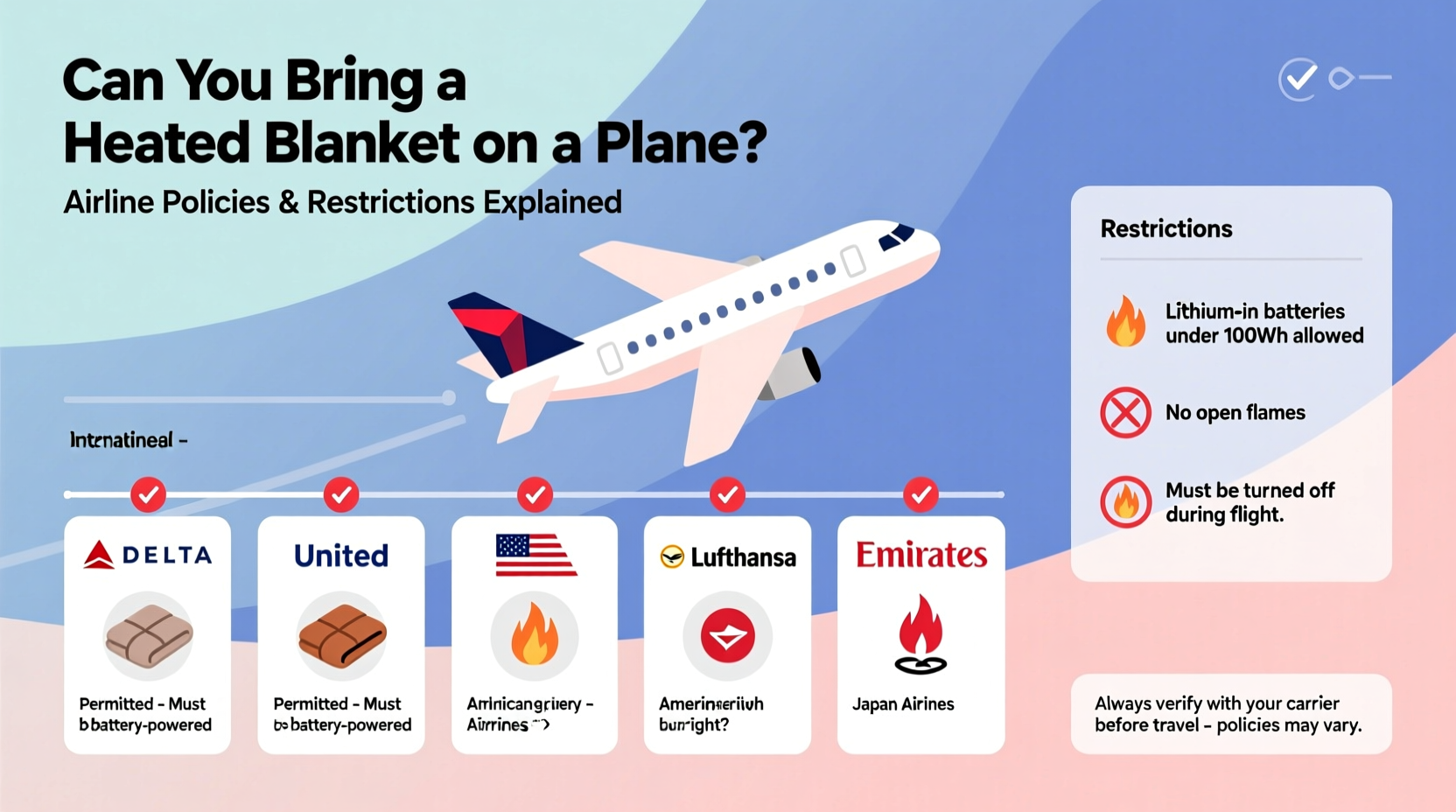
The Transportation Security Administration (TSA) governs what passengers can bring through airport security in the United States. According to current TSA guidelines, heated blankets are generally permitted in both carry-on and checked luggage—but with important caveats.
The primary concern is not the blanket itself, but its power source. Most heated blankets operate using either:
- Internal rechargeable lithium-ion batteries
- Wired connection to an external USB power bank
- Plug-in design meant for wall outlets (not usable mid-flight)
Lithium-ion batteries are regulated due to fire risk. The TSA allows spare lithium batteries only in carry-on bags, never in checked luggage. This means if your heated blanket has a removable battery, it must stay in your cabin baggage. If the battery is built-in, the entire unit must also go in carry-on.
“Lithium batteries pose a fire hazard if damaged or improperly stored. That’s why we require them to be carried in the cabin where they can be monitored.” — TSA Spokesperson, 2023 Lithium Battery Safety Report
In practice, most travelers report no issues bringing heated blankets through U.S. airports as long as they’re powered off during screening and packed neatly for inspection. However, final approval rests with the TSA officer at the checkpoint.
Airlines That Allow Heated Blankets: A Comparative Overview
While TSA sets federal security standards, individual airlines determine whether you can use electronic devices like heated blankets during flight. Some carriers welcome personal comfort items; others restrict their use due to safety protocols or seat power limitations.
Below is a comparison of major U.S. and international airlines and their current stances on heated blankets.
| Airline | Carry-On Allowed? | Use During Flight? | Battery Restrictions |
|---|---|---|---|
| Delta Air Lines | Yes | Yes, if battery-powered and used responsibly | No loose batteries; max 100Wh per battery |
| American Airlines | Yes | Permitted in seat, not during takeoff/landing | Built-in or installed batteries only |
| United Airlines | Yes | Allowed once cruising altitude reached | Must comply with FAA lithium battery rules |
| Alaska Airlines | Yes | Yes, with crew approval | No external power banks exceeding 160Wh |
| Southwest Airlines | Yes | Yes, when seated and not obstructing aisles | Standard lithium battery limits apply |
| JetBlue | Yes | Allowed, but not during critical phases of flight | Follow FAA watt-hour guidelines |
| British Airways | Yes | Only if battery capacity under 100Wh | Prohibited if modified or homemade |
| Lufthansa | Yes | Use allowed after takeoff | No spare batteries in cabin beyond two spares ≤100Wh |
| Emirates | Yes | Not permitted for in-flight use | Device may be carried but cannot be operated |
Note that while most airlines permit carrying heated blankets, usage policies differ significantly. Emirates, for example, bans operation entirely, citing cabin safety protocols. Others allow use only when the seatbelt sign is off and the device doesn’t interfere with emergency evacuation.
Types of Heated Blankets and What’s Allowed
Not all heated blankets are created equal. Understanding the differences helps determine whether yours will pass muster with TSA and airline staff.
1. USB-Powered Travel Blankets
These lightweight, portable options connect to a power bank via USB. They heat up quickly and offer multiple temperature settings. Since they rely on external power sources, ensure your power bank complies with airline regulations (max 100Wh, typically around 27,000mAh).
2. Built-In Battery Models
Some premium travel blankets feature integrated lithium-ion batteries. These are convenient but must remain within FAA watt-hour limits (under 100Wh). Always check the label or manual for battery specs.
3. Plug-In Electric Blankets
Designed for home use, these require wall outlets and are impractical—and usually prohibited—for aircraft use. While you can pack them in checked luggage, doing so risks damage and serves little purpose mid-flight.
4. Heated Scarves, Ponchos, and Vests
Similar rules apply to wearable heated gear. As long as they meet size, battery, and safety standards, they’re generally treated the same as blankets.
Step-by-Step Guide: How to Fly with a Heated Blanket Safely
To ensure a smooth journey with your heated blanket, follow this practical sequence:
- Check the battery type and capacity. Look for labels indicating voltage and watt-hours (Wh). If it exceeds 100Wh, contact your airline for special approval.
- Pack it in your carry-on. Never place a lithium battery or battery-powered device in checked luggage.
- Keep it easily accessible. Store near the top of your bag for quick removal during security screening.
- Power it off before boarding. Devices must be stowed and inactive during taxi, takeoff, and landing.
- Ask flight attendants before turning it on. Even if allowed, crew may request confirmation or impose temporary restrictions.
- Use it responsibly. Don’t cover it with other materials, leave it unattended, or drape it over armrests where it could overheat.
- Turn it off when not in use. Conserve battery and minimize fire risk during sleep or layovers.
“The key is transparency and compliance. If passengers declare their devices and follow instructions, there’s usually no issue.” — Captain Rebecca Tran, Commercial Pilot & Aviation Safety Instructor
Real-World Example: A Long-Haul Passenger’s Experience
Sarah M., a frequent flyer from Chicago, uses a heated travel blanket on transatlantic flights due to Raynaud’s syndrome, a condition that causes extreme sensitivity to cold. On a recent United Airlines flight from O’Hare to Frankfurt, she brought her USB-powered heated poncho with a 9,800mAh power bank.
At security, she removed the poncho and power bank separately. TSA agents inspected them briefly and allowed passage. Once seated, she waited until the seatbelt sign turned off before connecting the power bank. A flight attendant noticed and asked about the device. Sarah explained its medical necessity, showed the manufacturer’s safety certification, and was permitted to continue use.
Her experience highlights two key points: preparation matters, and courteous communication with crew increases acceptance. She now includes a printed note from her doctor when traveling internationally, just in case.
Do’s and Don’ts When Bringing a Heated Blanket on a Plane
| Do’s | Don’ts |
|---|---|
| ✅ Pack in carry-on luggage | ❌ Place in checked baggage |
| ✅ Use certified, factory-made blankets | ❌ Bring DIY or modified heating devices |
| ✅ Carry manufacturer’s instructions | ❌ Operate during takeoff or landing |
| ✅ Keep power bank charged and labeled | ❌ Use damaged or swollen batteries |
| ✅ Inform crew if asked | ❌ Leave device unattended while on |
Frequently Asked Questions
Can I use my heated blanket during takeoff and landing?
No. All electronic devices, including heated blankets, must be stowed and inactive during critical flight phases—taxi, takeoff, and landing. You may turn it on once the plane reaches cruising altitude and the seatbelt sign is off.
Are there any medical exemptions for heated blankets?
While there’s no formal exemption program, passengers with documented medical conditions (like circulatory disorders or chronic pain) may receive more lenient treatment if they explain their needs politely and provide supporting documentation. Airlines prioritize safety but appreciate transparency.
What happens if my heated blanket is confiscated?
If TSA or airline staff deem your blanket unsafe (e.g., oversized battery, damaged wiring), it will be confiscated at security or gate. It won’t be returned. To avoid loss, verify compliance before departure. In rare cases, you may be allowed to ship it home or discard it voluntarily.
Final Checklist Before You Fly
- ✔️ Confirm your blanket has a built-in or removable lithium battery under 100Wh
- ✔️ Pack the blanket and power bank in your carry-on, not checked luggage
- ✔️ Charge the battery fully before arrival at the airport
- ✔️ Be ready to remove it during security screening
- ✔️ Review your airline’s policy on personal electronic comfort devices
- ✔️ Turn off the blanket during takeoff and landing
- ✔️ Use it responsibly and respond calmly to crew inquiries
Conclusion: Stay Warm and Fly Smart
Bringing a heated blanket on a plane is not only possible—it’s increasingly common among savvy travelers seeking comfort on long flights. With proper preparation, adherence to TSA and airline rules, and respectful use onboard, you can enjoy cozy warmth without compromising safety or convenience.
Whether you're flying with a medical need, chasing better sleep, or simply hate freezing cabins, your heated blanket can be a legitimate travel companion. Just remember: knowledge, compliance, and courtesy go a long way in ensuring a smooth journey from gate to destination.




 浙公网安备
33010002000092号
浙公网安备
33010002000092号 浙B2-20120091-4
Comments
No comments yet. Why don't you start the discussion?