
Traveling with wellness in mind has become increasingly common, and many people rely on essential oil diffusers to maintain calm, focus, or sleep quality while on the go. Whether it’s a compact personal inhaler or a USB-powered nebulizer, these devices offer comfort during long flights or stressful layovers. But before packing your favorite aromatherapy tool, it’s crucial to understand the regulations set by transportation security agencies and airlines. The answer isn’t always straightforward—some diffusers are allowed, others aren’t, and certain conditions can make the difference between smooth boarding and having your device confiscated at security.
This guide breaks down everything you need to know about bringing diffusers on planes, including TSA guidelines, liquid restrictions, battery safety, and real-world travel strategies. With clear rules and practical advice, you’ll be able to enjoy your aromatherapy routine without violating aviation safety standards.
Understanding Diffuser Types and Their Travel Viability
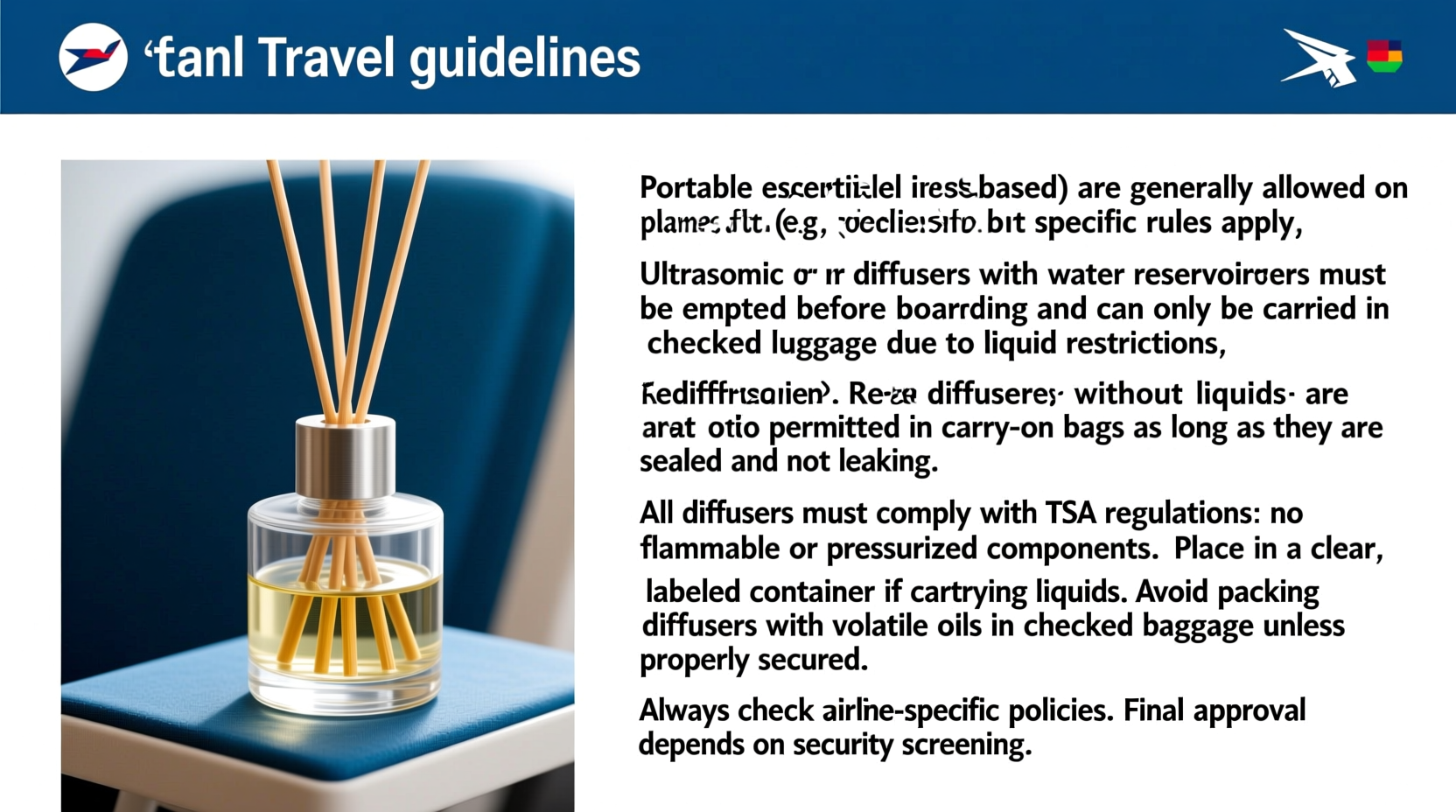
Not all diffusers are created equal—and this distinction is critical when flying. Different models operate using various mechanisms, power sources, and liquid capacities, each of which affects whether they’re permitted onboard. Here are the most common types travelers encounter:
- Ultrasonic diffusers: Use water and vibrations to disperse essential oils as mist. Typically larger and not ideal for air travel due to liquid content and size.
- Nebulizing diffusers: Operate without water, using pressurized air to atomize oils. Often powered by batteries or USB, making them more travel-friendly.
- Heat diffusers: Warm oils to release aroma. Less common but may contain electrical components subject to inspection.
- Personal inhalers: Resemble nasal sticks or small pens. These are generally acceptable since they contain minimal oil and no external liquids.
- Wearable diffusers: Jewelry-like items (e.g., lava stone necklaces with drops of oil) that passively emit scent. Usually permitted without restriction.
The key determining factors for air travel are: presence of liquids, battery type, and overall design. Devices that require water tanks or large reservoirs face stricter scrutiny than dry, portable alternatives.
TSA Regulations: What You Can and Can’t Bring
The Transportation Security Administration (TSA) governs what passengers can carry through U.S. airport checkpoints. While there’s no explicit ban on diffusers, several overlapping rules affect their permissibility:
- Liquids Rule (3-1-1): Any liquid, gel, or aerosol must be in containers of 3.4 ounces (100 ml) or less and fit inside one quart-sized clear plastic bag. This applies directly to essential oils used in diffusers.
- Battery Restrictions: Devices with lithium-ion batteries (common in electronic diffusers) must be carried in the cabin—not checked baggage—due to fire risk.
- Water Reservoirs: If your diffuser holds water, it must be completely empty during screening. Even residual moisture could raise concerns under liquid rules.
According to TSA spokesperson Lisa Farbstein, “Electronic devices are generally allowed, but any component containing liquid is evaluated under our 3-1-1 rule.” That means a diffuser with an integrated oil vial exceeding 3.4 oz will likely be rejected unless packed in checked luggage—but even then, leakage risks remain.
“While diffusers themselves aren't prohibited, the liquids and batteries they use fall under strict safety protocols. Travelers should separate components and follow standard electronics and liquid guidelines.” — Lisa Farbstein, TSA Public Affairs
Do’s and Don’ts When Packing Diffusers
| Do’s | Don’ts |
|---|---|
| Pack diffusers in carry-on luggage if they have built-in batteries | Leave essential oils in containers larger than 3.4 oz in carry-ons |
| Use travel-sized oil bottles that comply with 3-1-1 rules | Bring diffusers with full water tanks through security |
| Remove the device from your bag for separate screening if requested | Place spare lithium batteries in checked baggage |
| Carry passive diffusers like scent jewelry or inhalers freely | Assume all diffusers are treated the same—check model specifics |
Case Study: Aromatherapy on a Long-Haul Flight to Tokyo
Sophie, a frequent business traveler based in San Francisco, relies on lavender oil to manage anxiety during long-haul international flights. On her upcoming trip to Tokyo, she planned to use her USB-powered nebulizing diffuser to help her sleep during the 11-hour journey. However, she wanted to avoid issues at security.
Before departure, Sophie reviewed TSA guidelines and discovered her diffuser had a detachable 5 ml glass vial—just under the 3.4 oz limit. She transferred her favorite blend into a compliant amber bottle, labeled it clearly, and placed it in her quart-sized zip-top bag with other toiletries. She ensured the diffuser was fully charged and wiped clean of any oil residue.
At the checkpoint, TSA agents asked her to remove the diffuser from her backpack for closer inspection. Because it contained no liquids and had a visible USB port, they swabbed it for explosives testing. After a brief wait, she was cleared to proceed. During the flight, she discreetly used the device during takeoff and before bedtime, reporting improved relaxation without disturbing nearby passengers.
Sophie’s success came from preparation: knowing her device type, separating liquids properly, and following electronic screening procedures. Her experience highlights how compliance leads to hassle-free travel—even with niche wellness gear.
Step-by-Step Guide to Traveling with a Diffuser
To ensure a smooth experience when flying with a diffuser, follow this detailed process:
- Identify Your Diffuser Type: Determine whether it uses water, batteries, or only essential oils. Check manufacturer instructions for disassembly guidance.
- Empty All Liquid Compartments: Drain water tanks completely. Wipe dry with a lint-free cloth to show inspectors it’s not holding liquid.
- Prepare Essential Oils Separately: Transfer oils into containers ≤3.4 oz. Seal tightly and place in a clear quart-sized plastic bag for carry-ons.
- Check Battery Requirements: If your diffuser uses removable lithium-ion batteries, keep them in your carry-on. Never pack loose batteries in checked luggage.
- Pack Strategically: Place the diffuser in an easily accessible part of your carry-on. Consider using a padded pouch to protect it during screening.
- Be Ready for Inspection: Security may ask you to power on the device or remove it from your bag. Cooperate calmly and explain its purpose if needed.
- Use Discreetly In-Flight: Once airborne, use the diffuser sparingly. Avoid strong scents that might bother others; opt for subtle blends like chamomile or frankincense.
Airline Policies and International Variations
While TSA sets baseline rules for U.S. flights, individual airlines and foreign countries may impose additional restrictions. For example:
- Delta Air Lines: Allows personal diffusers in carry-ons as long as they meet size and battery requirements.
- United Airlines: Prohibits any device that emits vapor or mist during flight, citing cabin air quality concerns.
- Emirates: Requires approval for electronic wellness devices and may restrict usage inflight.
International destinations also vary. The UK Civil Aviation Authority permits diffusers under the same conditions as the U.S., but Japan Customs restricts certain essential oils (like camphor or eucalyptus in high concentrations). Always verify destination-specific rules before travel.
Additionally, some low-cost carriers prohibit non-essential electronic devices in overhead bins or seat pockets. Confirm your airline’s policy on mid-flight use to avoid conflict with crew members.
Frequently Asked Questions
Can I use my diffuser during the flight?
Most major airlines discourage or outright ban the use of diffusers once onboard, especially those producing mist or vapor. Passive options like inhalers or scent jewelry are safer choices. Always check with flight attendants before activating any device.
Are essential oil rollers allowed on planes?
Yes, rollerballs containing essential oils are permitted in carry-ons as long as the liquid volume is 3.4 oz or less and stored in your clear plastic bag. They’re a popular alternative to electronic diffusers for this reason.
What happens if my diffuser gets confiscated?
If a TSA agent determines your device violates liquid or battery rules, it will be discarded at security. There’s no appeal process at the checkpoint. To avoid loss, research your specific model beforehand and pack accordingly.
Final Checklist Before You Fly
- ✅ Confirm diffuser type (water-based vs. nebulizing)
- ✅ Empty all liquid compartments
- ✅ Pack essential oils in 3.4 oz or smaller containers
- ✅ Store oils in a clear, resealable plastic bag
- ✅ Carry device and batteries in your carry-on
- ✅ Remove diffuser from bag during screening if requested
- ✅ Verify airline policy on in-flight use
- ✅ Research destination country’s customs rules on essential oils
Conclusion
Bringing a diffuser on a plane is possible—but only with careful planning and adherence to aviation regulations. By understanding the differences between diffuser types, respecting liquid limits, managing battery safety, and preparing for inspections, you can maintain your wellness routine while staying compliant. The convenience of aromatherapy during travel shouldn’t come at the cost of delays or confiscation.
Whether you're navigating a red-eye flight or starting a healing retreat abroad, smart packing ensures peace of mind from curb to gate. Equip yourself with the right knowledge, choose travel-friendly devices, and fly confidently knowing your self-care tools are within reach.




 浙公网安备
33010002000092号
浙公网安备
33010002000092号 浙B2-20120091-4
Comments
No comments yet. Why don't you start the discussion?