
Traveling with toiletries seems straightforward—until you're standing at airport security, watching an agent pour out your favorite full-size shampoo into a waste bin. It’s a common scene, repeated daily across U.S. airports and beyond. Despite clear guidelines from the Transportation Security Administration (TSA), confusion persists: can you bring full size shampoo on a plane? The short answer is no—but the reasons why, and how to work around them, are where most travelers go wrong.
The root of the problem isn’t just ignorance; it’s misinterpretation. Many assume that as long as their bottle isn’t leaking or oversized, it’s fine. Others believe international flights have looser rules. Some pack full-size bottles in checked luggage without considering leakage risks or airline-specific policies. This article clears up the confusion with precise regulations, practical alternatives, and insights from aviation safety experts.
The 3-1-1 Rule: What It Actually Means
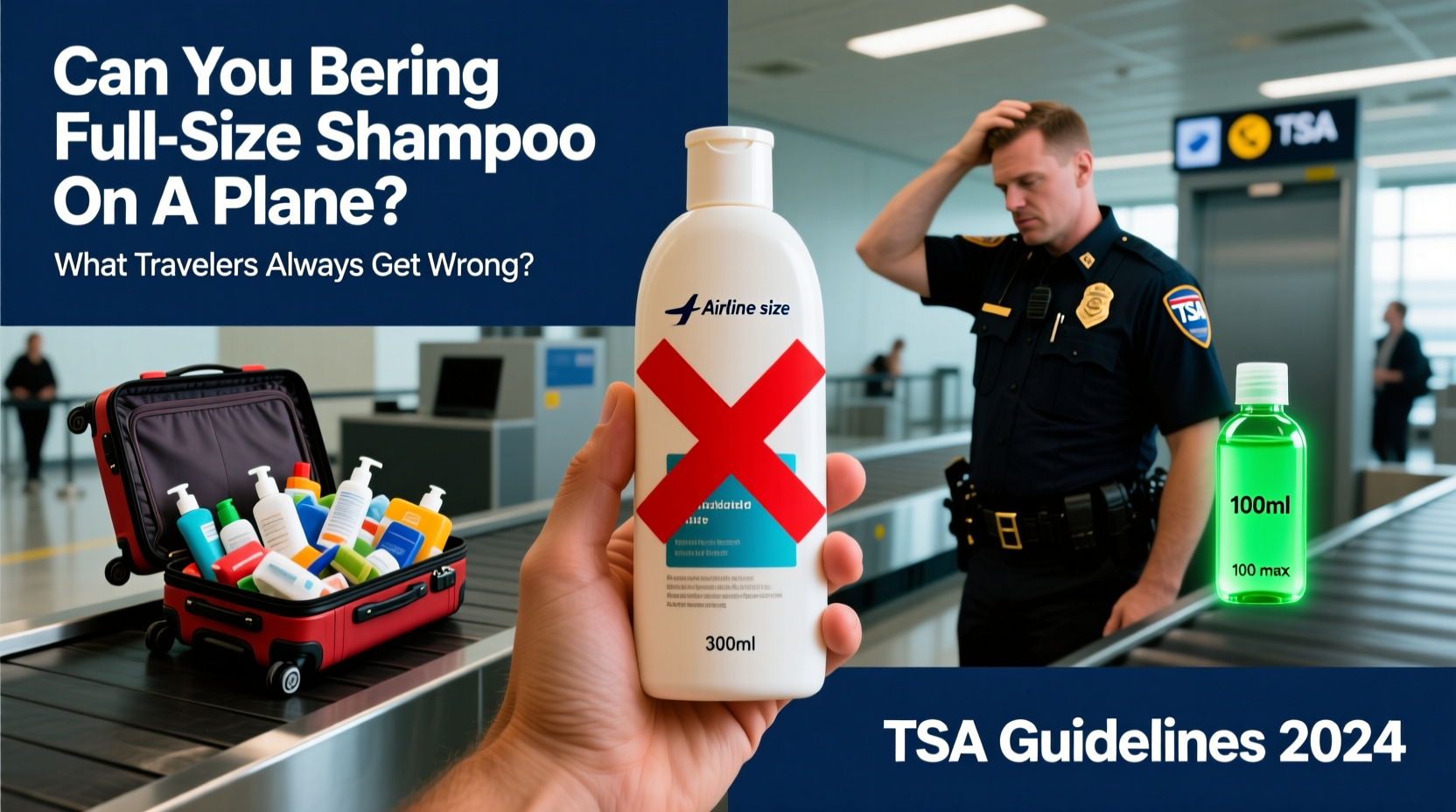
The cornerstone of TSA’s liquid policy is the 3-1-1 rule. It states that each passenger may carry:
- 3.4 ounces (100 milliliters) or less per container
- All liquids must fit in one quart-sized, clear, resealable plastic bag
- Each passenger is allowed one bag
This applies only to carry-on luggage. Full-size shampoo bottles—typically 8 oz, 12 oz, or larger—violate the first condition and are not permitted through security in hand baggage.
“The 3-1-1 rule wasn’t arbitrary. It was developed after intelligence indicated liquid explosives could be concealed in everyday containers. Limiting volume reduces risk.” — TSA Spokesperson, 2023 Public Safety Briefing
The rule applies to all liquids, gels, aerosols, creams, and pastes—including shampoo, conditioner, toothpaste, lotions, and even peanut butter. A full-size shampoo bottle, regardless of brand or packaging, will be flagged and likely discarded if presented at screening.
Checked Luggage: Yes, But With Caveats
You can pack full-size shampoo in checked luggage. There’s no volume restriction for liquids in hold baggage. However, this doesn’t mean it’s risk-free. Many travelers learn too late that convenience comes with trade-offs.
Airplane cargo holds experience pressure and temperature changes. Sealed bottles can rupture, especially if exposed to heat before flight or stored improperly. A single leak can ruin clothing, electronics, and other items. Additionally, some airlines impose weight or quantity limits on certain substances, particularly flammable aerosols.
| Factor | Carry-On | Checked Baggage |
|---|---|---|
| Max Container Size | 3.4 oz (100 ml) | No limit |
| Packaging Requirement | Quart-sized clear bag | None |
| Leak Risk | Low (small volume) | High (large volume) |
| Security Confiscation Risk | High if non-compliant | Negligible |
| Best For | Short trips, hotel stays | Long stays, destination availability issues |
If you choose to pack full-size shampoo in checked luggage, consider these precautions:
- Place bottles in sealed plastic bags to contain leaks
- Use travel caps or double-lid systems
- Wrap containers in clothing for cushioning
- Avoid packing in soft-sided bags that offer less protection
What Travelers Always Get Wrong
Misconceptions about liquid rules persist because they’re subtle and context-dependent. Here are the most common mistakes—even frequent flyers make them.
Mistake #1: Assuming Duty-Free Liquids Are Exempt
Duty-free purchases made past security—like perfumes or skincare sets—are allowed in carry-ons, but only if they meet specific conditions. The items must be sealed in a tamper-evident bag with a receipt visible inside. If the seal is broken before screening (e.g., during a connecting flight), agents may confiscate them.
Mistake #2: Thinking Hotel Bottles Are Safe to Reuse
Some travelers refill hotel shampoo bottles with their preferred products, assuming the small size makes them compliant. But if the bottle exceeds 3.4 oz—even slightly—it violates the rule. Also, homemade labels or unclear contents may prompt additional inspection.
Mistake #3: Overlooking Non-Shampoo Toiletries
Toothpaste, hair gel, facial mists, and even solid deodorant (if it has a creamy consistency) fall under the same rules. A traveler might pass shampoo only to have their 5 oz face cream rejected.
Mistake #4: Believing International Flights Have Different Rules
While some countries have slight variations, major international carriers follow ICAO (International Civil Aviation Organization) standards closely aligned with TSA. The 100ml limit is standard across EU, UK, Canada, Australia, and Japan. Packing full-size bottles for overseas trips still risks confiscation.
Smart Alternatives to Full-Size Shampoo
Relying on full-size bottles isn’t necessary—and often impractical. Modern solutions offer better portability, compliance, and performance.
Travel-Sized Bottles and Refillables
Reusable silicone travel bottles are inexpensive and TSA-compliant. Fill them with your preferred shampoo, label clearly, and store in your quart-sized bag. Choose ones with secure screw-top lids and wide mouths for easy refilling.
Solid Shampoo Bars
Gaining popularity among eco-conscious travelers, shampoo bars eliminate liquid concerns entirely. They’re compact, lightweight, and exempt from the 3-1-1 rule since they’re solids. One bar can last 50+ washes and fits in any toiletry kit.
Single-Use Packets
For short trips, pre-portioned packets are ideal. Brands like Verb and Pureology offer travel kits with shampoo, conditioner, and styling products in compliant sizes. No cleanup, no leaks, no guesswork.
Buy at Destination
Many travelers overpack toiletries out of habit, not necessity. In most cities, drugstores and supermarkets stock familiar brands. Consider shipping essentials ahead or buying upon arrival—especially for longer stays.
“We see dozens of full-size bottles thrown away every day. Most people don’t realize they can buy the same product two blocks from the airport.” — Airport Screening Supervisor, Chicago O’Hare
Step-by-Step: Packing Toiletries Without Stress
Follow this sequence to ensure your toiletries pass screening smoothly:
- Inventory your needs: List only what you’ll use daily (shampoo, conditioner, toothbrush, etc.).
- Select compliant containers: Use bottles ≤3.4 oz or switch to solid alternatives.
- Fill and seal: Pour products carefully, ensuring lids are tight. Wipe spills immediately.
- Organize in clear bag: Place all liquids in one quart-sized, transparent zip-top bag.
- Label if needed: Use waterproof labels for clarity, especially with similar-looking products.
- Test the setup: Simulate security by placing the bag in a bin and removing it quickly.
- Pack for access: Store the bag in an outer compartment for easy removal during screening.
This process takes under 15 minutes but prevents delays and losses at security.
Mini Case Study: The Business Traveler Who Lost His Routine
Mark, a consultant based in Atlanta, traveled weekly for client meetings. He always packed his full-size sulfate-free shampoo in carry-on—“because it’s my routine.” On a trip to Seattle, TSA confiscated it. Frustrated, he bought a $12 travel kit at the airport, only to find it leaked in his briefcase.
After three similar incidents, Mark switched to a solid shampoo bar. He placed it in a ventilated tin, added a travel-sized conditioner, and kept both in a mesh pouch within his clear liquids bag. The next month, he passed security in eight different airports without issue. “I saved money, space, and stress,” he said. “And my hair feels better.”
His new system now includes backup packets in checked luggage—just in case.
Frequently Asked Questions
Can I bring multiple 3.4 oz bottles?
Yes, as long as they all fit comfortably in one quart-sized clear bag. There’s no strict count limit, but space is the practical constraint—most bags hold 5–6 standard bottles.
Does the rule apply to international flights departing from the U.S.?
Yes. All carry-ons screened at U.S. airports follow TSA regulations, regardless of destination. The 3-1-1 rule applies uniformly.
What if my medication exceeds 3.4 oz?
Liquid medications are exempt from size limits but must be declared at security. Keep them in original packaging and expect possible additional screening. Inform the officer before X-ray processing.
Checklist: Travel-Ready Toiletries in 5 Steps
- ☐ Confirm all liquid containers are ≤3.4 oz (100 ml)
- ☐ Consolidate into one clear, quart-sized, resealable bag
- ☐ Securely close all lids; prevent leaks with tape or travel caps
- ☐ Include only essential liquids—skip duplicates or “just in case” items
- ☐ Place bag in easily accessible part of carry-on for screening
Conclusion: Travel Smarter, Not Heavier
The question “can you bring full size shampoo on a plane?” reveals a deeper issue: many travelers prioritize familiarity over efficiency. Sticking to full-size bottles leads to wasted time, lost products, and avoidable stress. The 3-1-1 rule isn’t a barrier—it’s a framework for smarter packing.
By embracing travel-sized options, solid alternatives, and simple organization habits, you gain more than compliance. You gain peace of mind, lighter luggage, and smoother transitions through security. Whether you’re flying cross-country or across continents, the goal isn’t to replicate your bathroom at home—it’s to move freely, efficiently, and confidently.




 浙公网安备
33010002000092号
浙公网安备
33010002000092号 浙B2-20120091-4
Comments
No comments yet. Why don't you start the discussion?