
After the final carol has faded and the last gift is unwrapped, a towering evergreen in the corner of the room becomes a seasonal relic. For many households that choose real trees over artificial ones, the post-holiday question arises: what should be done with this natural centerpiece? The good news is yes—you absolutely can compost your real Christmas tree, transforming it from festive decor into nutrient-rich soil amendment. But not all composting methods are equal, and doing it wrong can slow decomposition or introduce contaminants. This guide walks through the science, best practices, and practical steps to ensure your tree returns to the earth efficiently and safely.
Why Composting Your Christmas Tree Makes Sense
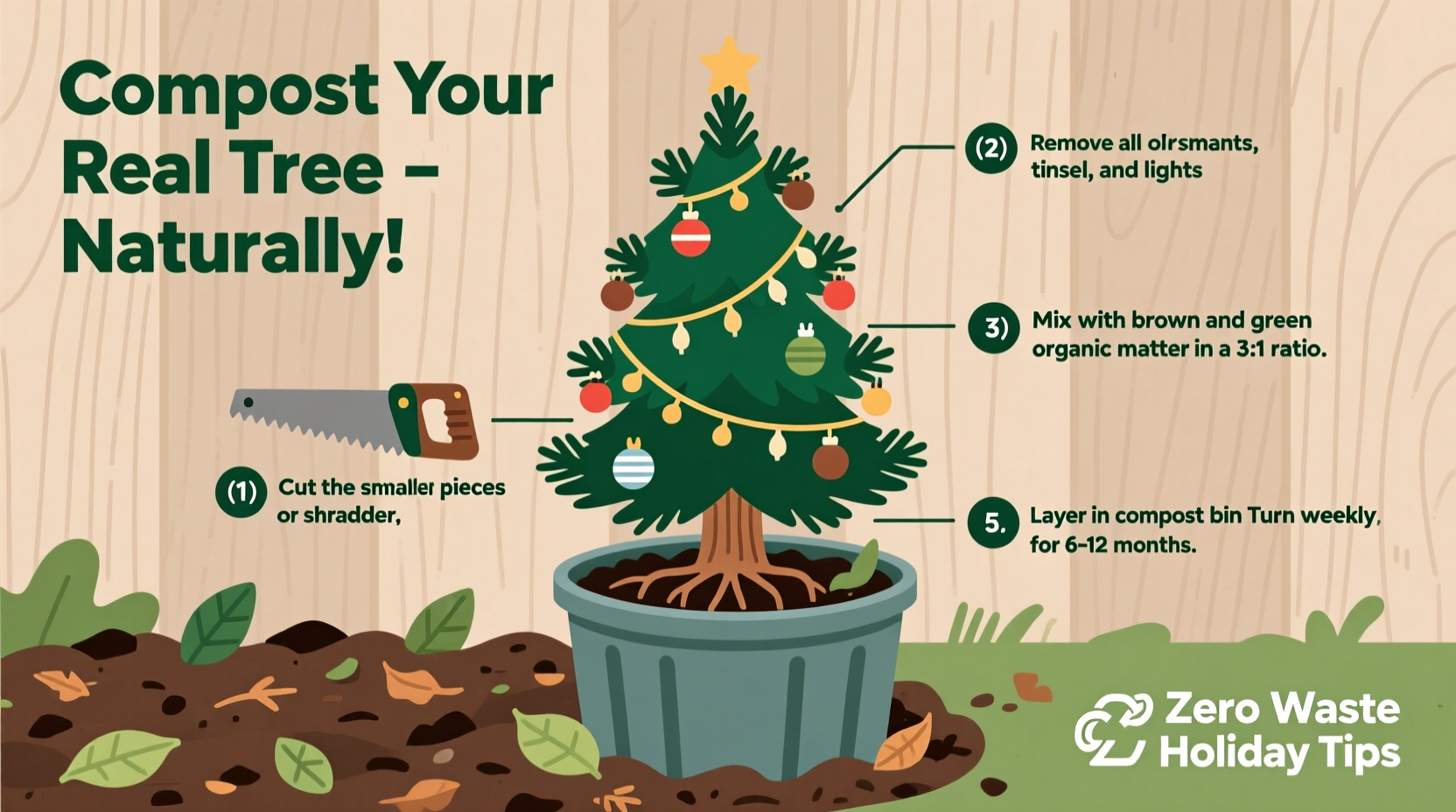
Real Christmas trees are biodegradable by design. Unlike plastic alternatives that sit in landfills for centuries, a natural fir, pine, or spruce tree is made of organic matter that breaks down over time. When properly composted, it contributes carbon-rich “brown” material to the compost pile, balancing nitrogen-heavy “greens” like food scraps and grass clippings.
Composting a tree reduces waste, lowers methane emissions from landfills, and closes the loop between nature and nurture. Municipal composting programs across North America and Europe now accept holiday trees as part of seasonal yard waste collection, recognizing their value in large-scale compost operations.
“Trees are essentially concentrated woody biomass. When chipped and mixed correctly, they become a powerful bulking agent in compost systems.” — Dr. Lena Peterson, Soil Scientist at the University of Vermont Extension
What Makes a Tree Compostable (and What Doesn’t)
Not every Christmas tree is suitable for composting. Several factors determine whether your tree will break down effectively or cause problems in your compost system.
Acceptable Trees
- Natural species such as Fraser fir, Balsam fir, Douglas fir, Scotch pine, and White pine
- Trees grown without chemical treatments beyond standard nursery care
- Untreated wood—no synthetic dyes, paints, or fire retardants
Non-Compostable Additions to Remove
Before composting begins, strip away anything that won’t decompose or could contaminate the soil:
- Plastic tinsel and garlands
- Metal hooks, wires, or stands
- Glitter-coated ornaments or spray-on snow
- Non-biodegradable flocking (artificial snow)
- Light strings—even if LED, these contain plastics and metals
Artificial Trees Are Not Compostable
PVC, metal frames, and synthetic fibers do not break down and release microplastics into the environment. These belong in general waste or recycling facilities equipped to handle composite materials—if available.
Step-by-Step: How to Compost Your Real Christmas Tree at Home
Home composting a whole tree isn’t feasible due to size and decomposition speed, but with proper preparation, you can integrate it into your backyard system. Follow this timeline for optimal results.
- Wait until after holidays end – Most experts recommend removing decorations and beginning disposal between January 2 and January 15. Leaving trees up longer risks dryness and needle shedding, complicating cleanup.
- Remove all non-organic materials – Strip lights, ornaments, tinsel, and stands. Check branches thoroughly—small wire hooks often remain hidden.
- Cut or chip the tree – Use pruning shears, a hand saw, or rent a wood chipper. Break trunks into pieces no larger than 2–3 inches wide. Smaller particles decompose faster.
- Shred needles and small twigs – Run softer parts through a mulcher or crush underfoot in a tarp to increase surface area.
- Bulk mix with green materials – Layer chipped wood with kitchen scraps, coffee grounds, fresh grass clippings, or manure. Aim for a 3:1 ratio of browns (tree material) to greens (nitrogen sources).
- Aerate regularly – Turn the pile every 7–10 days to introduce oxygen and prevent anaerobic conditions that slow decay and create odor.
- Monitor moisture – Keep the pile damp like a wrung-out sponge. Dry wood absorbs water slowly; mist layers during turning if needed.
- Allow 6–12 months for full breakdown – Woody material takes longer than other compostables. Finished compost should be dark, crumbly, and earthy-smelling.
“Chipping is the game-changer. A whole tree might take five years to rot. Chipped, it integrates fully within a single compost cycle.” — Mark Tran, Urban Composting Advocate, Seattle Public Utilities
Municipal Composting: An Easier Alternative
For most homeowners, municipal composting offers the simplest and most effective solution. Many cities host annual “Christmas Tree Recycling” programs each January. These typically involve curbside pickup or drop-off at designated parks, nurseries, or transfer stations.
Cities use industrial grinders to process thousands of trees quickly. The resulting mulch is often used in public landscaping, erosion control, or sold back to residents as garden amendment.
How to Participate in Municipal Programs
- Check your local waste authority’s website for dates and guidelines
- Remove all decorations, stands, and plastic bags
- Place tree at curb loose or in an open container—never in plastic
- Some areas require trees to be tagged or placed on specific weeks
In some regions, like Portland, Oregon, and Toronto, Canada, Christmas trees are collected as part of regular yard waste streams. In others, special weekend events encourage community drop-offs, sometimes paired with mulch giveaways.
Alternative Uses Beyond Composting
If composting isn’t accessible, consider repurposing your tree creatively:
- Garden habitat: Submerge in a pond to provide shelter for fish, or lay in garden beds to protect perennials from wind.
- Wildlife refuge: Place in wooded areas to offer cover for birds and small animals.
- Erosion control: Anchor along slopes or shorelines to stabilize soil.
- Firewood (limited use): Only softwoods like pine can be burned, but resin content makes them risky for indoor fireplaces. Never burn flocked or treated trees.
Do’s and Don’ts of Christmas Tree Composting
| Do | Don't |
|---|---|
| Chip or cut the tree into small pieces | Leave the tree whole in your compost bin |
| Remove all tinsel, lights, and ornaments | Compost trees with plastic or metal still attached |
| Mix wood chips with nitrogen-rich greens | Add only tree material without balancing ingredients |
| Use finished compost as mulch or soil conditioner | Apply partially decomposed wood directly to plant roots |
| Participate in city recycling if home composting isn’t viable | Send your tree to landfill when better options exist |
Mini Case Study: The Johnson Family’s Zero-Waste Holiday
The Johnsons in Boulder, Colorado, committed to a zero-waste holiday season in 2023. They chose a locally grown Fraser fir from a sustainable farm, decorated with homemade popcorn strings, dried oranges, and cotton ribbons. After New Year’s, they removed all adornments and took the tree to a city-sponsored recycling event at Foothills Park.
Within two weeks, the city processed over 1,200 trees into fine mulch. The Johnsons returned in March to pick up several bags of free compost, which they used to enrich their vegetable garden. By late summer, their tomato plants showed stronger growth compared to previous years—likely due to improved soil structure from the conifer-based mulch.
Their experience highlights how individual actions scale into broader environmental benefits when supported by community infrastructure.
Frequently Asked Questions
Can I compost a flocked Christmas tree?
No. Artificial flocking—often a mixture of cellulose, adhesive, and flame retardants—is not biodegradable and can introduce toxins into compost. Such trees should be disposed of through municipal waste or specialized disposal services.
How long does it take for a Christmas tree to decompose?
In a landfill, a whole tree may take up to 10 years to break down anaerobically. In a properly managed compost pile with chipped material, full decomposition occurs in 6 to 12 months. Whole trunks left outdoors may persist for 3–5 years.
Can I put pine needles in my compost?
Yes, but in moderation. Pine needles are acidic and decompose slowly. Mix small amounts into the pile rather than adding thick layers. Over time, acidity neutralizes, especially when balanced with alkaline materials like wood ash or lime-rich soils.
Maximizing Results: Tips for Faster Breakdown
- Pre-soak dry wood: Soaking chipped branches for 24 hours before adding them jumpstarts hydration, speeding up decomposition.
- Layer strategically: Alternate 2-inch layers of tree chips with green waste to maintain airflow and nutrient balance.
- Add compost accelerators: Natural starters like finished compost, compost tea, or commercial microbial inoculants boost fungal and bacterial colonies essential for breaking down lignin in wood.
- Keep pile insulated in winter: Cover with a tarp or straw to retain heat, allowing microbial processes to continue even in cold climates.
Checklist: Preparing Your Christmas Tree for Composting
- ▢ Remove all lights, tinsel, and ornaments
- ▢ Take off the tree stand and any metal supports
- ▢ Discard plastic bags or netting used during transport
- ▢ Check for hidden wires or staples in branches
- ▢ Chip or cut the tree into small pieces (under 3 inches)
- ▢ Mix wood chips with green compost materials
- ▢ Turn compost pile every 1–2 weeks
- ▢ Monitor moisture and adjust as needed
- ▢ Wait 6–12 months before using compost in gardens
- ▢ Celebrate closing the seasonal loop!
Conclusion: Turn Tradition Into Transformation
Your real Christmas tree doesn’t need to end its life in a landfill. With thoughtful preparation, it can nourish your garden, support local ecosystems, or contribute to community sustainability efforts. Whether you compost at home or rely on municipal programs, the choice to recycle your tree aligns tradition with environmental responsibility.
This holiday season, plan ahead. Treat your tree not as temporary decor, but as a renewable resource entering its next phase. From living forest to festive hearth to fertile soil, its journey can be truly circular.




 浙公网安备
33010002000092号
浙公网安备
33010002000092号 浙B2-20120091-4
Comments
No comments yet. Why don't you start the discussion?