
Decorating with Christmas lights is a beloved tradition, but off-the-shelf strings often don’t fit the space perfectly. Too long, and you’re left with messy coils; too short, and your vision falls flat. The good news? You can cut and rewire Christmas light strings to create custom lengths that match your exact needs. With the right knowledge and precautions, this DIY project can save money, reduce waste, and give you complete control over your holiday display.
However, cutting and rewiring isn't as simple as snipping a wire and reconnecting it. It involves understanding basic electrical principles, selecting compatible components, and ensuring safety throughout the process. Done incorrectly, modified lights can pose fire hazards or fail prematurely. This guide walks you through everything you need to know—from identifying suitable light types to step-by-step rewiring instructions—so you can customize your lights safely and effectively.
Understanding Which Lights Can Be Modified
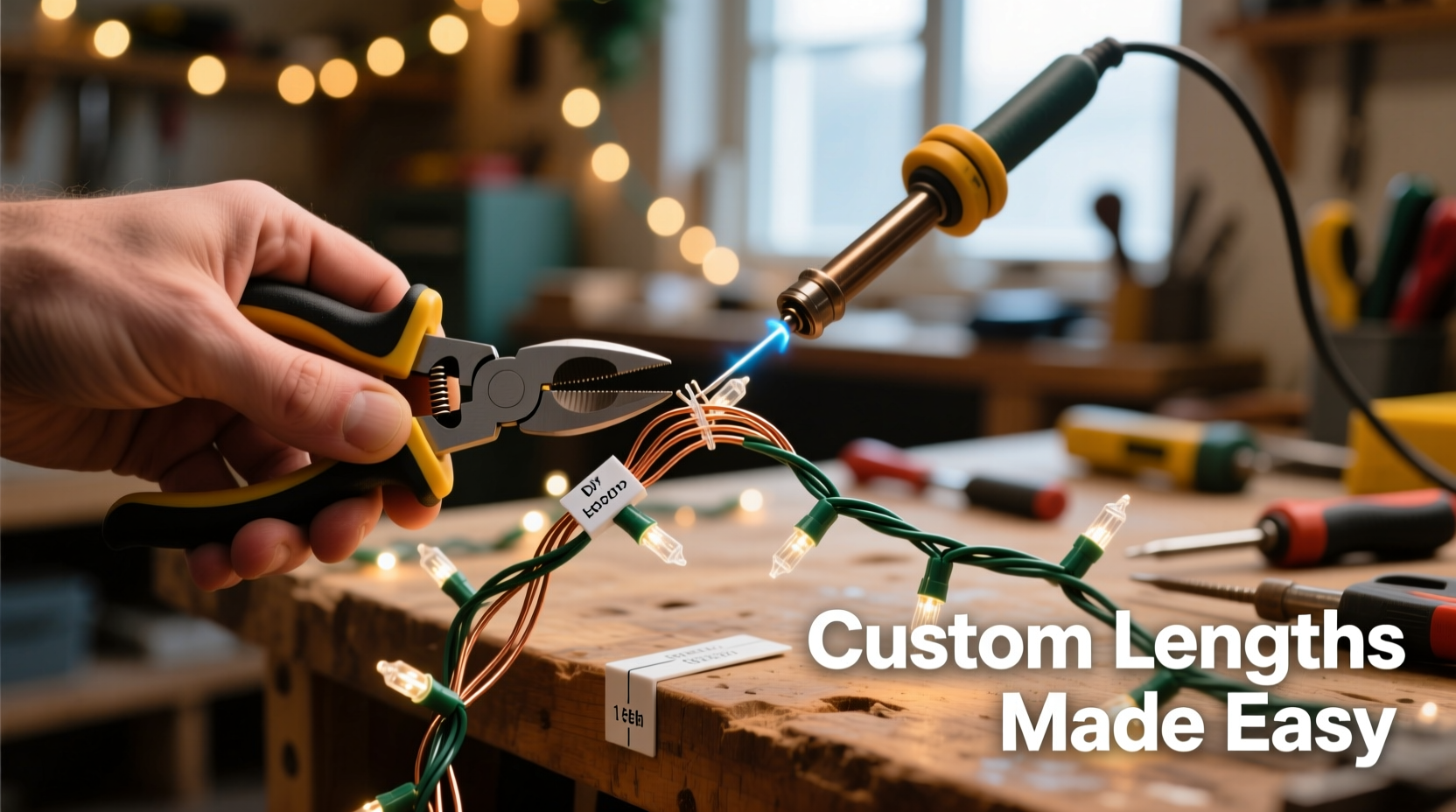
Not all Christmas lights are created equal when it comes to modification. Before picking up a pair of wire cutters, determine whether your string is even suitable for cutting and rewiring.
Traditional incandescent mini-lights wired in series are generally not ideal for customization. In a series circuit, each bulb shares the voltage, so removing bulbs or shortening the string without recalculating load can lead to overvoltage and burnout. However, many modern LED light strings—especially those marketed as “cuttable” or “sectional”—are designed with parallel circuits or shunted sockets, making them far more adaptable.
Look for labels like:
- \"Cuttable every 6 inches\"
- \"Custom length capable\"
- \"End-connectable up to X sets\"
If no such labeling exists, inspect the socket spacing and wire gauge. High-quality LED strings with thicker insulation and clearly marked cut points are better candidates for modification. Avoid cutting older, non-LED sets unless you're experienced with low-voltage circuit design.
Tools and Materials You’ll Need
To successfully cut and rewire a Christmas light string, gather the following supplies beforehand:
- Wire strippers – For cleanly removing insulation without damaging conductors.
- Needle-nose pliers – Useful for twisting wires and inserting them into connectors.
- Soldering iron and rosin-core solder – Provides strong, durable connections (optional but recommended).
- Heat-shrink tubing or electrical tape – Insulates spliced connections.
- Multimeter – Tests continuity and voltage after rewiring.
- Replacement end plugs – Female and male ends compatible with your wire type.
- Scissors or utility knife – Only if cutting insulation carefully.
- Label maker or masking tape – Helps identify polarity during reassembly.
Using proper tools ensures cleaner work and reduces the risk of shorts or loose connections. Skipping essentials like heat-shrink tubing may save time initially but increases long-term failure risks.
Step-by-Step Guide to Cutting and Rewiring
Follow this sequence to safely modify your Christmas light string:
- Unplug and inspect the string. Check for damaged bulbs, frayed wires, or moisture exposure. Discard any compromised sections.
- Determine the desired length. Measure your installation area and decide where to make the cut. If the string has marked cut points (often between sockets), use those.
- Cut the wire at the chosen point. Use sharp wire cutters to make a clean, straight cut. Avoid crushing the internal wires.
- Strip about ½ inch of insulation from both ends of the cut section—one side will become the new end plug connection, the other may connect to another segment.
- Identify polarity. Most LED strings have a clear polarity: one wire is positive (+), often marked with ridges, text, or red coloring; the other is negative (–). Match these correctly when reconnecting.
- Attach a new end plug. Open the replacement plug housing. Insert stripped wires into corresponding terminals, ensuring secure contact. Solder for permanence, then insulate with heat-shrink tubing.
- Test the connection. Plug the modified string into power. Use a multimeter to verify correct voltage across the first few bulbs. Watch for flickering or dimness.
- Seal and mount. Once functional, seal the splice with waterproof silicone if used outdoors. Secure the new endpoint to prevent strain on the wires.
This process works best on low-voltage DC LED systems commonly found in newer decorative lighting. Mains-powered AC strings require extra caution due to higher voltage levels.
“Rewiring Christmas lights isn’t just about shortening them—it’s about maintaining electrical integrity. A single reversed polarity can take out an entire run.” — Daniel Reyes, Electrical Safety Consultant
Do’s and Don’ts of Modifying Light Strings
To avoid common pitfalls, refer to the table below summarizing key practices:
| Do | Don’t |
|---|---|
| Use only LED strings labeled as cuttable or modular | Cut incandescent series-wired strings without recalculating load |
| Label positive and negative wires before disconnecting | Assume both wires are interchangeable |
| Solder and seal all connections | Leave exposed or twisted-only splices |
| Test with a multimeter before final installation | Plug in untested modifications directly into wall outlets |
| Use weatherproof enclosures for outdoor use | Expose splices to rain or snow without protection |
Following these guidelines minimizes the risk of premature failure and enhances overall safety. Remember: electricity demands respect, especially around flammable materials like trees and curtains.
Real Example: Customizing Lights for a Balcony Rail
Jessica, a homeowner in Portland, wanted to wrap her 14-foot wrought iron balcony railing with warm white LED string lights. The closest pre-made option was 25 feet—far too long and prone to sagging.
She purchased a 25-foot cuttable LED string designed for outdoor use, marked with scissor icons every 12 inches. After measuring her railing precisely, she decided to cut the string at the 15-foot mark, leaving an extra foot for routing to the outlet.
Using wire strippers, she exposed the twin leads and confirmed polarity via ridge marking. She then soldered the correct wires to a new female end plug, sealed each joint with heat-shrink tubing, and tested the connection indoors before mounting.
The result was a snug, professional-looking fit with no excess wire. Two years later, the lights still function flawlessly, thanks to proper sealing and strain relief at the connection point.
Frequently Asked Questions
Can I connect two shortened strings together?
Yes, provided they are rated for end-to-end connection and total wattage stays within safe limits. Always check manufacturer specifications. Never exceed the maximum number of linked sets listed on the packaging. Use a power strip with surge protection for added safety.
Will cutting my lights void the warranty?
In most cases, yes. Any physical alteration—including cutting or rewiring—typically voids the manufacturer’s warranty. Some brands offer modular systems explicitly designed for user modification and may honor limited coverage. Read terms carefully before proceeding.
Are there pre-cuttable options available instead of DIY?
Absolutely. Brands like GE, Hitlights, and Twinkling Green produce \"modular\" or \"segmented\" LED strings that allow users to snap apart sections at designated points and rejoin them with included connectors. These eliminate the need for soldering and reduce error risk, though they cost slightly more upfront.
Expert Tips for Long-Term Success
Beyond the initial modification, longevity depends on ongoing care and smart usage. Consider these advanced strategies:
- Use a timer to limit daily runtime, reducing heat buildup and extending LED lifespan.
- Inspect annually for cracked insulation or corrosion, especially in coastal or humid climates.
- Store coiled loosely in a climate-controlled space—tight wrapping stresses wires over time.
- Label modified strings with their voltage, length, and polarity diagram for future reference.
- Keep spare end plugs and fuses on hand for quick repairs.
For large-scale projects—like outlining a roofline or illuminating a staircase—consider building multiple shorter runs rather than one ultra-long string. This approach improves reliability; if one section fails, the rest remain lit.
Conclusion: Take Control of Your Holiday Lighting
Cutting and rewiring Christmas light strings for custom lengths is not only possible—it’s a practical solution for achieving a polished, tailored look. With careful planning, attention to polarity, and proper sealing techniques, you can transform standard-issue lights into a bespoke display that fits your space perfectly.
The key lies in respecting electrical fundamentals while embracing modern LED technology built for flexibility. Whether you're dressing up a small apartment balcony or designing a full-house glow, customization empowers creativity without sacrificing safety.




 浙公网安备
33010002000092号
浙公网安备
33010002000092号 浙B2-20120091-4
Comments
No comments yet. Why don't you start the discussion?