
Almond milk has become a staple in many households—valued for its low calorie count, dairy-free profile, and versatility in smoothies, coffee, and baking. But what happens when you buy too much or want to stock up during a sale? Can you freeze almond milk to extend its shelf life? The short answer is yes—but with important conditions. Freezing alters the texture and consistency of almond milk, which can make it less than ideal for drinking straight from the glass. However, with proper techniques and smart usage strategies, frozen almond milk can still be a valuable kitchen asset.
This guide breaks down everything you need to know about freezing almond milk: the science behind texture changes, best practices for freezing and thawing, creative ways to use defrosted almond milk, and how to avoid common pitfalls. Whether you're minimizing waste or planning meals ahead, understanding these nuances ensures your plant-based milk remains useful beyond the fridge.
The Science Behind Freezing Almond Milk
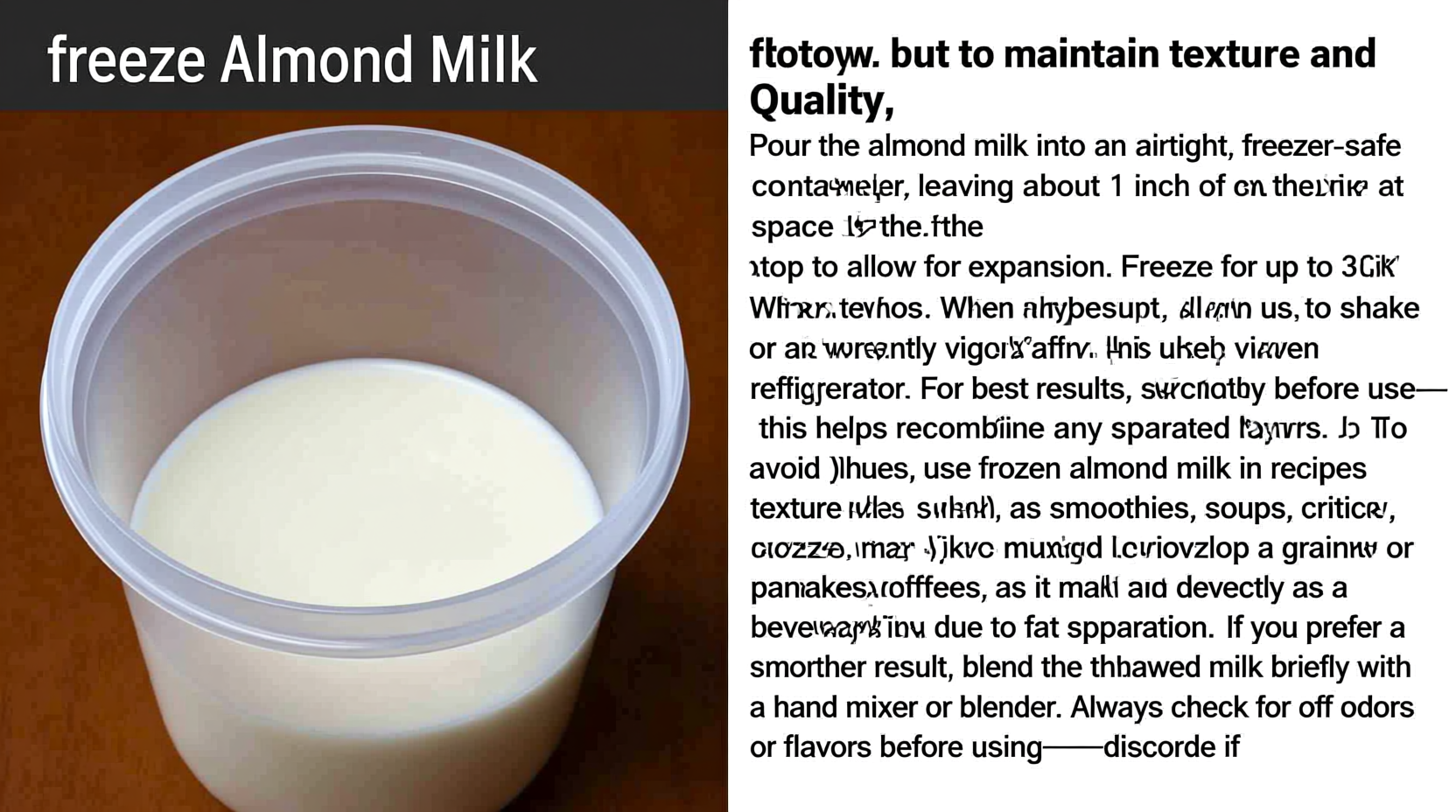
Unlike whole dairy milk, almond milk is an emulsion of water, ground almonds, stabilizers, and often added vitamins. When frozen, the water content expands and forms ice crystals, while the almond particles and emulsifiers separate. This phase separation is natural but leads to a grainy or clumpy texture upon thawing.
Commercial almond milks contain stabilizers like gellan gum or locust bean gum to maintain consistency on the shelf. These help somewhat during freezing, but they can't fully prevent structural breakdown. Homemade almond milk, lacking stabilizers, tends to fare even worse after freezing.
“Freezing disrupts the colloidal structure of plant-based milks. While safe to consume post-thaw, the mouthfeel changes significantly.” — Dr. Lena Torres, Food Scientist at the Institute for Sustainable Nutrition
It's also worth noting that freezing does not extend shelf life indefinitely. While bacteria growth halts at 0°F (-18°C), quality degrades over time. For best results, use frozen almond milk within 3 months.
How to Freeze Almond Milk Properly
Freezing almond milk successfully begins with preparation. Follow these steps to preserve as much quality as possible:
- Check expiration date: Only freeze almond milk that’s fresh and well within its use-by date. Never freeze spoiled or off-smelling milk.
- Choose the right container: If freezing unopened cartons, leave at least 1 inch of headspace to allow for expansion. Do not freeze full, sealed cartons—they may burst.
- Portion wisely: Divide into usable portions. Ice cube trays are excellent for small amounts used in cooking or coffee.
- Label clearly: Include the date and type (e.g., “unsweetened vanilla”) to avoid confusion later.
- Freeze quickly: Place containers in the coldest part of the freezer to minimize large ice crystal formation, which worsens texture degradation.
Best Containers for Freezing Almond Milk
| Container Type | Pros | Cons | Recommended? |
|---|---|---|---|
| Plastic freezer-safe containers | Durable, reusable, expandable | May absorb odors if low quality | ✅ Yes |
| Silicone ice cube trays | Flexible, easy release, portion-controlled | Not suitable for large volumes | ✅ Yes (for small uses) |
| Original carton (unopened) | Convenient, no transfer needed | Risk of bursting; paper not moisture-proof long-term | ⚠️ Only if not full and used quickly |
| Glass jars | Eco-friendly, non-reactive | High risk of cracking due to expansion | ❌ No unless specifically designed for freezing |
Creative Ways to Use Thawed Almond Milk
Once thawed, almond milk rarely regains its original silky texture. But this doesn’t mean it’s unusable. In fact, many culinary applications benefit from slight textural imperfections. Here are practical ways to repurpose defrosted almond milk without disappointment:
- Smoothies: The blending process masks separation. Frozen almond milk cubes can even replace ice for creamier results.
- Baking: Muffins, pancakes, cakes, and quick breads rely on liquid content more than mouthfeel. Thawed almond milk works perfectly here.
- Sauces and soups: Use in creamy pasta sauces, curries, or mashed potatoes where heat and stirring restore smoothness.
- Oatmeal or cereal (warmed): Heating and mixing helps reintegrate components. Works best when stirred continuously.
- Coffee or tea: Stir well before adding. Some detect a slightly chalky note, but flavor impact is minimal, especially with flavored varieties.
Mini Case Study: Meal Prepping with Frozen Almond Milk
Sophia, a busy teacher and vegan home cook, buys almond milk in bulk to reduce packaging waste. She noticed she was throwing out nearly half a carton each week due to spoilage. After researching freezing options, she began pouring leftover almond milk into silicone ice cube trays and freezing them.
Each morning, she drops three cubes into her oatmeal as it cooks. On weekends, she uses larger portions from frozen containers to make banana bread or blended soups. “I haven’t bought fresh almond milk in six weeks,” she says. “The cubes melt fast, and once heated or blended, I can’t tell the difference.”
Her system reduced waste, saved money, and simplified meal prep—all by embracing the limitations of frozen almond milk rather than fighting them.
Do’s and Don’ts of Freezing Almond Milk
To help you navigate common mistakes and maximize success, here’s a clear comparison of recommended versus discouraged practices:
| Do’s ✅ | Don’ts ❌ |
|---|---|
| Shake or blend thoroughly after thawing | Drink it straight without mixing |
| Use within 3 months for best quality | Keep it frozen for over 6 months |
| Portion into usable sizes before freezing | Freeze entire large cartons you won’t finish |
| Thaw slowly in the refrigerator overnight | Defrost at room temperature for hours (risk of bacterial growth) |
| Label containers with dates and flavor types | Store unlabeled milk leading to confusion later |
| Use thawed milk in cooked or blended dishes | Expect it to pour like fresh milk over cereal |
Step-by-Step Guide: From Freezing to Usage
Follow this timeline to seamlessly integrate frozen almond milk into your routine:
- Day 1 – Preparation: Transfer unused almond milk into freezer-safe containers, leaving ½–1 inch of space. Label with date and variety.
- Day 1 – Freezing: Place containers flat in the freezer. Avoid stacking until fully frozen (about 6 hours).
- Days 2–90 – Storage: Keep sealed at 0°F (-18°C). Avoid frequent temperature fluctuations.
- When Needed – Thawing: Move container to the refrigerator 12–24 hours before use. For quicker thaw, place sealed bag in cold water.
- Before Use – Reintegration: Shake vigorously or blend for 20–30 seconds to recombine separated layers.
- Final Step – Application: Use in smoothies, baking, sauces, or warm cereals. Avoid cold sipping unless blended well and preferred texture is achieved.
“Texture loss isn’t failure—it’s a shift in function. Think of frozen almond milk as a cooking ingredient, not a beverage.” — Chef Marcus Lin, Plant-Based Culinary Instructor
Frequently Asked Questions
Does freezing destroy nutrients in almond milk?
No, freezing preserves most vitamins and minerals in almond milk. Vitamin E and calcium (if fortified) remain stable. Some B vitamins may degrade slightly over extended storage, but not significantly within 3 months.
Why does my thawed almond milk look chunky?
This is normal. The almond particles and water separate during freezing and thawing. It’s not spoiled—just structurally changed. Blending or heating will improve appearance and consistency.
Can I refreeze almond milk after it’s been thawed?
It’s not recommended. Each freeze-thaw cycle increases separation and may encourage bacterial growth if left at unsafe temperatures. Use thawed almond milk within 5–7 days and do not refreeze.
Maximize Value, Minimize Waste
Freezing almond milk isn’t about preserving it exactly as-is—it’s about preserving utility. By adjusting expectations and usage methods, you transform a potentially wasted resource into a functional kitchen tool. Whether you’re making creamy lattes, fluffy pancakes, or hearty soups, defrosted almond milk holds its own when applied correctly.
The key lies in preparation: portioning wisely, labeling clearly, thawing safely, and choosing the right applications. With these strategies, you gain flexibility, reduce grocery trips, and support sustainable habits—all without sacrificing flavor or nutrition.




 浙公网安备
33010002000092号
浙公网安备
33010002000092号 浙B2-20120091-4
Comments
No comments yet. Why don't you start the discussion?