
Mixing battery-operated and plug-in Christmas lights in a single display is not only possible—it’s increasingly common among homeowners who want both flexibility and reliability during the holidays. Whether you're decorating a sprawling front yard, a cozy indoor tree, or an intricate mantle arrangement, combining power sources can expand your creative options. However, doing so requires thoughtful planning to ensure consistency in appearance, safety, and ease of use.
The short answer is yes—you can mix the two types. But success depends on how well you coordinate timing, brightness, color temperature, and maintenance. Done poorly, mismatched lights can look haphazard or fail mid-season. Done well, they blend seamlessly and enhance your overall aesthetic.
Understanding the Differences Between Power Types
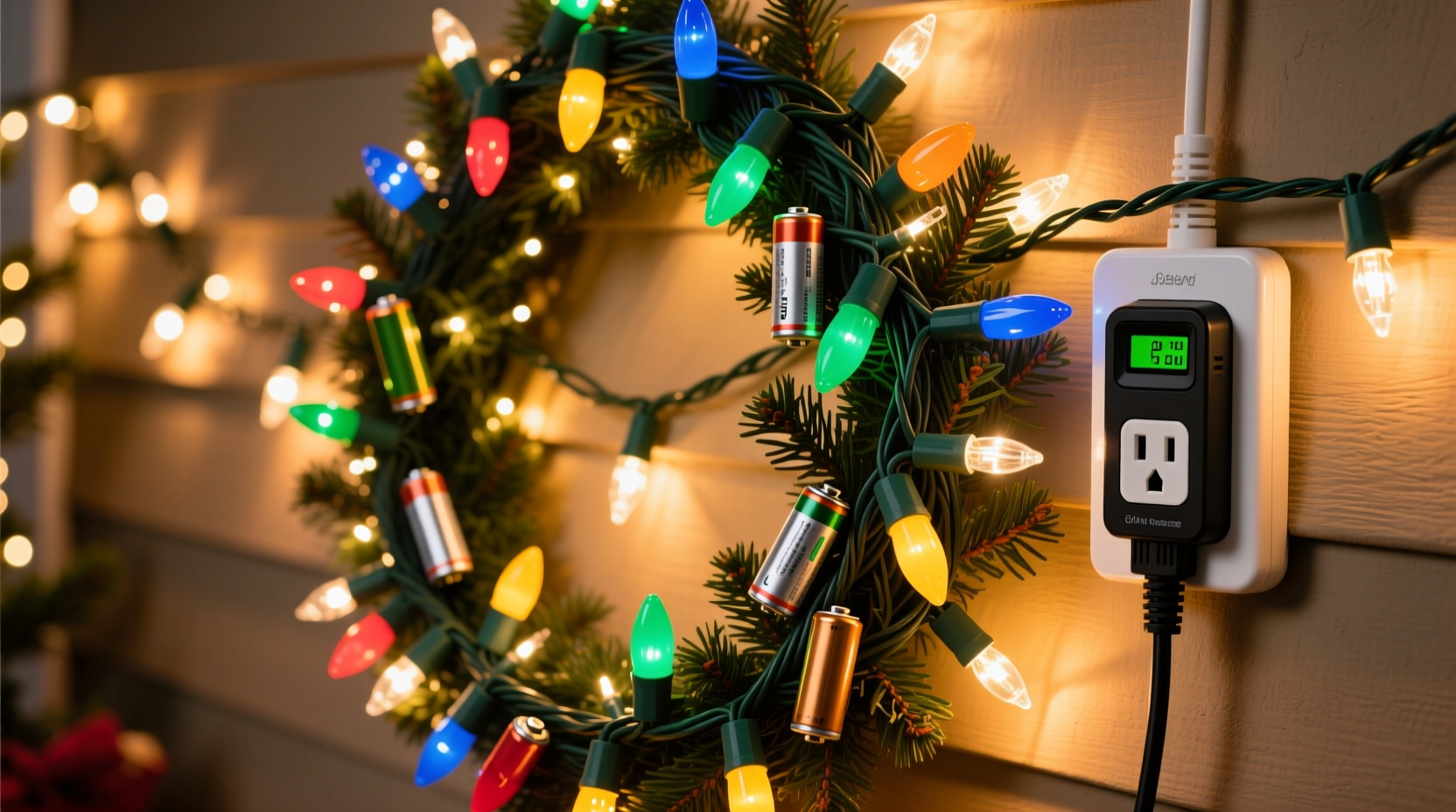
Before integrating different light types, it's essential to understand their core differences. Plug-in lights draw consistent power from an electrical outlet, while battery-operated sets rely on internal cells—typically AA, AAA, C, D, or lithium-based. These distinctions affect performance, longevity, and usability.
Plug-in lights are generally brighter, more reliable over long durations, and easier to synchronize with timers or smart controls. They’re ideal for large-scale displays where continuous operation is expected. Battery-powered lights offer unmatched portability and eliminate the need for extension cords, making them perfect for locations without nearby outlets—like wreaths on doors, centerpieces, or stair railings.
However, battery life varies significantly based on bulb type (LED vs. incandescent), number of bulbs per set, and usage patterns. Most standard LED battery lights last between 48 and 200 hours, depending on settings like steady-on versus twinkling mode. In contrast, plug-in LEDs can run all season without degradation if properly maintained.
Design Considerations for a Unified Look
Aesthetics matter when mixing light types. The goal is harmony—not just function. If one section of your display glows warm white while another flashes cool white, the effect can be jarring. To avoid this, match key visual characteristics across all light strands.
Color Temperature Matching
Christmas lights come in various color temperatures measured in Kelvin (K). Warm white (2700K–3000K) mimics candlelight and is popular for traditional decor. Cool white (5000K–6500K) appears bluer and more modern. Daylight (6500K+) is rarely used indoors due to its harshness.
To maintain consistency, test samples side by side before installation. Even small differences in hue become obvious at night. Many manufacturers now label packages clearly; look for exact Kelvin ratings rather than vague terms like “soft white.”
Brightness and Bulb Density
Plug-in lights often have higher bulb counts per foot than battery sets, leading to denser illumination. A sparse string of five battery-powered bulbs may get lost next to a 50-light plug-in strand. Compensate by grouping multiple battery sets together or choosing mini-bulb designs that mimic density.
| Feature | Plug-In Lights | Battery-Operated Lights |
|---|---|---|
| Power Source | Electrical outlet | Batteries (AA, AAA, etc.) |
| Typical Runtime | Unlimited (with outlet access) | 48–200 hours (varies by model) |
| Brightness Level | High and consistent | Moderate, may dim over time |
| Best For | Large trees, outdoor displays, permanent fixtures | Wreaths, centerpieces, cord-free zones |
| Timer/Smart Control | Commonly available | Sometimes built-in |
Lighting Effects and Modes
Many modern light sets include multiple modes: steady-on, twinkling, fading, chasing. When combining systems, align these effects as closely as possible. Running a slow-pulse battery set beside a constant-glow plug-in string creates visual dissonance. Choose either static lighting or synchronized motion.
“Consistency in color, rhythm, and intensity is what separates amateur from professional-looking displays.” — Daniel Reyes, Holiday Lighting Designer & Owner of Luminary Displays Inc.
Practical Setup Strategies
Successfully blending power types involves strategic placement, organization, and maintenance routines. Follow these steps to integrate both seamlessly into your holiday decor.
Zone-Based Planning
Divide your display into functional zones. Assign plug-in lights to areas near power sources—porches, windows, garages, and main trees. Reserve battery sets for remote or decorative accents: mantles, stair banisters, glass cabinets, or potted plants.
This zoning approach minimizes reliance on extension cords and reduces clutter. It also simplifies troubleshooting—if part of your display goes dark, you’ll know whether to check an outlet or replace batteries.
Use Timers Strategically
Most plug-in lights work with mechanical or digital timers, allowing automatic daily on/off cycles. Some battery-operated models include built-in timers (usually 6-hour on, 18-hour off). To keep everything synchronized:
- Set plug-in timers to match the cycle of battery sets (e.g., 6 PM to midnight).
- If using non-timed battery lights, manually turn them on/off at the same time each day.
- Label switches and timer boxes clearly to avoid confusion.
Monitor and Maintain Regularly
Battery-powered lights degrade gradually. As cells deplete, brightness drops, and flickering increases. Schedule weekly checks throughout the season:
- Inspect all lights for outages or dimming.
- Replace weak batteries promptly—even partially drained cells can drag down performance.
- Clean switch contacts and battery terminals with a cotton swab if corrosion is present.
- Swap out entire sets showing inconsistent output.
Mini Case Study: The Urban Apartment Balcony Display
Sarah Kim lives on the 12th floor of a downtown apartment building. Her holiday display centers around a small artificial tree and a balcony railing decorated with greenery and ornaments. There’s only one outdoor-rated outlet on her balcony—too far from the front door for practical wreath wiring.
She uses plug-in micro LED lights on the tree and railing, connecting them through a single surge-protected power strip. For her front door wreath, she chose a warm-white battery-operated set with a built-in 6-hour timer. Both sets have nearly identical color temperatures (2900K) and steady-on modes.
To maintain synchronization, Sarah sets her indoor timer to turn on at 5:30 PM and off at 11:30 PM—matching the duration of her wreath’s automatic cycle. She checks the wreath every Sunday evening, replacing batteries every three weeks. Neighbors consistently compliment the cohesive glow, unaware that two different power systems are at work.
The result? A polished, energy-efficient display that respects space limitations and electrical constraints—all without visible cords or mismatched lighting.
Safety and Electrical Best Practices
Safety should never be compromised for aesthetics. While mixing light types isn’t inherently dangerous, certain risks arise from poor practices.
Never attempt to convert a battery-powered set into a plug-in version or vice versa. These systems are engineered differently, and tampering can lead to overheating, fire hazards, or electrical shock. Similarly, don’t connect battery-operated strings in series unless explicitly designed for it—most aren’t rated for daisy-chaining.
For outdoor use, ensure all plug-in components are rated for exterior conditions (look for UL Outdoor certification). Use GFCI-protected outlets to prevent ground faults. Although battery sets don’t require GFCI protection, protect them from moisture—water exposure can corrode terminals and cause leakage.
Indoors, avoid overloading circuits. A typical household circuit handles 15–20 amps. Each string of incandescent lights draws about 0.5 amps; LED versions use roughly 0.05–0.1 amps. With modern LEDs, you can safely run dozens of strands on one circuit—but always verify total load.
Checklist: Safe Mixed Lighting Setup
- ✅ Confirm all plug-in lights are UL-listed for indoor/outdoor use as needed
- ✅ Match color temperature across all sets (within 200K tolerance)
- ✅ Synchronize on/off times using timers or manual schedules
- ✅ Test brightness and mode compatibility before full installation
- ✅ Replace old or leaking batteries immediately
- ✅ Avoid daisy-chaining non-compatible sets
- ✅ Store spare batteries in a dry, room-temperature location
Frequently Asked Questions
Can I control both types of lights with one smart system?
Direct integration isn't possible because battery-operated lights lack network connectivity. However, you can use smart plugs for your plug-in strands and group them in apps like Google Home or Alexa alongside voice reminders to turn on battery sets. Some newer battery lights have Bluetooth remotes, but universal automation remains limited.
Why do my battery lights dim after a few days?
Dimming indicates declining battery charge. Even high-quality alkalines lose voltage over time, especially in cold weather. Lithium batteries perform better in low temperatures and offer longer life. Also, ensure you’re not running too many bulbs on small batteries—overloading causes premature drain.
Is it safe to leave battery-operated lights on overnight?
Yes, most modern LED battery lights generate minimal heat and pose little fire risk. However, always follow manufacturer instructions. Remove batteries when storing long-term to prevent leakage. For peace of mind, use sets with auto-off timers instead of leaving them on continuously.
Final Thoughts: Blending Functionality with Festivity
Mixing battery-operated and plug-in Christmas lights allows decorators to overcome physical limitations while maintaining visual elegance. The key lies in intentionality—planning ahead, matching technical specs, and committing to regular upkeep.
As holiday technology evolves, we’re seeing smarter battery solutions, longer lifespans, and better integration with home automation. Until full interoperability arrives, careful coordination remains the best tool at your disposal.
Whether you're illuminating a suburban roofline or a minimalist city apartment, combining power sources wisely lets you create memorable displays without compromise. Thoughtful pairing turns logistical challenges into creative opportunities.




 浙公网安备
33010002000092号
浙公网安备
33010002000092号 浙B2-20120091-4
Comments
No comments yet. Why don't you start the discussion?