
Mixing different types of Christmas lights on a single tree is a common practice among decorators aiming for visual depth, contrast, and personalized flair. From warm white LEDs to multicolored incandescents and twinkling fairy lights, combining lighting styles can elevate your holiday decor. But with so many options—voltage differences, plug types, and power loads—many homeowners worry: could this create an electrical hazard or damage the lights? The short answer is yes, you *can* safely mix different types of Christmas lights on one tree—provided you follow proper electrical guidelines, understand compatibility, and avoid overloading circuits.
This article breaks down everything you need to know about combining various Christmas light types on a single tree. You’ll learn how to assess wattage, identify compatible connectors, manage heat output, and design a cohesive look—all while keeping safety at the forefront.
Understanding Christmas Light Types and Their Differences
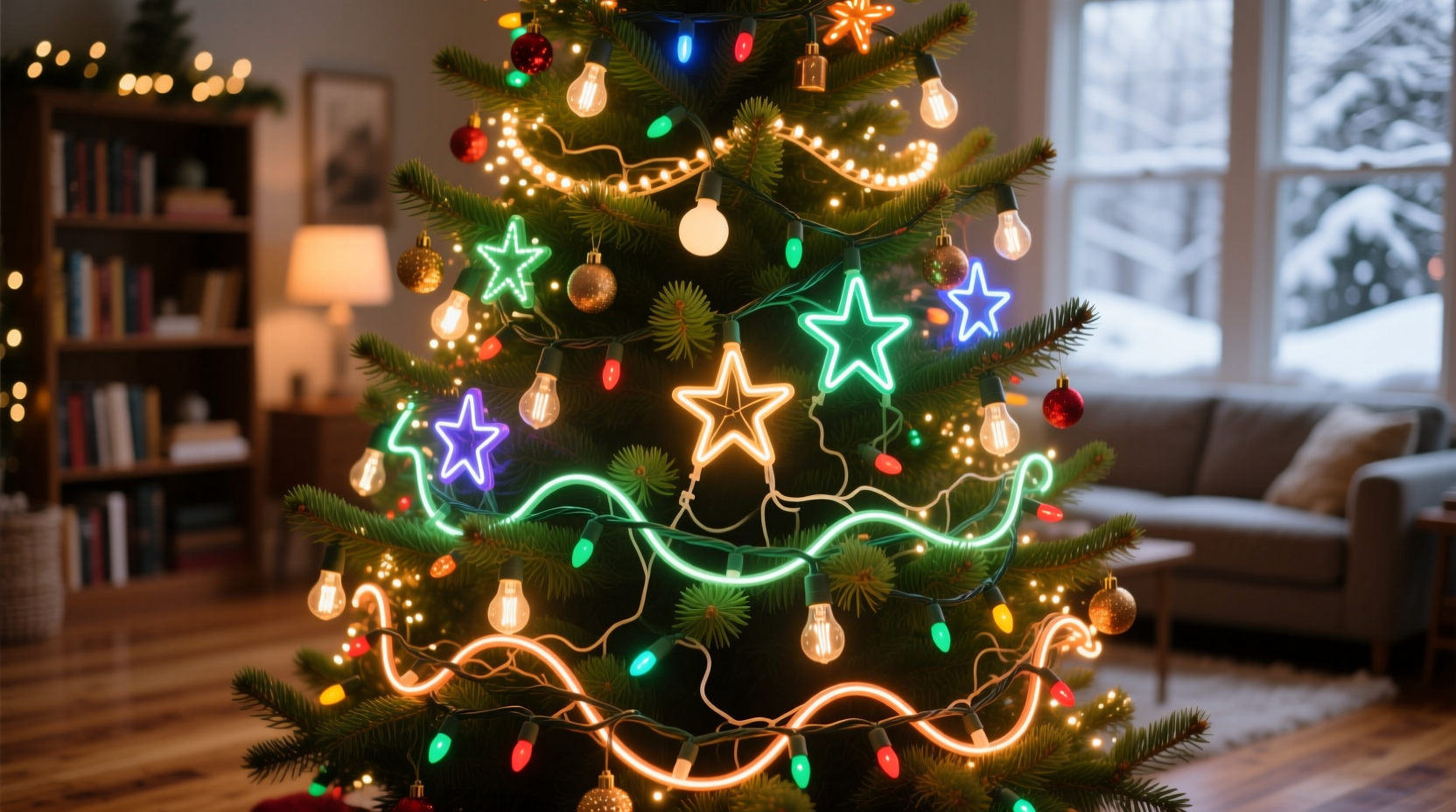
Before connecting any lights, it’s essential to understand the main categories of Christmas lights available today:
- Incandescent Lights: Traditional bulbs that produce a warm glow. They are less energy-efficient, generate noticeable heat, and have a shorter lifespan than LEDs.
- LED Lights: Energy-efficient, long-lasting, and cool to the touch. Available in multiple colors and effects (steady, twinkling, fading).
- Mini Lights: Small bulbs commonly used on trees; come in both incandescent and LED varieties.
- Rope Lights: Flexible tubing with embedded bulbs, often used for outlines but sometimes wrapped around trunks or bases.
- Fairy Lights: Ultra-thin wires with tiny bulbs, often battery-powered or low-voltage, ideal for delicate layering.
Each type has unique electrical characteristics, including voltage requirements, amperage draw, and connector designs. Mixing them isn’t inherently dangerous—but doing so without understanding these differences can lead to blown fuses, damaged strings, or even fire hazards.
Electrical Safety: Can Mixed Lights Overload a Circuit?
The primary concern when mixing lights is electrical load. Each circuit in your home has a maximum capacity—typically 15 or 20 amps. Exceeding this limit by daisy-chaining too many strings together can trip breakers or, worse, overheat wires.
Here’s how to calculate safe usage:
- Determine the wattage per string (found on packaging or bulb base).
- Multiply by the number of strings you plan to connect.
- Ensure total wattage does not exceed 80% of the circuit’s capacity (for a 15-amp circuit: 15A × 120V = 1800W; 80% = 1440W).
For example, a string of 50 incandescent mini lights uses about 20 watts. If you connect 10 such strings, that’s 200 watts—well within safe range. But add five LED strings (each using ~5 watts) and three rope light sections (~30 watts each), and you’re still under 400 watts total—still safe.
However, problems arise when mixing high-draw incandescents with other loads on the same outlet, such as space heaters or kitchen appliances. Always plug Christmas lights into a dedicated outlet if possible, and use surge-protected power strips rated for outdoor/indoor lighting.
“Mixing light types is fine electrically as long as you respect the total load and use UL-listed products. Never exceed manufacturer-recommended connection lengths.” — David Lang, Electrical Safety Engineer, NFPA Contributor
Compatibility and Connector Types: What You Need to Know
Not all Christmas lights are designed to be connected together. Even if two strings appear similar, mismatched connectors or voltage ratings can prevent safe daisy-chaining.
Common connector types include:
- C7/C9 plugs: Larger bulbs often used outdoors; not typically mixed with mini-light strings.
- Mini-light shunt connectors: Standard for indoor tree lights; vary between brands (e.g., GE, NOMA, Holiday Time).
- Low-voltage DC connectors: Used for battery-operated or USB-powered fairy lights—should never be plugged into AC mains.
Attempting to force incompatible connectors or using adapters without proper regulation can result in short circuits or melted wiring.
| Light Type | Voltage | Typical Wattage (50-bulb string) | Max Connectable Strings | Compatible With Other Types? |
|---|---|---|---|---|
| Incandescent Mini | 120V AC | 20–25W | 3–5 strings | Limited—only same type/voltage |
| LED Mini | 120V AC | 4–6W | Up to 40+ (varies by brand) | Sometimes—check labels |
| Battery-Powered Fairy | 3–6V DC | 1–2W | N/A (not daisy-chainable) | No—must remain separate |
| Rope Light (Indoor) | 120V AC | 25–40W per 12 ft | 2–3 sections | Rarely—different form factor |
Note: While some LED and incandescent strings share the same voltage (120V), they should not be daisy-chained together unless explicitly stated by the manufacturer. Differences in internal resistance and current draw can cause uneven performance or overheating.
Step-by-Step Guide to Safely Mix Lights on One Tree
If you want a layered, dynamic look using multiple light types, follow this practical process:
- Plan Your Design: Decide which areas of the tree will feature different lights (e.g., white LEDs as base, colored incandescents as accents, fairy lights for inner glow).
- Check Labels: Verify wattage, voltage, and maximum connectable length for each string.
- Use Separate Power Sources: Plug different light types into separate extension cords or power strips to avoid daisy-chaining across types.
- Test Before Hanging: Turn on each string individually to ensure functionality and color consistency.
- Layer Strategically: Start with the primary light set (usually LEDs or incandescents), then weave in secondary lights like fairy strands manually—do not plug them into the main string.
- Secure Connections: Use cord clips or twist ties to keep plugs accessible and prevent strain on connections.
- Monitor Heat Output: After running lights for 30 minutes, feel near the plugs and bulbs. If any section is hot, disconnect immediately.
This method allows you to enjoy the aesthetic benefits of mixed lighting while minimizing electrical risks.
Design Tips for a Cohesive Look When Mixing Lights
Safety is paramount, but so is visual harmony. A cluttered mix of flashing reds, steady whites, and blue twinkle lights can look chaotic rather than festive. Consider these design principles:
- Choose a Dominant Tone: Let one type (e.g., warm white LEDs) serve as the foundation, making up 60–70% of the lighting.
- Use Accents Sparingly: Colored or animated lights should highlight specific branches or ornaments—not dominate.
- Match Color Temperatures: Avoid pairing warm yellow (2700K) with cool daylight (5000K) whites—they clash visually.
- Balance Flashing Effects: Limit blinking or chasing lights to one or two strings; too much movement causes visual fatigue.
- Incorporate Battery-Powered Lights Internally: Weave fairy lights deep within the tree for a magical inner glow without adding to the electrical load.
Real Example: A Family’s Mixed-Light Tree Success Story
The Rivera family in Portland, Oregon, wanted a nostalgic yet modern tree for their living room. They loved the warmth of traditional incandescent lights but also wanted energy savings and safety for their young children.
Their solution? They used a base layer of 400-count cool white LED mini lights (drawing just 24 watts total) plugged into a surge-protected power strip. Then, they added three strands of vintage-style C7 incandescent lights (red, green, and clear) along major limbs—plugged into a second outlet. Finally, they hand-wrapped 10 feet of battery-powered copper wire fairy lights around the trunk and inner branches for subtle sparkle.
By separating the power sources and avoiding daisy-chaining across types, they achieved a rich, dimensional effect without overloading circuits. The tree became a neighborhood favorite—and remained trouble-free throughout the season.
Common Mistakes to Avoid
Even well-intentioned decorators make errors when combining lights. Watch out for these pitfalls:
- Daisy-Chaining Different Types: Connecting LED and incandescent strings end-to-end can overload the first string’s fuse.
- Ignoring Heat Buildup: Incandescent bulbs near dry foliage or insulation can pose fire risks.
- Using Damaged Cords: Frayed wires or cracked sockets increase shock and fire risk—replace, don’t repair.
- Overloading Power Strips: Just because a strip has six outlets doesn’t mean it can handle six high-wattage strings.
- Mixing AC and DC Lights: Never plug low-voltage battery lights into wall outlets—even with adapters.
“Every year, we see emergency calls related to overloaded Christmas light circuits. Most are preventable with basic load calculations and smart planning.” — Fire Captain Lisa Tran, Seattle Fire Department
FAQ: Common Questions About Mixing Christmas Lights
Can I connect LED and incandescent lights together on the same string?
No. Even if they have the same voltage, their electrical characteristics differ. LEDs draw less current, which can cause incandescent strings to overheat when connected downstream. Always keep them on separate circuits or power sources.
Is it safe to mix plug-in and battery-powered lights on the same tree?
Yes, and it’s actually recommended. Battery-powered fairy lights add sparkle without increasing electrical load. Just ensure batteries are fresh and replace them mid-season if brightness fades.
How many strings of mixed lights can I safely use on one tree?
There’s no fixed number—it depends on total wattage. As a rule, stay under 1440 watts per 15-amp circuit. For most trees, 5–10 standard light strings (mix of LED and incandescent) are safe if properly distributed across outlets.
Final Checklist: Safe & Stylish Mixed Lighting
Before turning on your tree, run through this checklist:
- ✅ All light strings are UL-certified and undamaged.
- ✅ Wattage totals are calculated and under 80% of circuit capacity.
- ✅ LED and incandescent strings are not daisy-chained together.
- ✅ Battery-powered lights are used only as intended.
- ✅ Extension cords are rated for indoor use and not hidden under rugs.
- ✅ Plugs are accessible and not covered by branches.
- ✅ Tree is kept hydrated (if real) and away from heat sources.
- ✅ Lights are turned off when leaving the house or sleeping.
Conclusion: Shine Bright, Stay Safe
Mixing different types of Christmas lights on one tree is not only possible—it’s a powerful way to create a custom, professional-quality display. By respecting electrical limits, using compatible products, and designing with intention, you can blend warmth, color, and sparkle without risking damage or danger.
Your tree should reflect your creativity, not compromise your safety. Apply these guidelines, test your setup early, and enjoy a holiday season lit with confidence and charm.




 浙公网安备
33010002000092号
浙公网安备
33010002000092号 浙B2-20120091-4
Comments
No comments yet. Why don't you start the discussion?