
Mixing different types of Christmas lights on a single tree is not only possible—it can elevate your holiday decor from predictable to extraordinary. The key lies in thoughtful coordination, not uniformity. With the right balance of color, scale, rhythm, and purpose, combining LED string lights, incandescent bulbs, fairy lights, twinkle lights, and specialty effects can create a dynamic, layered glow that feels rich and intentional. However, without a clear plan, the result can quickly devolve into visual noise. This guide breaks down how to blend multiple light types seamlessly, using proven design principles and real-world-tested techniques.
Understanding Light Types and Their Visual Impact
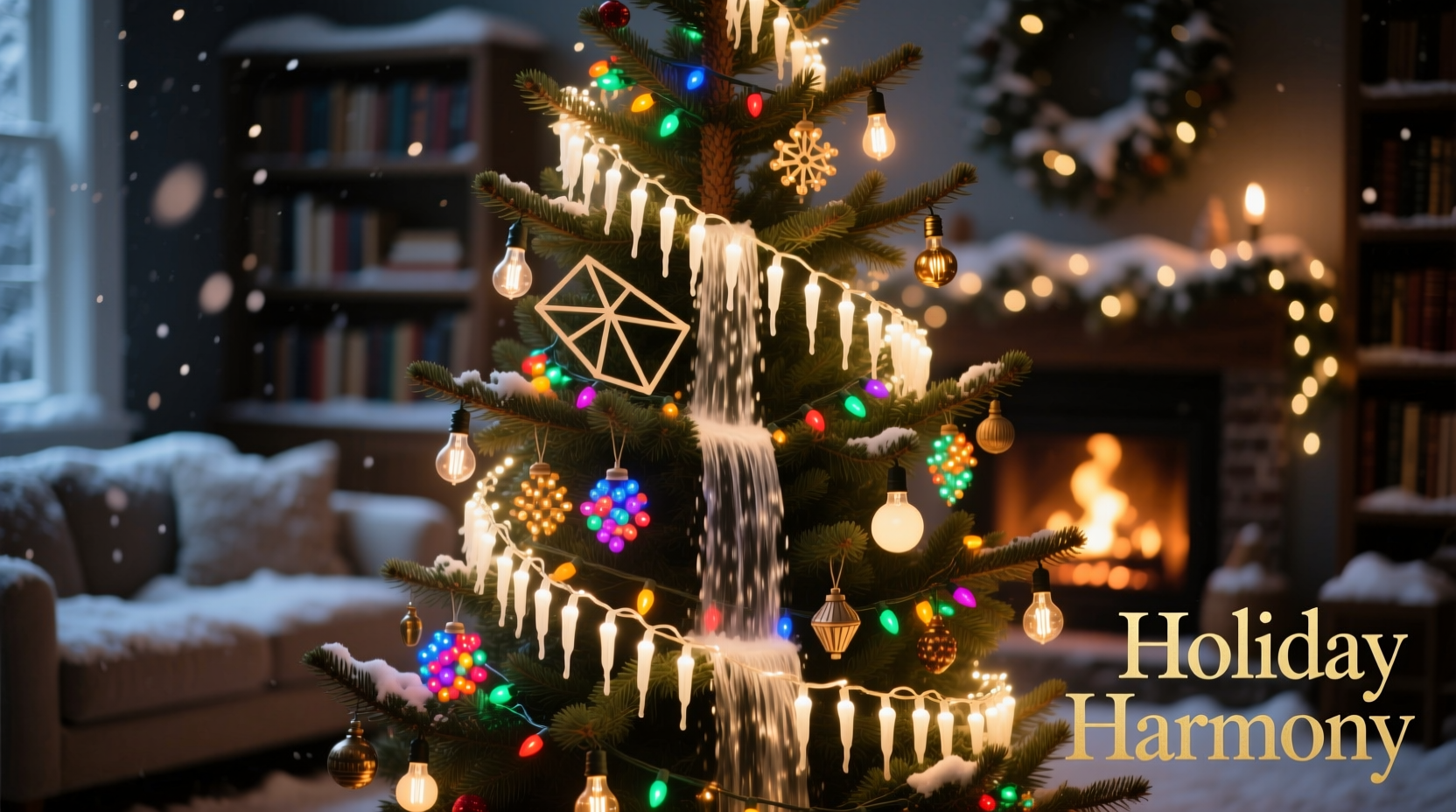
Before combining different lights, it’s essential to understand what each type contributes to the overall aesthetic. Not all lights are created equal—some emit warm glows, others flicker like candlelight, and some are designed for dramatic accenting rather than general illumination.
Common Christmas light varieties include:
- Mini Incandescent Lights: Classic warm white or colored bulbs with a soft, nostalgic glow. They generate more heat and use more energy than LEDs but offer a traditional look.
- LED Mini Lights: Energy-efficient, long-lasting, and cooler to the touch. Available in warm white, cool white, and full RGB color options. Often brighter per watt than incandescents.
- Fairy Lights (Ultra-Mini): Delicate, fine-wire strings with tiny bulbs ideal for subtle shimmer. Often battery-powered and used as accents.
- C7/C9 Bulbs: Larger screw-in bulbs typically used outdoors, but sometimes incorporated indoors for retro flair. C7s are about 1.5 inches long; C9s are larger at around 2.25 inches.
- Twinkle & Flicker Lights: Designed to mimic candlelight or firelight, these add movement and dimension.
- Color-Changing & Smart Lights: Wi-Fi or Bluetooth-enabled strings that allow remote control over color, pattern, brightness, and timing.
- Rope Lights: Flexible tubing containing continuous LED strips. Best for outlining shapes or wrapping trunks, not dense tree coverage.
The risk of visual chaos arises when lights compete rather than complement. A tree with red incandescents, blue LEDs, flickering candles, and rainbow smart lights—all blinking independently—can overwhelm the eye. Success comes from treating lights like elements in an interior design scheme: varied but harmonized.
Design Principles for Mixing Lights Successfully
To avoid clutter and achieve cohesion, apply fundamental design concepts commonly used in lighting and spatial aesthetics.
Establish a Dominant Light Type
Choose one primary light source that covers 60–70% of the tree. This becomes the “base layer” of illumination. For example, use warm white LED mini lights throughout the inner branches and deeper layers of the tree. This provides consistent, even lighting that supports ornament visibility.
Use Secondary Lights for Accent and Texture
Add a second light type sparingly—around 20–30% of total lighting—to highlight specific areas. This could be vintage-style Edison bulbs nestled near the trunk, or delicate fairy lights woven through snow-dusted branches. These accents draw attention without dominating.
Control Color Temperature
Mixing warm white (2700K) and cool white (5000K+) lights on the same tree often creates dissonance. Even if both are white, their undertones clash—one appearing yellowish, the other bluish. Stick to a single temperature range unless intentionally creating contrast (e.g., icy blue outer lights with warm inner core).
“Lighting a Christmas tree is like orchestrating a symphony—each instrument has its place. You don’t want every section playing at full volume simultaneously.” — Daniel Rivera, Lighting Designer & Holiday Display Consultant
Balance Movement and Stillness
Flickering or twinkling lights should be used minimally. Too many create visual fatigue. Use them selectively—perhaps only on the top third of the tree or framing a star topper. Pair them with steady-burn lights to ground the effect.
Create Depth with Layered Placement
Place brighter or warmer lights deeper within the tree to simulate internal glow, mimicking how real candles once illuminated trees from within. Reserve finer, cooler, or animated lights for outer tips to suggest frost or starlight.
Step-by-Step Guide to Blending Multiple Light Types
Follow this sequence to install mixed lights with professional precision.
- Plan Your Palette: Decide on a dominant color scheme and light temperature. Sketch a quick layout noting where each light type will go.
- Start with Base Lighting: String your primary lights first. Begin at the plug end near the outlet, weaving spirals from trunk to tip along main branches. Keep spacing even—about 3–5 inches between bulbs depending on tree size.
- Incorporate Secondary Lights: Once base lights are secure, add secondary strings. Tuck fairy lights into clusters of pinecones or garlands. Wrap C7 bulbs around thicker boughs for retro contrast.
- Add Specialty Effects: Introduce flicker, color-changing, or rope lights last. Position them to enhance focal points—such as circling a large ornament or highlighting a handmade angel.
- Test and Adjust: Turn off room lights and power on all strings. Walk around the tree. Look for dark zones, glare spots, or areas where colors clash. Re-route or dim as needed.
- Secure and Conceal: Use twist ties or floral wire to fasten wires discreetly. Hide excess cords behind branches. Label plugs if using multiple circuits.
Do’s and Don’ts: Table of Best Practices
| Do | Don't |
|---|---|
| Use lights of similar color temperature when mixing types | Mix warm white and cool white LEDs freely across the tree |
| Lay a foundation with one dominant light style | Apply all light types equally without hierarchy |
| Limit flicker or chase effects to under 20% of total lights | Install multiple twinkling strands on every major branch |
| Layer lights from inside out for depth | Only place lights on the outermost tips |
| Test combinations before final installation | Assume all \"white\" lights will match visually |
| Use smart lights for controlled, synchronized effects | Run incompatible controllers on the same circuit |
Real Example: A Balanced Urban Apartment Tree
Sophia, a graphic designer in Chicago, wanted her 7-foot pre-lit Fraser fir to feel cozy yet modern. The tree came with 700 warm white LEDs, which she found too flat. She enhanced it by adding two additional strands:
- A 50-bulb set of amber-tinted flicker LEDs placed near the upper center to mimic candlelight beneath the star topper.
- A 3-meter battery-powered silver-wire fairy light strand tucked into a ribbon bow and evergreen sprays at the base.
She avoided color-changing lights to maintain serenity and tested all three together before decorating. The result was a tree that felt dimensional and inviting—bright enough to illuminate the room but intimate in tone. Neighbors commented it looked “like something from a design magazine.”
Her secret? Restraint. She added only 15% more lighting than the base set, ensuring the new elements enhanced rather than overwhelmed.
Checklist: Can You Safely Mix Christmas Lights?
Before installing multiple light types, run through this checklist:
- ☑ All lights are rated for indoor use (if decorating inside)
- ☑ Voltage and connector types are compatible
- ☑ Total wattage does not exceed outlet or extension cord capacity
- ☑ Color temperatures align (or contrast is intentional)
- ☑ Blinking/flickering patterns won’t conflict
- ☑ Cords are in good condition—no fraying or exposed wires
- ☑ A master timer or smart plug controls all strands
Frequently Asked Questions
Can I mix LED and incandescent lights on the same tree?
Yes, but with caution. While electrically safe if properly plugged, the difference in brightness and color temperature can cause imbalance. Incandescents tend to be warmer and dimmer; LEDs are often brighter and whiter. If mixing, choose LEDs labeled “warm white” (2700K–3000K) to better match incandescents. Test side by side before full installation.
How many strands of lights should I use on one tree?
A common rule of thumb is 100 lights per foot of tree height. For a 6-foot tree, that’s about 600 bulbs. When mixing types, keep total light count within this range. Over-lighting increases fire risk and visual clutter. Focus on quality of placement over quantity.
Will mixing brands cause problems?
Not inherently, but compatibility matters. Different brands may have varying plug designs, making daisy-chaining difficult. Some smart lights require proprietary apps or hubs. Always check specifications and avoid mixing outdoor-rated lights with indoor-only sets unless explicitly rated for both.
Final Thoughts: Harmony Over Uniformity
The beauty of a well-decorated Christmas tree lies not in perfection, but in character. Mixing different types of Christmas lights allows personal expression—whether you’re evoking vintage charm with retro bulbs or embracing modern elegance with programmable LEDs. The danger isn’t variety; it’s lack of intention.
By anchoring your design with a dominant light theme, thoughtfully layering accents, and respecting the visual weight of each element, you can create a tree that feels rich, balanced, and uniquely yours. Chaos happens when every light demands attention. Harmony emerges when each knows its role.
This holiday season, don’t shy away from experimentation—but do so with a plan. Let your tree tell a story through light: one of warmth, memory, and carefully crafted joy.




 浙公网安备
33010002000092号
浙公网安备
33010002000092号 浙B2-20120091-4
Comments
No comments yet. Why don't you start the discussion?