
There’s no rule that says holiday decor must be uniform. In fact, some of the most striking Christmas trees are those that break tradition—especially when they combine contrasting textures like matte and glossy finishes. The interplay between dull and shiny surfaces adds depth, dimension, and visual interest that a single-finish collection often lacks. But pulling off this blend requires intentionality. Without careful planning, mixing matte and glossy ornaments can look haphazard or clash instead of complement.
The good news? With thoughtful placement, color coordination, and balance, you can create a tree that feels both elegant and dynamic. Whether you're drawn to rustic charm, modern minimalism, or vintage glamour, combining matte and glossy elements allows you to express layered aesthetics in a single centerpiece. This guide walks through practical strategies, common pitfalls, and expert-backed principles to help you master the art of mixing finishes—so your tree becomes a conversation starter, not a confusion point.
Why Mixing Finishes Works (When Done Right)
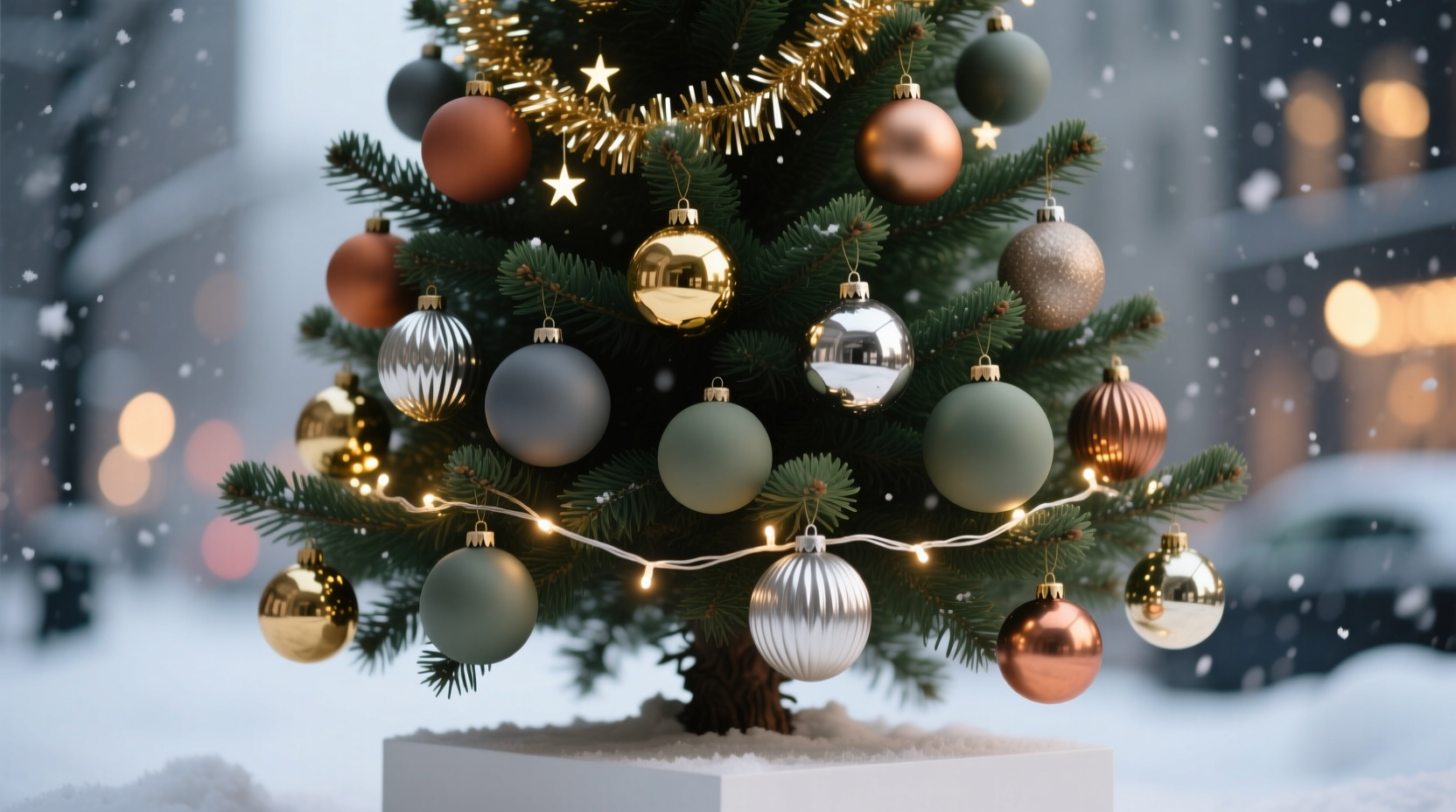
Texture is a silent storyteller in interior design. While color grabs attention, texture holds it. Matte ornaments absorb light, creating softness and warmth, while glossy ones reflect it, adding sparkle and energy. When used together, they create contrast—a foundational principle in visual harmony. Think of it like pairing velvet with satin in fashion: different but complementary.
Interior designer Mara Schanfield explains:
“Contrast elevates design. A tree with only glossy ornaments can feel flashy or overwhelming. One with only matte pieces may appear flat. Together, they balance each other—like yin and yang for the holidays.” — Mara Schanfield, Interior Stylist & Holiday Design Consultant
This balance doesn’t happen by accident. It relies on proportion, distribution, and cohesion through shared tones or themes. For instance, pairing deep matte burgundy balls with high-gloss gold baubles in the same shade family creates unity despite differing sheens. The key is ensuring that differences enhance rather than distract.
Design Principles for a Cohesive Mixed-Finish Tree
To avoid a chaotic appearance, apply core design principles that guide how and where you place each ornament type.
Distribute Evenly, Not Randomly
Random placement often leads to clumping—clusters of all matte or all glossy ornaments—which breaks visual flow. Instead, distribute finishes evenly throughout the tree. Imagine dividing your tree into zones: top, middle, lower third, and outer edges. Aim to have both finishes represented in each zone.
Anchor with a Color Palette
A shared color scheme unifies varying textures. Choose 2–3 dominant colors and use both matte and glossy versions of each. For example:
- Matte forest green + glossy emerald
- Matte cream + glossy champagne
- Matte charcoal + glossy silver
Use One Finish as Dominant, the Other as Accent
Unless you’re aiming for bold contrast, avoid a 50/50 split. Instead, choose a primary finish (e.g., 70% matte) and use the secondary (30% glossy) as accent pieces. This prevents visual competition and gives the eye a resting point.
Step-by-Step Guide to Hanging Mixed-Finish Ornaments
Follow this timeline-based approach to ensure even distribution and professional results:
- Start with lights and garland – Ensure your base layer is complete. Lights interact differently with matte vs. glossy surfaces, so seeing how illumination plays across the tree early helps inform placement.
- Hang largest ornaments first – Place big matte and glossy pieces deep within the branches to build volume. Alternate finishes as you go.
- Add medium-sized ornaments in layers – Work outward, spacing similar finishes apart. Use a “one matte, skip two, one glossy” rhythm.
- Incorporate specialty pieces – Include textured items like glitter-dusted, frosted glass, or metallic wood beads. These act as bridges between matte and glossy.
- Fill gaps with small accents – Use tiny glossy stars or matte snowflakes to cover sparse areas. This final layer should maintain the established balance.
- Step back and assess – View the tree from multiple angles and distances. Adjust any clusters or imbalances before considering it finished.
Do’s and Don’ts: Table Summary
| Do | Don’t |
|---|---|
| Use a consistent color palette across both finishes | Mix too many unrelated colors just because they shine differently |
| Alternate finishes as you hang ornaments | Cluster all glossy or all matte ornaments together |
| Choose one finish as dominant (e.g., 70/30 ratio) | Go for an exact 50/50 split unless aiming for high drama |
| Incorporate transitional textures (e.g., satin, hammered metal) | Use only extreme matte and mirror-like gloss without mid-tones |
| Step back frequently to check balance | Judge the look from only one angle |
Real Example: A Brooklyn Brownstone Tree Makeover
Jamie L., a graphic designer in Brooklyn, inherited a box of vintage matte glass ornaments from her grandmother—delicate, hand-blown pieces in dusty rose and sage. She also owned a set of modern glossy mercury glass balls in similar tones. Initially hesitant to mix them, fearing a mismatched look, she decided to experiment.
She began by mapping out her tree in sections. She hung larger matte ornaments toward the interior branches for depth, then placed glossy ones near the tips where light would catch them. She added woven linen ribbon in a neutral oat tone to soften transitions. The result was a tree that felt nostalgic yet contemporary—soft enough for quiet mornings, sparkly enough for evening gatherings. Friends repeatedly commented on its “expensive-looking texture play.” Jamie now mixes finishes every year, calling it “the secret weapon of my holiday styling.”
Checklist: Pre-Hanging Preparation
Before you start hanging, ensure you’re set up for success:
- ☐ Sort ornaments into matte and glossy piles
- ☐ Identify 2–3 core colors to unify the display
- ☐ Decide on a dominant finish (e.g., mostly matte with glossy accents)
- ☐ Test light interaction—turn on tree lights and observe how each ornament reflects or absorbs glow
- ☐ Prepare a ladder or step stool for reaching higher branches evenly
- ☐ Lay out a selection of 10–12 ornaments (mix of both finishes) to preview combinations
- ☐ Have extra ornament hooks and gloves (to prevent smudging glossy surfaces)
Frequently Asked Questions
Can I mix matte and glossy ornaments on a white Christmas tree?
Absolutely—and it can be especially effective. White trees act as a neutral canvas, making texture more noticeable. Use warm-toned matte ornaments (ivory, blush, taupe) paired with cool-toned glossy ones (silver, ice blue, pearl) for a sophisticated winter theme. Avoid overly bright glossy reds or greens unless balanced with equally strong matte counterparts.
Will mixing finishes make my tree look cluttered?
Only if balance isn’t maintained. Clutter comes from excess, not variety. If you limit your color range and distribute finishes thoughtfully, the mix will add richness, not chaos. As a rule: the more finishes or textures you introduce, the stricter you should be with color discipline.
How do I clean glossy ornaments without damaging matte ones?
Clean ornaments before decorating. Use a microfiber cloth for glossy surfaces—never paper towels, which can scratch. For matte ornaments, gently dust with a soft brush or compressed air. Never use polish or liquid cleaners on matte finishes, as they can leave shine spots or residue.
Pro Tips for Specific Styles
Different design aesthetics benefit from unique approaches to mixing matte and glossy ornaments.
Modern Minimalist
Stick to monochrome (black, white, gray) or a single accent color. Use geometric matte wood shapes with sleek glossy spheres. Keep quantity low—15–20 ornaments max on a medium tree—for maximum impact.
Rustic Farmhouse
Embrace matte as the star: burlap-wrapped balls, dried citrus, unpainted ceramics. Add subtle gloss with amber glass bulbs or copper-dipped pinecones. Avoid high-shine chrome or mirrored balls—they clash with the organic vibe.
Glamorous/Vintage Hollywood
Flip the script: let glossy dominate. Use crystal, mirrored, or lacquered red ornaments in abundance. Introduce matte sparingly—think velvet ribbons, felt stockings, or antique-looking plaster angels. The contrast makes the shine feel even more luxurious.
Nordic/Natural
Focus on matte wood, wool, and ceramic pieces. Use clear or lightly tinted glossy glass sparingly to mimic icicles or frozen droplets. Opt for soft gloss over high reflectivity to maintain serenity.
Final Thoughts: Confidence in Contrast
Mixing matte and glossy ornaments isn’t just acceptable—it’s a hallmark of intentional, evolved decorating. The most memorable holiday displays aren’t those that follow rules perfectly, but those that balance creativity with cohesion. By anchoring your design in color, controlling proportion, and distributing finishes with care, you turn potential conflict into compelling contrast.
Don’t wait for permission to experiment. Pull out your heirloom matte blues and pair them with that bold glossy teal ball you’ve been unsure about. Try a new rhythm. Step back. Adjust. You might just discover that your best tree yet is the one where opposites don’t just coexist—they elevate each other.




 浙公网安备
33010002000092号
浙公网安备
33010002000092号 浙B2-20120091-4
Comments
No comments yet. Why don't you start the discussion?