
Parrots have long fascinated humans with their ability to mimic human speech—sometimes so convincingly that they seem almost conversational. From household pets repeating “Hello!” to viral videos of African Greys debating philosophical topics (albeit exaggerated), the idea that a bird can speak like a person captures our imagination. But how much of this talent is trainable, and how much comes down to innate personality or sheer luck?
The short answer: yes, you *can* train a parrot to talk—but success depends on species, timing, consistency, environment, and individual temperament. While some birds pick up words effortlessly, others never utter a syllable despite extensive effort. Understanding the balance between nurture and nature is key to setting realistic expectations and achieving results.
The Science Behind Parrot Speech
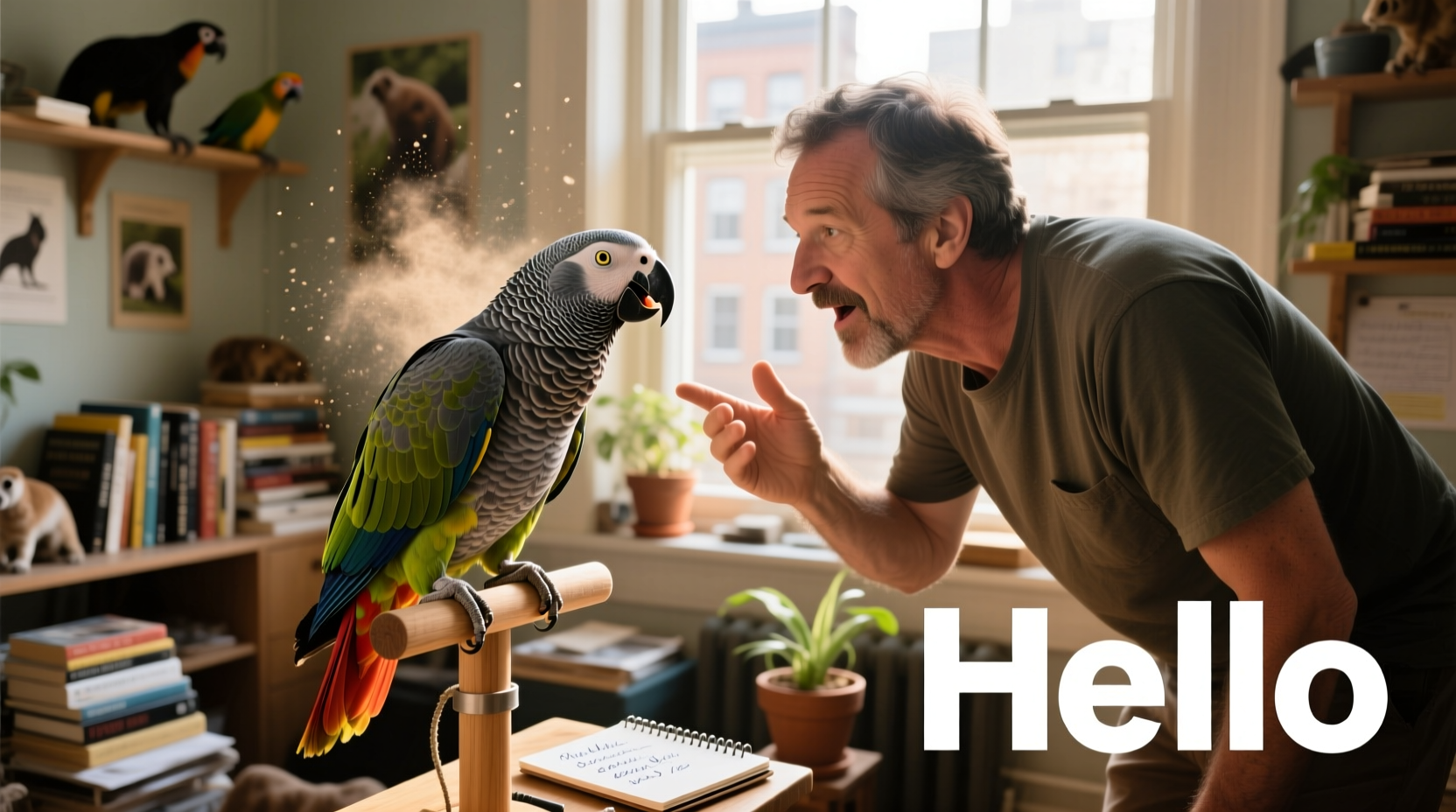
Unlike most animals, parrots possess a unique vocal anatomy and advanced cognitive abilities that allow them to imitate sounds with remarkable precision. They don’t have vocal cords; instead, they use a specialized organ called the *syrinx*, located at the base of the trachea, to produce complex tones. By adjusting muscles around the syrinx and modulating airflow, parrots can recreate a wide range of frequencies—including human speech.
But mimicry isn’t mere mechanical repetition. Research has shown that certain parrot species, particularly African Grey Parrots, demonstrate an understanding of context and meaning. The late Dr. Irene Pepperberg’s work with Alex, an African Grey, revealed that he could identify objects, colors, shapes, and even express desires such as “Wanna go back” when tired. This suggests that for some birds, speech can be both learned and semantically engaged.
“Parrots aren't just tape recorders. Some can associate words with meanings, intentions, and social cues.” — Dr. Irene Pepperberg, Avian Cognition Researcher
However, not all parrots reach this level of comprehension. Most pet parrots learn phrases through repetition and positive reinforcement without necessarily grasping grammar or syntax. Their motivation often stems from social bonding—they see speaking as a way to integrate into their human “flock.”
Species That Are More Likely to Talk
Not all parrots are created equal when it comes to vocal mimicry. Some species are naturally more inclined—and physically capable—of producing clear, intelligible speech. Here's a comparison of common talking parrots:
| Species | Talking Ability | Vocabulary Potential | Best For |
|---|---|---|---|
| African Grey Parrot | Exceptional | 500–1000+ words | Owners seeking deep interaction and cognitive engagement |
| Amazon Parrot | Very Good | 100–300 words | Families wanting expressive, musical talkers |
| Cockatoo | Moderate to Good | 20–100 words | Social owners who enjoy affectionate, loud companions |
| Budgerigar (Budgie) | Surprisingly Good | Up to 500 words (in rare cases) | Beginners with limited space and budget |
| Conure | Limited | 10–50 words | Those prioritizing playfulness over speech |
This variation underscores that genetics play a significant role. A well-socialized Budgie might outperform a neglected African Grey, but on average, species predisposition sets the upper limit of potential.
Training Techniques That Work
While natural ability matters, consistent training dramatically increases the odds of success. Birds raised in stimulating environments with regular human interaction are far more likely to develop speech than those kept in isolation. The following methods have been proven effective across decades of avian behavior research and practical ownership.
Start Early
Young parrots, especially those under one year old, are most receptive to learning new sounds. Just like human children during the critical language acquisition period, young birds absorb auditory input rapidly. Hand-fed babies handled daily from weaning onward tend to bond closely with humans and view speech as part of social communication.
Repetition With Context
Saying “Hello” every time you enter the room teaches the bird when to use the word. Pairing phrases with actions—like saying “Want a nut?” before offering food—helps create associative learning. Over time, the parrot may begin using the phrase independently when anticipating treats.
Positive Reinforcement
Reward attempts immediately with praise, head scratches, or small treats. Even mispronounced efforts should be acknowledged. If a parrot says “ba” instead of “ball,” respond enthusiastically: “Yes! Ball! That’s right!” Immediate feedback strengthens neural connections related to vocalization.
Limit Background Noise
Television, music, and household chatter can interfere with focused learning. Designate quiet times each day for one-on-one training sessions lasting 10–15 minutes. Short, frequent interactions are more effective than infrequent long ones.
Use Mirror Training (Cautiously)
Some owners report success placing a mirror near the cage, encouraging the bird to “talk” to its reflection. However, prolonged mirror exposure can lead to obsessive behaviors or aggression in mature birds. Use only during training periods and remove afterward.
A Real-Life Example: Milo the Rescue Budgie
Milo was a two-year-old budgerigar adopted from a shelter where he had lived in a crowded aviary with minimal human contact. His previous owner reported he “never talked.” When Sarah, his new caregiver, brought him home, Milo was silent for weeks.
Determined to build trust, she began sitting near his cage daily, reading aloud in a soft voice. She repeated simple phrases like “Good morning, Milo” and “Pretty bird” each time she offered fresh water. After three weeks, Milo whistled back—a sign of engagement. Encouraged, Sarah introduced a clicker-training method: clicking the moment Milo made any vocal attempt, followed by a millet spray treat.
By week eight, Milo said “Hi.” By month four, he had learned “Step up,” “Night-night,” and could sing snippets of nursery rhymes. Though not prolific, his progress demonstrated that even older, previously silent birds can learn speech with patience and structured training.
Milo’s case illustrates that while early exposure helps, it’s not the sole determinant. Environment, emotional safety, and consistent interaction matter just as much.
Personality and Luck: The Uncontrollable Factors
Despite optimal conditions, some parrots simply choose not to talk. This isn’t failure—it reflects individuality. Much like humans vary in musical aptitude or shyness, parrots exhibit distinct personalities.
- Outgoing birds often mimic readily, eager for attention.
- Shy or anxious individuals may withdraw, even in loving homes.
- Selective mimics might whistle songs perfectly but ignore spoken words entirely.
Gender also plays a debated role. In species like budgies, males are generally more vocal due to hormonal influences tied to mating displays. Female parrots can talk too, but statistically, males dominate in volume and frequency of speech.
Luck enters the picture in subtle ways: whether a bird imprints on human voices during development, whether it hears clear enunciation, or whether it encounters a trigger word that sparks interest. One owner might say “No!” sharply during a mishap, only to find their parrot repeating it endlessly—not because it was taught, but because it stood out emotionally.
Step-by-Step Guide to Teaching Your Parrot Its First Word
- Choose a quiet time—early morning or evening when the house is calm.
- Select a simple, high-frequency word like “hello,” “up,” or “night.”
- Say the word clearly and slowly, 5–10 times per session, multiple times daily.
- Pair it with a routine action—say “hello” when entering the room.
- Respond immediately to any approximation with praise or a treat.
- Keep sessions short (5–7 minutes) to maintain focus.
- Be patient—wait weeks, not days, for results.
- Add new words gradually once the first is consistently used.
Consistency is crucial. Everyone in the household should use the same pronunciation and reinforcement strategy. Mixed signals confuse the bird and slow learning.
Common Mistakes That Hinder Progress
- Expecting quick results: Parrots learn at their own pace. Pushing too hard causes stress.
- Using punishment: Scolding for screaming or bad words reinforces attention-seeking behavior.
- Overloading with stimuli: TVs, radios, and multiple languages make it hard to isolate target words.
- Neglecting social needs: A lonely parrot won’t care about pleasing you with speech.
- Ignoring health issues: Respiratory infections or malnutrition impair vocal ability.
“Speech is a social behavior. If a parrot doesn’t feel safe or bonded, it won’t invest energy in mimicking.” — Dr. Jane Peterson, Avian Veterinarian
Checklist: Is Your Parrot Ready to Learn?
Before beginning formal training, assess these factors:
- ✅ Has a clean bill of health from an avian vet
- ✅ Shows curiosity—watches you, tilts head, approaches cage front
- ✅ Responds to your presence (chirps, sings, fluffs feathers)
- ✅ Lives in a stable, low-stress environment
- ✅ Gets at least 2–4 hours of supervised out-of-cage time daily
- ✅ Eats a balanced diet supporting brain function (fresh veggies, pellets, limited seeds)
- ✅ Has consistent daily routines (feeding, lighting, interaction)
If most boxes are checked, your parrot is likely ready to begin. If not, address foundational needs first.
FAQ
Can older parrots learn to talk?
Yes, though it’s harder. Parrots over five years old may resist new sounds, especially if they’ve had little prior interaction. Success depends more on environment and motivation than age alone. Many rescue birds begin speaking months or even years after adoption.
Why does my parrot only say random words out of context?
This is normal. Parrots often store phrases like audio clips and retrieve them based on mood or sound similarity. A bird might scream “I love you!” during a tantrum simply because the phrase is emotionally charged. With training, you can shape usage by reinforcing appropriate timing.
Should I worry if my parrot doesn’t talk?
No. Vocal mimicry is just one form of intelligence. Many non-talking parrots excel in problem-solving, emotional awareness, and physical dexterity. A happy, healthy bird is more important than a talkative one.
Conclusion: Nurture Meets Nature
The ability of a parrot to talk sits at the intersection of biology, environment, and relationship. While species and individual personality set the stage, deliberate training and emotional connection determine the outcome. It’s neither pure luck nor guaranteed skill—it’s a blend of both.
You can’t force a parrot to speak, but you can create the ideal conditions for it to want to. Through patience, clarity, and consistent positive interaction, many birds will surprise you with their voices. And even if yours never says a word, its presence, intelligence, and companionship remain invaluable.




 浙公网安备
33010002000092号
浙公网安备
33010002000092号 浙B2-20120091-4
Comments
No comments yet. Why don't you start the discussion?