
LED string lights have become a staple in holiday décor, event design, and everyday ambiance. Their energy efficiency, long lifespan, and vibrant glow make them popular across homes and businesses. But when an LED string fails—whether due to frayed wires, dead sections, or complete burnout—the question arises: can you recycle broken LED strings, or do they belong strictly in the electronic waste (e-waste) category?
The short answer is yes—broken LED strings can and should be recycled—but not through your standard curbside bin. These items contain metals, plastics, and small electronic components that classify them as e-waste, requiring specialized handling to prevent environmental harm and recover valuable materials.
Understanding the right way to manage end-of-life LED lighting isn’t just about compliance; it’s a responsible step toward reducing landfill burden and supporting sustainable manufacturing cycles.
Why LED Strings Are Classified as E-Waste
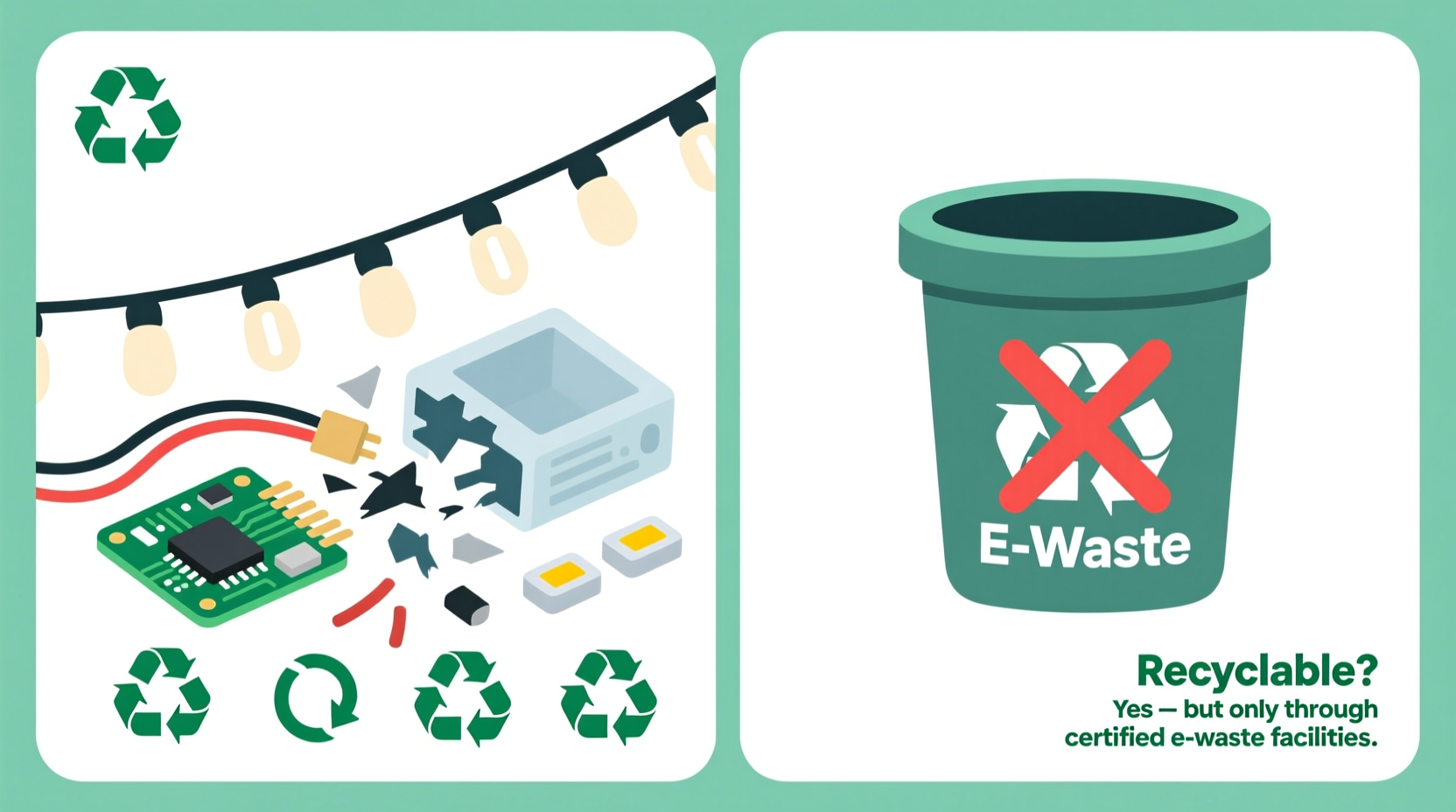
Despite their decorative appearance, LED light strings are complex electronic devices. Each strand contains:
- Light Emitting Diodes (LEDs): Semiconductor components made from gallium, arsenic, and other rare earth elements.
- Copper wiring: Used for electrical conduction, often coated in PVC insulation.
- Plastic housing: Protects bulbs and connectors, typically made from polyvinyl chloride (PVC) or polycarbonate.
- Power adapters and controllers: Especially in smart or programmable strings, which include circuit boards and microchips.
Because these materials don’t biodegrade and some—like heavy metals in older LEDs or flame retardants in plastic casings—can leach into soil and water if improperly discarded, regulatory bodies classify LED strings as electronic waste.
“Any device with circuitry, wiring, or semiconductor components falls under e-waste regulations—even if it’s used for decoration.” — Dr. Lena Torres, Environmental Engineer, U.S. EPA Regional Office
This classification means tossing LED strings in the trash is not only environmentally irresponsible but illegal in many jurisdictions, including states like California, Washington, and New York, where e-waste disposal laws are strictly enforced.
Can You Recycle Broken LED Strings? The Real Answer
Yes, broken LED strings can be recycled—but not via traditional recycling programs. Most municipal recycling facilities aren’t equipped to process mixed-material electronics like light strands. Instead, they require dedicated e-waste recycling streams that can safely separate and recover component materials.
The challenge lies in the composite nature of LED strings. Unlike aluminum cans or glass bottles, which are single-material items, LED lights combine metal, plastic, and electronic parts fused together. This makes mechanical separation difficult without industrial processing.
Specialized e-waste recyclers use techniques such as shredding, magnetic sorting, eddy current separation, and chemical extraction to reclaim copper, recover rare earth elements, and safely dispose of hazardous byproducts.
Where Standard Recycling Falls Short
Curbside recycling bins accept paper, cardboard, clean plastics (#1 and #2), and metal containers. However, tangled wires, composite plastics, and embedded electronics confuse sorting systems and can damage machinery. For this reason, even intact LED strings should never go in your blue bin.
Additionally, moisture exposure from rain or snow can degrade insulation and increase conductivity risks during transport and processing—another reason why municipalities reject such items.
How to Properly Recycle Broken LED Strings: A Step-by-Step Guide
Disposing of LED strings responsibly takes a few deliberate steps. Follow this timeline to ensure safe and compliant recycling:
- Unplug and inspect: Ensure the string is completely disconnected from any power source. Check for obvious hazards like exposed wires or melted connectors.
- Coil and secure: Wrap the strand neatly and tie it with a twist tie or reusable cord. Avoid using tape, which can leave residue and complicate downstream processing.
- Remove batteries (if applicable): Some battery-powered LED strings have removable AA or button-cell batteries. These must be recycled separately at designated drop-off points.
- Locate a certified e-waste recycler: Use online tools like Earth911.org, Call2Recycle.org, or your city’s sanitation department website to find local options.
- Drop off or schedule pickup: Many retailers (e.g., Best Buy, Staples) and municipalities offer free e-waste collection events or permanent drop-off bins.
- Verify recycling certification: Choose recyclers certified under R2 (Responsible Recycling) or e-Stewards standards to ensure ethical and environmentally sound practices.
Timing matters. Holiday lights, for example, are best collected post-season and stored until a community e-waste event occurs—often in January or February. Keeping a labeled box in your garage or utility closet simplifies seasonal cleanup.
Alternatives to Recycling: Repair and Repurposing Options
Before declaring an LED string “dead,” consider whether repair or reuse might extend its life. Not all failures mean total loss—many issues are localized.
Troubleshooting Common LED String Failures
Sometimes, only one bulb or fuse causes a full strand to go dark. Modern LED strings are wired in series, meaning a single point of failure interrupts the entire circuit. Here’s how to diagnose:
- Check the fuse compartment (usually near the plug). Replace with identical-rated fuses if blown.
- Inspect each bulb for looseness or darkening. Use a known-working replacement to test suspect sockets.
- Look for visible wire damage—especially at bends or connection points—and use waterproof electrical tape as a temporary fix (not recommended for long-term indoor safety).
If only a section is out, you may be able to cut out the faulty segment and reconnect the remaining functional portion using waterproof connectors—ideal for outdoor landscaping or patio lighting.
Creative Repurposing Ideas
Even non-functional LED strings can contribute beyond the trash can:
- Art projects: Extract colored lenses or diffusers for mosaics, jewelry, or school crafts.
- Garden markers: Cut apart and label individual bulbs with plant names; stake into soil using the wire frame.
- DIY nightlights: Salvage working sections and rewire into simple USB-powered lamps using basic soldering skills.
- Texture in sculptures: Artists incorporate old LED strands into mixed-media installations to reflect themes of technology and obsolescence.
While these uses delay final disposal, they emphasize the value of thinking creatively before surrendering to recycling—or worse, landfill.
E-Waste Recycling vs. Landfill: Environmental Impact Comparison
To understand the importance of proper disposal, consider the long-term consequences of different choices:
| Disposal Method | Environmental Impact | Recovery Potential | Legal Compliance |
|---|---|---|---|
| Curbside Trash | High – Leaches heavy metals, contributes to microplastics, fire risk in landfills | None | Often illegal in regulated areas |
| Curbside Recycling Bin | Moderate – Contaminates recycling stream, damages equipment | Negligible | Prohibited |
| E-Waste Drop-Off | Low – Safe material recovery, reduced mining demand | Up to 80% (copper, plastic, rare earths) | Fully compliant |
| Repurposed/Repaired | Minimal – Extends product life, reduces consumption | Deferred recovery, higher overall sustainability | Always acceptable |
Choosing certified e-waste recycling over landfill reduces greenhouse gas emissions equivalent to powering a home for several days per kilogram of electronics processed. It also prevents toxic substances like lead and brominated flame retardants from entering ecosystems.
Mini Case Study: A Community’s Shift Toward Responsible Disposal
In Boulder, Colorado, city officials noticed a spike in holiday-related litter after New Year’s Day—discarded LED strings tangled in trees, parks, and storm drains. In response, they launched the “Lights Out, Recycle Right” campaign in 2021.
The initiative partnered with local libraries and hardware stores to install e-waste kiosks during December and January. Residents could drop off old lights and receive a 10% discount coupon for new Energy Star-certified replacements.
Within three years, the program diverted over 7.5 tons of LED strings from landfills. More importantly, follow-up surveys showed a 63% increase in awareness about e-waste classification among participants.
“We didn’t realize Christmas lights were considered electronics,” said resident Maria Chen. “Now I keep a bin in my basement just for old cables and lights.”
Boulder’s success demonstrates that education, accessibility, and incentives can shift behavior—even around seemingly minor waste streams.
FAQ: Common Questions About Recycling Broken LED Strings
Can I throw LED strings in the regular trash if they’re broken?
No. LED strings contain electronic components and should never be disposed of in household trash. Doing so violates e-waste regulations in many regions and poses environmental risks.
Are there mail-in recycling programs for LED lights?
Yes. Companies like TerraCycle offer specialty kits for holiday lighting and small electronics. While not always free, these services provide a convenient option for rural residents without local drop-off access.
Do LED strings have any value when recycled?
Individually, no—but collectively, yes. Recyclers extract copper from wiring (worth ~$3–4 per pound) and recover trace rare earth elements used in phosphor coatings. Large-scale collection improves economic viability.
Checklist: How to Responsibly Handle Broken LED Strings
- ☑ Unplug and inspect the LED string for damage
- ☑ Test fuses and replace if needed
- ☑ Attempt repair for partial failures (e.g., one dark section)
- ☑ Remove batteries if present and recycle separately
- ☑ Coil and secure the strand for storage or transport
- ☑ Locate a certified e-waste recycler or drop-off site
- ☑ Drop off or schedule pickup through official channels
- ☑ Consider repurposing salvaged parts for art or DIY projects
Conclusion: Turning Off the Lights Doesn’t Mean Turning Off Responsibility
Broken LED strings may no longer illuminate your space, but they still carry a responsibility—one that extends beyond convenience to environmental stewardship. Treating them as e-waste rather than ordinary trash ensures safer communities, cleaner recycling systems, and smarter resource use.
Recycling isn’t always easy, but every strand you divert from the landfill contributes to a larger cycle of sustainability. Whether through certified drop-offs, creative reuse, or advocating for better policies in your area, your actions matter.




 浙公网安备
33010002000092号
浙公网安备
33010002000092号 浙B2-20120091-4
Comments
No comments yet. Why don't you start the discussion?