
After brewing your morning coffee, a damp pile of used grounds often ends up in the compost bin or trash. But if you're someone who enjoys experimenting in the kitchen—especially with bold flavors—you might have wondered: can these leftover grounds still play a role in baking? Are they completely spent, or is there residual potential locked inside that dark, earthy sludge?
The answer isn’t a simple yes or no. While fresh coffee grounds deliver the full aromatic punch needed for brewing, used ones aren't entirely devoid of value. In fact, when applied thoughtfully, spent coffee grounds can add depth, moisture, and complexity to certain baked goods. However, there are important caveats regarding flavor strength, texture, food safety, and proper handling.
This article explores whether reused coffee grounds are viable in baking, how they compare to fresh ones, and what precautions to take. Whether you’re looking to reduce waste or experiment with natural flavoring agents, understanding the science and culinary logic behind this practice is essential.
The Science Behind Spent Coffee Grounds
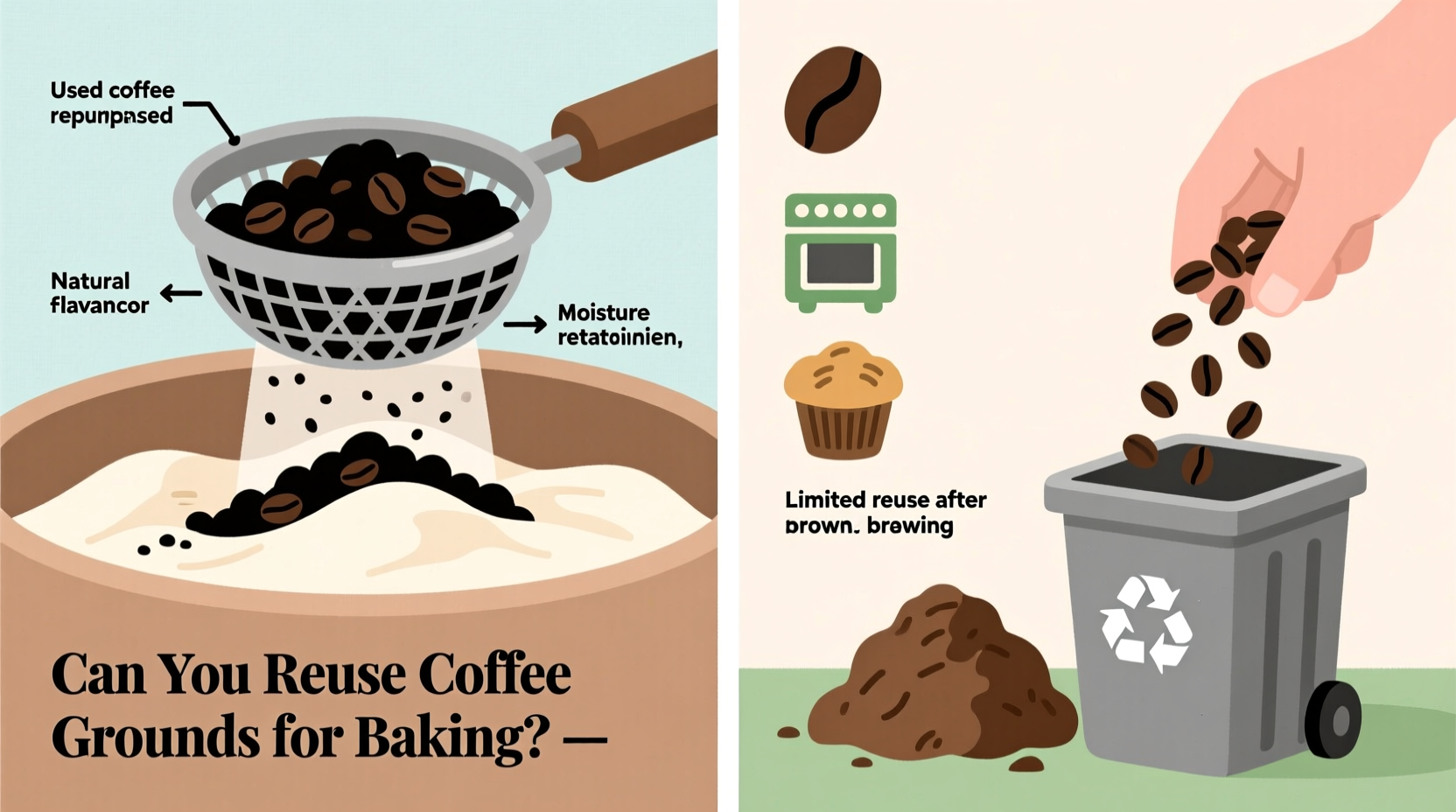
When coffee is brewed—whether by drip, French press, or espresso machine—water extracts soluble compounds from the ground beans. These include caffeine, acids, sugars, lipids, and hundreds of volatile aroma molecules responsible for coffee’s complex profile. After brewing, roughly 70–80% of the original solids remain in the used grounds, but most of the desirable flavor components have been leached out.
According to Dr. Christopher H. Hendon, computational chemist and co-author of *Water for Coffee*, “Spent coffee grounds retain some structural integrity and trace compounds, but they’ve lost the majority of their aromatic volatiles. What remains is more fibrous and less flavorful.”
That doesn’t mean they’re inert. Used grounds still contain small amounts of melanoidins (browning compounds formed during roasting), residual oils, and bitter alkaloids. These can contribute subtle notes in applications where strong coffee flavor isn’t the primary goal, but background richness is welcome.
“Used coffee grounds aren’t ‘dead’—they’re just retired from brewing. They still carry character, especially in moist, dense bakes like brownies or spice cakes.” — Chef Lila Nguyen, Sustainable Pastry Specialist
Flavor Impact: Fresh vs. Reused Grounds in Baking
Fresh coffee grounds are potent. When incorporated into baked goods—typically as instant espresso powder or finely ground beans—they provide an intense, roasted depth that enhances chocolate-based desserts, cookies, and even savory rubs. Their high concentration of flavor compounds means even a teaspoon can elevate a recipe.
Reused grounds, on the other hand, offer a muted version of that experience. The dominant notes shift from bright acidity and floral top notes to earthy, smoky undertones. This makes them better suited for recipes where subtlety matters more than punch.
Consider this comparison:
| Characteristic | Fresh Coffee Grounds | Used (Spent) Coffee Grounds |
|---|---|---|
| Flavor Intensity | Strong, aromatic, vibrant | Mild, earthy, subdued |
| Caffeine Content | High (~60–80mg per tablespoon) | Low (~10–20mg per tablespoon) |
| Moisture Level | Dry and free-flowing | Damp, clumpy, requires drying |
| Baking Suitability | Ideal for flavor enhancement | Limited; best in dense, moist bakes |
| Shelf Life (Stored) | 6–12 months (dry, sealed) | 1–2 weeks unless dried and preserved |
As the table shows, used grounds lack the dry consistency and robust flavor needed for most standard baking uses. However, they aren’t without utility—especially when properly processed.
How to Safely Prepare Used Coffee Grounds for Baking
If you’re determined to give spent grounds a second life in the kitchen, preparation is critical. Wet, improperly stored grounds can harbor bacteria and develop musty odors within hours. Here’s a reliable method to make them safe and usable:
- Collect Immediately: Remove grounds from the brewer right after use. Don’t let them sit in a damp filter or carafe.
- Spread Thinly: Place the wet grounds on a parchment-lined baking sheet in a single layer.
- Oven-Dry: Bake at 200°F (95°C) for 2–3 hours, stirring occasionally, until completely dry and crumbly.
- Grind (Optional): For finer integration into batter, pulse in a clean coffee grinder or spice mill.
- Store Properly: Keep in an airtight container in a cool, dark place. Use within 2–3 weeks.
Drying eliminates moisture that encourages microbial growth and stabilizes the material for later use. It also concentrates the remaining compounds slightly, making the flavor more detectable in finished products.
When Reused Grounds Work Best in Recipes
Not all baked goods benefit from used coffee grounds. Their low flavor yield means they won’t enhance a delicate vanilla cake or shortbread. Instead, target recipes where:
- The base is already rich and moist (e.g., brownies, chocolate cake).
- Complementary flavors like cocoa, cinnamon, or nuts are present.
- A rustic, textured appearance is acceptable (fine particles blend better).
In these contexts, dried spent grounds can subtly amplify earthiness without overpowering. For example, adding one tablespoon of dried used grounds to a double chocolate brownie mix can deepen the roast notes, mimicking the effect of a small amount of unsweetened cocoa with a smoky edge.
Real Kitchen Test: Brownies with Reused Coffee Grounds
Sarah Kim, a home baker from Portland, tested the viability of spent grounds in her weekly baking routine. She prepared two batches of fudgy chocolate brownies—one with fresh espresso powder and one with oven-dried used grounds, both in equal measure (1 tbsp).
The results were telling. The espresso-enhanced batch had a bright, sharp coffee lift that cut through the sweetness. The used-ground version lacked that vibrancy but offered a smoother, almost molasses-like depth. Tasters described it as “more mellow” and “less acidic,” with a faint bitterness that balanced the sugar well.
“It wasn’t the same,” Sarah noted, “but it wasn’t bad. If I didn’t know, I might’ve thought it was just a different roast. And I felt good knowing I wasn’t wasting something.”
This mini case study illustrates a key point: reused grounds don’t replicate fresh coffee flavor, but they can contribute a unique nuance in the right context—especially when sustainability is a priority.
Common Pitfalls and What to Avoid
While reusing coffee grounds may seem like a zero-cost ingredient boost, several risks come with improper use:
- Mold Growth: Wet grounds left unattended become breeding grounds for fungi. Always dry them promptly.
- Off-Flavors: Stale or sour-smelling grounds will ruin a batch. Trust your nose—if it smells musty, discard it.
- Texture Issues: Undried or coarse grounds can create gritty patches in smooth batters like custards or mousses.
- Overestimating Flavor Contribution: Using too much in hopes of boosting taste can result in unpleasant bitterness.
To avoid disappointment, start small. Use no more than 1–2 teaspoons of dried, used grounds per cup of flour in dense bakes. Adjust based on results and personal preference.
“Think of spent coffee grounds as a supporting actor, not the lead. They add texture and background tone, but shouldn’t dominate.” — Marcus Reed, Culinary Instructor at Pacific Baking Academy
Alternative Uses for Used Coffee Grounds (Beyond Baking)
If baking with used grounds feels too uncertain, consider other practical applications that make better use of their properties:
- Natural Exfoliant: Mixed with coconut oil or honey, dried grounds make an effective skin scrub.
- Garden Fertilizer: Rich in nitrogen, they improve soil structure (best composted first).
- Odor Absorber: Place dried grounds in a bowl in the fridge or freezer to neutralize smells.
- Meat Tenderizer: The mild abrasiveness helps break down fibers in marinades.
- DIY Dye: Simmered in water, they produce a light brown stain for paper or fabric.
These alternatives often provide more reliable outcomes than culinary reuse, especially when flavor precision matters.
Frequently Asked Questions
Can I use coffee grounds from flavored coffee in baking?
It’s possible, but proceed with caution. Flavored coffees often contain artificial oils or sweeteners that may not bake well and could leave undesirable residues. Stick to plain, unflavored used grounds for food applications.
Are used coffee grounds safe to eat after drying?
Yes, if handled properly. As long as the grounds are dried quickly, stored correctly, and show no signs of spoilage, they are safe to consume in small quantities. However, they offer minimal nutritional value and should be treated more as a flavor adjunct than an ingredient.
Can I substitute used coffee grounds for cocoa powder?
No. While both are dark and bitter, they are chemically distinct. Cocoa provides fat, sugar-reactive compounds, and rich chocolate flavor. Used coffee grounds lack fat and sweetness and will not mimic cocoa’s role in structure or taste. They can complement it, but not replace it.
Checklist: How to Reuse Coffee Grounds in Baking (Safely)
- ✅ Collect grounds immediately after brewing.
- ✅ Spread on a baking sheet and dry in a low oven (200°F) for 2–3 hours.
- ✅ Check for complete dryness—no moisture or clumping.
- ✅ Grind finer if desired for smoother texture.
- ✅ Store in an airtight container away from heat and light.
- ✅ Use within 3 weeks for best quality.
- ✅ Start with small amounts (1 tsp per cup of flour) in dense bakes.
- ✅ Discard if moldy, sour, or off-smelling.
Final Verdict: Are Used Coffee Grounds Worth It in Baking?
Reusing coffee grounds for baking is not a shortcut to rich coffee flavor, nor is it a direct substitute for fresh grounds or espresso powder. They are past their prime in terms of aromatic potency and solubility. However, they are not entirely without merit.
With careful preparation and realistic expectations, dried spent grounds can add a whisper of roast, a touch of texture, and a sense of resourcefulness to select recipes. They shine best in moist, dense confections where subtlety is valued over intensity. More importantly, their reuse aligns with sustainable kitchen practices—turning waste into a minor asset.
If your goal is maximum flavor, stick to fresh coffee ingredients. But if you’re exploring low-waste cooking and enjoy nuanced experimentation, giving used grounds a thoughtful second act is both feasible and rewarding.




 浙公网安备
33010002000092号
浙公网安备
33010002000092号 浙B2-20120091-4
Comments
No comments yet. Why don't you start the discussion?