
In the ongoing effort to maintain respiratory health and prevent the spread of airborne illnesses, face masks remain a key protective tool. While early in the pandemic, mask use was often limited to medical settings, today they are part of everyday preparedness. As people seek cost-effective and environmentally responsible solutions, the question arises: can you reuse face masks safely? The answer depends on the type of mask, how it’s used, and the care it receives between uses. This guide breaks down best practices for both cloth and disposable masks, offering clear, science-backed recommendations for safe reuse.
Understanding Mask Types and Reusability
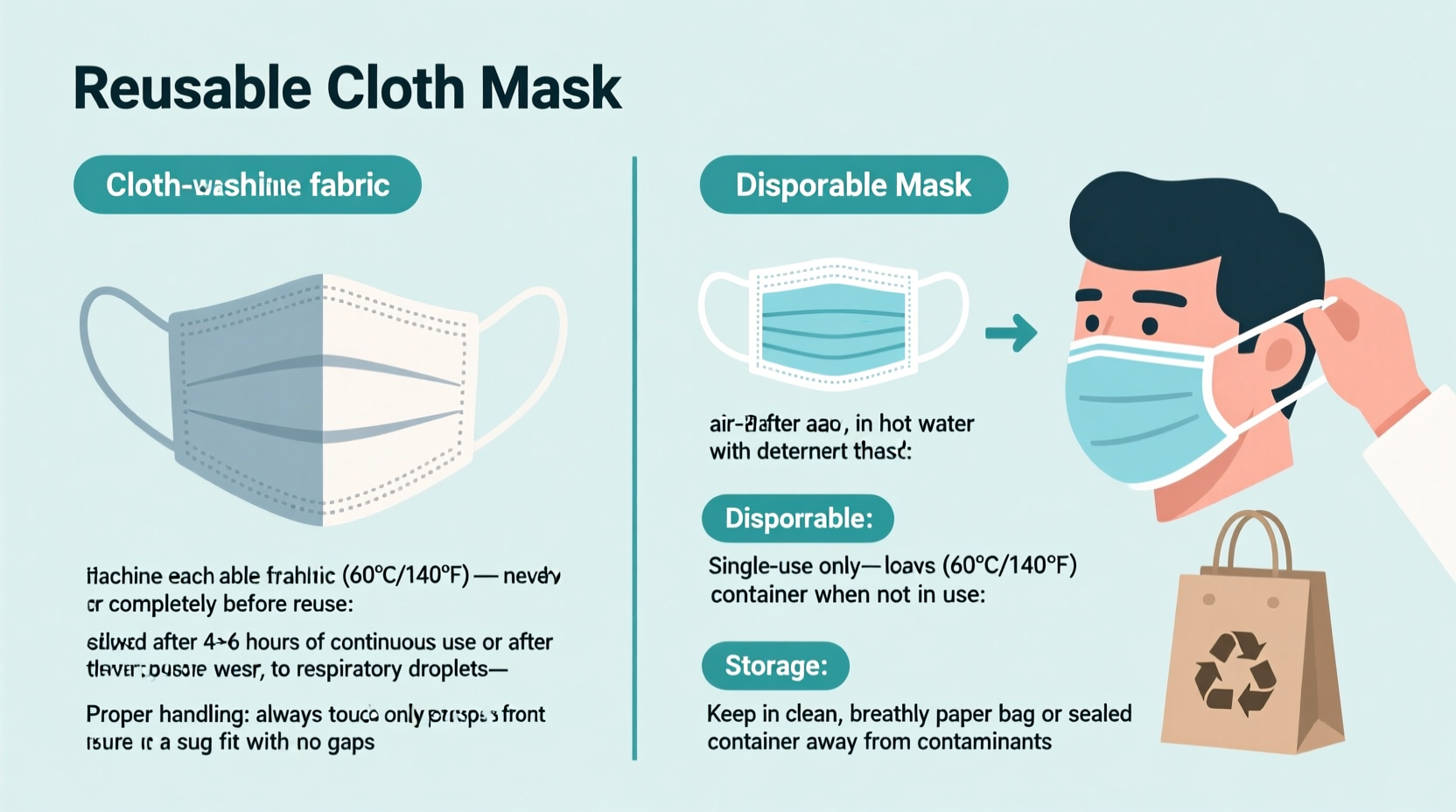
Not all face masks are created equal. Their materials, design, and intended use determine whether—and how often—they can be reused. Broadly, masks fall into two categories: reusable (typically cloth) and single-use (disposable). Understanding these differences is essential before attempting any form of reuse.
- Cloth masks: Designed for multiple uses, made from washable fabrics like cotton or polyester blends. They should have at least two layers and a snug fit.
- Disposable surgical masks: Intended for one-time use in clinical environments. Made from non-woven polypropylene, they lose effectiveness when damp or damaged.
- N95 respirators: High-filtration masks typically reserved for healthcare workers. Some models are labeled as reusable; others are strictly single-use.
The U.S. Centers for Disease Control and Prevention (CDC) states that cloth masks can be safely reused if cleaned regularly, while disposable masks should ideally not be reused unless under exceptional circumstances such as supply shortages.
Reusing Cloth Masks: Best Practices
Cloth masks are the most sustainable option when used correctly. However, their effectiveness hinges on proper maintenance. A dirty or improperly stored mask can harbor bacteria and reduce filtration efficiency.
Washing Guidelines for Cloth Masks
Regular washing is non-negotiable. The CDC recommends laundering cloth masks after every use, especially after prolonged wear or exposure to high-risk environments.
- Remove the mask using clean hands, touching only the ear loops or ties.
- Place directly into a laundry bag or bin to avoid contaminating surfaces.
- Wash in hot water (at least 60°C / 140°F) with regular detergent.
- Air dry completely in direct sunlight if possible, or use a dryer on high heat.
- Inspect for damage before storing or reusing.
Machine washing is preferred over hand washing due to higher agitation and temperature, which more effectively remove pathogens. For delicate fabrics, use a mesh laundry bag to prevent deformation.
Storage Between Uses
If immediate washing isn’t possible, store the used mask in a clean paper bag or breathable container labeled with the date. Avoid plastic bags, which trap moisture and promote microbial growth.
| Maintenance Step | Recommended Frequency | Notes |
|---|---|---|
| Washing | After every use | Use hot water and detergent |
| Filter Replacement (if applicable) | Every 1–2 days or after wetting | Inserts like PM2.5 filters are not washable |
| Inspection for Damage | Before each use | Check seams, straps, and nose wire |
| Rotation | Maintain 3–5 masks | Allows time for drying and reduces daily wear |
Can You Reuse Disposable Masks? Limited Exceptions
Disposable surgical masks and N95 respirators are engineered for single use. Reusing them increases the risk of contamination and diminishes filtration performance. However, during public health emergencies or personal shortages, limited reuse may be considered—with strict precautions.
When Reuse Might Be Acceptable
The World Health Organization (WHO) acknowledges that in resource-limited settings, healthcare workers may extend the use of certain masks under controlled conditions. For the general public, occasional reuse of a disposable mask may be acceptable if:
- The mask remains dry and intact.
- It hasn’t been touched frequently or worn in high-exposure areas (e.g., hospitals).
- No visible soiling or deformation is present.
- Only one person uses it—never shared.
“Extended use is preferred over reuse. If reuse is unavoidable, limit it to no more than five cycles with proper storage.” — Dr. Linsey Marr, Environmental Engineer and Airborne Virus Expert
Safe Handling and Storage for Disposable Masks
If you must reuse a disposable mask, follow this protocol:
- After removal, place the mask in a clean, breathable paper bag labeled with your name and date.
- Store in a dry, well-ventilated area away from humidity.
- Allow at least 4 days between uses to let potential pathogens degrade.
- Never wipe or spray with disinfectants—this damages the electrostatic filter layer.
- Discard immediately if wet, bent, or visibly dirty.
UV light and heat treatments have been studied for decontaminating N95s in clinical settings, but these methods are not recommended for home use due to risks of material degradation.
Step-by-Step Guide to Safe Mask Reuse
Whether using cloth or occasionally reusing disposables, follow this timeline to ensure safety and longevity:
- Wear: Put on the mask with clean hands, ensuring full coverage of nose and mouth. Avoid adjusting once in place.
- Remove: Untie or lift ear loops without touching the front. Immediately place in designated storage or laundry.
- Assess: Check for moisture, stains, stretched straps, or structural damage.
- Clean (cloth only): Wash thoroughly and dry completely before next use.
- Store (disposable): Place in a ventilated container for at least 72 hours before considering reuse.
- Reuse: Only if all criteria are met. Never exceed five reuse cycles for disposable masks.
- Retire: Discard when performance declines or hygiene cannot be assured.
Mini Case Study: Community Clinic During Supply Shortage
In early 2021, a rural health clinic in Oregon faced a critical shortage of N95 respirators during a surge in respiratory illness cases. With limited access to new supplies, staff implemented a reuse protocol based on CDC interim guidance. Each clinician was assigned a labeled N95, which they wore for multiple non-aerosol-generating procedures in a single shift. Between shifts, masks were placed in individual paper bags and stored in a dedicated, low-traffic drying room for 96 hours. Staff rotated through four masks weekly, allowing ample time for decontamination via natural pathogen decay. No increase in staff infections was observed during the three-week period, and the protocol was discontinued once new shipments arrived. This example highlights that, under strict controls, limited reuse can be a viable stopgap—but not a long-term strategy.
Common Myths About Mask Reuse
Misinformation continues to circulate about cleaning and reusing masks. Here are some common myths debunked:
- Myth: Spraying masks with alcohol makes them safer.
Fact: Alcohol and bleach can degrade the fibers and electrostatic charge in surgical and N95 masks, reducing filtration. - Myth: Microwaving a mask sanitizes it.
Fact: This can melt synthetic materials and create fire hazards, especially with metal nose strips. - Myth: Washing disposable masks restores their function.
Fact: Water disrupts the static charge essential for particle capture. Once washed, disposable masks are ineffective.
FAQ: Your Questions Answered
Can I wash a disposable mask if it gets dirty?
No. Washing destroys the internal filtration layer of disposable masks. Once soiled or moistened, they should be discarded. Even gentle rinsing compromises their integrity.
How many times can I reuse a cloth mask?
There’s no fixed number—it depends on fabric quality and care. A well-maintained cotton mask can last 30+ washes. Replace it if it becomes thin, stretched, or fails to hold its shape.
Is it safe to reuse an N95 at home?
For most people, routine reuse of N95s isn’t necessary. If you choose to reuse one, follow the same storage rules as healthcare workers: rotate between multiple units, store in a paper bag, and avoid touching the inside. Never attempt to clean it at home.
Checklist: Safe Mask Reuse at a Glance
- ✅ Wash cloth masks after every use with hot water and detergent.
- ✅ Inspect all masks for damage before wearing.
- ✅ Store used disposable masks in breathable containers for 4+ days if reuse is unavoidable.
- ✅ Never share masks between users.
- ✅ Replace masks that are damp, soiled, or difficult to breathe through.
- ✅ Keep at least three cloth masks for rotation.
- ❌ Do not use disinfectant sprays, UV lamps, or microwaves to “clean” disposable masks.
Conclusion: Prioritize Safety Without Sacrificing Sustainability
Reusing face masks can be done safely—but only when guided by evidence-based practices. Cloth masks are designed for repeated use and should be integrated into a regular laundry routine. Disposable masks, while convenient, are not built to withstand cleaning or extended wear. In rare cases where reuse is unavoidable, strict handling and storage protocols must be followed to minimize risk.
The goal is not just convenience, but consistent protection. By choosing the right mask type, maintaining hygiene, and knowing when to retire old ones, you protect yourself and those around you. Respiratory health is a shared responsibility. Make informed choices, stay updated on public health guidance, and treat your mask with the care it deserves.




 浙公网安备
33010002000092号
浙公网安备
33010002000092号 浙B2-20120091-4
Comments
No comments yet. Why don't you start the discussion?