
Many pet owners assume that once a dog reaches their golden years, learning slows or stops altogether. The old saying \"You can't teach an old dog new tricks\" is deeply ingrained in popular culture—but it's also profoundly inaccurate. Senior dogs are not only capable of learning new behaviors; they often thrive when given mental stimulation and structured interaction. With the right approach, training an older dog can strengthen your bond, improve their quality of life, and address behavioral issues that may have developed over time.
The key lies in understanding the unique needs of aging dogs: reduced energy, possible hearing or vision loss, joint pain, and changes in cognitive function. When these factors are respected and accommodated, training becomes not just possible, but deeply rewarding—for both dog and owner.
Why Training Senior Dogs Matters
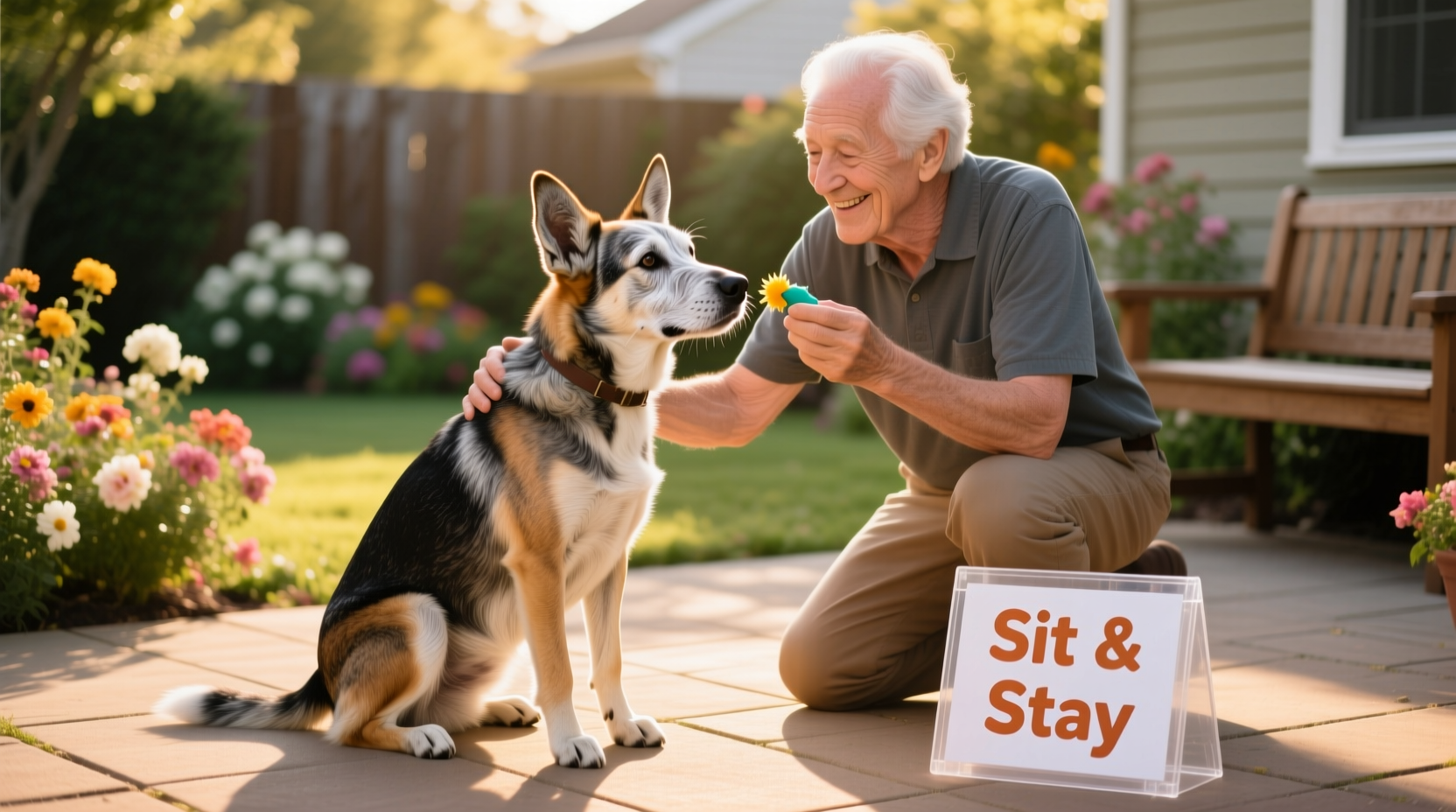
Training isn’t just about obedience—it’s a form of mental exercise. Just as physical activity keeps muscles strong, mental engagement helps maintain cognitive function in aging dogs. Without stimulation, senior dogs can become withdrawn, anxious, or develop destructive habits out of boredom or confusion.
Moreover, reinforcing basic commands like “sit,” “stay,” or “come” ensures safety, especially if mobility declines. Teaching adaptive behaviors—such as using ramps instead of stairs or responding to hand signals when hearing fades—can greatly enhance comfort and independence.
“Dogs of any age benefit from training. For seniors, it’s not just about learning—it’s about staying connected, confident, and mentally sharp.” — Dr. Karen Becker, Veterinary Advocate for Holistic Pet Care
Adapting Methods for Older Learners
Effective training for senior dogs hinges on patience, consistency, and method adjustments tailored to their physical and emotional state. Unlike puppies, older dogs bring a lifetime of experiences—some positive, some not. Their ability to learn is often influenced by past reinforcement patterns, health conditions, and temperament.
The most successful techniques rely on positive reinforcement: rewarding desired behavior with treats, praise, or affection. Harsh corrections or repetitive drills increase stress and reduce receptivity. Instead, short, frequent sessions (5–10 minutes) work best. These minimize fatigue and keep the dog engaged without overwhelming them.
Use High-Value Rewards
As dogs age, their motivation may wane. To counter this, use high-value treats such as small pieces of cooked chicken, cheese, or commercial soft treats. These create stronger associations and make learning more appealing. Pair food rewards with verbal praise and gentle petting to reinforce the connection between action and approval.
Account for Sensory Changes
Hearing and vision loss are common in senior dogs. If your dog doesn’t respond to verbal cues, try switching to visual signals. A raised hand for “stop,” a flat palm for “sit,” or a finger point for “look” can be effective alternatives. Consistency in signal use helps the dog build new associations quickly.
Step-by-Step Guide to Training a Senior Dog
Follow this practical timeline to introduce new tricks or refresh old ones in a way that respects your dog’s pace and capabilities.
- Assess Health First: Schedule a vet check-up to rule out pain, arthritis, or cognitive dysfunction that could interfere with learning.
- Choose One Simple Trick: Start with something achievable, like “paw,” “spin,” or “lie down.” Avoid complex sequences.
- Break It Down: Use shaping—rewarding small steps toward the final behavior. For example, click or treat when your dog lifts their paw slightly, even if they don’t offer it fully.
- Train in Quiet Environment: Minimize distractions. Use a familiar room with few noises or interruptions.
- Practice Daily: 5–10 minute sessions once or twice a day are ideal. Repetition builds confidence.
- Add the Cue Word: Only introduce the verbal command once the dog consistently performs the action.
- Phase Out Treats Gradually: Shift from continuous to intermittent reinforcement after mastery to maintain the behavior long-term.
This gradual process reduces pressure and allows the dog to succeed at each stage. Rushing leads to confusion and disengagement.
Common Challenges and How to Overcome Them
Even with the best intentions, setbacks occur. Recognizing and addressing common obstacles ensures continued progress without frustration.
| Challenge | Possible Cause | Solution |
|---|---|---|
| Dog seems uninterested | Low motivation, tiredness, or poor treat value | Use higher-value rewards; train during peak alertness (e.g., morning); shorten sessions |
| Doesn’t respond to commands | Hearing loss, distraction, or unclear cues | Switch to hand signals; ensure clarity and consistency; reduce environmental noise |
| Stops mid-session | Pain, fatigue, or cognitive decline | End session immediately; consult vet; consider shorter, more frequent practices |
| Performs trick inconsistently | Incomplete learning or lack of generalization | Reinforce basics; practice in different locations gradually |
Real Example: Training Max the 10-Year-Old Labrador
Max, a 10-year-old Labrador Retriever, had never learned to “shake” despite being otherwise well-behaved. His owner, Sarah, assumed he was too old to pick up new tricks. After reading about cognitive enrichment for senior dogs, she decided to try.
She began by luring Max’s paw with a treat held just above his front leg. At first, he only shifted his weight. But after three days of two-minute sessions, he lifted his paw slightly. Sarah marked the moment with a clicker and rewarded him instantly. Within ten days, Max was confidently offering his paw on cue. The real surprise came when Sarah noticed Max seemed more alert overall—not just during training, but during walks and mealtimes.
What started as a simple trick became a gateway to improved engagement and mental vitality. Max wasn’t learning in spite of his age—he was thriving because of the opportunity to learn.
Essential Do’s and Don’ts for Training Senior Dogs
- Do keep sessions short and positive.
- Do warm up with known commands to build confidence.
- Do use soft surfaces to protect joints during movement-based tricks.
- Do celebrate small wins—progress is cumulative.
- Don’t repeat commands multiple times; it teaches the dog to ignore the first cue.
- Don’t train when the dog is tired, in pain, or distracted.
- Don’t compare your senior dog’s progress to younger ones.
- Don’t punish mistakes—confusion is not defiance.
Checklist: Preparing to Train Your Senior Dog
Before starting any training program, run through this checklist to set both of you up for success:
- ✅ Vet clearance confirming no underlying pain or illness
- ✅ High-value, bite-sized treats ready
- ✅ Clicker or marker word (like “yes”) chosen and practiced
- ✅ Quiet, familiar training space free of distractions
- ✅ Realistic goal selected (e.g., “touch,” “roll over,” “go to mat”)
- ✅ Calendar scheduled for daily 5–10 minute sessions
- ✅ Patience mindset prepared—progress may be slow but meaningful
Frequently Asked Questions
Can an older dog with arthritis still learn tricks?
Yes, absolutely. Focus on low-impact behaviors that don’t require jumping or rapid movement. Tricks like “touch” (nose to hand), “look,” or “back up” can be performed while standing or lying down. Always consult your vet before introducing physical activities.
My senior dog seems confused during training. Is this normal?
Some hesitation is normal, especially if the dog hasn’t been trained recently. However, persistent confusion, staring into space, or disorientation could indicate Canine Cognitive Dysfunction (CCD). If you observe signs like house soiling, altered sleep cycles, or forgetting familiar commands, speak with your veterinarian.
How long does it take to teach a senior dog a new trick?
There’s no fixed timeline. Some dogs grasp a simple trick in a week; others may take several weeks. The focus should be on consistency and enjoyment, not speed. Success isn’t measured in days, but in moments of connection and mutual understanding.
Conclusion: Age Is Not a Barrier to Learning
The belief that senior dogs can’t learn new tricks is a myth that limits both pets and their people. With empathy, adaptability, and kindness, older dogs can acquire new skills, relearn forgotten ones, and enjoy the mental stimulation that training provides. More than just behavioral outcomes, these sessions deepen trust, reinforce bonds, and affirm that your dog is still seen, valued, and loved at every stage of life.
Training a senior dog isn’t about defying age—it’s about honoring it. By meeting them where they are, celebrating their pace, and respecting their history, you create a space where learning remains joyful, not stressful. Whether it’s a simple “sit” or an elegant “spin,” every trick is a testament to resilience, relationship, and the enduring capacity to grow.




 浙公网安备
33010002000092号
浙公网安备
33010002000092号 浙B2-20120091-4
Comments
No comments yet. Why don't you start the discussion?