
Many cat owners assume that once a cat reaches a certain age, their behaviors are set in stone. This belief often leads people to accept furniture damage as inevitable when living with a senior cat. However, cats of any age—including those 7 years and older—can learn new habits with patience, consistency, and the right approach. Training an older cat to use a scratching post isn’t just possible; it’s entirely achievable using humane, stress-free techniques grounded in feline behavior science.
Scratching is a natural, essential behavior for cats. It helps them shed old claw layers, stretch muscles, mark territory through scent glands in their paws, and relieve stress. When this instinct isn’t properly directed, cats turn to carpets, sofas, and door frames. Rather than punishing or discouraging the act itself, the goal should be redirecting it to appropriate surfaces. For older cats, who may have arthritic joints or reduced mobility, the process requires special consideration—but success is well within reach.
Understanding Why Older Cats Resist Change
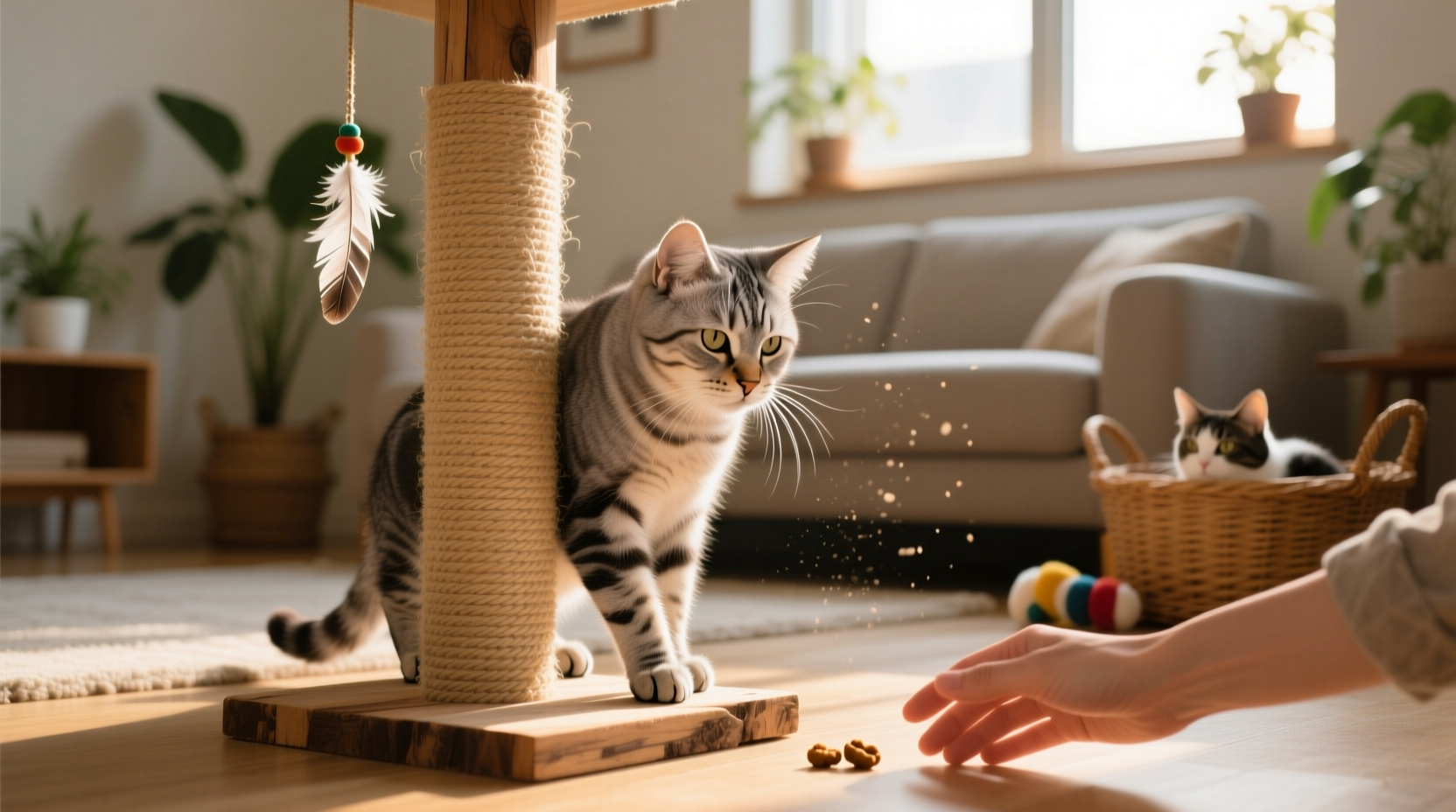
Cats are creatures of habit. As they age, their routines become more deeply ingrained, making them less likely to adapt quickly to new objects or expectations. An older cat may have been scratching the same armchair for years, and suddenly introducing a scratching post nearby might not be enough to shift their preference.
Additionally, physical discomfort plays a role. Arthritis, decreased flexibility, or vision loss can make climbing or stretching difficult. A poorly placed or unstable post may seem intimidating or inaccessible. Emotional factors also matter: stress from environmental changes, new pets, or even subtle shifts in routine can cause a cat to cling more tightly to familiar behaviors—even destructive ones.
The key is not to force change but to make the desired behavior—the use of a scratching post—as appealing and effortless as possible.
“Older cats aren’t untrainable—they’re just more selective about what’s worth changing. Meet them where they are, and the results will follow.” — Dr. Lena Patel, Feline Behavior Specialist
Step-by-Step Guide to Gentle Training
Training an older cat requires a structured yet flexible plan. The following timeline outlines a realistic 4–6 week process designed to minimize stress and maximize cooperation.
- Week 1: Observation & Assessment
Track your cat’s current scratching patterns. Note the locations, times of day, duration, and body posture during scratching. Is it vertical (upright) or horizontal (carpet)? How high do they stretch? This data informs your choice of post type and placement. - Week 2: Strategic Post Placement
Place one or more scratching posts directly beside or in front of the furniture they currently scratch. Ensure the post matches their preferred orientation (vertical/horizontal) and material (sisal, cardboard, carpet). Stability is crucial—an older cat won’t trust a wobbly structure. - Week 3: Make It Irresistible
Sprinkle catnip on the post, attach dangling toys, or gently guide your cat’s paws over the surface during calm moments. Use positive vocal tones and offer treats immediately after contact with the post—even accidental brushes count. - Week 4: Encourage Through Routine
Engage your cat near the post daily. Stroke their back toward the base, encouraging a stretch. Reward any interaction generously. Avoid forcing or placing them on the post. - Weeks 5–6: Phase Out the Old Target
Once consistent use begins, gradually make the furniture less accessible. Cover it with double-sided tape, aluminum foil, or a tightly fitted slipcover. Never remove the old target before the new one is fully adopted.
Choosing the Right Scratching Post for Senior Cats
Not all scratching posts suit older cats. The ideal option supports their physical needs while matching their behavioral preferences. Consider these features:
- Height: At least 28–32 inches tall so they can stretch fully without jumping.
- Stability: Heavy base or wall-mounted design prevents tipping.
- Texture: Sisal rope or corrugated cardboard are most effective; avoid plush fabric covers.
- Orientation: Offer both vertical and horizontal options if possible.
- Ease of Access: Place near resting areas or favorite windows—no stairs or obstacles.
| Feature | Recommended for Older Cats | Avoid |
|---|---|---|
| Material | Sisal, cardboard | Plush upholstery, thin carpet |
| Height | 28–36 inches | Under 24 inches |
| Base | Weighted or anchored | Lightweight, wobbly |
| Shape | Vertical pole or angled ramp | Tall towers requiring climbing |
| Location | Near sleeping area or sunspot | High-traffic hallway or basement |
Proven Techniques That Respect Your Cat’s Temperament
Gentle training hinges on positive reinforcement—not punishment. Here are three evidence-based methods shown to work with older cats:
1. Lure-and-Reward Method
Use a small amount of dried catnip or silver vine rubbed into the post. When your cat investigates, praise softly and offer a treat. Repeat daily until they initiate contact independently.
2. Modeling with Paws
During a relaxed moment, gently take your cat’s front paw and make a few downward strokes on the post. Say “scratch” in a calm tone. Immediately follow with a treat. This mimics natural scratching motion and links the action with reward.
3. Environmental Enrichment Pairing
Attach a feather toy or bell to the top of the post. Cats naturally swat and stretch when playing, increasing chances of contact. Rotate toys weekly to maintain interest.
Real Example: Re-training Bella, a 10-Year-Old Rescue Cat
Bella had lived with her owner for eight years, consistently scratching the corner of a leather loveseat. When her owner bought a new scratching post, Bella ignored it completely. After consulting a feline behaviorist, she adjusted her strategy.
First, she placed a sisal-wrapped post directly in front of the loveseat. She sprinkled catnip on it each morning and sat nearby reading, occasionally praising Bella when she glanced at it. On day five, Bella sniffed the post. By day nine, she gave it two quick scratches. Her owner rewarded her instantly with a piece of tuna.
Over the next three weeks, Bella began using the post regularly. The owner then covered the loveseat corner with a textured slipcover, which Bella disliked. Within a month, she stopped targeting the furniture entirely. The transition succeeded because the owner respected Bella’s pace and reinforced every tiny step forward.
Common Mistakes to Avoid
Even well-meaning efforts can backfire if based on misconceptions. Steer clear of these pitfalls:
- Punishing scratching: Hissing, spraying water, or yelling creates fear and damages trust. It doesn’t teach alternatives.
- Using ineffective deterrents: Sticky pads work for some cats but not all. Combine them with positive reinforcement, not isolation.
- Changing too fast: Removing scratched furniture before replacement behavior is solid leads to regression.
- Ignoring health issues: Painful joints may prevent full stretching. Consult your vet if reluctance seems physical.
Checklist: How to Successfully Train Your Older Cat
Follow this actionable checklist to stay on track:
- ✅ Observe your cat’s current scratching habits for 3–5 days
- ✅ Choose a post that matches their preferred texture and height
- ✅ Place the post within 1–2 feet of the current scratching site
- ✅ Apply catnip or silver vine to attract attention
- ✅ Reward any interaction—sniffing, touching, scratching—with treats
- ✅ Engage in daily short sessions near the post
- ✅ Gradually cover or block access to forbidden surfaces only after consistent post use
- ✅ Be patient—allow 4–8 weeks for full adoption
Frequently Asked Questions
Can a 12-year-old cat still learn to use a scratching post?
Yes. Age does not eliminate learning capacity in cats. While older cats may take longer to adopt new habits, they are fully capable of doing so with consistent, positive reinforcement. Physical limitations should be assessed by a veterinarian, but cognitive ability remains strong in healthy seniors.
What if my cat hisses at the new scratching post?
Hissing indicates fear or territorial concern. Remove the post temporarily and reintroduce it more slowly. Place it farther away at first, perhaps in another room, and let your cat approach on their own terms. Rubbing the post with a cloth from your cat’s face (carrying their scent) can help it feel safer.
Is it okay to trim my older cat’s claws during training?
Yes, and it’s often helpful. Regular nail trims reduce damage to furniture and may make your cat more willing to scratch appropriate surfaces. Always leave a safe margin to avoid bleeding, and pair trimming with treats to create a positive association.
Conclusion: Patience Pays Off
Training an older cat to use a scratching post isn’t about dominance or correction—it’s about communication and cooperation. By understanding your cat’s instincts, respecting their pace, and using gentle, reward-based methods, you can successfully redirect unwanted scratching without stress or conflict. The bond you strengthen through this process often proves more valuable than the saved furniture.
Every cat, regardless of age, deserves to express natural behaviors safely and appropriately. With the right tools and mindset, retraining isn’t just possible—it’s a meaningful way to support your senior cat’s well-being.




 浙公网安备
33010002000092号
浙公网安备
33010002000092号 浙B2-20120091-4
Comments
No comments yet. Why don't you start the discussion?