
Many cat owners assume that once a feline reaches adulthood or senior years, their habits are set in stone. This belief often leads people to accept destructive scratching on furniture as inevitable. But the truth is, age doesn’t make a cat untrainable—it just requires a more thoughtful, patient approach. With the right techniques, even cats over 7 years old can learn to consistently use a scratching post. The key lies in understanding feline behavior, creating positive associations, and making the desired option more appealing than the alternatives.
Scratching is a natural and necessary behavior for cats. It helps them shed the outer layers of their claws, stretch muscles, mark territory with scent glands in their paws, and relieve stress. When this instinct is redirected improperly, it results in shredded sofas, damaged doorframes, and frustrated owners. Rather than punishing the behavior, effective training focuses on guiding the cat toward acceptable outlets. For older cats, who may have spent years scratching where they please, retraining is not only possible—it’s entirely achievable with consistency and empathy.
Why Older Cats Can Still Learn New Behaviors
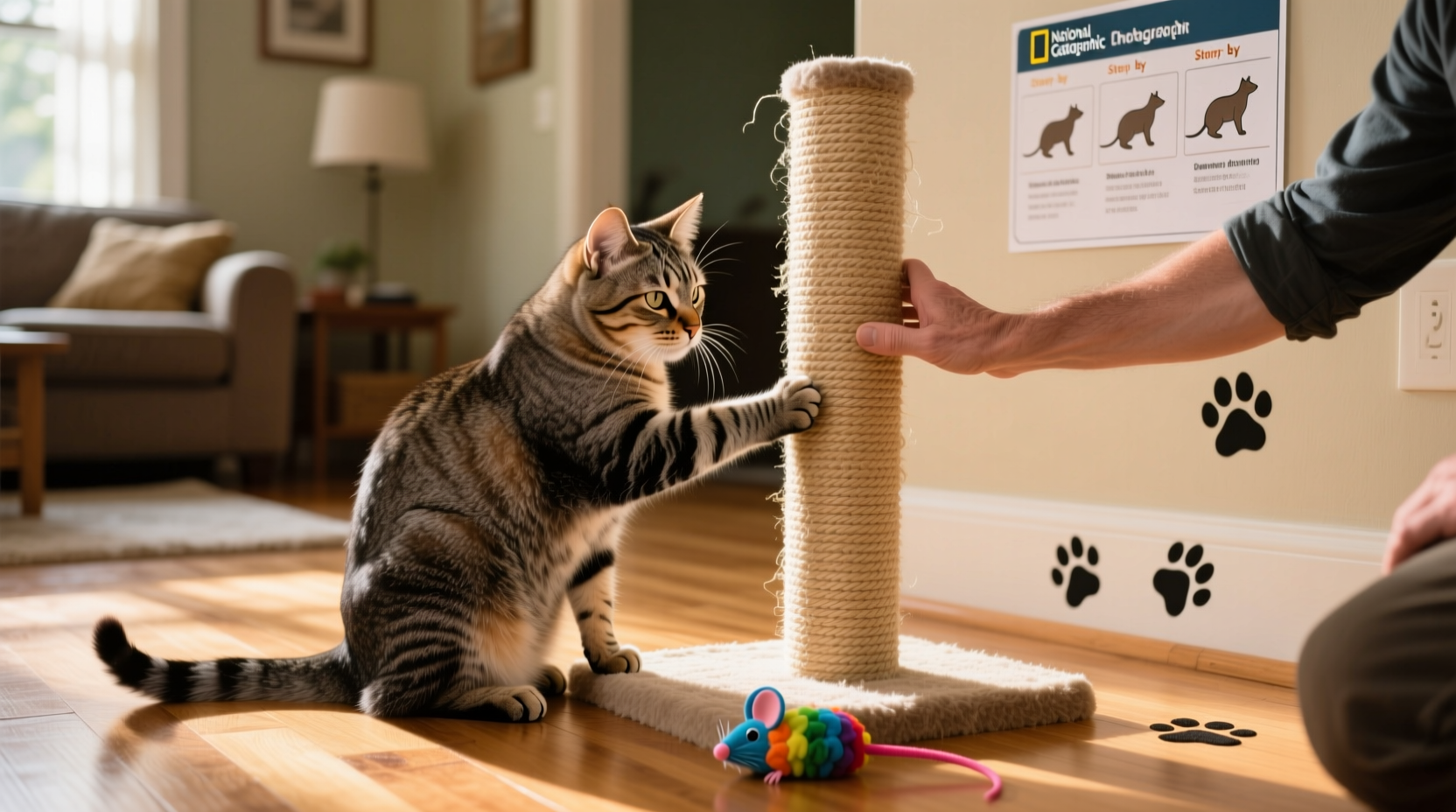
The myth that “you can’t teach an old cat new tricks” persists, but modern animal behavior science firmly debunks it. While kittens are more impressionable during early development, adult and senior cats retain significant neuroplasticity—the brain's ability to adapt and form new connections. This means they can learn new behaviors when motivated by rewards, safety, and environmental cues.
Older cats may be less flexible in routine, but they are also often more predictable in their habits. This predictability works in your favor: once you identify when and where your cat scratches, you can strategically intervene. Dr. Sarah Ellis, co-author of *The Trainable Cat*, emphasizes that \"motivation is the cornerstone of feline learning. If the reward outweighs the effort, even a 12-year-old cat will change its behavior.\"
“Cats of any age respond best to training that respects their instincts. Punishment fails; encouragement succeeds.” — Dr. Karen Overall, Veterinary Behaviorist
The challenge isn’t the cat’s age—it’s the owner’s approach. Mistakes like using sprays that merely repel without redirecting, placing posts in ignored corners, or expecting immediate results undermine progress. Success comes from combining environmental management with positive reinforcement.
Step-by-Step Guide to Training an Older Cat
Retraining an older cat requires patience, observation, and a structured plan. Follow these steps methodically to increase the likelihood of lasting change.
- Observe your cat’s current scratching patterns. Note the locations, times of day, duration, and surfaces preferred (carpet, wood, upholstery). This reveals what your cat finds satisfying—texture, height, stability, or location.
- Select the right scratching post. Match the post to your cat’s preferences. Most cats prefer vertical posts at least 30 inches tall with sisal fabric or corrugated cardboard. Horizontal scratchers work for some, especially seniors with mobility issues.
- Place the post near existing scratching zones. Do not isolate it in a back room. Position it within 3 feet of where your cat currently scratches, even if that’s next to the sofa.
- Make the post irresistible. Rub it with catnip, attach dangling toys, or sprinkle silver vine powder. These natural attractants stimulate interest.
- Use positive reinforcement. Immediately reward your cat with treats, praise, or play when they interact with the post—even if they just sniff or paw at it.
- Discourage unwanted scratching gently. Use double-sided tape, aluminum foil, or temporary plastic covers on furniture. Avoid sprays with strong scents unless paired with redirection.
- Gradually phase out old habits. Once your cat uses the post consistently for 2–3 weeks, slowly move it up to 6 inches per day toward a more permanent location—if needed.
- Maintain consistency for at least 4–6 weeks. Habits take time to solidify, especially in older animals. Continue rewarding use and monitoring setbacks.
Common Mistakes That Sabotage Training
Even well-intentioned efforts can fail due to subtle missteps. Awareness of these pitfalls improves your odds of success.
- Using punishment. Hissing, spraying water, or yelling creates fear and erodes trust. The cat may stop scratching in your presence but will seek hidden spots or become anxious.
- Placing the post incorrectly. A post tucked behind a couch won’t compete with a favorite armrest. High-traffic areas, near sleeping zones, or beside entryways are ideal.
- Choosing a wobbly or undersized post. Cats need stability to stretch fully. A flimsy post feels unsafe and uninviting.
- Expecting instant results. Older cats may test changes repeatedly. Consistency over weeks matters more than daily perfection.
- Having only one post. The general rule is one per cat plus one extra. Multiple options reduce competition and increase accessibility.
| Do’s | Don’ts |
|---|---|
| Place posts near windows, beds, or furniture they already scratch | Put the post in a dark, unused corner |
| Use catnip or silver vine to boost interest | Force your cat onto the post |
| Reward every correct attempt with a treat or affection | Yell or punish after scratching furniture |
| Trim claws regularly to reduce damage during transition | Allow inconsistent access to the post (e.g., moving it daily) |
Real Example: Retraining Bella, a 9-Year-Old Rescue Cat
Bella, a 9-year-old domestic shorthair adopted from a shelter, had a habit of shredding the arms of her owner’s leather recliner. Despite loving the cat, the owner was frustrated and considering rehoming her. A certified cat behavior consultant was consulted, and a tailored plan was implemented.
First, a tall sisal post was placed directly in front of the recliner—Bella’s primary scratching zone. The post was rubbed with catnip and had a feather toy dangling from the top. Whenever Bella approached the chair, she was gently guided to the post and given a small treat upon contact. Double-sided sticky tape was applied to the recliner arms, which Bella disliked but didn’t associate with punishment.
Within five days, Bella began swatting at the toy and scraping the post. By day 12, she used it daily after naps. Over the next month, the post was slowly moved six feet away to a sunlit corner near a window perch. After eight weeks, Bella used the post exclusively, and the recliner was fully protected. The owner reported not only reduced damage but also increased confidence and playfulness in Bella.
This case illustrates that even deeply ingrained habits can shift when the environment supports better choices and the cat feels safe and rewarded.
Essential Checklist for Success
Use this checklist to ensure your training strategy covers all critical elements:
- ✅ Observed your cat’s preferred scratching surfaces and locations
- ✅ Chosen a sturdy, appropriately sized scratching post with desirable texture
- ✅ Placed the post in a high-use area, close to current scratching zones
- ✅ Applied natural attractants (catnip, silver vine) to the post
- ✅ Removed or protected targeted furniture (tape, foil, slipcovers)
- ✅ Established a reward system (treats, praise, play) for correct use
- ✅ Committed to a minimum 4-week consistency period
- ✅ Provided multiple scratching options throughout the home
- ✅ Trimmed your cat’s claws every 2–3 weeks during training
- ✅ Monitored progress and adjusted placement or texture as needed
Frequently Asked Questions
Can a 10-year-old cat learn to use a scratching post?
Yes. Age does not prevent learning. While older cats may take longer to adapt, they can absolutely adopt new habits with consistent, reward-based training. The process may require more patience, but success rates remain high when the environment supports the desired behavior.
What if my cat refuses to use any scratching post?
If your cat ignores all posts, reassess the type and placement. Try different materials—cardboard, sisal, carpet—and angles—vertical, horizontal, angled. Some cats prefer scratchers integrated into cat trees or window perches. Also, ensure the post is stable; wobbling deters use. Introducing catnip or interactive toys nearby can spark curiosity.
Is it okay to trim my older cat’s claws during training?
Yes, and it’s highly recommended. Regular claw trims reduce the damage caused by accidental scratching and make the transition smoother. Use proper clippers and avoid the pink quick. If unsure, ask your vet or groomer to demonstrate. Most cats tolerate trimming well when introduced gradually.
Conclusion: Patience and Persistence Pay Off
Training an older cat to use a scratching post isn’t about dominance or discipline—it’s about collaboration. By aligning your strategy with your cat’s natural instincts, you create a win-win: your furniture stays intact, and your cat maintains a vital outlet for physical and emotional health. The methods that stick are those grounded in respect, consistency, and positive reinforcement.
Start today by observing your cat’s habits, selecting the right post, and making it the most appealing option in the room. Celebrate small victories, adjust as needed, and remember that progress—not perfection—is the goal. Every older cat deserves the chance to live harmoniously in a home where both their needs and yours are met.




 浙公网安备
33010002000092号
浙公网安备
33010002000092号 浙B2-20120091-4
Comments
No comments yet. Why don't you start the discussion?