
Sleep is a biological necessity, not a luxury. Yet in today’s fast-paced world, many people seek ways to do more with less—especially when it comes to time spent sleeping. The idea of training oneself to function on fewer hours of sleep has long intrigued high achievers, entrepreneurs, military personnel, and students. But is it truly possible to rewire your body to require less sleep through lifestyle changes? And if so, how much can you realistically reduce your sleep without harming health or performance?
The short answer: while you cannot fundamentally change your genetic sleep requirement, certain evidence-based lifestyle methods can improve sleep efficiency, enhance alertness during waking hours, and help some individuals adapt to slightly reduced—but still adequate—sleep durations. However, attempting to drastically cut sleep carries significant risks, including cognitive decline, metabolic disruption, and increased disease risk.
This article explores the science behind sleep reduction, examines proven techniques that support better wakefulness, and outlines realistic boundaries for those seeking to optimize their rest without compromising long-term well-being.
The Science of Sleep: How Much Do We Really Need?
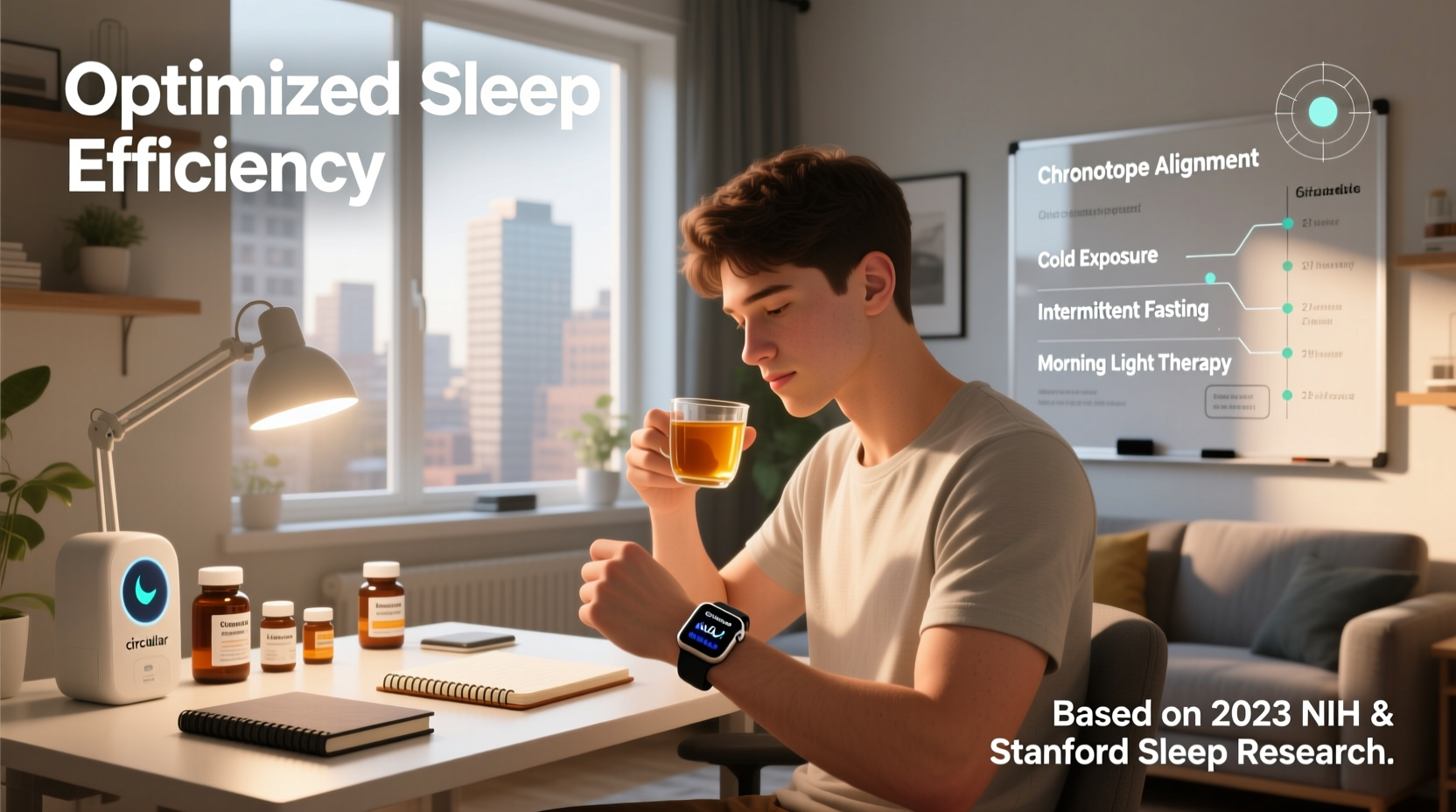
According to the National Sleep Foundation and the American Academy of Sleep Medicine, most adults require between 7 and 9 hours of sleep per night for optimal health. This range isn't arbitrary—it's based on decades of research linking insufficient sleep (less than 6 hours) with impaired cognition, weakened immunity, weight gain, cardiovascular disease, and mood disorders.
Sleep occurs in cycles lasting approximately 90 minutes, each progressing through stages: light sleep (N1 and N2), deep sleep (N3), and rapid eye movement (REM) sleep. Deep sleep supports physical restoration and immune function, while REM sleep is crucial for memory consolidation and emotional regulation. Disrupting these cycles—even if total sleep time appears sufficient—can impair recovery and mental performance.
Genetics play a major role in determining individual sleep needs. A rare mutation in the DEC2 gene allows a small number of people to thrive on just 4–6 hours of sleep without adverse effects. These “short sleepers” are outliers, however; for the vast majority, chronic sleep restriction leads to accumulating deficits.
“Sleep is non-negotiable for brain health. You can’t train away biology. What you can do is maximize the quality of the sleep you get.” — Dr. Matthew Walker, neuroscientist and author of *Why We Sleep*
Proven Lifestyle Methods That Enhance Sleep Efficiency
You may not be able to reduce your core sleep need from 8 to 5 hours safely, but you can improve the quality and efficiency of your sleep. When sleep is deeper and more consolidated, you may feel more rested on the same amount—or even slightly less—than before. Several lifestyle interventions have strong scientific backing:
- Consistent Sleep Schedule: Going to bed and waking up at the same time every day—even on weekends—strengthens circadian rhythms, leading to faster sleep onset and fewer nighttime awakenings.
- Morning Sunlight Exposure: Natural light within 30–60 minutes of waking helps regulate melatonin production, improving both daytime alertness and nighttime sleep quality.
- Caffeine Timing: Limit caffeine after 2 p.m., as its half-life can extend up to 6–8 hours, interfering with sleep onset and depth.
- Evening Wind-Down Routine: Engaging in relaxing activities like reading, meditation, or gentle stretching signals the body that it’s time to prepare for sleep.
- Optimized Sleep Environment: Keep the bedroom cool (around 65°F/18°C), dark, and quiet. Consider blackout curtains, white noise machines, or earplugs if needed.
Can You Adapt to Less Sleep? Realistic Limits and Risks
Some populations—such as military personnel during operations or medical residents on long shifts—are required to function on minimal sleep. Studies show that under controlled conditions, humans can temporarily adapt to sleep schedules of 4–6 hours per night using strategic napping and stimulant use. However, this adaptation comes at a cost.
A landmark study by the University of Pennsylvania found that participants restricted to 6 hours of sleep per night for two weeks performed as poorly on cognitive tasks as those who had gone without sleep for 48 hours straight. Crucially, they were largely unaware of their declining performance—a phenomenon known as \"sleep debt blindness.\"
Chronic partial sleep deprivation leads to:
- Impaired attention, reaction time, and decision-making
- Reduced glucose tolerance and increased appetite (linked to weight gain)
- Elevated cortisol levels (chronic stress hormone)
- Increased inflammation and susceptibility to illness
Mini Case Study: The Executive Who Tried to Outrun Sleep
Mark, a 42-year-old tech startup founder, believed he could gain a competitive edge by sleeping only five hours a night. He adopted a strict routine: no screens after 8 p.m., morning workouts, and three 20-minute naps during the workday. For the first month, he felt energized and productive. By month three, his focus began slipping. He made avoidable errors in investor meetings, became irritable with his team, and started experiencing heart palpitations.
After a routine checkup revealed elevated blood pressure and signs of insulin resistance, Mark consulted a sleep specialist. He was advised to increase his nightly sleep to at least 6.5 hours and eliminate late-day napping, which was disrupting his nighttime rest. Within six weeks of prioritizing sleep quality over quantity, his energy, clarity, and health markers improved significantly.
His experience illustrates a key truth: perceived productivity gains from reduced sleep are often illusory and unsustainable.
Strategic Napping and Polyphasic Sleep: Do They Work?
One method often cited for reducing total sleep time is polyphasic sleep—the practice of dividing sleep into multiple shorter periods throughout the day instead of one long block. Popular variants include the Everyman schedule (a 3-hour core sleep plus three 20-minute naps) and the Uberman cycle (six 20-minute naps spaced evenly).
While anecdotal reports exist of success, there is no robust scientific evidence supporting long-term safety or efficacy. Most attempts fail within days due to intense sleep pressure and circadian misalignment. Moreover, frequent napping can interfere with nighttime sleep, especially if done late in the day.
In contrast, **strategic napping**—one short nap (10–30 minutes) early in the afternoon—has proven benefits. NASA research shows that a 26-minute nap improved pilot performance by 34% and alertness by 54%. These micro-recoveries can supplement—but not replace—adequate nighttime sleep.
| Method | Potential Benefit | Major Risk |
|---|---|---|
| Monophasic Sleep (7–9 hrs at night) | Optimal alignment with circadian rhythm | None when duration is sufficient |
| Biphasic Sleep (6–7 hrs + 1 nap) | Maintains ~85–90% of full sleep benefit | Nap too long/lates can disrupt night sleep |
| Polyphasic Sleep (multiple short sleeps) | Theoretical time savings | High failure rate; cognitive strain; long-term health unknowns |
Step-by-Step Guide to Safely Optimizing Sleep Duration
If your goal is to make the most of limited time while protecting health, follow this science-backed approach:
- Assess Your Baseline: Track your natural sleep patterns for one week without alarms. Note when you fall asleep and wake up spontaneously. This reveals your body’s true sleep need.
- Set a Minimum Threshold: Never drop below 6.5 hours of sleep consistently. Even resilient individuals suffer deficits below this level over time.
- Improve Sleep Quality: Optimize your environment (dark, cool, quiet), limit blue light exposure after sunset, and maintain a consistent bedtime.
- Incorporate Strategic Naps: If needed, add a single 20-minute nap between 1 p.m. and 3 p.m. Set an alarm to avoid deep sleep inertia.
- Monitor Performance: Use simple self-checks: Are you relying heavily on caffeine? Dozing off in meetings? Forgetting details? These are red flags.
- Reassess Monthly: After implementing changes, evaluate energy, mood, focus, and health markers. Adjust as needed.
Frequently Asked Questions
Can you train your body to need less sleep over time?
No—not in the way most people mean. While you can adapt behaviorally to feel somewhat functional on less sleep, your brain and body still require the same biological processes. Chronic restriction leads to accumulated deficits, even if you don’t notice them immediately.
Are there any supplements that reduce sleep need?
No supplement replaces sleep. Some substances like caffeine, modafinil, or L-theanine can temporarily boost alertness, but they do not provide the restorative functions of sleep. Relying on stimulants to offset poor sleep creates a dangerous dependency cycle.
What about people who say they only sleep 5 hours a night?
Many who claim to function on 5 hours are either underestimating their sleep needs, catching extra sleep elsewhere (e.g., weekends), or experiencing gradual cognitive decline without realizing it. True short sleepers are extremely rare and typically have identifiable genetic markers.
Action Plan Checklist
“Success isn’t measured by how little you sleep, but by how well you perform and how sustainably you live.” — Dr. Sara Mednick, sleep researcher and author of *Take a Nap! Change Your Life*
To responsibly explore whether you can function on slightly less sleep, follow this checklist:
- ✅ Determine your natural sleep need through observation
- ✅ Prioritize sleep quality over cutting duration
- ✅ Maintain a consistent sleep-wake schedule
- ✅ Expose yourself to bright light in the morning
- ✅ Limit caffeine and alcohol, especially in the afternoon/evening
- ✅ Try a single early-afternoon nap if needed (20 mins max)
- ✅ Monitor cognitive performance and mood weekly
- ❌ Avoid drastic reductions (below 6 hours) or irregular polyphasic schedules
- ❌ Don’t ignore signs of fatigue, irritability, or forgetfulness
Conclusion: Work With Biology, Not Against It
The dream of needing less sleep is understandable—but it must be tempered with biological reality. You cannot train your body to eliminate its need for rest any more than you can train it to survive without food or water. However, you can become more efficient in how you sleep and how you manage your energy throughout the day.
Rather than trying to reduce sleep, aim to optimize it. Invest in consistency, quality, and recovery. Respect your circadian biology. Use naps strategically. Measure success not by hours shaved off sleep, but by sustained mental clarity, emotional balance, and long-term health.
If you're constantly tired, the solution isn’t pushing harder—it’s resting smarter.




 浙公网安备
33010002000092号
浙公网安备
33010002000092号 浙B2-20120091-4
Comments
No comments yet. Why don't you start the discussion?