
In homes across the world, people are turning to humidifiers and essential oil diffusers to improve indoor air quality, support respiratory health, and create calming environments. While both devices serve distinct purposes, many wonder whether they can be used simultaneously—especially when space or convenience is limited. The short answer is yes, but with important caveats. Used improperly, combining these devices can damage equipment, reduce effectiveness, or even pose health risks. This guide dives deep into the safe integration of humidifiers and diffusers, offering tested strategies, real-world insights, and clear best practices.
Understanding How Humidifiers and Diffusers Work
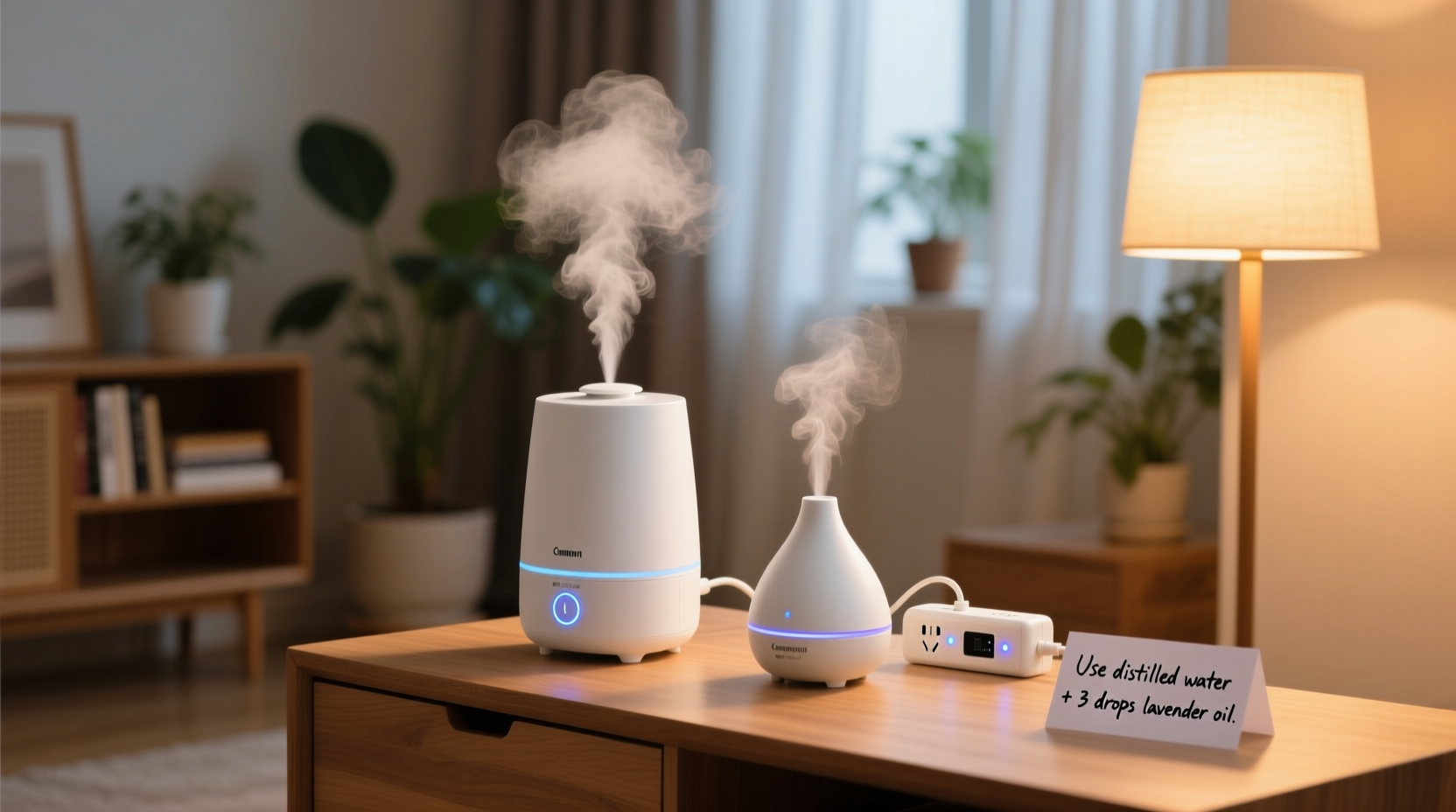
Before exploring whether these two devices can coexist, it’s essential to understand their core functions and mechanisms.
Humidifiers add moisture to dry air by converting water into a fine mist. They come in several types: ultrasonic (which uses high-frequency vibrations), evaporative (which blows air through a wet wick), and steam vaporizers (which heat water to produce vapor). Their primary purpose is to maintain healthy humidity levels—typically between 30% and 50%—to prevent dry skin, irritated sinuses, and respiratory discomfort.
Essential oil diffusers, on the other hand, are designed specifically to disperse aromatic plant extracts into the air. Most are ultrasonic models that vibrate water and a few drops of essential oil to create a scented mist. Unlike humidifiers, diffusers prioritize fragrance dispersion over moisture output, often using smaller water tanks and intermittent operation cycles.
The key difference lies in design intent: humidifiers are built for durability and consistent output; diffusers are optimized for aroma therapy and ambiance. Merging their functions requires caution, especially since essential oils can degrade plastic components, clog internal mechanisms, and alter mist consistency.
Safety Risks of Combining Devices Incorrectly
Mixing humidifiers and diffusers without proper knowledge can lead to unintended consequences. The most common issues include:
- Internal damage: Essential oils are highly concentrated and often contain compounds that can corrode rubber seals, degrade plastic reservoirs, and gum up ultrasonic plates in non-compatible humidifiers.
- Reduced efficiency: Oil residue can coat sensors and wicks, impairing the humidifier’s ability to detect humidity levels or produce consistent mist.
- Health concerns: Some individuals may experience headaches, throat irritation, or allergic reactions if certain oils are dispersed at high volume via a powerful humidifier.
- Fire hazard: In rare cases, oil buildup near heating elements in warm mist humidifiers can pose a combustion risk.
A 2021 report from the American Association of Poison Control Centers noted an uptick in calls related to improper essential oil usage in household appliances, including humidifiers. Many incidents stemmed from users assuming all water-based devices could handle oils.
“Just because a device disperses water doesn’t mean it can safely handle essential oils. Compatibility depends on material resistance and engineering design.” — Dr. Lena Patel, Environmental Health Specialist
When It’s Safe to Use Both Together
There are scenarios where using a humidifier and diffuser simultaneously makes sense—and can even enhance comfort. The safest approach is to run them as separate units in the same room, allowing each to perform its intended function without interference.
For example, during winter months, a cool-mist humidifier can combat dry air while a dedicated diffuser emits lavender or eucalyptus to promote relaxation or ease congestion. Since both release mist into the air, their effects complement each other without mechanical conflict.
If space or noise is a concern, consider investing in a **hybrid humidifier-diffuser**—a dual-purpose unit designed to handle both tasks safely. These models feature oil-resistant materials, sealed compartments, and designated trays or pads for essential oils, preventing direct contact with sensitive components.
| Device Type | Can Add Essential Oils? | Risk Level | Recommended For Combined Use? |
|---|---|---|---|
| Standard Ultrasonic Humidifier | No (unless specified) | High | No |
| Evaporative Humidifier | No | High | No |
| Steam Vaporizer | No | Extreme | No |
| Ultrasonic Diffuser | Yes (by design) | Low | Yes (with humidifier) |
| Dual-Function Humidifier-Diffuser | Yes (via designated compartment) | Low | Yes |
Mini Case Study: Sarah’s Bedroom Routine
Sarah, a 34-year-old teacher living in Colorado, struggled with dry sinuses and stress-induced insomnia during the winter. Her bedroom had low humidity (often below 25%), and she relied on a basic ultrasonic humidifier. After hearing about aromatherapy benefits, she added three drops of peppermint oil directly into her humidifier’s tank. Within days, the device began making a grinding noise and eventually stopped producing mist.
Upon inspection, a technician found oil residue coating the transducer plate and clogging the water channel. The humidifier was beyond repair. Sarah then purchased a hybrid model with a separate essential oil tray. Now, she runs the humidifier nightly with clean water and places a single drop of lavender on the scent pad. Her sleep has improved, and her nasal passages remain moist—all without damaging her equipment.
Step-by-Step Guide: Using a Humidifier and Diffuser Safely Together
To get the benefits of both devices without risking harm, follow this structured approach:
- Identify your devices: Check labels and manuals to confirm whether your humidifier is oil-safe. Look for phrases like “essential oil compatible” or “includes aroma tray.” If unsure, assume it is not safe.
- Use separate units: Operate a standard humidifier and a dedicated diffuser side by side. Place them at least 2–3 feet apart to avoid cross-contamination and ensure even distribution.
- Choose the right oils: Opt for gentle, well-diluted essential oils such as lavender, chamomile, or citrus. Avoid thick resins like frankincense or pine-heavy blends, which leave more residue.
- Limit diffusion time: Run the diffuser for 30–60 minutes at a time, especially in small rooms. Continuous diffusion can overwhelm the senses and increase airborne particulate load.
- Maintain both devices: Clean the humidifier every 2–3 days with white vinegar to prevent mold. Clean the diffuser after every 3–4 uses to remove oil buildup.
- Monitor humidity levels: Use a hygrometer to ensure room humidity stays between 30% and 50%. Over-humidification can encourage mold growth, especially when combined with organic oil particles.
- Observe household members: Watch for signs of irritation—coughing, sneezing, watery eyes—particularly in children, pets, or those with asthma. Discontinue use if adverse reactions occur.
Checklist: Safe Combination Use
- ✅ Confirm humidifier is labeled as essential oil-safe
- ✅ Use only diffuser-specific oils (no perfume oils or synthetic fragrances)
- ✅ Keep diffuser and humidifier physically separated if not integrated
- ✅ Clean both devices regularly with appropriate solutions
- ✅ Monitor room humidity with a digital hygrometer
- ✅ Avoid using oils around infants, pets, or sensitive individuals
- ✅ Replace water daily in both units to prevent bacterial growth
Frequently Asked Questions
Can I put essential oils in my Vicks humidifier?
No. Most Vicks humidifiers, including popular models like the Starry Night Cool Mist, are not designed for essential oils. Adding oils can void the warranty and damage internal parts. Vicks does offer aroma pads for select models—use only those approved accessories.
What happens if I accidentally put oil in a regular humidifier?
Immediate effects may include reduced mist output, strange noises, or oily residue in the mist. Long-term exposure can permanently damage the transducer or motor. If this occurs, stop using the unit, disassemble and clean thoroughly with vinegar and a soft brush, and inspect for lingering oil. If performance doesn’t return, replacement is recommended.
Are there any essential oils that are safe for all humidifiers?
No essential oil is universally safe for all humidifiers. Even mild oils like lemon or tea tree can degrade plastics over time. Safety depends on the device’s construction, not the oil type. Always defer to the manufacturer’s guidelines.
Expert Tips for Maximizing Benefits Without Risk
Integrating aromatherapy and humidity control can elevate home wellness—if done correctly. Experts recommend the following advanced strategies:
- Use passive diffusion: Instead of adding oils to water, place a cotton pad with 1–2 drops near the humidifier’s vent. This allows subtle scent dispersion without introducing oils into the system.
- Time your usage: Run the humidifier throughout the night and the diffuser only during relaxation periods (e.g., 30 minutes before bed).
- Opt for water-soluble diffuser blends: Some companies sell hydrophilic essential oil formulations designed to mix safely with water and minimize residue.
- Upgrade to smart devices: Models with app control allow scheduling, humidity monitoring, and automatic shutoff—reducing guesswork and enhancing safety.
“The goal is balance: enough moisture to support respiratory health, and just enough aroma to enhance mood—without overloading the environment.” — Dr. Marcus Tran, Integrative Pulmonologist
Conclusion: Harmonizing Comfort and Safety
Using a humidifier and diffuser together isn’t inherently unsafe—but it demands informed choices. By respecting the design limits of each device, maintaining a strict cleaning routine, and prioritizing health over convenience, you can enjoy the combined benefits of optimal humidity and therapeutic aromas. Whether you choose separate units, a dual-function model, or passive scenting methods, the key is mindfulness. Your indoor environment plays a critical role in daily well-being; treat it with care, precision, and respect for how each tool works.




 浙公网安备
33010002000092号
浙公网安备
33010002000092号 浙B2-20120091-4
Comments
No comments yet. Why don't you start the discussion?